


Tornado warnings now buy you 13 minutes instead of 3
Average warning lead time has risen from 3 minutes in the 1980s to 13 today because radar can spot a storm's rotation before a funnel touches down. Newer systems can also confirm one already has.
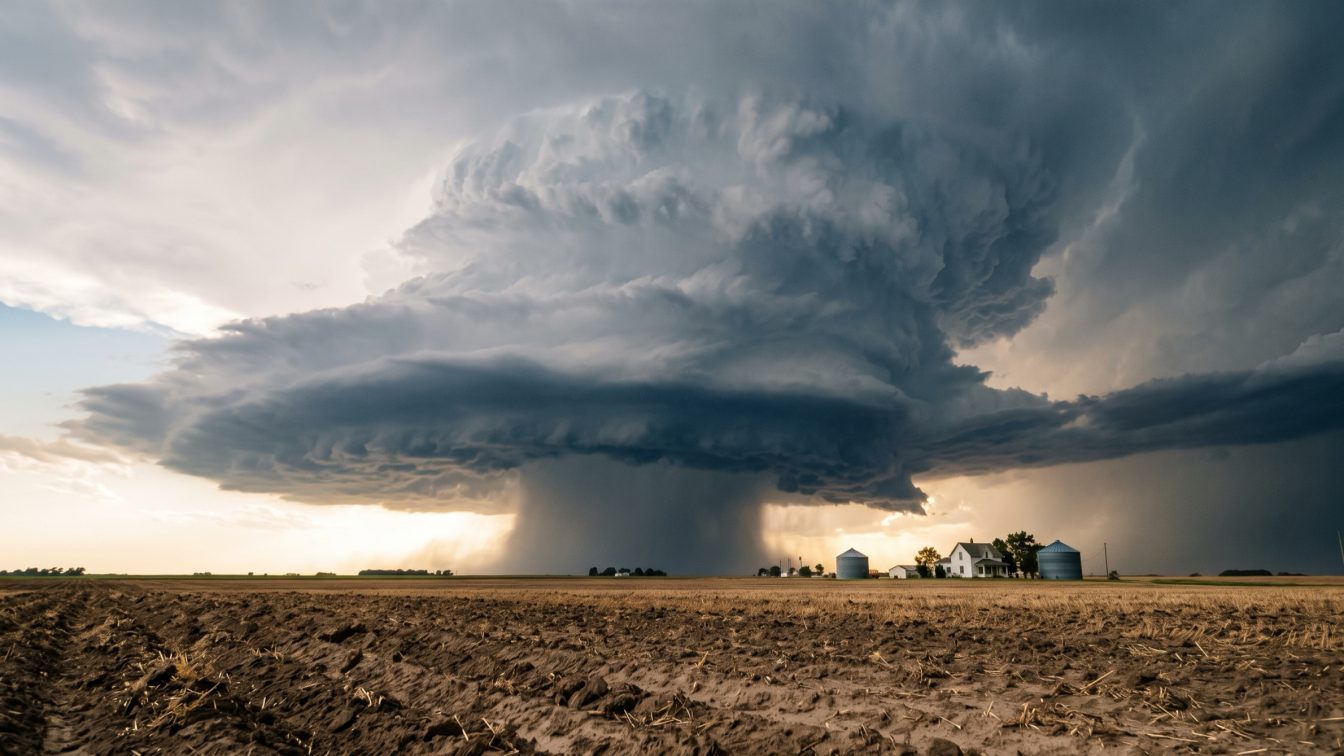
Table of contents
Summary of this article
- Average tornado warning lead time has risen from roughly 3 minutes in the 1980s to about 13 minutes today, driven by advances NOAA scientist Dr. Sean Waugh described to NBC News on May 8, 2026.
- Doppler radar measures wind speed and direction inside a storm, letting forecasters detect the rotation that precedes a tornado before the funnel touches down.
- Dual-polarization radar, deployed across the national network by 2013, sends both horizontal and vertical pulses and can identify a "debris signature", confirmation that a tornado is already on the ground.
- Better warnings only reduce harm when homeowners act. A safe room built to FEMA P-361 standards can withstand winds up to 250 mph, the threat level of the strongest EF5 tornadoes.
- The single most important preparedness step is a way to receive alerts that wakes you, a NOAA Weather Radio or a phone with Wireless Emergency Alerts enabled.
Thirty years ago, a tornado warning bought you about three minutes. Today it buys you roughly 13.
That gain is the product of three decades of radar science, NOAA scientist Dr. Sean Waugh told NBC News on May 8, 2026, in a segment marking the 30th anniversary of the movie “Twister.” The film dramatized storm chasing in 1996. The real story since then is quieter and far more consequential: forecasters can now see the machinery of a tornado forming before the funnel reaches the ground.
For homeowners, those extra minutes are not an abstraction. They are the difference between reacting and preparing. But the warning only works if your home and your household are ready to receive it and act. That readiness begins long before the sky turns.
What the Radar Actually Sees Now
The technology that transformed forecasting is Doppler radar. Standard radar tells you where rain is falling. Doppler radar does more: it measures the speed and direction of the wind moving inside a storm.
That distinction matters. Tornadoes form inside rotating thunderstorms called supercells. The rotation appears in the radar data before a tornado touches down. Forecasters watch for a tight couplet of winds, air moving toward the radar right beside air moving away, which signals a spinning column. Catching that rotation early is what stretched warning lead times from three minutes to about 13.
The next leap was dual-polarization radar. The National Weather Service completed its rollout across the national network by 2013. Older radar sent out pulses in one direction, horizontally. Dual-pol radar sends pulses both horizontally and vertically, which lets it judge the shape and size of what it hits.
That capability produces a readout nothing else can give: the debris signature. When a tornado lifts insulation, lumber, shingles, and dirt into the air, dual-pol radar can detect that airborne debris. The radar can confirm a tornado is already on the ground, even at night, even when nobody can see it. Confirmation replaces guesswork, and confirmed warnings carry more weight with the people who receive them.
Mobile radars add a third layer: units mounted on trucks that drive toward storms and study them at close range. They gather the fine-grained data that helps scientists like Waugh understand how tornadoes form, which in turn sharpens the models that power everyday forecasts.
What Better Warnings Mean for Your Home
A 13-minute warning changes the math of survival. Studies of tornado casualties consistently show that most deaths happen among people who were caught in the open, in vehicles, or in structures that offered no protection, not among people who reached a sturdy interior space in time.
The warning system now delivers the time. The gap that remains is on the homeowner’s side: receiving the alert, having somewhere safe to go, and knowing the plan before the siren sounds.
That gap is where a building-biology approach earns its keep. Building biology treats your home as a system that either protects you from environmental threats or exposes you to them. Tornado risk fits that frame exactly. A warning reaching you is only half of it. Your house also needs a space that holds up when the wind arrives. A warning buys time only if the building holds, and the wind speed your roof was built for is on file.
Knowing Your Site Risk
Tornado risk is not uniform, and it is not static. The central and southeastern United States carry the highest frequency, but tornadoes have struck in all 50 states. Your first task is to understand your specific site.
Your structure decides most of it. A house on a permanent foundation with a basement offers real protection. A manufactured or mobile home does not. FEMA data on tornado fatalities has long shown that people in mobile homes die at far higher rates than people in permanent structures, because these homes can be lifted or destroyed by winds well below the strength of a violent tornado. If you live in a manufactured home, your safety plan must include leaving it for a sturdier shelter before the storm arrives, not during it.
Next, assess your interior. The safest place in most homes is the lowest floor, in an interior room with no exterior walls, a basement, a central bathroom, or a closet under the stairs. Put as many walls as possible between yourself and the outside.
Building Resilience Into the Structure
For homeowners who want protection that matches the threat, the standard is a safe room. FEMA’s guidance, published as FEMA P-361, defines safe rooms engineered to protect occupants from the most extreme tornadoes, winds up to 250 mph, the threshold of an EF5, the strongest category on the Enhanced Fujita scale.
A safe room can be built into a new home during construction or added to an existing one, often in a basement, garage, or interior room. The engineering handles both the wind pressure and the debris, the flying two-by-fours and roof fragments that cause most tornado injuries. Forecast skill rests on federal data, and the assessment behind it is now run differently.
Retrofitting an existing home offers gains short of a full safe room. Hurricane straps and metal connectors tie the roof to the walls and the walls to the foundation, creating a continuous load path that resists uplift. Impact-rated windows and reinforced garage doors reduce the chance that a breach lets wind pressurize and lift the structure. These measures matter most in the outer bands of a tornado and in the far more common straight-line wind events, which cause damage across a much wider area than tornado tracks themselves.
Turning a Warning Into a Plan
Technology delivers the warning. A plan delivers the response. The steps below close the gap between them.
Get an alert that wakes you. Many tornado deaths happen at night, when people are asleep and miss sirens designed to be heard outdoors. A NOAA Weather Radio with battery backup sounds an alarm indoors when a warning is issued for your area. A smartphone with Wireless Emergency Alerts enabled does the same. Confirm the setting is on.
Know the difference between watch and warning. A tornado watch means conditions favor tornadoes, stay alert and review your plan. A tornado warning means a tornado has been detected or is imminent, take shelter now. The 13-minute lead time exists inside the warning window. Do not wait for confirmation you can see.
Designate your shelter in advance. Pick your safe space today and make sure every household member knows it. Practice reaching it. In a real warning, seconds spent deciding are seconds lost.
Stock the shelter. Keep sturdy shoes, a battery or hand-crank flashlight, a first-aid kit, and helmets inside or beside your shelter space. Head injuries from debris are a leading cause of tornado deaths, and a bike or sports helmet offers meaningful protection.
Protect your body during the event. Get low, cover your head and neck, and put something solid between you and flying debris, a mattress, heavy blankets, or a sturdy table.
The Climate Angle
Severe weather patterns are shifting. Research has documented that the geographic center of U.S. tornado activity has been drifting eastward into the more densely populated and heavily forested Southeast, where mobile homes are common and nighttime tornadoes are more frequent, a combination that raises the human toll.
Resilience planning is not a one-time task. Owning a home means keeping it up, on the same level as checking your roof or servicing your furnace. The forecasting has improved dramatically. The 13 minutes are real. Whether they save you depends on the choices you make in the calm before the storm.
Sources
- Chesky, Morgan, and Dr. Sean Waugh (NOAA). "How forecasting has changed since the 1996 movie 'Twister'." NBC News, May 8, 2026.
- Federal Emergency Management Agency. "FEMA P-361, Safe Rooms for Tornadoes and Hurricanes: Guidance for Community and Residential Safe Rooms."
- National Oceanic and Atmospheric Administration, National Weather Service. Dual-Polarization Radar and Doppler Radar.
Questions people ask
How much warning do I get before a tornado now?
Average tornado warning lead time is about 13 minutes today, up from roughly 3 minutes in the 1980s. NOAA scientist Dr. Sean Waugh attributed the gain to advances in radar technology. Lead time varies by storm, so treat any warning as a signal to shelter immediately.
What is the difference between a tornado watch and a tornado warning?
A watch means conditions favor tornado formation, stay alert and review your plan. A warning means a tornado has been detected or is imminent in your area, and you should take shelter right away. Watches cover larger areas and longer time frames; warnings are specific and urgent.
Where is the safest place in my home during a tornado?
The lowest floor, in an interior room with no exterior walls, a basement, central bathroom, or closet under the stairs. Put as many walls as possible between yourself and the outside, get low, and cover your head and neck.
Are mobile homes safe during a tornado?
No. Manufactured and mobile homes can be destroyed by winds far below the strength of a violent tornado, and residents die at much higher rates than people in permanent structures. If you live in one, your plan must include reaching a sturdier shelter before the storm arrives.
What is a safe room and how strong is it?
A safe room is a structure engineered to FEMA P-361 standards to protect occupants from extreme tornadoes, withstanding winds up to 250 mph, the threat level of an EF5. It can be built into a new home or added to an existing one, typically in a basement, garage, or interior room.
How will I know a tornado warning is issued if I'm asleep?
Use a NOAA Weather Radio with battery backup, which sounds an indoor alarm for warnings in your area, or enable Wireless Emergency Alerts on your smartphone. Many tornado deaths occur at night, so an alert that wakes you is one of the most important preparedness steps you can take.
Have questions about the environment inside your home?
Air quality, mold, EMF, light and water all shape how a house feels and how the people in it feel. Whatever your concern is, the first step is finding out what is there.
Our certified team of environmental professionals and advocates can help.