Florida leprosy cases are rising, and armadillos may be part of why
Florida recorded 36 leprosy cases in 2025, up from 8 in 2022, and health officials say people can catch the…


The place you live is writing itself into your health every day. The air in your bedroom, the water in your glass, the dust on your floor and the ground under your feet all leave a mark.
Most of that record forms slowly, long before anyone feels a symptom. That is what makes it easy to miss and worth understanding.
The World Health Organization ties 24% of deaths worldwide to environmental factors, roughly 13.7 million a year. That number describes ordinary places: kitchens, yards, and the rooms where children sleep.
Because so much of what affects your body comes from where you live. The WHO ties 24% of deaths worldwide to environmental factors, which puts your air, water and home at the center of your health.
Yes. Mold, radon, carbon monoxide, lead dust and combustion fumes all originate indoors. The EPA reports indoor air can be 2 to 5 times more polluted than outdoor air.
Your body carries the total dose, not each single moment. Low levels of lead or radon cause harm through steady repeated exposure rather than one large event, which is why time matters as much as amount.
Children, older adults, pregnant women, and anyone with heart or lung conditions. Children breathe more air for their size and are still developing, so early exposure affects them most.
A radon test. It costs about $15, takes a few days, and measures a gas the EPA links to about 21,000 lung cancer deaths a year. There is no other way to know your level.
Yes. The CDC reports about 1 in 12 people in the United States has asthma, and indoor triggers like mold, dust, pet dander and gas fumes are among the most common causes of flare-ups.
It removes the pollutants your home creates before they build up. Running a range hood while cooking and airing rooms after showers lowers moisture, fumes and particles you would otherwise breathe.
A carbon monoxide alarm and a radon test come first, since both are cheap and cover deadly invisible risks. After that, better ventilation, low humidity and a shoes-off habit reduce daily exposure at almost no cost.
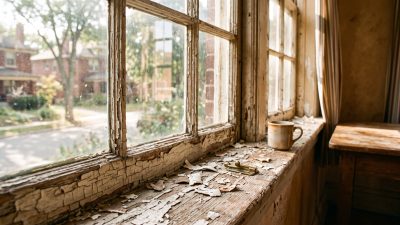
Your body responds to the place it lives in. Warm, damp rooms grow mold that triggers asthma. A gas stove raises indoor nitrogen dioxide. Old paint sheds lead into household dust.
None of these announce themselves, and each one shapes how you breathe, sleep and recover from everything else. The CDC reports that about 1 in 12 people in the United States has asthma, and indoor triggers like mold, pet dander and combustion fumes are among the most common drivers.
The home is where much of that exposure happens. It is also the one place where you set the terms.
A house that feels comfortable can still be doing this quietly, because comfort is a temperature and a smell, and none of these exposures register as either.
The danger in environmental health is rarely a single event. It is the slow accumulation of small doses: a little lead here, a bit of radon there, months of poor ventilation, years of the same untreated tap water. Your body carries the total, not the individual moments.
The CDC notes there is no known safe level of lead exposure for children, because even low amounts affect learning and behavior over time. Radon works the same way. The EPA links it to about 21,000 lung cancer deaths a year, and that risk comes from breathing low levels steadily rather than from one bad afternoon.
The same exposure also lands differently on different people. Children breathe faster and take in more air relative to their size, and their bodies are still developing, which makes early exposure harder to undo. Older adults, pregnant women and people with heart or lung conditions carry more risk from identical conditions, so a home that feels fine to a healthy adult can still be hard on the youngest person under its roof.
Which is why the useful question is never whether a single reading is alarming. It is what the last few years have added up to, and whether the trend is still running.
A house is not a neutral container. It either lowers your exposures or raises them, depending on how it is built, aired out and maintained.
The EPA reports that indoor air can be 2 to 5 times more polluted than the air outside, largely because homes trap what they generate. Ventilation moves stale air out. A working range hood clears cooking fumes. A dehumidifier stops mold before it establishes.
The good news lives inside that number. You can't fix the whole outdoors. You do have real influence over the air in your own rooms, and that is where most of your hours are spent anyway, which makes it the place where a small change buys the most.
Start with the exposures carrying the most weight and the least cost. Put a carbon monoxide alarm on the wall, because it covers a gas that kills without warning. Test for radon with a kit that runs about $15. Both take minutes.
Then work on the everyday load. Ventilate while cooking and after a shower. Keep humidity under 50% so mold can't establish. Take shoes off at the door to leave outdoor soil and lead outside. Change filters on schedule so they keep doing the job you bought them for.
None of this needs a specialist. It asks only that you know which exposures matter, and that you handle them one at a time rather than all at once.
Florida recorded 36 leprosy cases in 2025, up from 8 in 2022, and health officials say people can catch the…
A Connecticut landlord paid $359,069 after failing to disclose possible lead paint in 11 apartments where children lived. The rule…
Companies replaced BPA with BPS and BPF, chemicals so similar that the body handles them in much the same way…
A study linked PFAS in drinking water to a nearly 200% rise in infant mortality, turning background contamination into an…
The interim cleanup would remove contaminated sediment from Wappinger Creek before it spreads farther downstream. The work targets the most…
Blood drawn 5 months after the Norfolk Southern derailment showed changes in immune markers among East Palestine residents. The released…
The study points to two exposures acting together that many men control directly: device heat and close-range wireless radiation. The…
A frozen valve pushed a methyl methacrylate tank to the top of its gauge and triggered a mass evacuation around…
In 25 bedrooms, air sampled inches from a sleeping child contained 31 compounds, more than the room air around it…
In a long-running cohort, people sleeping in the brightest rooms faced a 56% higher heart failure risk. Four cardiology groups…
Children exposed before birth to drinking water at the U.S. legal arsenic limit were twice as likely to develop type…
In 72 households where asthma was poorly controlled, replacing gas stoves with induction cut nitrogen dioxide and reduced emergency visits…
Two rare cancers came back higher in districts where PFOS had been detected, while the biggest cancer group, leukemia, showed…
In a 7-day randomized trial, 3 chemicals fell by a third or more when adults ate from a supply chain…
The definition once required that no other cause be known. The CDC dropped that line after the 2021-22 season, so…
A federal panel rated nine home changes and found the evidence supports four. Which four depends on what the child…
An air purifier is a particle machine. It works on cooking smoke, wildfire haze, pollen and dust, and one trial…
Air quality, mold, EMF, light and water all shape how a house feels and how the people in it feel. Whatever your concern is, the first step is finding out what is there.
Our certified team of environmental professionals and advocates can help.