


Inland flooding can get worse even after a tropical storm weakens
A weakening tropical storm often slows down and dumps rain over the same ground for longer, making inland flooding more dangerous. Just 6 inches of moving water can knock an adult off their feet.
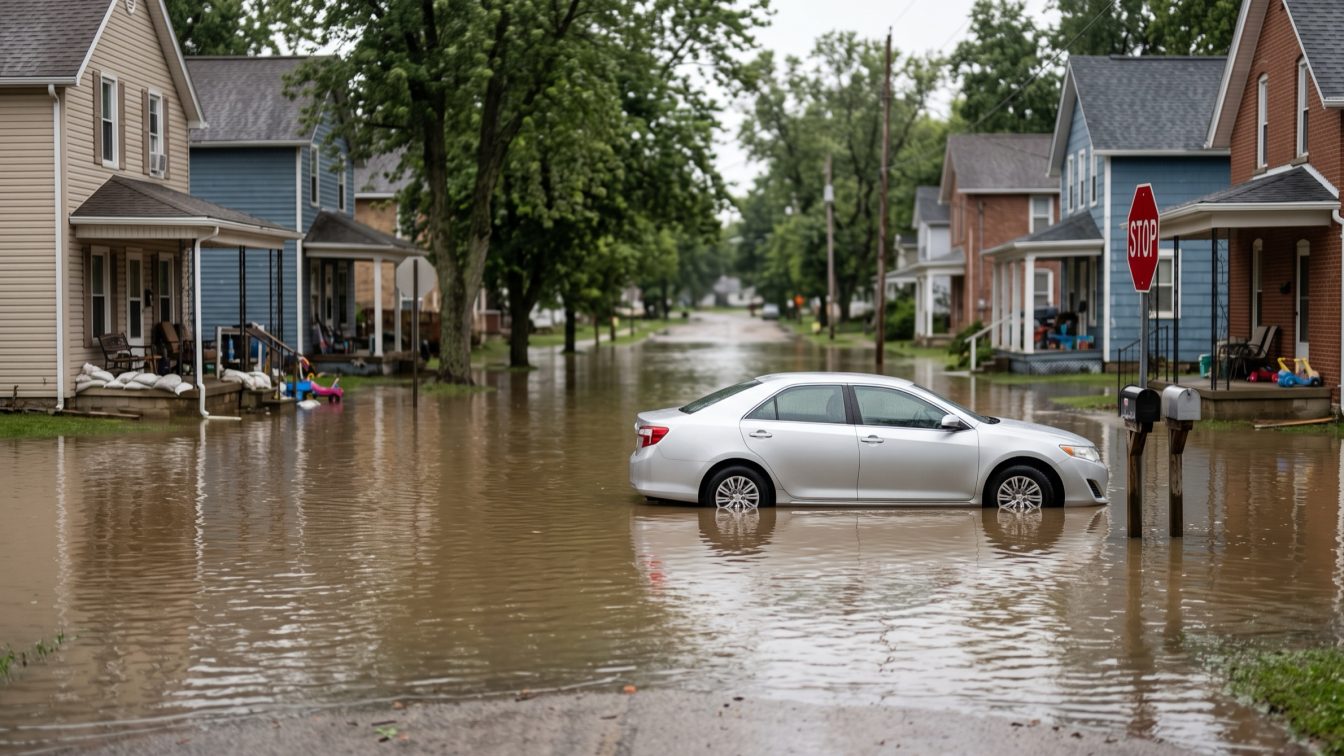
Table of contents
Summary of this article
- Tropical Storm Arthur weakened over the Southeast, but the flash flood threat persisted and spread inland, NBC News reported. Weaker winds do not mean less water.
- A weakening storm often slows its forward speed, dropping more rain over the same ground for longer. Flash flooding frequently peaks inland, hours to days after landfall, far from where the wind was strongest.
- Flash floods rank among the deadliest severe-weather hazards in the United States. Just 6 inches of moving water can knock an adult off their feet, and 12 inches can float many vehicles.
- Water reaches a home through predictable pathways: overwhelmed storm drains, saturated soil, basement seepage, sewer backups, and crawl space flooding.
- Practical fixes are measurable: a sump pump with battery backup, a backwater valve, foundation and crawl space vapor barriers, and elevating mechanicals above base flood elevation (BFE) plus 1 to 2 feet of freeboard.
Tropical Storm Arthur weakened over the Southeast. The flash flood threat did not.
That is the pattern NBC News reported as Arthur, the first named storm of the season, lost wind strength while forecasters kept flash flood threats in place across the region. It reads like a contradiction. The storm is dying, so why is the danger still growing?
Here is the answer that reframes the whole risk. Wind is a coastal story. Water is everyone’s story. A tropical storm’s winds fade within hours of landfall, but its rain often intensifies inland, dropping on ground that can no longer absorb it. For homes far from the beach, in the Piedmont, the foothills, and the inland valleys, the most dangerous phase of a tropical system frequently arrives after the headlines say it has weakened.
Why a weaker storm can flood harder
The instinct to relax when a storm weakens comes from watching the wind. Wind speed is the number that defines a storm’s category, and it drops fast once a system moves over land and loses the warm ocean water that fuels it.
Rainfall follows a different rule. As a tropical storm weakens, it often slows its forward speed. A slower storm sits over the same area longer, which means more hours of rain falling on the same ground. A storm crawling at 5 miles per hour dumps far more total rain on a town than the same storm racing through at 25 miles per hour. The winds that made news are gone. The water is just getting started.
The National Weather Service tracks this directly, and it is why flash flood watches and warnings frequently outlast the wind threat by a full day or more. Inland flooding from tropical systems has, in many storms, killed more people than the storm surge and wind combined. The danger does not weaken with the storm. It migrates inland and concentrates.
The saturated-soil trigger
The reason inland rain turns into flash flooding comes down to the ground itself.
Soil works like a sponge, but a sponge has a limit. Dry soil absorbs the first hours of rain. Once it fills, it stops absorbing. Every additional inch of rain then runs off the surface instead of soaking in. Hydrologists call this saturation, and it is the switch that flips a rainstorm into a flood.
A weakening, slow-moving storm is engineered to hit that switch. The first bands saturate the ground. The hours that follow deliver rain to soil that can no longer take it. That runoff gathers fast, pours into streams and storm drains, and overwhelms systems built for ordinary rainfall. Flash flooding gets its name from its speed: the National Weather Service defines it as flooding that begins within 6 hours, and often within minutes, of heavy rain.
The building-biology lens: your home sits in a watershed
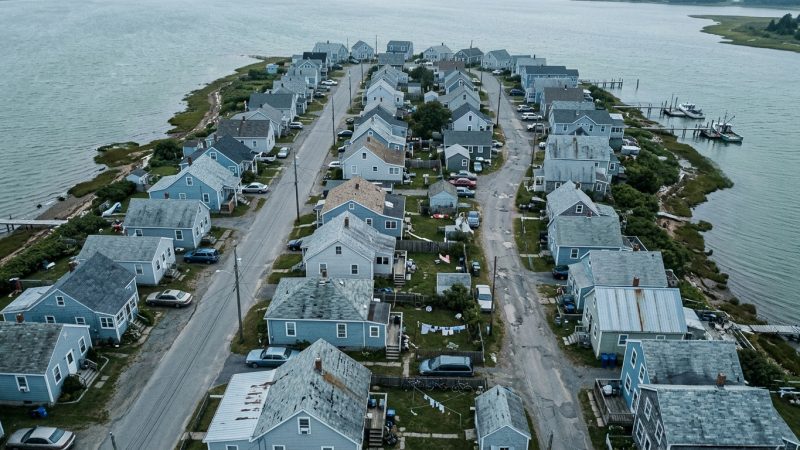
Building biology treats a home and its surroundings as one connected system. A house does not sit on an island. It sits in a watershed, the network of soil, slope, streams, and drains that move water across the land.
That framing changes how you read a flash flood. The water that reaches your foundation is not just falling on your roof. It is arriving from uphill, from streets, from a saturated yard, and from a storm drain system that has run out of capacity. Your home is the low point that all of that water is looking for.
Source control, in this context, means managing where water goes before it reaches the building and blocking the specific paths it uses to get inside. A weakening storm gives you the pathways to defend. Each one is predictable, and each one has a fix.
The exposure pathways water uses to get in
Flash floodwater reaches a home through five main routes. Each is measurable, and each attacks a different part of the structure.
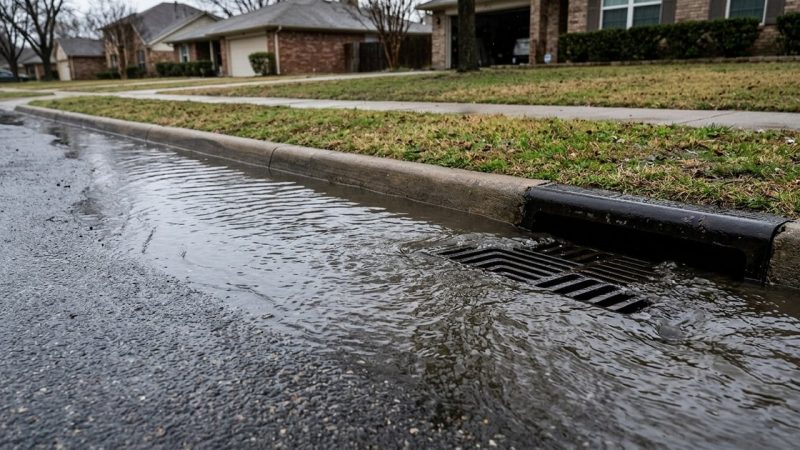
Overwhelmed storm drains. Municipal storm drains and street gutters are sized for typical rainfall, not for a stalled tropical system dropping several inches an hour. When they fill, water backs up into streets and yards, then pools against foundations. Curbside water that has nowhere to go moves toward the nearest low opening, a basement window well, a garage, a doorway.
Saturated soil against the foundation. Once the ground around a house is saturated, it holds water against the foundation walls. That standing water creates hydrostatic pressure, the force of water pushing against concrete and block. Under enough pressure, water finds every crack, joint, and gap, and seeps directly through the foundation into a basement or crawl space.
Basement seepage and intrusion. Basements are the lowest point of a home and the first to flood. Water enters through foundation cracks, through the joint where the wall meets the floor, up through floor drains, and through window wells. A few inches of basement water can destroy flooring, drywall, stored belongings, and any mechanical systems sitting on the floor. Being outside a mapped flood zone is weak protection: FEMA paid 29% of claims to houses beyond the high-risk areas.
Sewer backups. When a storm overwhelms the municipal sewer system, or when heavy rain infiltrates the sanitary sewer, the excess can reverse direction and flow back into homes through floor drains and low fixtures. This is one of the most damaging and hazardous forms of flooding, because it brings contaminated water, sewage, directly into the living space.
Crawl space flooding. Homes on crawl spaces face a slower, quieter threat. Water pools under the house, and even after it drains, the moisture lingers. A wet crawl space raises humidity throughout the home above it and creates the conditions for mold, wood rot, and structural decay. Mold can begin to colonize within 24 to 48 hours of wetting, so a crawl space that floods repeatedly becomes a chronic health and structural problem.
The thresholds that define the danger
Flash flooding runs on numbers, and knowing them turns a vague warning into a clear line for action.
Water depth and movement. Just 6 inches of moving water can knock an adult off their feet. 12 inches can float many cars, and 18 to 24 inches can carry away most vehicles, including SUVs and trucks. This is why the National Weather Service repeats one rule above all others: Turn Around, Don’t Drown. More than half of flood-related deaths involve vehicles driven into floodwater.
Rainfall rate. Flash flood risk climbs sharply when rainfall exceeds roughly 1 to 2 inches per hour, especially on already-saturated ground. A slow tropical storm can sustain those rates for hours.
Base flood elevation (BFE). This is the single most important number for a flood-prone home. The BFE is the height floodwater is expected to reach in a serious flood at your location, set by FEMA flood maps. Every protective decision should start with knowing your property’s BFE.
Freeboard. Building or elevating to the BFE meets the minimum. Building above it adds a safety margin called freeboard. Elevating critical systems 1 to 2 feet above the BFE meaningfully reduces flood damage and, in mapped flood zones, can lower flood insurance costs.
Practical fixes, matched to each pathway
Each exposure pathway has a defense. Together they turn a home from a low point that collects water into a structure that sheds and blocks it. The maps behind those zones rest on federal data, and the climate assessment feeding them has changed hands.
Install a sump pump with battery backup. A sump pump collects water that reaches the lowest point of a basement or crawl space and pumps it away from the house. The battery backup is not optional, flash floods and power outages arrive together, and a pump without power is useless during the exact hour you need it. Test it before storm season, and consider a second backup pump for high-risk homes.
Add a backwater valve. A backwater valve, also called a backflow preventer, installs on the main sewer line and closes automatically when water tries to flow backward into the house. It is the single most effective defense against sewer backups. Have a licensed plumber install one if your home has ever experienced a backup or sits below the street level.
Seal the foundation. Fill and seal foundation cracks, and grade the soil so it slopes away from the house, a drop of at least 6 inches over the first 10 feet directs water away from the foundation. Extend downspouts to discharge at least 4 to 6 feet from the walls, so roof runoff does not pool against the foundation.
Lay a crawl space vapor barrier. A vapor barrier, heavy polyethylene sheeting laid across the crawl space floor and sealed to the walls, blocks ground moisture from rising into the home. In flood-prone areas, pair it with a crawl space sump pump and proper drainage to keep water from pooling and lingering.
Elevate mechanical systems. Raise the furnace, water heater, electrical panel, and HVAC equipment above the base flood elevation, plus 1 to 2 feet of freeboard where possible. Flooded mechanicals are among the costliest failures in a flooded home, and elevating them keeps a house livable after the water recedes.
Manage the yard as a watershed. Add rain gardens, permeable surfaces, and swales that slow and absorb runoff before it reaches the foundation. The more water the landscape holds, the less reaches the house.
Practical steps before the next warning
Find your base flood elevation. Look up your property’s flood zone and BFE before any storm, so every other decision has a baseline.
Test the sump pump and backup. Do it at the start of storm season and again before a forecasted system. A pump that fails during the storm is no protection.
Clear drains and gutters. Clogged gutters, downspouts, and yard drains send water toward the foundation. Clear them before rain arrives.
Never drive into floodwater. Six inches can stall a car; a foot can float it. Turn around.
Watch the rate, not just the total. Rainfall of 1 to 2 inches per hour on saturated ground is the flash flood trigger. Take a flash flood warning as the signal to act, not to wait.
The bigger picture
Tropical Storm Arthur’s winds weakened, but the flash flood threat spread across the Southeast and pushed inland, exactly the pattern that makes tropical systems so dangerous far from the coast. A weakening storm slows down, drops more rain over saturated ground, and overwhelms the drains and streams that move water off the land. The wind was the coastal warning. The water is the inland threat, and it arrives after the storm looks defeated.
For homeowners, the response is source control at the scale of a watershed. Know your base flood elevation. Block the five pathways water uses to get in, the drains, the saturated soil, the basement, the sewer line, and the crawl space. Install a sump pump with battery backup, add a backwater valve, seal and grade the foundation, and lift your mechanicals above the flood. Each fix targets a specific route the water will try to take.
A weaker storm is still a wet one. The homes that stay dry through the next flash flood are the ones prepared before the rain outlasts the wind.
Sources
- NBC News. Tropical Storm Arthur weakens but flash flood threats remain in the Southeast
Questions people ask
Why is a weakening tropical storm still dangerous for flooding?
As a tropical storm weakens, it often slows its forward speed, which means more hours of rain falling on the same ground. Wind fades quickly over land, but rainfall can intensify and spread inland. Flash flooding from tropical systems frequently peaks hours to days after landfall, far from the coast, and inland flooding has killed more people than wind and storm surge in many storms.
Why do flash floods get worse inland instead of near the coast?
Wind is strongest at the coast and fades as the storm moves over land. Rain is different. A slow, weakening storm dumps sustained rainfall over inland areas, saturating the soil. Once the ground is saturated it stops absorbing water, so every additional inch runs off and overwhelms streams and storm drains built for ordinary rainfall.
How deep does floodwater have to be to be dangerous?
Just 6 inches of moving water can knock an adult off their feet. About 12 inches can float many cars, and 18 to 24 inches can carry away most vehicles, including SUVs and trucks. More than half of flood-related deaths involve vehicles driven into floodwater, which is why the National Weather Service urges "Turn Around, Don't Drown."
How does floodwater get into my home?
Through five main pathways: overwhelmed storm drains that back water up against the foundation, saturated soil that pushes water through foundation cracks, basement seepage through cracks and floor drains, sewer backups that reverse into the house, and crawl space flooding that pools under the home and drives up moisture. Each pathway has a specific defense.
What is the most effective way to stop a sewer backup?
A backwater valve, also called a backflow preventer, installed on the main sewer line. It closes automatically when water tries to flow backward into the house during a storm that overwhelms the municipal sewer. Have a licensed plumber install one, especially if your home has ever had a backup or sits below street level.
What is base flood elevation, and why does it matter?
Base flood elevation, or BFE, is the height floodwater is expected to reach at your location in a serious flood, as set by FEMA flood maps. It is the most important number for a flood-prone home because it sets how high to elevate mechanical systems and living space. Building 1 to 2 feet above the BFE, a margin called freeboard, reduces flood damage and can lower flood insurance costs.
Why does a sump pump need a battery backup?
Flash floods and power outages usually arrive together. A sump pump running on household power stops working the moment the electricity fails, which is often the exact hour floodwater is rising. A battery backup keeps the pump running through the outage, and high-risk homes benefit from a second backup pump as well.
How do I protect a crawl space from flood damage?
Lay a heavy polyethylene vapor barrier across the crawl space floor and seal it to the walls to block ground moisture. In flood-prone areas, add a crawl space sump pump and proper drainage so water does not pool and linger. This matters because mold can begin to colonize within 24 to 48 hours of wetting, turning a wet crawl space into a chronic health and structural problem.
Have questions about the environment inside your home?
Air quality, mold, EMF, light and water all shape how a house feels and how the people in it feel. Whatever your concern is, the first step is finding out what is there.
Our certified team of environmental professionals and advocates can help.