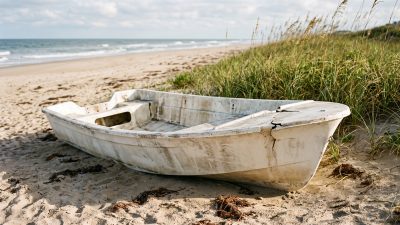
The EPA pulled a 27-foot abandoned boat off a Shinnecock beach
A 1,200-pound navigational buoy came off a second beach in the same operation, after more than five years aground. The…


Roughly 43 million Americans drink from a private well, and no federal agency is required to test any of them.
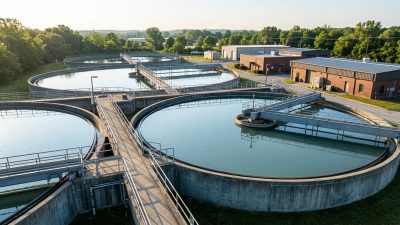
Everyone else gets water from a utility that measures what leaves the treatment plant, not what pours out of a kitchen tap. Those are 2 different questions. One of them is nobody's job.
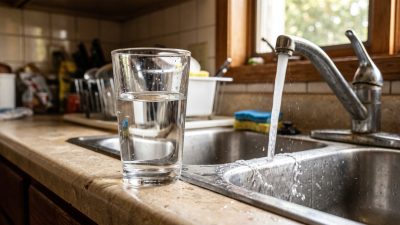
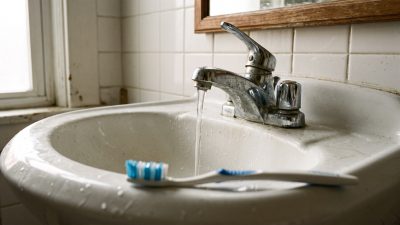
Water is the exposure you take in every day without thinking about it. It carries whatever it picks up from the ground it flows through, the pipes it travels, and the fixtures it passes on the last few feet into your home.
Your water bill names the supplier. No bill and no meter usually means a private well, which no agency supplies or tests for you.
An annual summary every community water system sends its customers by July 1. It lists detected contaminants, the enforceable limits, and where the water comes from. It is free, and most utilities post it online.
Not always. The report describes water in the system, not water at your tap. Lead often enters after the utility's responsibility ends, so one house can have a problem its neighbors do not.
The utility samples through the year and results vary. An average can look fine while individual samples ran high. The range is where a spike shows up.
The owner, or nobody. The EPA and CDC both recommend an annual panel for coliform bacteria, nitrate, pH and total dissolved solids, and neither can require it.
Start with those 4, then add what your surroundings suggest. Nearby farmland points to nitrate and pesticides. An old gas station or landfill points to volatile organic compounds and metals.
No. The USGS treats hardness as a nuisance rather than a health concern. It affects taste and buildup on fixtures, not your safety.
Only once you know what you are filtering. Filters are certified for specific contaminants, so a unit rated for taste and chlorine does nothing about lead or nitrate. Test first, then decide.
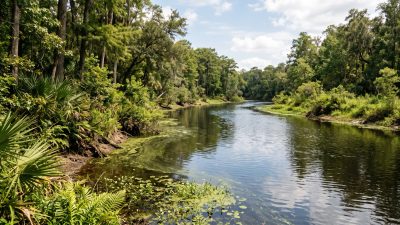
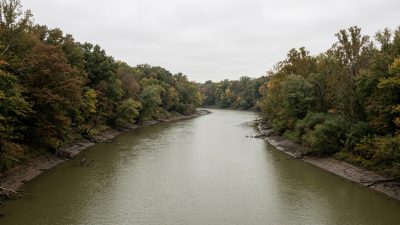
Most tap water starts in rivers, lakes and reservoirs, or in groundwater pulled from underground aquifers. That choice shapes what reaches you before anyone treats a drop. Roughly half of Americans drink surface water and roughly half drink groundwater, and the split runs by region rather than by anything a household chose.
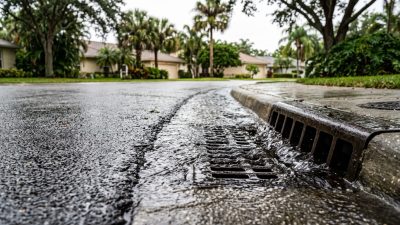
Surface water reflects the land around it. Farm runoff, stormwater and whatever washes off nearby roads all end up in the same rivers that supply millions of homes. Groundwater runs steadier, though it carries naturally occurring metals and whatever seeps down from the surface above it.
Neither source is safer in general. A community drawing from a river and a community drawing from an aquifer simply face different lists of things worth looking for, and that list, rather than any broad judgement about surface versus underground, is what a sensible test should follow.
Clean water leaving a treatment plant does not stay that way automatically. The journey through miles of public mains and then your own plumbing can add things the utility never put in. Water sits in those pipes overnight, and the longer it sits in contact with metal, the more it picks up.
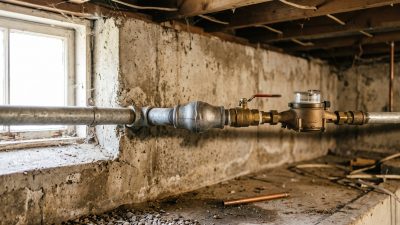
Lead is the clearest example. It rarely comes from the source. It enters from lead service lines, from solder installed before the 1986 federal ban, and from older brass fixtures. All 3 sit on the house side of the water meter. The CDC says there is no known safe level of lead exposure for children, which is why the pipe between the street and your sink matters as much as what flows through it.
This is also why 2 houses on one street can differ. The main under the road is shared. Your service line, your solder and your fixtures are not, which means the answer for your neighbor tells you very little about the answer for you.
Nitrate and PFAS can't be tasted, smelled or seen. The first comes off agricultural runoff, and the EPA sets a limit of 10 milligrams per liter to protect infants from a condition that reduces oxygen in the blood. Nothing warns you at the tap. The number is the only signal there is.
PFAS is the second. This class of industrial chemicals, used for decades in nonstick and waterproof products, breaks down so slowly it earned the name forever chemicals. That word is doing real work: these compounds were built not to break down, which is why they are still in the water decades after the products that carried them.
Both are regulated on the utility's side of the meter, and neither announces itself at the tap. A laboratory panel is the only way to turn either one from a worry into a number.
Start with the report you already have. Community water systems publish an annual Consumer Confidence Report online and by mail. Reading the range of results tells you more than the average alone.
Then find out what your service line is made of. Utilities now publish service line inventories by address, so you can learn whether lead lies in the path to your home. If a test makes sense, use a state certified laboratory. Buy a filter last, once you know what you are treating.
Run the water for 30 seconds to 2 minutes before drinking if a tap has stood unused overnight, which clears whatever sat in contact with the pipe while the house was asleep. It costs nothing. It is the one step that works before you know anything at all.
A 1,200-pound navigational buoy came off a second beach in the same operation, after more than five years aground. The…
Miami-Dade has filed for a marina with 325 slips and dry storage for 500 boats on a stretch of bay…
Federal officials listed the queen conch as threatened in 2024, but the habitat rule that should protect where it lives…
Closing the strait disrupted a third of the world's traded farm nutrients, pushing growers to plant several million fewer acres…
Florida now controls a major effort to move more fresh water south from Lake Okeechobee toward Florida Bay, a shift…
EPA moved its fluoride review forward and will examine two possible effects in children: lower IQ and tooth enamel staining…
More than half of Florida's assessed waters fail state standards, and enforcement actions now run at half their 2010 rate…
Florida researchers found 6PPD-Q in the Hillsborough River, a first for any waterway in the state. The chemical forms when…
When Hurricane Milton closed the Dunedin Causeway, seagrass and native wildlife returned during the months nobody could launch. The shutdown…
The Great Lakes hold a fifth of the world's surface freshwater, and more than 40 million people drink from them…
Researchers say the giant mats now recycle nutrients that help seed the next bloom, making the belt partly self-sustaining. Rotting…
Mote researchers found that some mountainous star coral can resist the disease that has been killing Florida and Caribbean reefs…
9 million old lead service lines are still in use, and water can pick up lead from them even when…
Apalachicola Bay once produced more than 90% of Florida's oysters, but its reef base has collapsed from 2,000 acres to…
A water main breaks somewhere in the United States every 2 minutes, and much of the buried pipe is 50…
A new report argues that emphasizing fluoride took pressure off the food and drink that cause tooth decay in the…
More than $34 million will fund dredging along a one-mile stretch where decades of industrial discharge left PAH contamination in…
The former smelter buried spent potliner, a hazardous waste from aluminum production, and a new cleanup deal will fund a…
The association appeared in 2 childhood cancers and not in the others the study examined, which sharpens what the finding…
Across 10 ecosystems hit by extreme events, dead coral skeletons either sheltered the next generation or helped seaweed take over…
Air quality, mold, EMF, light and water all shape how a house feels and how the people in it feel. Whatever your concern is, the first step is finding out what is there.
Our certified team of environmental professionals and advocates can help.