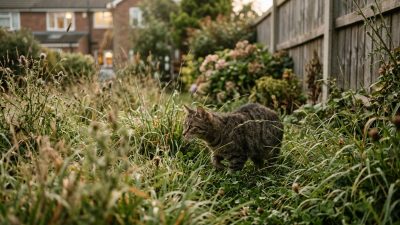
Free-ranging cats are killing species already at risk
Hundreds of the species cats have been documented eating are already listed as threatened or worse on the international Red…


Wildlife lives in the same air, water and soil you do, only closer to the ground and with fewer ways to avoid what is there.
The frog in a pond, the fish in a river and the bird nesting in a backyard tree all take in whatever the local environment carries. None of them can move house.
When something goes wrong in a place, animals feel it first. What happens to them tells you something about the conditions around your own home.
It usually does affect you, just indirectly. Wildlife shares your air, water and food supply, so declines often point to contamination or habitat problems that reach human health through the same pathways.
An animal sensitive enough to its environment that its condition reveals the health of the whole area. Frogs, fish and certain birds are common indicators because they react quickly to pollution and habitat change.
Through biomagnification. A contaminant enters tiny organisms, then concentrates as it moves up the food chain, so predators and large fish end up with far higher doses than the water or soil around them.
Because mercury and other pollutants build up in fish tissue over time. The EPA and FDA advise children and pregnant women to limit high-mercury fish, since the fish wildlife eat are the ones people catch.
The pesticide DDT thinned their eggshells until eggs broke, collapsing the population. Numbers recovered after the 1972 DDT ban, which showed how a single chemical can climb the food web all the way to top predators.
Yes. Sharp drops in pollinators or songbirds often reflect habitat loss, pesticide use or climate shifts. Since about 1 in 3 bites of food depends on pollinators, their decline touches the food supply directly.
Most cannot relocate. Shrinking habitat crowds animals into smaller spaces with less food and shelter, which raises stress and disease and removes the cushion a population needs to survive a hard year.
Plant native flowers for pollinators, skip broad-spectrum pesticides, keep a clean water source in the yard, and watch local fish advisories and bird counts. These steps also protect the environment you share with those animals.
They drink untreated water, breathe outdoor air all day, and eat food straight from the environment. Nothing stands between them and it. A contaminant that would take years to register in a person can show up quickly in a local population, which is why an animal is a faster instrument than a person for the same place.
That sensitivity makes wildlife an early warning system. The clearest example is the bald eagle, whose numbers collapsed in the mid-1900s as the pesticide DDT thinned their eggshells until the eggs broke under the weight of the parents.
The US Fish and Wildlife Service credits the 1972 ban on DDT with the recovery that followed. The eagle became living proof that a chemical moving through the food web reaches the top predators. People are among them.
Pollution rarely stays where it lands. It enters the smallest organisms first, then concentrates at each level above them, a process biologists call biomagnification. Large fish, birds and mammals end up carrying a dose far higher than anything measurable in the water or soil it started in, which is why a lake can test acceptable while the fish pulled out of it do not.
Mercury is the clearest case. It settles into lakes and rivers, changes into a form living tissue absorbs easily, and builds up in fish. The EPA and FDA advise children and pregnant women to limit certain fish for that reason.
The fish carrying that mercury are the ones people catch and eat. That is how a problem in a waterway becomes a problem at the dinner table.
When a habitat shrinks, the animals depending on it don't simply move somewhere better. They crowd into smaller spaces, lose the food and shelter they rely on, and become far more vulnerable to disease and stress than the same population was a decade earlier on twice the ground. A bad year used to be survivable. Now there is nothing left to absorb it with.
Pollinators show what this costs. The US Geological Survey and other researchers have tracked steep declines in native bees and monarch butterflies tied to habitat loss and pesticide use.
Roughly 1 in 3 bites of food you eat depends on a pollinator. That makes this more than an ecological concern: it reaches into the food supply and the price of what fills your grocery cart.
Some species are sensitive enough that scientists watch them as indicators, and amphibians sit near the top of that list. Frogs and salamanders breathe partly through thin, permeable skin, so they absorb pollutants from both water and air. A decline in your local wetland points at a water quality problem worth investigating.
Birds do the same work in open air. Long before modern monitors existed, miners carried canaries underground because the birds reacted to toxic gases before people could sense them. The principle has not changed. Backyard bird counts still work this way, and researchers use shifts in bird populations to flag changes in habitat, pesticide use and climate.
A river polluted enough to kill its fish feeds a watershed that supplies homes. Soil contaminated enough to sicken ground-feeding birds is soil where your children play and your garden grows. Fewer frogs, disappearing pollinators or a fish advisory on your local lake are all worth attention, because your household and the animals around it draw on one place.
Hundreds of the species cats have been documented eating are already listed as threatened or worse on the international Red…
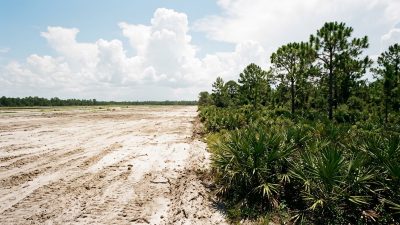
The Interior Department removed habitat destruction from the Endangered Species Act's definition of harm in July 2026, reversing what courts…
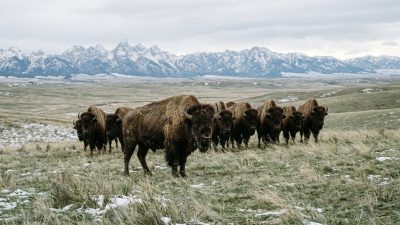
Nearly 90% of the 400,000 bison alive today are legally classified as livestock rather than wildlife. That single label shapes…
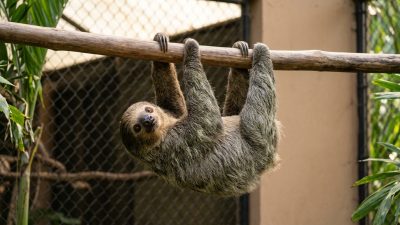
Florida's wildlife agency got a tip before a single sloth arrived, then kept returning and finding no violations while animals…
Air quality, mold, EMF, light and water all shape how a house feels and how the people in it feel. Whatever your concern is, the first step is finding out what is there.
Our certified team of environmental professionals and advocates can help.