


One major hurricane can still hit in a below-average season
Forecasts can call for a quiet Atlantic year and still miss the storm that reaches your address. Hurricane Andrew remains one of the costliest examples.
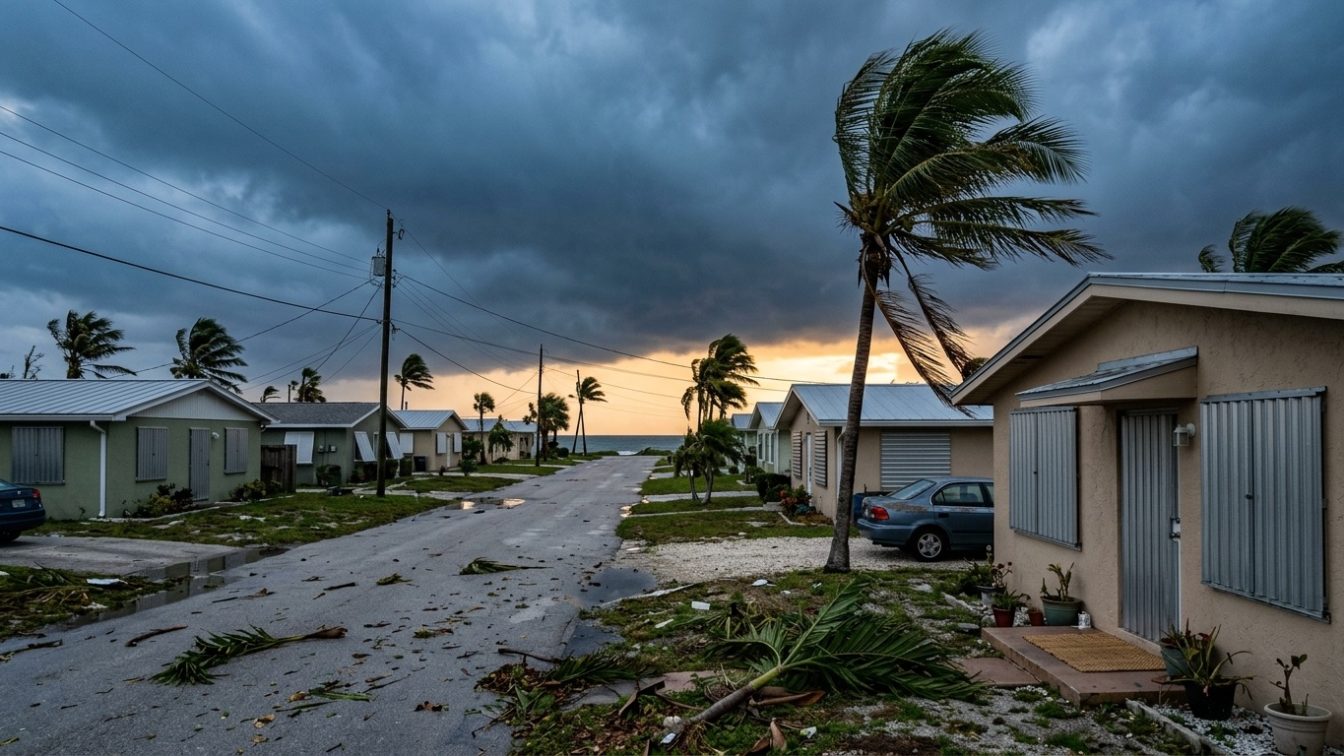
Table of contents
Summary of this article
- Forecasters issued the first below-average Atlantic hurricane season forecast in a decade, driven largely by El Niño conditions that increase wind shear and tend to suppress storm development.
- A below-average season still produces landfalls. Hurricane Andrew struck Florida in 1992 during a below-average year and became one of the costliest hurricanes in U.S. history.
- Seasonal forecasts predict the number of storms, not where they land. A quiet season offers no protection to any individual home in a storm's path.
- Wind damage follows failure pathways. Once wind breaches an opening such as a garage door or window, internal pressure can push the roof off from the inside.
- Envelope hardening is measurable and most affordable during a calm year. Impact-rated openings, roof-deck sealing, ring-shank nails, and hurricane clips all carry verifiable engineering ratings.
Forecasters issued the first below-average Atlantic hurricane season forecast in a decade, NBC News reported. The prediction, driven largely by developing El Niño conditions, points to fewer named storms than the recent norm. That is welcome news for a coastline exhausted by active years.
It is also a trap.
A seasonal forecast counts storms across an entire ocean basin. It cannot tell you which house a single storm will strike. The distinction matters because your building envelope, the roof, walls, windows, and doors that separate inside from outside, does not respond to a seasonal average. It responds to the one storm that reaches it. And the historical record is blunt on this point: some of the most destructive hurricanes in U.S. history arrived during quiet seasons.
Hurricane Andrew is the clearest example. It struck South Florida in August 1992 during a below-average season and became one of the costliest hurricanes the country had recorded. The season produced few storms. One of them leveled neighborhoods. The lesson has held for three decades: a low storm count is not a low personal risk.
This is why a calm forecast is not a reason to stand down. It is the cheapest, least stressful window you will get to harden your home before the next landfall, whenever it comes.
Why El Niño Lowers the Count, Not Your Risk
El Niño is a climate pattern marked by warmer-than-average water in the central and eastern Pacific. Its effect on Atlantic hurricanes is indirect but well documented.
El Niño increases wind shear over the Atlantic. Wind shear is the change in wind speed and direction at different altitudes, and it disrupts the vertical structure a hurricane needs to organize and intensify. The National Oceanic and Atmospheric Administration has long identified this shear as a primary reason El Niño years tend to produce fewer and weaker Atlantic storms.
Fewer storms means a lower basin-wide total. It does not mean weaker storms where they land. Shear suppresses formation across the ocean, but a storm that survives the shear and reaches your coastline still carries the full destructive load of its category. The forecast reduces the number of shots fired. It does not reduce the damage of the one that hits.
Seasonal Forecasts Answer the Wrong Question for a Homeowner
A seasonal forecast is a basin-scale probability. It predicts how many named storms, hurricanes, and major hurricanes the Atlantic will produce over roughly six months. It is a useful planning tool for emergency managers and insurers who think in aggregates.
It answers the wrong question for you.
The question that governs your home is not “How many storms will form?” It is “Will my envelope survive the wind that reaches my address?” Those are different problems. The seasonal forecast tells you about the first. Only your building’s construction tells you about the second. A home in the path of a Category 3 storm faces the same wind loads whether that storm formed in a busy year or a quiet one.
How Wind Actually Destroys a House
Wind does not crush a house evenly. It probes for the weakest point and exploits it. Building scientists call this the failure pathway, and understanding it turns hurricane prep from guesswork into targeted engineering.
The sequence usually begins at an opening. A garage door is the largest and often weakest opening in a home, and an unbraced door is frequently the first component to fail. When it buckles, wind rushes into the structure.
That is the moment the danger multiplies. Once wind enters the building, it pressurizes the interior. The Federal Alliance for Safe Homes and the Insurance Institute for Business & Home Safety both describe the result the same way: internal pressure pushes up on the roof and out on the walls at the same time the wind outside is pulling the roof up. The roof is now loaded from both sides. This combined load is how storms lift entire roofs off homes that appeared solid.
A broken window does the same thing. So does a failed door. The envelope is a pressure boundary, and a single breach converts an external wind problem into an internal one.
The Exposure Pathways to Seal
Building biology treats the envelope the way it treats any hazard: identify every pathway, then control each one at the source. For wind, there are four.
Openings, windows, doors, and garage doors. These are the primary breach points. An unrated window or an unbraced garage door is the equivalent of leaving the front line undefended. What your own roof was built to withstand is already on file at the building department.
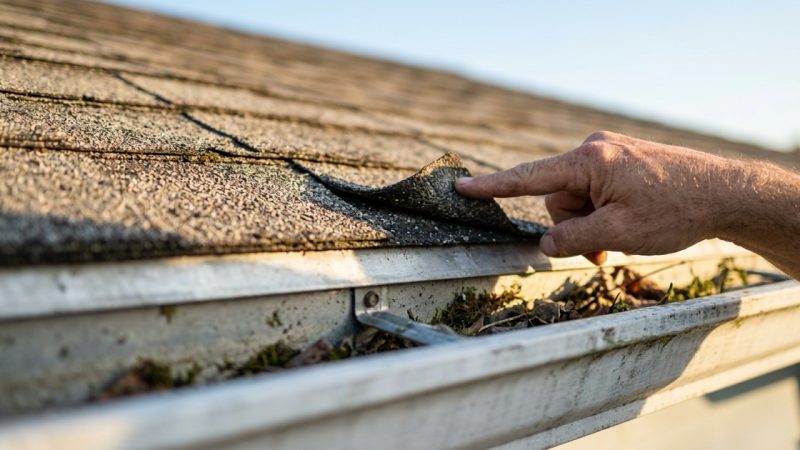
The roof deck and covering. Wind uplift attacks the roof directly. If the covering peels or the deck lifts, wind and water enter from above.
The roof-to-wall connection. This is where the roof meets the walls. A weak connection is where wind uplift separates the roof from the structure.
The attachment hardware itself. Nails, clips, and straps hold the whole system together. Undersized or improperly installed fasteners fail before the materials they hold.
Each pathway has a measurable, verifiable fix.
Practical Fixes With Ratings You Can Verify
The strength of envelope hardening is that it is not a matter of opinion. Every component carries an engineering rating you can check.
Protect the openings first. Install impact-rated windows and doors, or fit code-approved shutters. Impact-rated products are tested to withstand a “large missile” impact, typically a nine-pound two-by-four fired at roughly 34 miles per hour, followed by thousands of pressure cycles simulating sustained wind. Look for products meeting ASTM E1996 and E1886 standards.
Brace or replace the garage door. A wind-rated garage door, or an add-on bracing kit installed to the manufacturer’s specification, prevents the largest opening from becoming the first failure. This is often the single highest-value fix per dollar.
Seal the roof deck. A sealed roof deck creates a secondary water barrier beneath the shingles. IBHS research through its FORTIFIED program shows that taping the seams of the roof deck and using a sealed underlayment dramatically reduces water intrusion when the covering is lost. Water damage, not wind alone, drives much of a storm’s repair cost.
Upgrade to ring-shank nails. IBHS testing found that re-nailing a roof deck with 8d ring-shank nails significantly increases uplift resistance compared with the smooth-shank nails common in older construction. This is a low-cost upgrade during any re-roofing job.
Strengthen the roof-to-wall connection. Hurricane clips and metal straps tie the roof structure to the walls. They convert a roof that merely rests on the walls into one mechanically fastened to resist uplift.
Measurable Thresholds That Guide the Work
Hardening decisions should track to numbers, not to nerves.
The Saffir-Simpson scale defines the wind loads your envelope must resist. A Category 1 hurricane brings sustained winds of 74 to 95 mph. A Category 3, the threshold for a “major” hurricane, brings 111 to 129 mph. A Category 5 exceeds 157 mph. Your local building code specifies a design wind speed for your area, and that number tells a contractor exactly what your components must be rated to withstand.
Two design targets are worth knowing. In high-velocity hurricane zones such as Miami-Dade and Broward counties in Florida, products must meet the toughest impact and pressure standards in the country. The IBHS FORTIFIED standard offers a nationally recognized benchmark, FORTIFIED Roof, Silver, and Gold, that many insurers reward with premium discounts. Asking a contractor to build to FORTIFIED gives you a verifiable target rather than a vague promise of “storm-ready.”
Why a Quiet Season Is the Right Time to Act
The economics favor acting now. Contractor demand and material prices spike in the days before a forecast landfall and stay elevated through an active season. A calm year is when crews are available, prices are stable, and you are not competing with an entire coastline for plywood and impact windows.
The physics favor acting now too. Envelope hardening is permanent. A sealed roof deck installed this year protects you through every season that follows, active or quiet. You are not buying protection for one forecast. You are buying it for the working life of the building.
The below-average forecast NBC News reported is real, and it is good news for the basin as a whole. But it is a statement about storm counts, not about your address. Andrew formed in a quiet year and rewrote Florida’s building code. The forecast tells you how many storms the Atlantic may produce. Your envelope decides what happens when one of them finds your home. Harden it while the skies are clear.
Sources
- NBC News. Hurricane season begins, with the first below-average forecast in a decade
- National Oceanic and Atmospheric Administration (NOAA), El Niño influence on Atlantic hurricane activity and wind shear; Saffir-Simpson Hurricane Wind Scale
- Insurance Institute for Business & Home Safety (IBHS), FORTIFIED standard, roof-deck sealing, ring-shank nail testing, and internal pressurization research
- Federal Alliance for Safe Homes (FLASH), garage door and opening protection guidance
- ASTM International, E1886 and E1996 impact and cyclic pressure testing standards for windows and shutters
Questions people ask
If the season is below average, do I really need to prepare my home?
Yes. A seasonal forecast predicts the number of storms across the entire Atlantic basin, not where any storm will land. Hurricane Andrew struck Florida in 1992 during a below-average season and became one of the costliest U.S. hurricanes. A quiet year still produces landfalls, and a single landfall still delivers full-category wind loads to any home in its path.
Why does El Niño reduce the number of hurricanes?
El Niño increases wind shear over the Atlantic, the change in wind speed and direction at different altitudes. According to NOAA, that shear disrupts the vertical structure a hurricane needs to organize and intensify, so El Niño years tend to produce fewer and weaker Atlantic storms. It suppresses storm formation basin-wide but does not weaken a storm that reaches your coast.
What is the single most important part of my home to harden?
The openings, starting with the garage door. The garage door is usually the largest and weakest opening, and when it fails, wind enters and pressurizes the interior. That internal pressure pushes up on the roof while wind outside pulls it up, a combined load that lifts entire roofs. Bracing or replacing the garage door is often the highest-value fix per dollar.
How does wind actually pull a roof off a house?
It rarely does so from the outside alone. Wind first breaches an opening, a garage door, window, or door, and rushes inside. That internal pressure pushes the roof up from within at the same moment external wind pulls it up from above. The Insurance Institute for Business & Home Safety describes this combined loading as a primary cause of roof loss.
What ratings should I look for when buying storm protection?
For windows, doors, and shutters, look for impact-rated products meeting ASTM E1996 and E1886, which test resistance to a large missile impact and repeated pressure cycles. For whole-home hardening, the IBHS FORTIFIED standard (Roof, Silver, Gold) offers a nationally recognized benchmark, and many insurers offer premium discounts for it.
Is it worth hardening my home during a quiet season?
It is the ideal time. Contractor availability is higher and material prices are more stable when no landfall is imminent. Envelope upgrades are permanent, a sealed roof deck or impact windows protect you through every future season, active or quiet, so you are investing in the working life of the building, not a single forecast.
Have questions about the environment inside your home?
Air quality, mold, EMF, light and water all shape how a house feels and how the people in it feel. Whatever your concern is, the first step is finding out what is there.
Our certified team of environmental professionals and advocates can help.