


An aluminum smelter buried toxic waste, and now a $57 million wall must hold it
The former smelter buried spent potliner, a hazardous waste from aluminum production, and a new cleanup deal will fund a barrier to keep contamination contained. The site operated near Columbia Falls from 1955 to 2009.
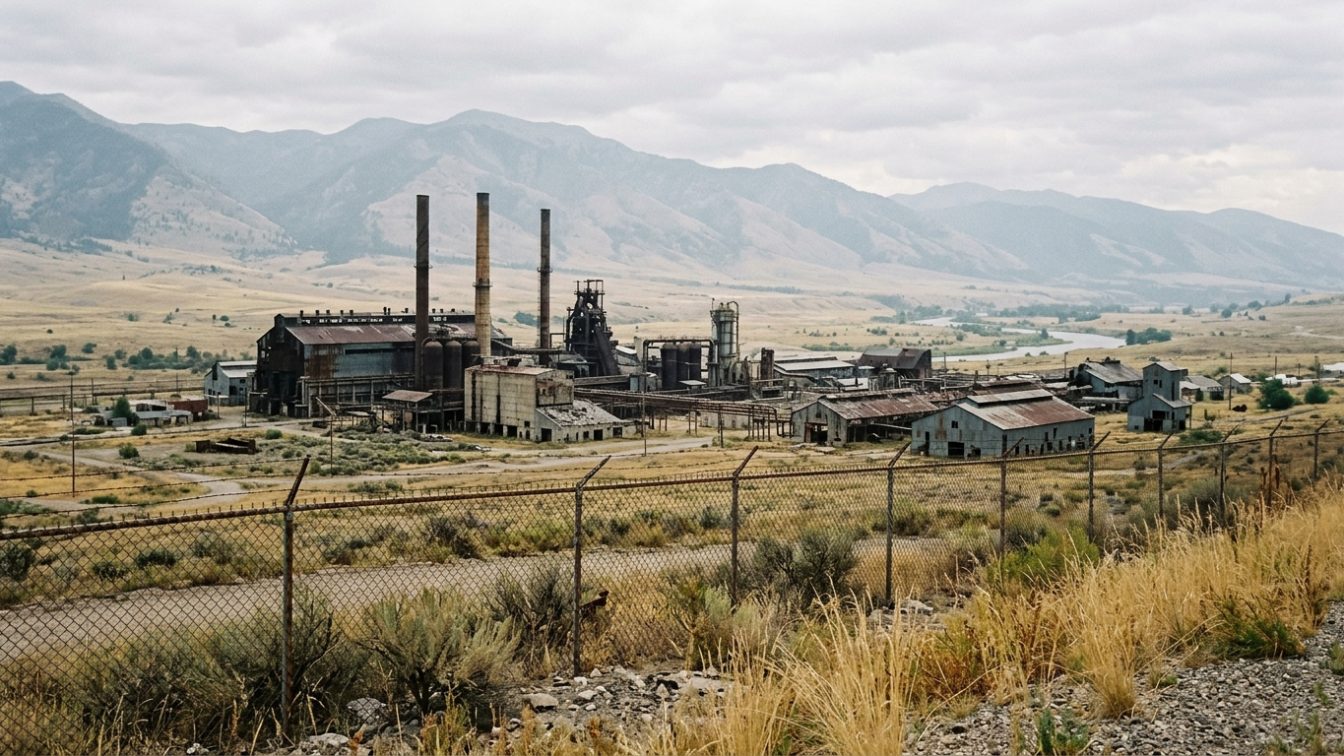
Table of contents
Summary of this article
- The U.S. Environmental Protection Agency (EPA) announced on July 7, 2026, that Columbia Falls Aluminum Company (CFAC) agreed to a $57 million cleanup of the Anaconda Aluminum Co. Columbia Falls Reduction Plant Superfund site near Columbia Falls, Montana.
- The site operated as an aluminum smelter from 1955 to 2009.
- Spent potliner material, the used lining of aluminum reduction cells, was stored in unlined landfills near the former smelter building.
- Over time, arsenic, cyanide, and fluoride leached out of the potliner into the groundwater; other areas were contaminated with polycyclic aromatic hydrocarbons (PAHs) from the reduction process.
- The cleanup uses containment: low-permeability caps on the landfills and a slurry wall built to fully encircle the main source of groundwater contamination.
- The slurry wall is designed to stop contaminants from migrating toward the Flathead River and to bring riverbank seeps into ecological compliance.
- The EPA and the Montana Department of Environmental Quality (DEQ) selected the cleanup in a Record of Decision signed in January 2025 and will oversee its design and implementation.
- Measurable thresholds anchor the risk: the EPA's arsenic drinking-water limit is 10 parts per billion, its residential soil screening level for arsenic is 0.4 milligrams per kilogram, and its cyanide drinking-water limit is 0.2 milligrams per liter.
The U.S. Environmental Protection Agency (EPA) announced on July 7, 2026, that Columbia Falls Aluminum Company (CFAC) agreed to a $57 million cleanup of a former smelter site near Columbia Falls, Montana. The company will pay past response costs and carry out the work under EPA and Montana Department of Environmental Quality (DEQ) oversight.
The site is the Anaconda Aluminum Co. Columbia Falls Reduction Plant, and it ran for 54 years, from 1955 to 2009. The contamination it left is specific and measurable: arsenic, cyanide, and fluoride in the groundwater, plus polycyclic aromatic hydrocarbons in the soil.
For anyone who draws water from a well near a former smelter, gardens in the soil, or lives along the Flathead River, the CFAC agreement matters for one reason. This is not a cleanup that digs up the poison and hauls it away. It is a cleanup that wraps the source in an underground wall and holds it in place. Understanding why containment was chosen, and what it does and does not protect, is the difference between assuming the problem is gone and confirming it at your own tap.
Where the Contamination Came From
The source has a name most people have never heard: spent potliner.
Aluminum smelting runs on huge electrolytic cells called reduction pots, each lined with carbon and refractory material. Over time, that lining absorbs the chemistry of the process and wears out. When it is removed, it becomes spent potliner, a hazardous waste loaded with the byproducts of aluminum reduction.
CFAC stored significant amounts of that spent potliner in unlined landfills near the former smelter building, according to the EPA. The word “unlined” is the entire problem. A lined landfill sits on an engineered barrier that stops waste from leaching into the ground. An unlined one does not. Rain and snowmelt percolate through the waste, dissolve its contaminants, and carry them straight into the soil and groundwater below.
Three contaminants leached out of the potliner into the groundwater: arsenic, cyanide, and fluoride. Other areas of the site were contaminated with PAHs from the aluminum reduction process. The EPA and DEQ selected the cleanup in a Record of Decision signed in January 2025.
Why This Fix Is a Wall, Not a Dig
Earlier cleanups in this series excavated contaminated soil and trucked it off-site. The CFAC plan does something different, and the difference is the point.
The cleanup uses containment. CFAC will place low-permeability caps on the landfills and build a slurry wall to fully encompass the main source of groundwater contaminants, the EPA said. Two structures, two jobs.
A low-permeability cap is a sealed cover placed over a landfill. It keeps rain and snowmelt from soaking into the buried waste, which cuts off the water that would otherwise leach contaminants downward. Stop the water from entering, and you slow the leaching at its start.
A slurry wall is an underground barrier, a trench filled with a low-permeability mixture, sunk into the ground to encircle the contamination. It works like a cup buried around the waste, blocking groundwater from carrying contaminants outward. The EPA says this wall will prevent further contamination of the groundwater, stop the migration of contaminants toward the Flathead River, and bring seeps along the river into ecological compliance.
The reasoning is scale. The main source is a mass of buried potliner too large to excavate practically. Isolating it, sealing the top, walling the sides, contains the plume where digging cannot.
The Three Contaminants and Their Thresholds
Containment is judged against numbers. Each of the three groundwater contaminants carries a measurable limit that tells a household when a well result is a problem.
| Contaminant | Health concern | Federal limit |
|---|---|---|
| Arsenic | A known human carcinogen linked to skin, bladder, and lung cancers with long-term exposure. | The EPA’s drinking-water limit, the maximum contaminant level, or MCL, is 10 parts per billion (ppb). For soil, the EPA’s residential screening level is 0.4 milligrams per kilogram (mg/kg). A well above 10 ppb or a yard above 0.4 mg/kg is a signal to act. |
| Cyanide | Toxic to the nervous system and heart at sufficient doses. | The EPA’s drinking-water limit for cyanide is 0.2 milligrams per liter (mg/L), equal to 200 ppb. Cyanide is more mobile in water than the metals, which is part of why a barrier that stops groundwater movement is central to the fix. |
| Fluoride | Beneficial at low levels but harmful in excess. | The EPA’s enforceable drinking-water limit is 4.0 mg/L; above that, long-term exposure can cause skeletal fluorosis, a bone disease. A secondary standard of 2.0 mg/L guards against dental effects in children. |
These three numbers, 10 ppb arsenic, 0.2 mg/L cyanide, 4.0 mg/L fluoride, turn an invisible plume into something a lab report can measure.
The Three Pathways From the Plume to Your Body
In building biology, exposure follows a pathway, a source, a route, and a person at the end of it. A groundwater plume near a smelter reaches people through three routes.
1. Drinking Water
This is the primary pathway for a groundwater problem. Contaminants dissolved in groundwater travel toward wells, and a household drinking, cooking with, and mixing baby formula from that water takes them in with every use. A private well near the site is the highest-priority thing to test, because no one tests it for you.
2. Soil Ingestion
Where contaminated groundwater rises near the surface or where waste sits shallow, soil becomes a route. Children are the highest-risk group: they play on the ground and put hands to mouths, transferring soil, and its arsenic, into the body. Contaminated dust tracked indoors adds to the dose, settling on floors and toys.
3. Skin Contact
Gardening, yard work, and contact with contaminated soil or river seeps put skin against the contaminants. Skin contact is a lower-dose route than drinking or swallowing, but it moves soil onto hands and clothing that later reach the mouth and the home.
Each pathway delivers a share of the total dose. Cutting any one of them lowers overall exposure.
What the Cleanup Protects, and What It Does Not
The slurry wall and caps protect the groundwater and the Flathead River by holding the source in place. “This slurry wall will prevent further contamination of the groundwater, stop the migration of contaminants toward the Flathead River, and bring seeps along the Flathead River into ecological compliance,” the EPA said.
That is community-scale source control. But containment differs from removal in a way that matters at home: the waste stays on-site. A wall works only as long as it holds, which is why the plan runs under long-term EPA and DEQ oversight, with the design and implementation stage, the remedial design/remedial action, following court approval of the consent decree.
For a household, that means the regional fix reduces the odds of exposure but does not replace testing your own water. The wall protects the aquifer at large. Your specific well, your specific soil, and your specific tap are measured one address at a time.
Practical Steps You Can Take
You cannot build a slurry wall from your home. You can find out whether the three contaminants have reached your water and soil, and put barriers between them and your family.
- Test your private well against the limits
- Private wells fall outside federal drinking-water rules, so the testing is your responsibility. Have a certified lab measure arsenic (limit 10 ppb), cyanide (0.2 mg/L), and fluoride (4.0 mg/L). Near a Superfund site, retest periodically, plumes shift.
- Filter with reverse osmosis
- For arsenic and fluoride in water, a reverse osmosis system certified to NSF/ANSI Standard 58 is the most reliable household reduction. Confirm the certification lists arsenic and fluoride specifically. A standard carbon pitcher is not enough for these.
- Test your soil against 0.4 mg/kg for arsenic
- If your yard sits near the site, have a certified lab test soil where children play and where you grow food, and compare to the residential screening level.
- Wash hands before eating
- Handwashing before every meal and snack, and after outdoor play, breaks the soil-ingestion pathway at the point where soil would reach the mouth. It is the single most effective habit for protecting children.
- Adopt a shoes-off policy
- Removing shoes at the door keeps contaminated soil from becoming indoor dust that settles where children play.
- Cover bare soil
- Grass, clean mulch, or ground cover blocks direct skin contact and keeps soil from becoming airborne dust.
- Stay clear of river seeps
- Until the cleanup brings the Flathead River seeps into compliance, keep children and pets away from seep areas, and wash skin after any contact.
- Garden in raised beds
- If you grow food near the site, use raised beds with clean, tested soil and a barrier at the bottom, and wash all produce thoroughly.
- Do not rely on boiling
- Boiling does not remove arsenic, cyanide, or fluoride, and by evaporating water it can slightly concentrate them. Filtration, not heat, is the tool.
- Comment on the consent decree
- The proposed consent decree, filed with the U.S. District Court for the District of Montana, carries a 30-day comment period, a direct point of community input.
Why This Matters Now
The CFAC agreement puts a price and a method on a problem 17 years in the making since the smelter closed. Fifty-four years of aluminum production left spent potliner in unlined pits, and three contaminants, arsenic, cyanide, and fluoride, have been leaching from that waste into the groundwater ever since.
The chosen fix is telling. Rather than dig out a mass of waste too large to excavate, CFAC will seal it under caps and encircle it with a slurry wall, holding the source where it lies. “This consent decree represents a significant milestone on the path to successful cleanup and redevelopment,” EPA Region 8 Regional Administrator Cyrus Western said. Montana DEQ Director Sonja Nowakowski said the work will “protect the Flathead River and Columbia Falls.”
For the household nearby, the response is the one source control always demands: find out whether the contamination has reached you, and cut the pathways if it has. Test the well against 10 ppb arsenic, 0.2 mg/L cyanide, and 4.0 mg/L fluoride; test the soil against 0.4 mg/kg; filter with reverse osmosis; and keep contaminated soil off small hands and out of the house. The wall will contain the source. Whether its contaminants reach your body is a matter of pathways you can measure and control.
Sources
- U.S. Environmental Protection Agency (EPA). Columbia Falls Aluminum Corporation, LLC Agrees to $57 million cleanup of former smelter site in Montana (2026) (July 7, 2026):
- U.S. Environmental Protection Agency (EPA), Anaconda Aluminum Co. Columbia Falls Reduction Plant (CFAC) Superfund site profile:
- U.S. Department of Justice, Proposed Consent Decrees:
- U.S. Environmental Protection Agency (EPA), Arsenic in Drinking Water and the 10 ppb standard
- U.S. Environmental Protection Agency (EPA), National Primary Drinking Water Regulations (cyanide and fluoride limits):
- U.S. Environmental Protection Agency (EPA), Regional Screening Levels (RSLs) for arsenic:
- U.S. Agency for Toxic Substances and Disease Registry (ATSDR), Toxicological Profile for Cyanide:
- Montana Department of Environmental Quality (DEQ), State Superfund and Federal Superfund Program:
- NSF International, Drinking Water Treatment Units certification:
Questions people ask
What did the EPA announce about the Columbia Falls smelter site?
On July 7, 2026, the EPA announced that Columbia Falls Aluminum Company (CFAC) agreed to a $57 million cleanup of the Anaconda Aluminum Co. Columbia Falls Reduction Plant Superfund site near Columbia Falls, Montana. CFAC will pay past response costs and carry out the cleanup under EPA and Montana DEQ oversight.
Where did the contamination come from?
The site operated as an aluminum smelter from 1955 to 2009. Spent potliner, the used lining of aluminum reduction cells, was stored in unlined landfills near the former smelter. Over time, arsenic, cyanide, and fluoride leached from that waste into the groundwater, and PAHs contaminated other areas from the reduction process.
What is spent potliner?
Spent potliner is the worn-out carbon and refractory lining removed from aluminum reduction cells. It is a hazardous waste that holds byproducts of the smelting process. When stored in unlined landfills, rain and snowmelt percolate through it and carry its contaminants into soil and groundwater.
What does the cleanup actually do?
It uses containment. CFAC will place low-permeability caps over the landfills to keep rain from soaking into the waste, and build a slurry wall, an underground barrier, to fully encircle the main source. The wall is designed to stop contaminants from migrating toward the Flathead River and bring riverbank seeps into ecological compliance.
Why contain the waste instead of digging it out?
The main source is a mass of buried potliner too large to excavate practically. Sealing the top with caps and walling the sides with a slurry wall isolates the contamination where digging cannot, preventing further groundwater contamination and stopping migration toward the river.
What are the safe limits for these contaminants?
The EPA's drinking-water limit for arsenic is 10 parts per billion, and its residential soil screening level for arsenic is 0.4 milligrams per kilogram. The drinking-water limit for cyanide is 0.2 milligrams per liter, and the enforceable limit for fluoride is 4.0 milligrams per liter. Results above these values signal the need for action.
How do these contaminants reach people?
Through three pathways: drinking water drawn from contaminated groundwater (the primary route), ingestion of contaminated soil and dust (highest-risk for children), and skin contact during gardening, yard work, or contact with river seeps. Cutting any pathway lowers overall exposure.
What can I do to protect my household?
Test a private well against the arsenic, cyanide, and fluoride limits and soil against the 0.4 mg/kg arsenic level, filter drinking water with an NSF/ANSI 58 reverse osmosis system certified for arsenic and fluoride, wash hands before eating, remove shoes at the door, cover bare soil, avoid river seeps, and garden in raised beds with clean soil. Boiling does not remove these contaminants.
Have questions about the environment inside your home?
Air quality, mold, EMF, light and water all shape how a house feels and how the people in it feel. Whatever your concern is, the first step is finding out what is there.
Our certified team of environmental professionals and advocates can help.