


Bright bedrooms were linked to 56% more heart failure in a 9.5-year study
In a long-running cohort, people sleeping in the brightest rooms faced a 56% higher heart failure risk. Four cardiology groups now name artificial light at night alongside air pollution as a heart risk.
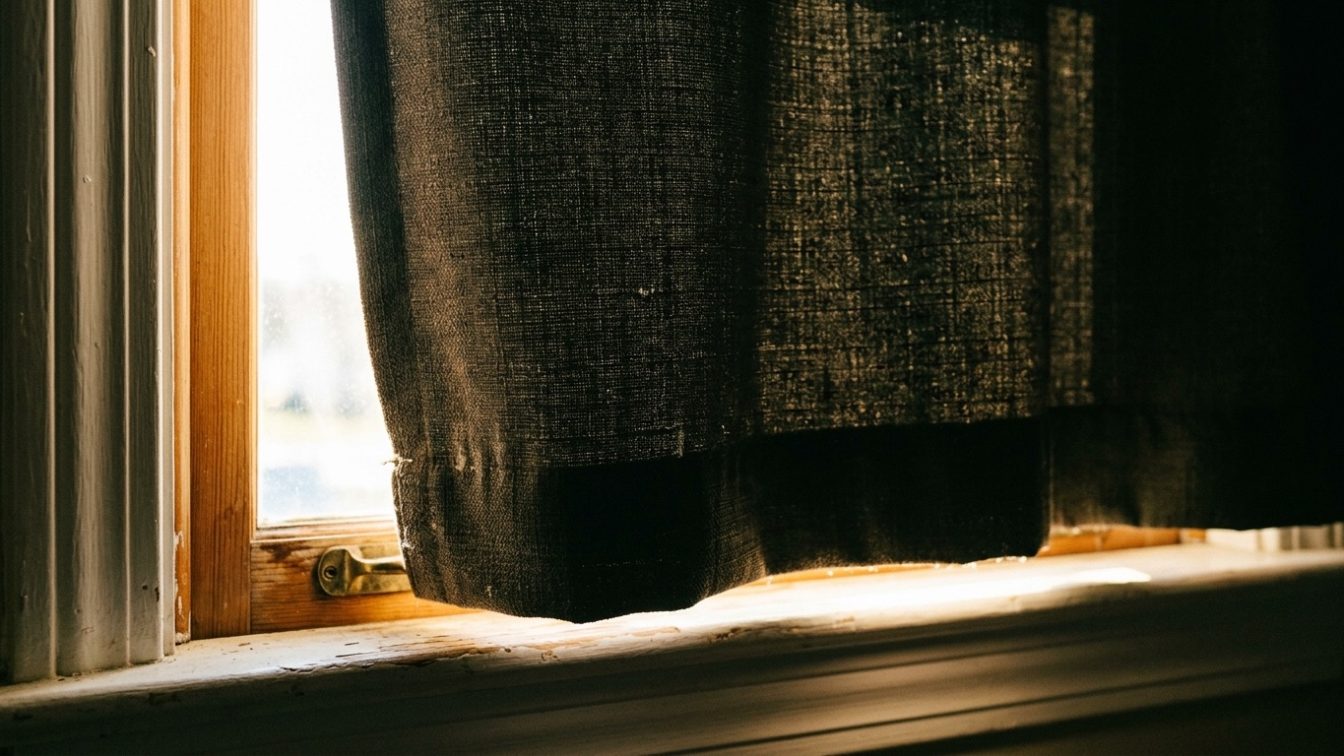
Table of contents
Summary of this article
- The American Heart Association, American College of Cardiology, European Society of Cardiology and World Heart Federation named artificial light at night alongside air pollution in one 2026 statement.
- A JAMA Network Open cohort put light sensors on 88,905 wrists for a week each and followed hospital records for 9.5 years.
- Brightest tenth against the darker half: heart failure 1.56, heart attack 1.47, coronary artery disease 1.32, atrial fibrillation 1.32, stroke 1.28. No interval touches 1.
- Sleep duration, smoking, diet, income and genetic risk were all adjusted for, and the association survived.
- No federal standard sets how dark a bedroom has to be, and no agency is writing one.
- Everybody in the cohort was over 40, averaging 62. Nothing here describes a child's bedroom.
Four cardiology societies signed one document in 2026: the American Heart Association, the American College of Cardiology, the European Society of Cardiology and the World Heart Federation.
Somewhere in it, sitting between air pollution and plastics, is a phrase nobody expected to find on a heart risk list, and it is not smoking, salt, cholesterol or any of the other things a cardiologist has ever raised with a patient. Artificial light at night.
What did four heart societies actually say?
They named six things at once, in a single sentence, with no ranking between them: air pollution, noise, artificial light at night, plastic pollution, chemical pollution, and the effects of a changing climate.
Thomas Münzel led six authors. Their statement is titled Environmental Stressors and Cardiovascular Health. Not a pamphlet. A position.
Non-communicable disease accounts for 70 percent of deaths worldwide, they write, which runs past 38 million people a year. Heart disease is most of it. That is the scale they are arguing about.
Environmental Health News covered the statement on 23 July 2026 and quoted Münzel directly. A unified voice was needed, he said, to state clearly that the science is settled, and that continued inaction reflects political and structural inertia rather than scientific uncertainty.
Now read that list of six again and notice where two of them live. Noise and light are not weather. Not industry either. They are a window, a street, a charger and a clock radio.
Two exposures on a global heart risk list are sitting in your bedroom tonight.
How much light are we talking about?
Enough to sort 88,905 people by it, then wait nearly a decade to see who fell ill. Which somebody did.
That work is separate from the statement. Windred and colleagues published it in JAMA Network Open in October 2025. It is the reason one line about light, inside a society document, is worth a second look.
Everybody in it wore a light sensor on one wrist for a week, going about ordinary life, which came to roughly 13 million hours of readings. Hospital and death records were then followed from June 2013 to November 2022. Call it 9.5 years.
People whose nights sat in the brightest tenth were compared against everybody in the darker half. Here is what came back.
| What developed | Hazard ratio | 95% interval |
|---|---|---|
| Heart failure | 1.56 | 1.34 to 1.81 |
| Heart attack | 1.47 | 1.26 to 1.71 |
| Coronary artery disease | 1.32 | 1.18 to 1.46 |
| Atrial fibrillation | 1.32 | 1.18 to 1.46 |
| Stroke | 1.28 | 1.06 to 1.55 |
Five outcomes. Five intervals, and not one of them touches 1. Heart failure ran 56 percent higher.
Nobody was asked how dark their room felt. A sensor on their arm recorded it.
Why does a wrist sensor matter so much?
Because nearly every other study of this question measured something else entirely, and the difference between the two decides whether any of this is about you or about the town you happen to live in.
Light at night usually gets studied from orbit. A satellite photographs a city after dark. Researchers read brightness off that image. Everybody living underneath it then inherits one number, whatever their own window is doing.
Two neighbours on one street score identically that way. One of them sleeps in a back room behind lined curtains; the other sleeps facing a parking lot, on blinds that never quite meet in the middle. Same score. Wildly different nights.
Only a sensor worn against skin tells those two apart. Whatever reached that arm across seven ordinary nights is what got counted, curtains and all.
So this is the rare version of a finding that is genuinely about your room rather than your postcode, which is also, conveniently, exactly what makes it something you can go and change on a Sunday afternoon for the price of a curtain. Nobody needs permission.
Satellites measure a neighborhood. This measured a bed.
Was it just people sleeping badly?
No. Windred’s team went at that one head-on, because everybody raises it first, and they raise it fast.
Sleep duration sits in the adjustment list. So do physical activity, smoking, alcohol, diet, socioeconomic status, and polygenic risk, which is the genetic loading somebody was born with and cannot do anything about.
Take all of that out and an association was still there. Cause is a different word, and nobody has earned it yet. What it does mean is simpler. Easy explanations were tested, and none of them accounted for what turned up.
Two groups showed a stronger effect, and both are worth knowing about: women had larger associations for heart failure and coronary artery disease, while younger people in this cohort had larger ones for heart failure and atrial fibrillation.
One boundary before anybody runs with this. Everybody in the cohort was over 40, averaging 62 years old. Nothing here says a word about a child’s bedroom. Its authors do not pretend otherwise.
The obvious alternative explanations were adjusted for, and an association survived all of them. Light is not the only thing that keeps a bedroom from recovering overnight. The heat no longer breaks after dark.
What rule covers light in a bedroom?
None at all. No federal standard says how dark a bedroom has to be. No agency is drafting one.
That absence is not peculiar to light. It is the ordinary condition of American indoor air and sound as well, and it surprises people every single time somebody goes looking for the rule they were sure existed.
Air makes the point best. EPA sets fine particles at 9.0 micrograms per cubic meter as an annual mean, enforced against states, describing outdoor air across whole regions. Cross your own doorstep and that number stops applying, because no federal agency holds authority over the air inside a private home.
Sound repeats the pattern. EPA identified 45 decibels as a day-night indoor residential level back in 1974. Identified is doing real work in that sentence. Nothing enforces it in a house.
Light does not get even that much. Its nearest relative in federal law is a construction site lighting minimum, written so workers can see what they are doing. That is a floor, not a ceiling. It describes a job site. A bedroom is a different setting with no equivalent figure.
Meanwhile Americans spend close to 90 percent of life indoors, roughly 70 percent of it at home. Rules cover the other tenth.
Every exposure on that list is regulated outdoors and unregulated where you sleep.
What should you aim for instead?
Darker than average. Softer than it sounds. Nobody needs an instrument.
The Building Biology Institute writes bands rather than limits. Its sleeping-area sound band runs under 25 dB(A) for no anomaly, then 25 to 35 slight, then 35 to 45 severe. Nobody enforces those. They also sit on a different scale from EPA’s day-night average, so the two cannot be lined up digit for digit.
For light, nothing. No equivalent band exists anywhere, legal or precautionary, and no building standard in this country carries one either.
What exists instead is the comparison this study used, and it works perfectly well as a goal: darker than a median night. Most people who fix this never chase a reading at all. They walk into the room after midnight, look for anything still glowing, remove three or four specific objects, and stop there.
Aim to be darker than half of everybody, because that is the comparison this evidence rests on.
What actually makes a room dark?
Less than people expect. Most of it costs nothing.
Start inside the four walls, since that is where most of it comes from. A charger with a status light. A television on standby. The clock radio. Anything wearing a blue or white LED and pointing at a pillow. Electrical tape solves the lot in ten minutes.
Windows come next. Streetlight through thin curtains is the single largest source in most bedrooms, and a lined curtain or a blackout blind ends it in one afternoon for well under a hundred dollars, which is roughly what people spend on a monitor that would only tell them the light was there.
Then the hallway: a light left on for somebody else, a bathroom on a timer, a door left ajar. Free to change. Nobody thinks of any of it as exposure.
Screens are their own argument. Evidence there is about sleep rather than about hearts. Worth doing, and not what this cohort measured.
Tape over the LEDs, line your curtains, shut your door. One evening, and that is most rooms handled.
Who should act on this first?
Anybody in treatment for a heart condition. Anybody whose bedroom never really goes dark.
Narrower than the headline suggests. It is also who the evidence covers, because every figure above describes adults over 40, mostly in their sixties.
Worth saying plainly what nobody has shown. No trial has darkened a set of bedrooms, then measured what happened to the hearts inside them. Until somebody runs one, this stays a strong association across a very large group. It is not a demonstrated cure for anything.
Cost is what tips it. Blackout blinds and electrical tape are not a treatment decision, and waiting on a trial to justify either would be a strange way to spend a decade of nights.
Those four societies asked for environmental exposure to be handled inside ordinary heart care rather than alongside it. Anybody seeing a cardiologist can use that sentence as an opening. A room nobody has ever asked about is exactly what it was written for.
Ask what your bedroom looks like at 2am. No cardiologist ever will.
Sources
- Global Heart. Environmental Stressors and Cardiovascular Health: Acting Locally for Global Impact in a Changing World: A statement of the European Society of Cardiology, the American College of Cardiology, the American Heart Association, the World Heart Federation (2026)
- JAMA Network Open. Light Exposure at Night and Cardiovascular Disease Incidence (2025)
- Environmental Health News. Leading cardiology societies call for stronger protections against environmental hazards (2026)
- US EPA. NAAQS Table (2024)
- Building Biology Institute. Building Biology Evaluation Guidelines SBM-2024 (2024)
Questions people ask
Does light at night raise heart disease risk?
One large cohort found a strong association. Across 88,905 UK adults who wore wrist light sensors for a week each, the brightest tenth of nights carried a hazard ratio of 1.56 for heart failure against the darker half, with an interval of 1.34 to 1.81, published in JAMA Network Open in October 2025. Coronary artery disease, heart attack, atrial fibrillation and stroke were all raised as well. That is an association measured across 9.5 years of records, not a demonstrated cause.
Which cardiology societies said light at night is a heart risk?
The American Heart Association, the American College of Cardiology, the European Society of Cardiology and the World Heart Federation, in a joint 2026 statement titled Environmental Stressors and Cardiovascular Health, led by Thomas Münzel. It lists artificial light at night alongside air pollution, noise, plastic pollution, chemical pollution and the effects of climate change.
Was the finding just about people who slept badly?
Sleep duration was in the adjustment list, along with physical activity, smoking, alcohol, diet, socioeconomic status and polygenic risk. The association held after all of them. That does not make light the cause, but it does mean the easy alternative explanations were tested and none of them accounted for the result.
How dark does a bedroom need to be?
No standard exists to answer that. No US federal agency sets a limit on light inside a home, and no precautionary building guideline carries a light band either. The usable target is the comparison the study itself used: darker than a median night.
What makes the most difference in a bedroom?
Three things, in order. Cover or unplug anything indoors with a status LED, including chargers, televisions on standby and clock radios. Line the curtains or fit a blackout blind, because streetlight through thin fabric is the largest single source in most rooms. Then close the door on hallway and bathroom lights left on for somebody else.
Does this apply to children?
Nothing in this study says so. Every participant was over 40 and the cohort averaged 62 years old, and its authors limit their conclusion to adults older than 40.
Is there a federal limit on noise or air quality inside a home either?
No. EPA sets fine particles at 9.0 micrograms per cubic meter as an annual mean and identified 45 decibels as an indoor residential day-night level in 1974, but the particle standard applies to outdoor air enforced against states, and the noise figure is an identified level rather than an enforceable limit. Neither reaches inside a private home.

Have questions about the environment inside your home?
Air quality, mold, EMF, light and water all shape how a house feels and how the people in it feel. Whatever your concern is, the first step is finding out what is there.
Our certified team of environmental professionals and advocates can help.