


Nighttime heat is now the dangerous part of a heat wave
A heat wave becomes most dangerous at night when a bedroom stays above 70 degrees and the body can't recover. Roads and rooftops keep releasing the day's heat after dark.
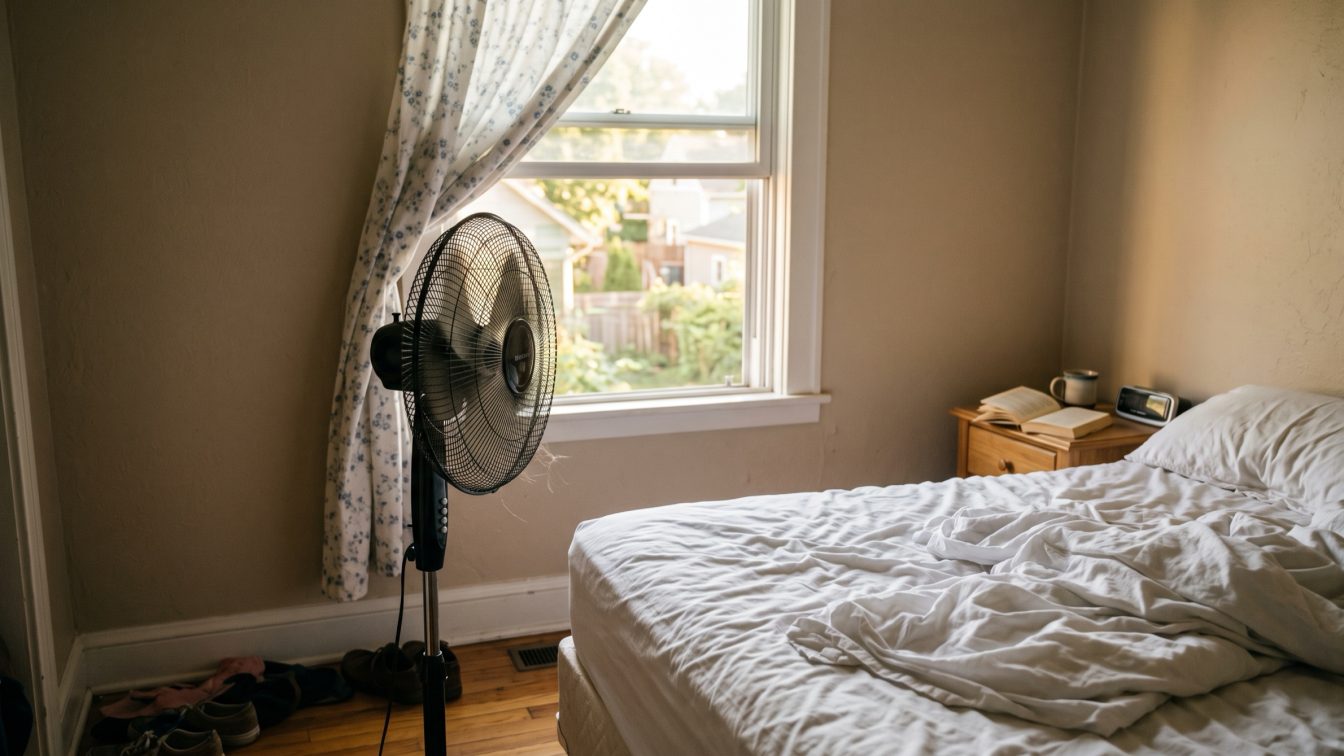
Table of contents
- Why the overnight low matters more than the daytime high
- The building-biology lens: your bedroom is a recovery chamber
- Exposure pathway one: radiant heat stored in the building
- Exposure pathway two: the urban heat island effect
- Exposure pathway three: no cross-ventilation
- The thresholds that matter
- Practical fixes: block the heat, then move it out
- The bigger picture
Summary of this article
- Many U.S. cities are recording record overnight temperatures, with the heat failing to break after dark, NBC News reported.
- High nighttime lows are the most dangerous part of a heat wave. Health experts note that they leave no time for the body's core temperature to cool down and recover from daytime heat.
- The target for safe sleep is a bedroom below 70°F. When overnight temperatures stay above that, the body's overnight recovery breaks down and heat strain accumulates night after night.
- Cities stay hotter after dark because of the urban heat island effect: concrete, brick, and asphalt absorb heat all day and radiate it back at night, keeping urban areas several degrees warmer than nearby rural land.
- Practical fixes target the heat pathways: attic insulation and reflective roof coatings block stored heat, cross-ventilation and ceiling fans move it out, and external window shading stops it before it enters.
The afternoon high is the number everyone watches during a heat wave. The overnight low is the number that hurts you.
Many U.S. cities are setting record overnight temperatures, with the heat offering no relief after dark, NBC News reported. Nights that once cooled enough for the body and the building to recover are now staying hot from dusk to dawn. That shift changes the entire health calculation of a heat wave.
Here is the fact that reframes the risk. Your body is built to shed heat at night. When the air outside never drops, that recovery never happens, and the strain of one hot day carries straight into the next. Understanding why nights stay hot, and how to cool the one room that matters most, is the difference between a heat wave you endure and one that puts you in danger.
Why the overnight low matters more than the daytime high
The human body handles heat through a daily cycle. It absorbs heat during the day and releases it at night, when cooler air lets the core temperature reset. That nightly reset is how the body recovers and prepares for the next day.
High overnight temperatures break that cycle. “Health experts say that high overnight temperatures are particularly dangerous because there’s no time for the body’s core temperature to cool down and recover from daytime heat,” according to reporting on the current heat. When the night stays hot, the body never fully cools. It starts each day already carrying yesterday’s heat load, and across a multi-day heat wave, the strain compounds.
That compounding is what makes hot nights deadly. Heat-related illness and death climb sharply during heat waves that fail to cool at night, because the body is denied the recovery window it depends on. The daytime high grabs the headlines. The overnight low is what the body cannot survive without a break from.
The building-biology lens: your bedroom is a recovery chamber
Building biology treats a home and the people inside it as one connected system. A building’s job is not only to shield you from the day’s heat but to give you a cool space to recover at night. During a heat wave, the bedroom becomes the single most important room in the house, the recovery chamber where the body resets.
That reframes the goal. You do not have to cool an entire home to survive a hot night. You have to cool one room enough for the body to recover in it. And to do that, you have to understand how heat reaches that room and lingers there long after the sun goes down.
The problem is that most buildings, and most cities, are engineered to hold heat, not release it. The heat that reaches your bedroom at midnight is not the day’s sunlight. It is heat stored hours earlier, seeping out of the mass around you.
Exposure pathway one: radiant heat stored in the building
A building absorbs heat all day and releases it at night. This is the pathway most people never notice.
The roof, walls, and attic soak up solar energy through the daylight hours. That heat does not vanish at sunset. It radiates inward and downward through the evening, which is why a bedroom can feel hotter at 10 p.m. than it did at 4 p.m. The attic is the worst offender: an uninsulated attic can reach well over 130°F on a hot day, and that stored heat presses down into the rooms below for hours after dark.
This is why nighttime cooling is a building problem, not just a weather problem. A home that stored heat all day becomes a radiator all night, releasing warmth into the exact space where you are trying to recover.
Exposure pathway two: the urban heat island effect
Cities stay hotter after dark than the countryside, and the reason is the materials they are built from.
Concrete, brick, asphalt, and stone are dense, and they absorb and store enormous amounts of solar heat during the day. After sunset, they release it slowly. The result is the urban heat island effect, the tendency of urban areas to stay several degrees warmer than surrounding rural land, especially at night. The U.S. Environmental Protection Agency reports that the daytime temperature difference between a city and its rural surroundings is typically 1°F to 7°F, and the nighttime difference can reach 2°F to 5°F, with larger gaps in dense, paved urban cores.
That nighttime gap is the danger. A city that holds its heat after dark is a city where overnight lows stay high, and where the body’s recovery window shrinks or disappears. The record overnight temperatures NBC News reported are heat island effect and heat wave stacked together, the city’s stored heat added to an already hot night.
Exposure pathway three: no cross-ventilation
Even when outdoor air finally cools, a sealed or poorly ventilated home cannot take advantage of it.
Many homes are set up to trap the day’s heat inside. Windows stay closed, air sits still, and the warm air that accumulated all day has no path out. When the outdoor temperature drops below the indoor temperature at night, that cooler air is a free resource, but only if the home is arranged to let it flow through. Without cross-ventilation, the cool night air stays outside while the hot air stays in, and the bedroom never gets the flush it needs.
The thresholds that matter
Cooling a bedroom becomes actionable when you know the numbers to aim for. Running cooling all night is not free, and 1 in 3 households already struggle to pay the bill.
Safe sleeping temperature: below 70°F. Sleep research and health guidance point to a bedroom temperature below 70°F, and often in the mid-60s, as the range that supports healthy sleep and lets the body recover. When a bedroom stays above 70°F overnight, sleep and recovery both degrade. That 70°F line is the practical target for a heat-wave night.
Heat index. The heat index combines air temperature and humidity into a single “feels like” number, because high humidity slows the body’s ability to cool itself by sweating. The National Weather Service issues heat advisories and warnings based on the heat index, so a night that reads 78°F on the thermometer can carry a far higher heat index when humidity is high.
Wet-bulb temperature. This is the most serious threshold. The wet-bulb temperature measures the lowest temperature the body can reach through sweating in a given combination of heat and humidity. At a sustained wet-bulb temperature around 95°F, the body can no longer cool itself at all, and even a healthy person is at risk. High humidity pushes the wet-bulb temperature up, which is why humid nights are more dangerous than dry ones at the same air temperature.
Practical fixes: block the heat, then move it out
The strategy for a cool bedroom follows the heat pathways in order, stop heat from entering, then remove what gets in.
Insulate the attic. Attic insulation is the highest-return fix for nighttime heat. It blocks the stored attic heat from radiating down into the rooms below after dark. The U.S. Department of Energy recommends attic insulation of roughly R-38 to R-60 in most U.S. climates. A well-insulated attic keeps the day’s stored heat from becoming the night’s misery.
Add a reflective roof coating. A reflective, or “cool,” roof coating reflects sunlight instead of absorbing it, so the roof stores far less heat during the day. The EPA notes that reflective roofs can stay significantly cooler than dark roofs under the same sun, which means less heat driven into the building and released at night.
Shade windows from the outside. Sunlight through windows is a major heat source, and it is far more effective to stop it before it enters the glass. External shading, awnings, exterior shades, shutters, or trees on the sun-facing side, blocks solar heat outside the building. Interior blinds help, but by the time sunlight has passed through the glass, most of its heat is already inside.
Cross-ventilate at night. Once the outdoor temperature drops below the indoor temperature, open windows on opposite sides of the home to create a through-breeze that flushes the day’s hot air out and pulls cooler night air in. A fan placed in a window to exhaust hot air outward accelerates the flush. Close the windows again in the morning to trap the cool air before the day heats up.
Use ceiling and portable fans correctly. Fans cool people, not rooms. Moving air speeds the evaporation of sweat, which cools the body directly, so a ceiling fan makes a bedroom feel several degrees cooler to the person in it. Because fans cool people and not the air, turn them off when you leave the room. One caution: when the air temperature climbs above roughly the mid-90s°F, a fan can push hot air over the skin and add heat rather than remove it, so in extreme heat fans should be paired with other cooling.
Build a cool sleeping strategy. On the hottest nights, sleep in the lowest and coolest room in the home, since heat rises and upper floors stay warmer. Use breathable cotton bedding, keep water by the bed, and take a cool shower before sleep to lower your core temperature. If your home cannot reach a safe temperature, spend the night in an air-conditioned space or a public cooling center.
The bigger picture
The record overnight temperatures reported by NBC News are dangerous for a reason that gets little attention: they take away the recovery the human body depends on. High nighttime lows leave no time for the core temperature to cool down and recover from daytime heat, so the strain of one hot day carries into the next, and across a multi-day heat wave it compounds.
Cities make it worse. The urban heat island effect keeps paved, built-up areas several degrees warmer after dark, adding the city’s stored heat to an already hot night. Inside a home, the day’s heat radiates down from the attic and walls for hours, turning the building into a radiator in the exact room where you are trying to sleep.
The response is to treat the bedroom as a recovery chamber and cool it deliberately. Block the heat with attic insulation, a reflective roof, and external shading. Move it out with cross-ventilation and fans. Aim for a bedroom below 70°F, and watch the heat index and humidity, not just the thermometer. The afternoon high will pass on its own. The overnight low is the one you have to manage, and the homes and bodies that recover are the ones that get the night back. Losing the cool hours costs more than sleep: extreme heat also cuts the daily contact that protects health.
Sources
- NBC News. No relief from the heat as many cities will swelter in record overnight temperatures
Questions people ask
Why are hot nights more dangerous than hot days?
The body is built to shed heat at night, when cooler air lets its core temperature reset. Health experts note that high overnight temperatures are especially dangerous because they leave no time for that recovery. When the night stays hot, the body starts each day already carrying the previous day's heat, and across a multi-day heat wave the strain compounds and can become deadly.
What is the safe temperature for sleeping during a heat wave?
Aim for a bedroom below 70°F, and often the mid-60s, which is the range sleep and health guidance associate with healthy sleep and overnight recovery. When a bedroom stays above 70°F, both sleep and the body's recovery degrade. That 70°F line is the practical target to aim for on a hot night.
Why do cities stay hotter at night than rural areas?
Because of the urban heat island effect. Concrete, brick, asphalt, and stone absorb large amounts of solar heat during the day and release it slowly after dark. The EPA reports that cities can run 2°F to 5°F warmer than surrounding rural areas at night, with larger gaps in dense, paved cores. That stored heat keeps overnight lows high.
What is the difference between heat index and wet-bulb temperature?
The heat index combines air temperature and humidity into a "feels like" number and is used by the National Weather Service to issue heat advisories. The wet-bulb temperature measures the lowest temperature the body can reach through sweating in given heat and humidity. At a sustained wet-bulb temperature around 95°F, the body can no longer cool itself, making it the most serious threshold.
Do fans actually cool a room?
No. Fans cool people, not rooms. Moving air speeds the evaporation of sweat, which cools the body directly, so a ceiling fan makes you feel several degrees cooler without changing the air temperature. Turn fans off when you leave the room to save energy. In extreme heat above the mid-90s°F, a fan can add heat by blowing hot air over the skin, so pair it with other cooling.
What is the single most effective home fix for hot nights?
Attic insulation. An uninsulated attic can exceed 130°F on a hot day, and that stored heat radiates down into the rooms below for hours after dark. Insulating the attic to roughly R-38 to R-60, as the U.S. Department of Energy recommends for most climates, blocks that heat from turning your building into a nighttime radiator.
How does cross-ventilation help cool my home at night?
Once the outdoor temperature drops below the indoor temperature, opening windows on opposite sides of the home creates a through-breeze that flushes the day's hot air out and pulls cooler night air in. A fan in a window to exhaust hot air outward speeds the process. Close the windows in the morning to trap the cool air before the day heats up again.

Have questions about the environment inside your home?
Air quality, mold, EMF, light and water all shape how a house feels and how the people in it feel. Whatever your concern is, the first step is finding out what is there.
Our certified team of environmental professionals and advocates can help.