


Every baby bottle and sippy cup tested leaked bisphenols into drinks
Every baby bottle and sippy cup tested released BPA or BPS into the liquid inside, including plain water and liquids used to mimic breastmilk and formula. Researchers tested 20 bottle brands and 13 sippy cups.
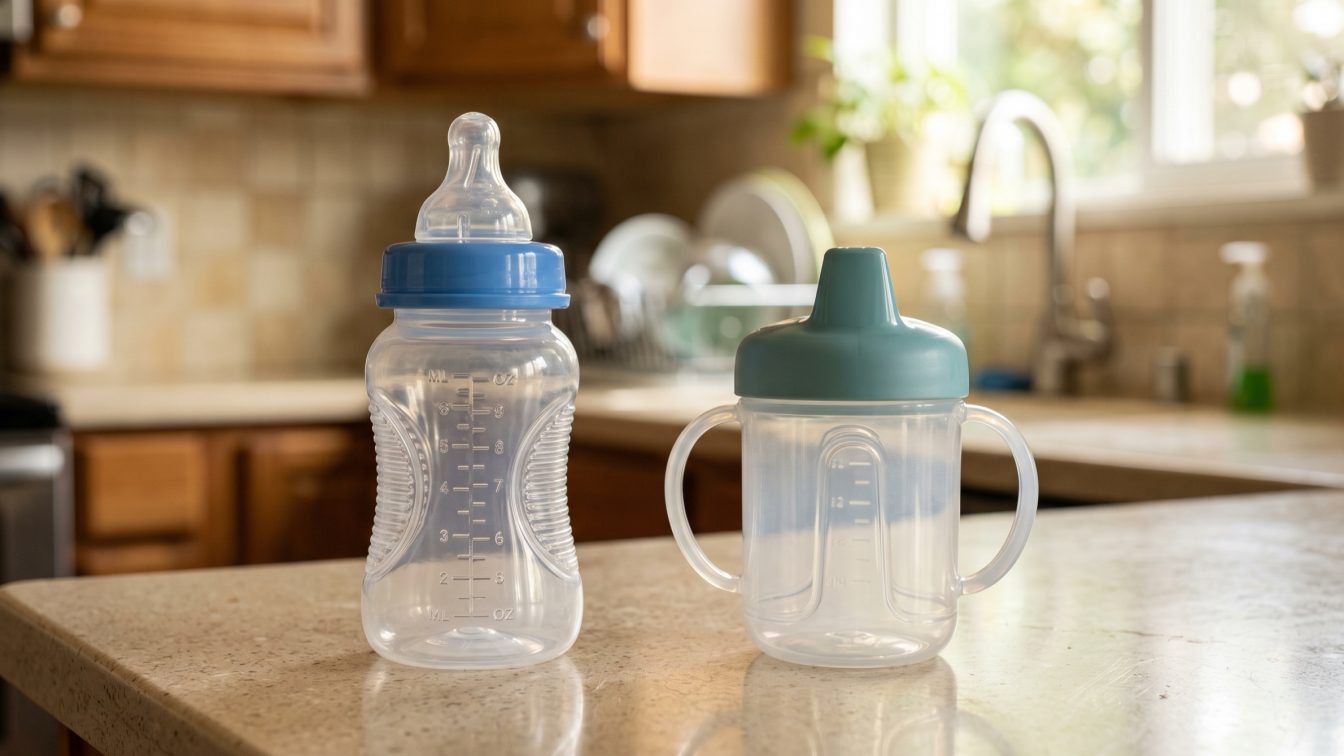
Table of contents
Summary of this article
- All 20 brands of baby bottles and all 13 brands of sippy cups tested released BPA and BPS, Environmental Health News reported on March 19, 2026.
- The bisphenols leached when the containers were used with plain water and with liquids that simulated breastmilk and formula.
- Bisphenols are endocrine disruptors, chemicals that interfere with the body's hormone system, which directs infant development.
- The transfer is migration: BPA and BPS are not bonded to the plastic, so they move out of the container into the liquid it holds.
- Heat and fatty liquids accelerate the leaching, which is why warmed milk and simulated formula pulled out more chemical than room-temperature water.
- "BPA-free" does not mean bisphenol-free, because manufacturers replaced BPA with BPS, a structurally similar chemical that acts the same way and was detected in the tests.
- Infants are the most vulnerable group: they feed many times a day during rapid development, in small bodies that receive a larger dose relative to body weight.
- You cannot filter a bisphenol out of a developing baby, so the reliable defense is source control: feed from glass or stainless steel, choose silicone nipples, and never heat milk in plastic.
Researchers tested 20 brands of baby bottles and 13 brands of sippy cups. Every single one released BPA and BPS into the liquid inside.
Environmental Health News reported the results on March 19, 2026. Leaching happened with plain water, and more with liquids formulated to mimic breastmilk and formula. No brand came back clean.
Which closes the usual escape route. Switching brands does nothing, because no brand is the variable here. The plastic is, and every one of these products is made of it.
How a bottle puts chemicals in milk
Bisphenols are not locked inside plastic, which is why a BPA-free label names only what is absent. They migrate out of the material into whatever liquid touches it.
The chemistry is plain. BPA and BPS build or harden the plastic without bonding into a fixed structure, so individual molecules separate from the surface and dissolve into the drink. Every feeding is a stretch of direct contact between container wall and milk.
Two conditions speed it up, and both are standard practice.
Heat. Warming a bottle raises how much the plastic releases. Parents warm milk and formula to body temperature routinely, which drives more bisphenol into the liquid at the exact moment of feeding.
Fat. Bisphenols dissolve more readily into fat than water. Breastmilk and formula both contain it, which is why the simulated milk pulled out more than plain water did. What makes milk nourishing is what extracts more chemical from the bottle.
Warm fatty milk sitting in plastic is the worst case, and it is also the normal case.
Why the label does not help
“BPA-free” describes the absence of one chemical. The tests make the gap concrete: these containers released BPS, the chemical that replaced BPA.
When studies tied BPA to hormonal and developmental effects and parents began avoiding it, manufacturers substituted close relatives, BPS most commonly. Same chemical family, nearly the same molecular structure. That resemblance is why BPS does the same job in a bottle and acts the same way in a body, mimicking estrogen and interfering with hormone signaling.
Researchers call it regrettable substitution: swapping a known hazard for a less-studied one that causes similar harm. A “BPA-free” bottle can be perfectly truthful about its label and still leach a bisphenol.
Estrogen mimicry, in a body still being built
Mimicry does it. BPA and BPS imitate estrogen, binding to the receptors the real hormone uses and sending signals nobody asked for.
Hormones work at very low concentrations and set the timing of development, so a small dose of something imitating them produces effects out of proportion to its size. The system being disrupted is the one directing how an infant’s brain, reproductive system and metabolic pathways get built.
Exposure is close to universal. The CDC detects bisphenol A in the vast majority of Americans it tests through its National Report on Human Exposure to Environmental Chemicals. A bottle contributes to that directly, delivered to the mouth at every feeding.
Three things make infants the worst case
Frequency. A newborn feeds eight or more times a day, each one a period of milk against plastic. Dose scales with use, and few objects an infant touches get used that often.
Timing. Hormonal signals guide construction of the brain, immune system and metabolic pathways through infancy. A disruptor arriving then interferes with signals a mature body would shrug off, because those systems are still being assembled.
Body size. A given amount of chemical delivers a larger dose per pound in a small body, and a bottle-fed baby takes in a lot of milk relative to its size. Cutting plastic out of food contact dropped urine chemical levels by 33% in a week in adults.
All three compound. A container leaching a small amount per feeding, used many times daily, in a small and fast-developing body, delivers far more than the per-feeding number suggests.
Glass, steel and silicone have nothing to give up
Material decides whether a bisphenol is even present.
Glass and stainless steel contain no BPA or BPS, so they have none to release. Silicone, used for nipples and some components, is not a bisphenol-based plastic and does not leach the way hard plastic does.
Label versus substance is the whole distinction. “BPA-free” is a claim printed on a plastic product the tests showed still leaches BPS. Glass, steel and silicone are different substances entirely, and changing what the container is made of beats trusting a label that carves out one molecule.
Sterilising makes plastic worse
Parents boil bottles or run them hot in the dishwasher to kill germs. Heat is also what drives the most leaching.
Transfer of BPA and BPS out of plastic rises with temperature. Boiling or a hot cycle increases release during the cleaning and afterward, because repeated heating degrades the plastic into shedding more over time. A routine meant to make a bottle safer makes a plastic one leach more.
Material resolves it. Glass and stainless steel take boiling and high-temperature cleaning with no bisphenol penalty, having none to release. The same swap works across every container in a kitchen.
Change the material
Feed from glass or stainless steel. Neither contains or releases BPA or BPS. Glass bottles with silicone sleeves add breakage protection without putting plastic against the milk.
Choose silicone nipples. Not a bisphenol-based plastic. Replace any hard plastic nipple or component.
Never heat milk in plastic. Warm it in glass or steel, or stand the bottle in a bowl of warm water. Never microwave milk in plastic.
Skip boiling and dishwasher sterilising for plastic parts. Warm soapy water and a good rinse instead. Glass and steel can be boiled safely.
Treat “BPA-free” plastic as a bisphenol risk. The tests found BPS coming out of exactly those products.
Replace worn plastic promptly. Scratched, cloudy or degraded plastic leaches more and harbors germs.
Extend it to sippy cups. The tests covered 13 brands of those too. Stainless steel or glass with silicone parts as a baby moves off the bottle.
Store milk in glass. Expressed breastmilk and prepared formula both, and use glass or steel for any warming step.
Twenty bottle brands, 13 sippy cup brands, every one of them leaking BPA or BPS into what a baby drinks. Heat and the fat in milk both make it worse, and the label naming one absent chemical does not stop the one that replaced it. Nobody filters a bisphenol out of a developing infant. Changing what the bottle is made of is the only part of this a parent controls.
Sources
- Environmental Health News (EHN), March 19, 2026. Baby bottles and sippy cups release bisphenol chemicals, on the finding that all 20 baby bottle brands and all 13 sippy cup brands tested released BPA and BPS with water and with liquids simulating breastmilk and formula.
- Centers for Disease Control and Prevention. National Report on Human Exposure to Environmental Chemicals, on bisphenol A biomonitoring in the US population.
- Environmental Protection Agency and National Institute of Environmental Health Sciences. Guidance on bisphenol A, bisphenol substitutes (BPS and BPF), and endocrine disruptors, including how the chemicals mimic estrogen and migrate from plastics under heat.
- Food and Drug Administration. Information on BPA and bisphenol use in food-contact and infant feeding products.
Questions people ask
What did the study on baby bottles and sippy cups find?
Environmental Health News reported on March 19, 2026 that all 20 brands of baby bottles and all 13 brands of sippy cups tested released BPA and BPS. The bisphenols leached when the containers were used with plain water and with liquids that simulated breastmilk and formula. Every product tested released the chemicals, so the problem was not limited to specific brands.
How do bisphenols get from a bottle into a baby's milk?
Through migration. BPA and BPS are not chemically bonded to the plastic, so they separate from the container wall and dissolve into the liquid it holds. Heat and fat both speed the transfer, which is why warmed milk and formula, which contain fat, pulled out more bisphenol than room-temperature water in the tests.
Does a "BPA-free" bottle protect my baby?
Not reliably. "BPA-free" means only that bisphenol A is not the primary plastic, and the tests found the containers still released BPS, the chemical that replaced BPA. BPS shares nearly the same structure as BPA and acts the same way in the body. The label removes one named chemical without removing the class of bisphenols.
Why are infants especially at risk from these chemicals?
Three reasons converge. Babies feed many times a day, so contact with the leaching container is frequent. They are developing rapidly, and bisphenols are endocrine disruptors that interfere with the hormone system directing that development. And they are small, so a given amount of chemical delivers a larger dose relative to body weight than it would in an adult.
What bottles and cups should I use instead?
Glass and stainless steel bottles, because neither contains or leaches BPA or BPS, paired with silicone nipples, which are also bisphenol-free. Extend the same choice to sippy cups by selecting stainless steel or glass with silicone parts. Choosing the material, rather than trusting a "BPA-free" label on plastic, is the reliable way to remove the source.
Should I sterilize bottles by boiling or in the dishwasher?
Glass and stainless steel can be boiled or run through a hot dishwasher safely, because they contain no bisphenols to release. Plastic is different: heat drives more bisphenol leaching and degrades the material over time, so boiling or dishwasher-sterilizing a plastic bottle can make it leach more. Clean any remaining plastic with warm, soapy water instead, and never heat milk in plastic.
Have questions about the environment inside your home?
Air quality, mold, EMF, light and water all shape how a house feels and how the people in it feel. Whatever your concern is, the first step is finding out what is there.
Our certified team of environmental professionals and advocates can help.