


California Screens Soil Lead at 80 ppm. The EPA Waits Until 200
Lead from burned pre-1978 houses settles in the top inch or two of soil and stays there. The EPA screens at 200 parts per million, California at 80, and neither number is a safety line.
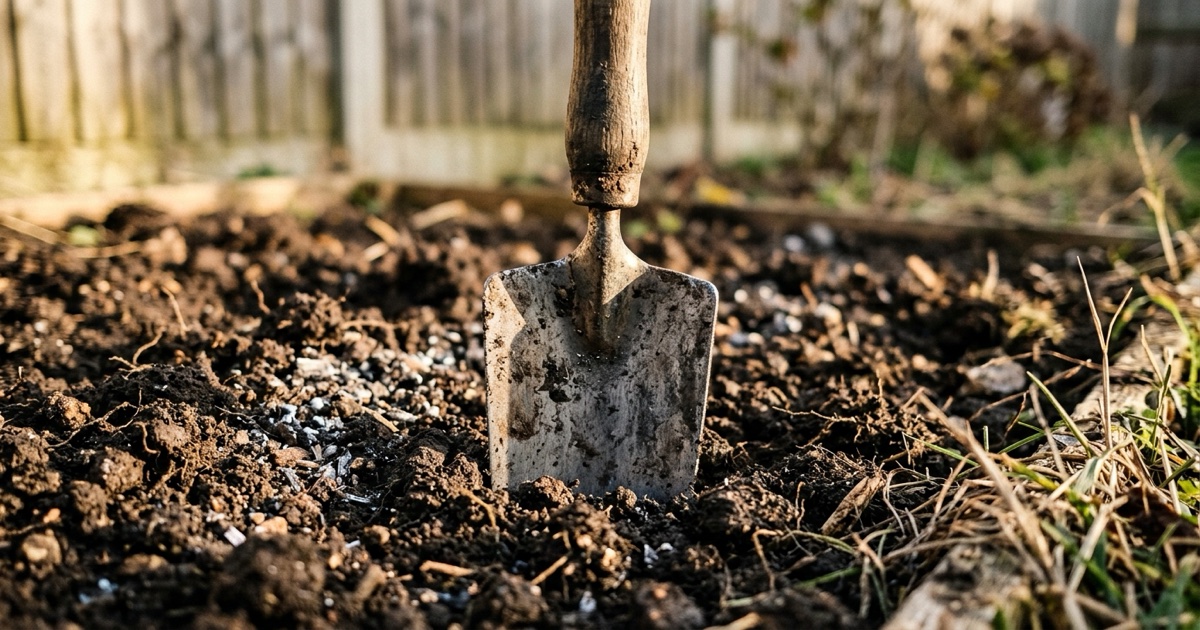
Table of contents
Summary of this article
- Houses built before 1978 carry lead paint. Fire lifts that lead into the air and deposits it on soil, where it does not break down.
- California's health hazard office reports that in undisturbed soil, lead stays within the top inch or two. That is also the depth a child digs at and a gardener turns over.
- The EPA recommended 200 ppm for residential soil in January 2024, and 100 ppm where another lead source was present. It withdrew the 100 figure in October 2025 because it sat below the lead already in ordinary dirt in older cities and mining regions.
- California uses 80 ppm for a residential yard, two and a half times stricter than the federal figure, derived from a loss of up to one IQ point in a young child.
- None of these is a limit. A screening figure marks where to look harder. Crossing one does not prove harm and sitting under one does not prove safety.
- Roux Associates sampled both 2025 Los Angeles burn areas in February and March. Palisades came back broadly clean. Eaton did not.
- Nearly 96 percent of Altadena homes destroyed in the Eaton fire were built before the 1978 paint ban.
- Federal rules attach the word hazard to bare soil. Grass, mulch or a planted bed change what happens next, because the question is whether anyone gets soil on their hands.
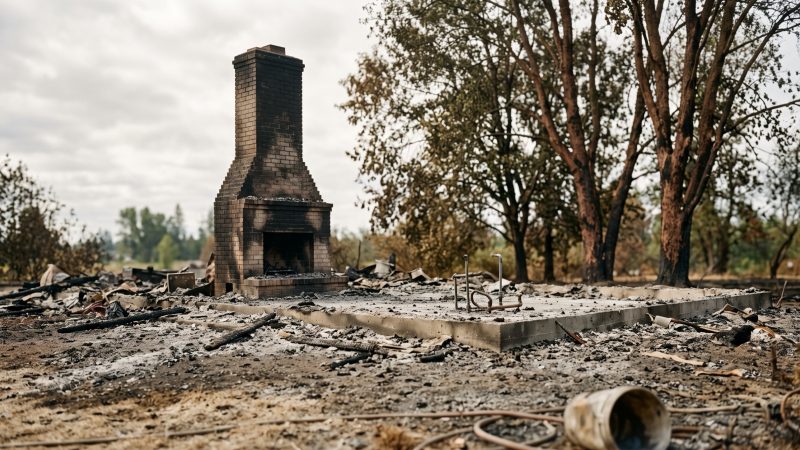
Houses built before 1978 carry lead paint. A fire that burns those houses lifts the lead into the air and drops it back onto soil, where it stays, because lead does not break down.
California’s Office of Environmental Health Hazard Assessment reports that in undisturbed soil, lead stays within the top inch or two. That shallow layer is both the reassurance and the problem: it is also the depth a toddler digs at, where carrots root, what a gardener turns over in spring, and where dust lifts off on a dry windy day.
Here is what the screening numbers actually mean, what soil testing after the 2025 Los Angeles fires found, and what protects a household without waiting on a laboratory.
No one agrees on how much is too much
Three numbers are in circulation, and none means what a homeowner assumes.
The EPA recommended 200 parts per million for residential soil in January 2024, and 100 ppm where another source of lead was already present. In October 2025 the agency withdrew that lower figure, and the reason is worth reading twice: 100 ppm sat below the lead already present in ordinary dirt in older cities and mining regions, which was slowing the search for yards that genuinely needed work.
A federal screening level had been set below the background soil of entire cities, and the agency that set it said so.
California moved the opposite way. Its health hazard office settled on 80 ppm for a residential yard, two and a half times stricter than the federal figure, and derived it from what lead does to a young child’s intelligence, enough to cost up to one IQ point.
None of the three is a limit. A screening figure marks where someone should look harder. Crossing one does not prove harm, and sitting under one does not prove safety.
The two Los Angeles burn areas gave opposite answers
Crews from Roux Associates sampled both areas across February and March 2025 for heavy metals and other burn products, and Los Angeles County published the results.
Palisades came back broadly clean. Eaton did not.
The pattern that emerged points at paint rather than fire. Elevated readings clustered where old housing stock had burned, and lead also turns up in neighborhoods where nothing has burned in living memory. Filippelli and colleagues, publishing in GeoHealth, estimated that one in four US households likely exceed the new soil lead guidance levels.
Nearly 96 percent of Altadena homes destroyed in the Eaton fire were built before the 1978 paint ban, a figure Representative Judy Chu cited when she led 27 members of California’s delegation in asking FEMA for federal testing money that June.
Federal rules hang the word “hazard” on bare soil
That is the practical hinge. Grass, mulch or a planted bed change what happens next, because the question is whether anyone gets soil on their hands.
Debris contractors scrape six inches of soil from under the burned structure and stop there. FEMA told California in February 2025 that it would not pay to test what remained, noting that five years of California fires had shown positive results came mostly from lead that sat in the dirt before any fire started.
What protects a household this month
None of these require a test result, and all of them cost less than a laboratory.
Cover bare ground. Grass, mulch, gravel or a planted bed all break contact between hands and dirt, and this is the single cheapest step available.
Leave shoes at the door. Soil rides in on feet and settles into carpet, which is where small children spend the day and where nobody thinks to look for a yard problem.
Wash hands after playing outside and before eating. Obvious, and the step most often skipped.
Grow food in raised beds with purchased soil if the yard’s own soil is a question mark. That closes the question rather than managing it.
Wet-wipe indoors rather than dry-dust, because dry dusting redistributes fine particles instead of removing them.
Plant shrubs tight against exterior walls, which quietly moves a child’s afternoon somewhere else.
When testing is worth paying for
Three conditions make it worthwhile. Outside them, money does more work covering soil than sampling it.
The house predates 1978 and bare dirt runs along the drip line. That strip is the likeliest place to find something and small enough to sample cheaply.
The property sits in a burn area where crews cleared debris on or near the lot.
Small children play in the yard, or food grows in it. That is the route lead takes into a person.
Ask for a sample from the top inch or two, because sampling deeper dilutes the one layer that matters. Check with the county first: Los Angeles County ran a free testing program inside its burn areas and has since handed it to USC.
Compare any result against the state figure where one exists. California’s runs two and a half times stricter than the federal one, and that gap decides what a number means.
A screening figure tells someone to look harder. Nobody has drawn a line between safe and dangerous, which makes what to do with a result a judgement rather than a rule.
Sources
- U.S. Environmental Protection Agency. 40 CFR 745.65, Lead-based paint hazards (2024) 89 FR 89456
- U.S. Environmental Protection Agency, Office of Land and Emergency Management. Residential Lead Directive for CERCLA Sites and RCRA Hazardous Waste Cleanup Program Facilities (2025)
- U.S. Environmental Protection Agency, Office of Land and Emergency Management. Updated Residential Soil Lead Guidance for CERCLA Sites and RCRA Corrective Action Facilities (2024)
- California Office of Environmental Health Hazard Assessment. Properties Contaminated by Lead (2017)
- Los Angeles County Department of Public Health. Public Health Releases Final Findings of Soil Testing in Fire-Impacted Areas (2025)
- Federal Emergency Management Agency, Region 9. Post-Fire Soil Testing for Los Angeles County, letter to Cal OES (2025) FEMA-4856-DR-CA
- Centers for Disease Control and Prevention. Notes from the Field: Elevated Atmospheric Lead Levels During the Los Angeles Urban Fires, California, January 2025 (2025) MMWR 2025;74:69-71
- U.S. Army. U.S. Army Corps of Engineers reflects on record-breaking wildfire debris mission (2025)
- Filippelli GM, Dietrich M, Shukle J, Wood L, Margenot A, Egendorf SP, Mielke HW. One in Four US Households Likely Exceed New Soil Lead Guidance Levels, GeoHealth (2024) GeoHealth 8:e2024GH001045
- Building Biology Evaluation Guidelines. SBM-2024 Standard Points B3-B6, section 4, Heavy Metals and other Similar Toxins (2024)
- U.S. Environmental Protection Agency. Protect Your Family from Sources of Lead (2026)
- Office of Representative Judy Chu. Rep. Chu Urges FEMA to Conduct Soil Testing and Remediation in LA Fire Burn Zones (2025)
Questions people ask
Why does lead turn up in soil after a fire?
Houses built before 1978 carry lead paint. A fire lifts that lead into the air and it settles back onto soil, which keeps it, because lead does not break down.
How deep does the lead go?
California's Office of Environmental Health Hazard Assessment reports that in undisturbed soil it stays within the top inch or two. That is also the layer a toddler digs in and where dust lifts on a dry windy day.
How much lead in soil is too much?
There is no agreed figure. The EPA recommends 200 parts per million for residential soil. California uses 80 ppm, two and a half times stricter, derived from a loss of up to one IQ point in a young child. Neither is a limit.
Why did the EPA withdraw its 100 ppm figure?
In October 2025 the agency withdrew the lower 100 ppm figure because it sat below the lead already present in ordinary dirt in older cities and mining regions, which was slowing the search for yards that genuinely needed work.
What did testing after the 2025 Los Angeles fires find?
Roux Associates sampled both burn areas across February and March 2025 and Los Angeles County published the results. Palisades came back broadly clean. Eaton did not. Nearly 96 percent of Altadena homes destroyed were built before the 1978 paint ban.
Does the debris cleanup remove the lead?
Not all of it. Contractors scrape six inches of soil from under the burned structure and stop. FEMA told California in February 2025 that it would not fund testing of what remained, noting that positive results in five years of California fires came mostly from lead present before the fire.
What can I do without testing?
Cover bare ground with grass, mulch, gravel or a planted bed. Leave shoes at the door. Wash hands after playing outside. Grow food in raised beds with purchased soil. Wet-wipe indoors rather than dry-dust.
When is testing worth paying for?
When the house predates 1978 and bare dirt runs along the drip line, when the property sits in a burn area where debris was cleared, or when small children play in the yard or food grows in it. Ask for a sample from the top inch or two, and check whether the county runs a free program first.
Have questions about the environment inside your home?
Air quality, mold, EMF, light and water all shape how a house feels and how the people in it feel. Whatever your concern is, the first step is finding out what is there.
Our certified team of environmental professionals and advocates can help.