


A Texas tribe got help to stop the trash burning making people sick
When a community has no reliable way to handle trash, it gets burned in piles or dumped, creating two health hazards with one root cause. A new grant is meant to address both.
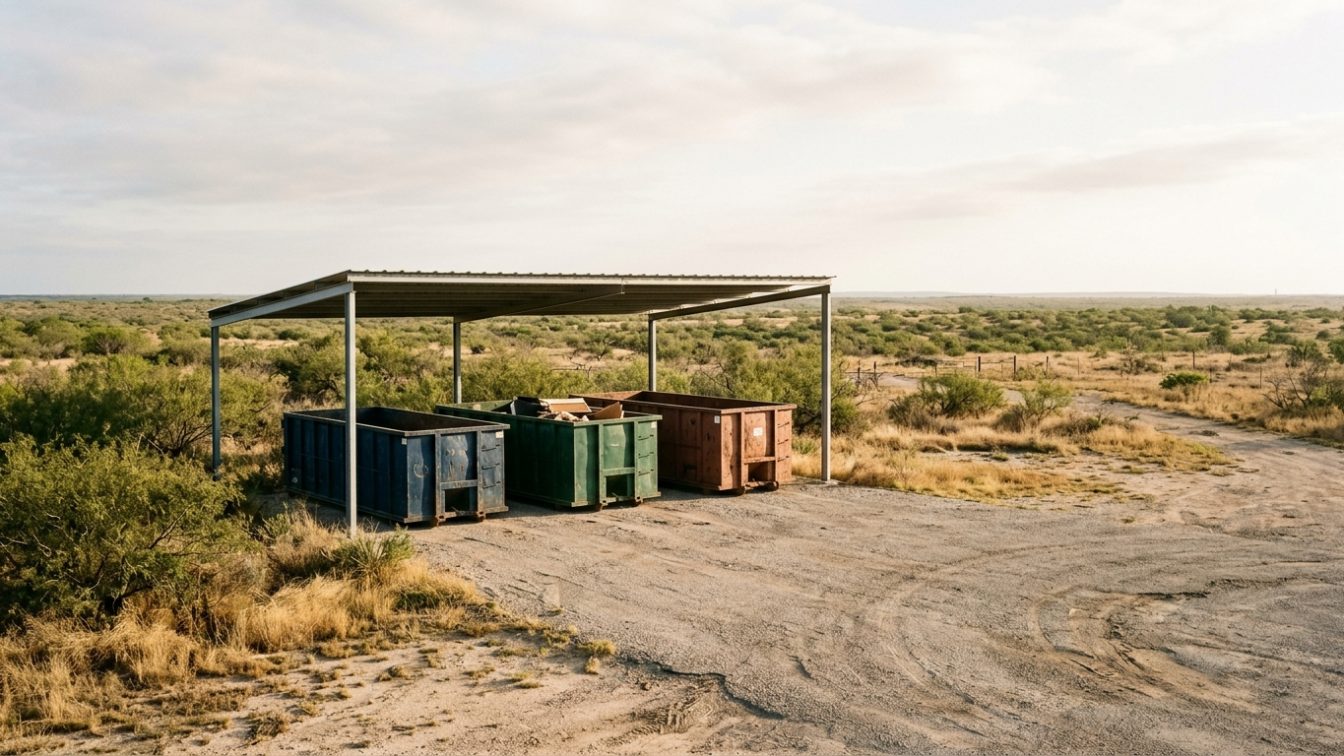
Table of contents
Summary of this article
- The EPA announced $1,499,066 to the Kickapoo Traditional Tribe of Texas on July 29, 2026, through the Solid Waste Infrastructure for Recycling (SWIFR) grant program.
- The tribe will build a hub-and-spoke materials management center, drop-off stations feeding a central processing station, and procure heavy equipment and machinery for safe, efficient operations.
- The project's stated goals are to reduce landfill dependency, illegal dumping, and open burning, "resulting in cleaner air, water, and land for the community," according to the EPA.
- Open burning releases fine particulate matter (PM2.5) and dioxins because it burns at low temperatures with no emission controls; illegal dumping leaches chemicals into groundwater and soil.
- The SWIFR program aims to meet Congress's goal of a stronger, more resilient, and cost-effective U.S. municipal solid waste recycling system; proper waste infrastructure is source control that removes contamination pathways before they open.
The EPA announced $1,499,066 to the Kickapoo Traditional Tribe of Texas on July 29, 2026. The money funds a single fix for two health hazards that share one root cause: when a community has no reliable way to handle its trash, that trash gets burned in open piles or dumped where it does not belong.
The award comes through the Solid Waste Infrastructure for Recycling program, known as SWIFR. The tribe will use it to build what the EPA calls a hub-and-spoke materials management center, a network of drop-off stations that feed into one central processing station, and to buy the heavy equipment and machinery needed to run those facilities safely.
The project’s goals are stated plainly. “Coupled with community outreach and engagement, the project aims to reduce landfill dependency, illegal dumping, and open burning, resulting in cleaner air, water, and land for the community,” the EPA said.
That last phrase is the whole point. A recycling grant looks like a logistics story. It is a health story, because the disposal methods this infrastructure replaces are direct sources of contamination. Here is how open burning and illegal dumping harm the people nearby, what a hub-and-spoke system does to stop them, and how the same logic applies to any household.
What the grant builds
The design matters, so start with the structure the money funds.
A hub-and-spoke system is built around geography. The “spokes” are drop-off stations placed where people live, so residents have a nearby, legal place to bring their waste. The “hub” is a central processing station where materials are sorted, consolidated, and prepared for recycling, composting, or transfer. The heavy equipment, loaders, balers, containers, transport machinery, is what moves material through that system without creating a new hazard.
The purpose of the design is access. Illegal dumping and open burning thrive when the legal option is too far away or too difficult to use. A drop-off station within reach removes the excuse and the incentive. The central station then handles the volume efficiently, which is what keeps the whole system running instead of backing up.
“Tribes leverage these funds to invest in and improve their communities, steward their resources and protect the environment,” said Scott Mason, EPA Regional Administrator for Region 6.
Why open burning is a source of airborne toxins
Building biology studies how the built environment affects human health, and its first principle is source control: stop a pollutant where it originates rather than manage the damage after it spreads. Open burning is a source that the naked eye can see, and it is one of the least controlled forms of combustion there is.
The problem is the fire itself. A burn pile or barrel has no emission controls and burns at low, uneven temperatures. Those are precisely the conditions that produce the most pollution, because incomplete combustion releases more particles and more toxic byproducts than a hot, controlled fire would.
Two pollutants carry the direct health weight.
Fine particulate matter (PM2.5). Open burning produces microscopic particles small enough to bypass the body’s defenses and lodge deep in the lungs. The EPA links PM2.5 to asthma attacks, heart disease, and premature death, and its annual health-based standard for PM2.5 is 9 micrograms per cubic meter of air. Smoke from a burn pile does not respect property lines, it drifts into the homes downwind.
Dioxins. When plastics, treated wood, or packaging burn, they release dioxins, a group of highly persistent compounds the EPA identifies among the most toxic it tracks, linked to cancer, immune damage, and developmental harm. Dioxins settle onto soil and plants, where they can enter the food chain. The EPA specifically warns that backyard burning of household trash is a significant source of dioxin exposure.
The exposure pathway is short and direct. A fire is lit, the smoke rises, and the people nearest it breathe the particles and the dioxins into their lungs. Eliminating the fire eliminates the exposure at its source.
Why illegal dumping is a source of water contamination
Open burning contaminates the air. Illegal dumping contaminates the water and soil, and it does so quietly, over time.
The mechanism is leaching. When waste sits on open ground, rain moves through it and dissolves whatever it can carry. That contaminated water then percolates downward through the soil toward the water table. Household hazardous waste in the pile, batteries, paints, solvents, cleaners, electronics, adds heavy metals and toxic chemicals to the mix, and those compounds travel with the water.
The destination is what makes this dangerous. In many rural communities, drinking water comes from a well that draws directly on groundwater. Contamination that leaches from a dump site can reach the same aquifer a household drinks from, and unlike a burn pile, it is invisible, you cannot see or smell heavy metals dissolved in well water. The Kickapoo project’s aim of reducing illegal dumping is, in practical terms, a measure to protect the soil and groundwater the community depends on.
The source-control principle at work
The reason a materials management center improves health is that it closes contamination pathways before they open.
“By improving tribal recycling infrastructure EPA supports the recovery of domestic sources of raw materials, local economies and provides tangible health benefits to communities across Indian Country,” said Thomas Croci, Acting Assistant Administrator for the EPA’s Office of Land and Emergency Management.
Every unit of waste that reaches a drop-off station is a unit that does not go into a burn barrel or onto a dump site. That is the trade at the center of the project. A managed system does not filter the smoke or clean the groundwater after the fact, it prevents the fire and the dump from happening in the first place. This is the same logic behind sealing a pollutant at its point of release rather than ventilating a room after it has already spread.
The community outreach component reinforces the physical fix. Infrastructure only works if people use it, so the education and engagement built into the project are what turn a new facility into a change in behavior, the shift from burning and dumping to dropping off.
The larger program
The Kickapoo award is one piece of a national effort. The SWIFR program’s stated goal is to improve local waste management systems and meet Congress’s objective of a stronger, more resilient, and cost-effective U.S. municipal solid waste recycling system.
The outcomes the EPA cites are concrete. By building a more efficient system, the grants reduce the burden on landfill capacity, increase valuable materials available for end-markets, establish collection and processing services, create local jobs, and improve quality of life. Each of those reduces the pressure that pushes a community toward burning or dumping to begin with.
What you can do
You may never receive a federal grant. The source-control principle behind this one applies to any home, in any community.
Never burn household trash. Burning plastics, treated wood, or packaging releases PM2.5 and dioxins into the air you and your neighbors breathe. Where trash service exists, use it. Where it does not, haul waste to a managed transfer station instead of a burn barrel.
Separate your hazardous waste. Keep batteries, paints, solvents, cleaners, and electronics out of regular trash and away from any dump site. Most counties run hazardous waste collection days or permanent drop-off points. This single step keeps heavy metals out of groundwater.
Test your well water if you use one. If you draw from a private well, test it periodically for contaminants, especially if you know of dumping activity nearby. Well water contamination is invisible, testing is the only way to detect it.
Compost your organics. Food scraps and yard trimmings are the largest divertible share of household waste. A backyard bin or municipal compost program removes the material that fuels smoldering fires and generates methane in a landfill.
Recycle what your local program accepts. Accepted materials vary, so check your local guidelines and recycle everything eligible. Each item recycled is one that does not need burning or burial.
Support local waste infrastructure. Attend county meetings, comment on waste plans, and back funding for drop-off and composting programs. The health benefit of a managed system reaches every household on the same air, water, and land.
The EPA’s $1.5 million to the Kickapoo Traditional Tribe of Texas funds drop-off stations, a central processing hub, and the equipment to run them. The value lies in what those facilities replace: the burn piles that push PM2.5 and dioxins into the air, and the dump sites that leach chemicals into the groundwater. Building the system is source control at the community scale, stopping the contamination before it starts, rather than living with it after.
Sources
- EPA. EPA Grants Nearly $1.5 Million to Kickapoo Traditional Tribe of Texas for Tribal Solid Waste Infrastructure for Recycling (2026) (July 29, 2026):
- EPA, Solid Waste Infrastructure for Recycling Grants for Tribes and Intertribal Consortia:
- EPA, Backyard burning and open burning health effects
- EPA, Learn about dioxin and health effects:
- EPA, Particulate Matter (PM2.5) basics and health effects:
- EPA, National Ambient Air Quality Standards (NAAQS) table:
- EPA, Household Hazardous Waste (HHW):
- EPA, Private drinking water wells and testing:
Questions people ask
What did the EPA award the Kickapoo Traditional Tribe of Texas?
On July 29, 2026, the EPA announced $1,499,066 to the Kickapoo Traditional Tribe of Texas through the Solid Waste Infrastructure for Recycling (SWIFR) grant program. The tribe will build a hub-and-spoke materials management center, drop-off stations feeding a central processing station, and procure heavy equipment and machinery for safe, efficient operations.
What is a hub-and-spoke materials management center?
It is a waste system built around geography. The "spokes" are drop-off stations placed near where people live, giving residents a nearby, legal place to bring their waste. The "hub" is a central processing station where materials are sorted, consolidated, and prepared for recycling, composting, or transfer. The design's purpose is access, a nearby legal option removes the incentive to burn or dump.
How does open burning of trash affect health?
Open burning runs at low, uneven temperatures with no emission controls, the conditions that produce the most pollution. It releases fine particulate matter (PM2.5), which lodges deep in the lungs and is tied to asthma, heart disease, and premature death; the EPA's annual PM2.5 standard is 9 micrograms per cubic meter. Burning plastics also releases dioxins, which the EPA identifies among the most toxic compounds it tracks.
How does illegal dumping contaminate water?
Through leaching. When waste sits on open ground, rain dissolves chemicals from it and carries them downward through the soil toward the water table. Household hazardous waste, batteries, paints, solvents, electronics, adds heavy metals and toxic compounds. In communities that draw drinking water from wells, that contamination can reach the same groundwater people drink, and it is invisible without testing.
Why is waste infrastructure considered a health measure?
Because it is source control, it closes contamination pathways before they open. Every unit of waste that reaches a drop-off station is one that does not go into a burn barrel or a dump site. A managed system prevents the fire and the dump rather than cleaning up the smoke and groundwater afterward. The EPA's Thomas Croci said improving tribal recycling infrastructure "provides tangible health benefits to communities across Indian Country."

Have questions about the environment inside your home?
Air quality, mold, EMF, light and water all shape how a house feels and how the people in it feel. Whatever your concern is, the first step is finding out what is there.
Our certified team of environmental professionals and advocates can help.