


What Your Plastic Water Pipes Are Doing to Your Tap Water
New research found that plastic pipes can release additives into stagnant tap water and help bacteria grow. In a house with low-use fixtures, that turns still water into the part to watch first.
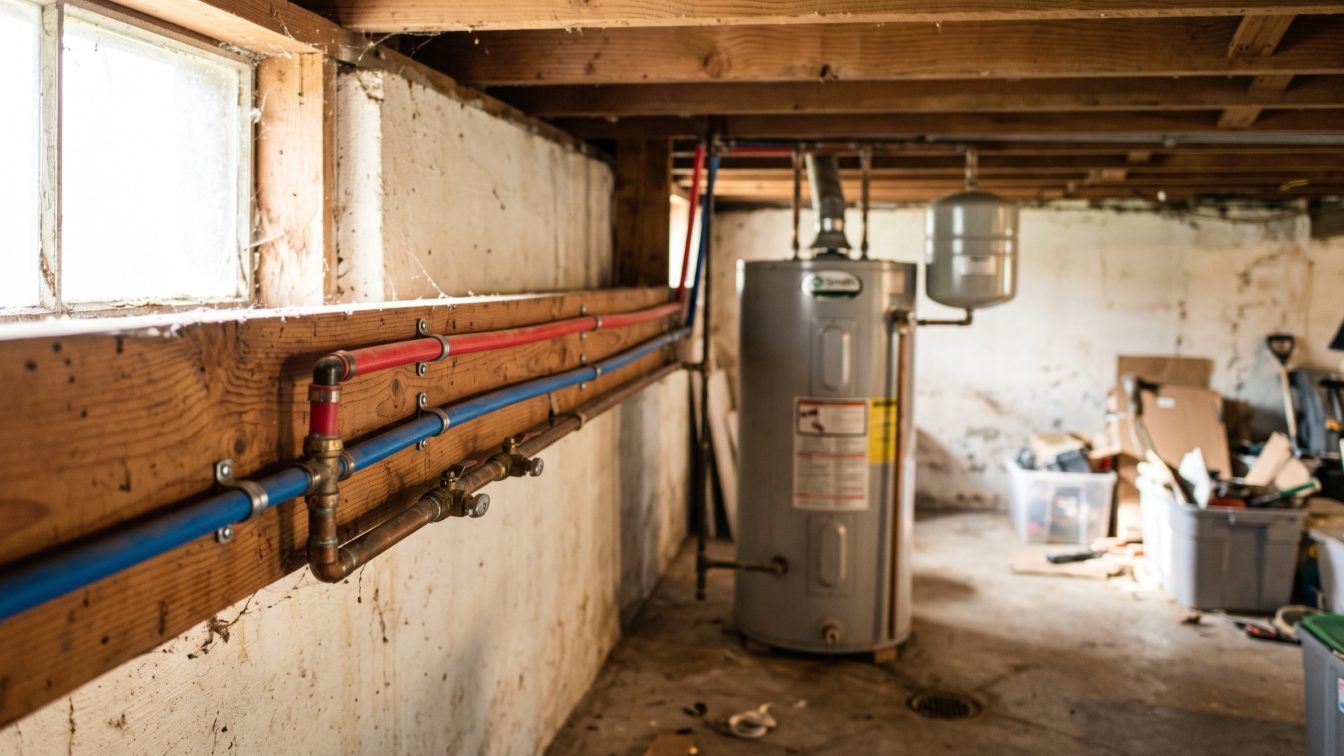
Table of contents
- Know what pipe is running to your taps
- What actually leaches, and why it does not stop
- The real problem is the water that never moves
- Which taps stagnate longest
- What flushing actually does
- Where a filter helps, and where it cannot
- After a vacation or a new build, flush before you drink
- What is not worth doing
Summary of this article
- Plastic pipes do more than carry water. Some of them can leach chemical additives into water that sits still.
- The study behind this article tested PVC, polypropylene, and polyethylene, but not PEX. That limit matters.
- Stagnant water is where the problem grows teeth. Low-use taps deserve the most attention.
- Flushing does not fix the pipe wall, but it does replace water that has had time to collect additives and support more microbial growth.
Most homes built in the United States since the 1980s carry some length of plastic pipe, and a pipe is never just a pipe. It is a wall of material sitting against your water for hours at a stretch, and new research says that wall does more than carry water from point A to point B. A study published in Environmental Science and Technology in October 2025 found that PVC, polypropylene, and polyethylene pipe continuously release chemical additives into standing water, and those additives feed the bacteria already living inside the pipe. Chemical safety testing and microbial safety testing are normally done separately. This study looked at both at once. The answer was not reassuring. Below is what a homeowner can do about it this week, and what the study cannot yet tell us.
Know what pipe is running to your taps
Start in the crawlspace or basement, wherever the main line enters the house. Copper is rigid and metallic, and it often shows green or blue-green corrosion at the joints after enough decades. PVC is hard, white, and printed with black lettering along its length, and it does not bend. CPVC looks similar but often runs cream or tan, and it is used for hot lines because PVC is not rated for heat. PEX is the flexible colored tubing, usually red for hot, blue for cold, or plain white, snaking around obstacles instead of joining at hard right angles the way rigid pipe does.
This distinction matters more than it looks. The study behind this article tested PVC, polypropylene random copolymer, and polyethylene. It did not test PEX, and PEX is the material most commonly installed in new American homes today. I will say this plainly: I cannot extend this study’s numbers to a PEX system, because nobody has run the same experiment on PEX yet. PEX is still a plastic, and plastics as a class leach. Which additives, and how much, is a question this particular paper does not answer for PEX.
What actually leaches, and why it does not stop
Plastic pipe is never one material. It is a base polymer blended with additives for flexibility, color, and heat resistance, and some of those additives sit loosely enough in the mix to move. Bisphenols and organophosphate esters are two of the more concerning groups. Both leach steadily, the study notes, because of their weak binding to the polymer matrix rather than any true chemical lock.
Polyethylene released the most. Researchers measured TCPP, an organophosphate flame retardant, at concentrations up to 700 nanograms per liter, and BPF, a bisphenol, up to 200 nanograms per liter. Polyethylene also produced between 207 and 227 distinct dissolved organic molecules the other two plastics did not generate in the same numbers. Environmental Health News, reporting on this same paper, put the total count of leached additives at up to 13 separate chemicals, spanning bisphenols and organophosphates broadly.
The researchers sampled sealed pipe sections on seven separate days across a full month, and the chemicals kept turning up on every one of them. The paper does not say at what week or month this tapers off inside a real house, if it tapers off at all. I will not invent that number. What the data supports is narrower, and still worth knowing: thirty days in, the leaching had not stopped.
The real problem is the water that never moves
Chemical contamination and microbial contamination are usually assessed as separate questions, under separate testing standards. This study asked what happens when you stop treating them separately, and the two problems turned out to feed each other.
Think of it the way you would think of a cut that keeps getting reopened before it heals. Skin under constant low-grade irritation, never given the time it needs to close, stays inflamed. Water sitting against a plastic wall works on a similar principle. The longer it stays put, the more additive it collects, and that additive becomes food for bacteria already living in the pipe. I set the comparison down there.
Under chlorinated conditions, the leached organic matter favored chlorine-resistant bacteria and opportunistic pathogens, organisms healthy people usually tolerate but that threaten anyone immune-compromised. Under nonchlorinated conditions, the effect sharpened: faster microbial growth, and a measurable rise in antibiotic resistance genes, opportunistic pathogens, and virulence factors, the genetic traits that make a pathogen more dangerous once it takes hold. Environmental Health News summarized the scale plainly. Leaching increased microbe counts in the water by up to 20-fold.
The three plastics did not behave identically. PVC supported the largest number of opportunistic pathogens overall. Polypropylene random copolymer supported the greatest variety of them. Polyethylene, the same material leaching the most chemical additive, led on chemical risk rather than microbial risk. No single plastic came out clean on both counts. That is the study’s real point.
Which taps stagnate longest
The study did not measure any specific house, so I cannot hand you a number for your own plumbing. What years of walking these systems have taught me is the general shape of the problem. Water stagnates most in the branches that see the least daily use: a guest bathroom, a basement utility sink, an outdoor spigot, a dead-end line a remodel forgot to cap. The kitchen tap that fills the coffee maker every morning moves water constantly and stays closer to fresh. The bathtub tap nobody has touched since a houseguest left in July does not.
If you cannot remember the last time a tap ran, treat it as stagnant. That single habit does more than any other item on this list.
What flushing actually does
Flushing does not remove anything from the pipe wall. The additive is still there, ready to leach into the next batch of still water. What flushing does is interrupt the buildup, replacing water that has sat against that wall for hours with water fresh from the main, before the additive load and the microbial load have had time to climb.
The researchers did something worth noting here. Before collecting the tap water used for their own control sample, they ran the tap for 15 minutes and let it reach a stable temperature, specifically so the sample would reflect the network rather than whatever had been sitting in the building’s own service line. That is a lab procedure, not a home recommendation, and I will not dress it up as one. The study gives no minute count for a household tap, and I am not going to supply one it does not contain. What it does support is the principle underneath the habit: moving water beats standing water. A short flush before drinking or cooking follows that principle even without a study-backed number attached to it.
Where a filter helps, and where it cannot
This study did not test any filter, of any kind, at any point. I cannot tell you a filtration technology stops TCPP or BPF, because the researchers never put one in the water path to check. Saying otherwise would be inventing a result this paper does not contain.
Separate from this study, and from my own practice: a filter is only as good as what it is certified against. A filter box that does not list the specific chemical class you are worried about is not solving that particular problem, whatever else it may be doing. If bisphenol and organophosphate leaching concerns you enough to buy a filter over it, look for certification against that exact class before you buy, and do not accept a marketing claim in place of one. This study does not hand you that certification list. Nobody has published one yet for this exact combination of pipe material and chemical.
After a vacation or a new build, flush before you drink
Static water is exactly the condition this study simulated: pipe sections sealed at both ends and left alone for 30 days. Your house does a smaller version of the same thing every time you leave town for two weeks. Before drinking or cooking with that water, run every tap in the house until it runs cold and steady, starting with the ones farthest from the main.
A new build carries its own version of the same problem. Fresh pipe, freshly installed, has had no water moving through it yet, and this study’s own data says the leaching begins immediately and had not stopped by day 30. I do not have a study-backed number for how long to flush a new system before first use, and I will not give you one dressed up as science. Based on the mechanism this paper describes, a new system benefits from the same habit as an old one left standing: move the water before you drink it.
What is not worth doing
Do not spend money chasing one half of this problem while ignoring the other. A whole-house system marketed purely against chemical leaching, with nothing said about microbial growth, answers half the question this study raised. The researchers put it more precisely than I can: “These findings challenge conventional drinking water safety assessments that separate chemical contamination from microbial risk, underscoring the urgent need for an integrated risk assessment framework.” That sentence is the paper’s whole argument in miniature, and it applies just as well to a homeowner standing in a hardware store aisle, choosing between two products that each solve only one side of the problem.
The pipe is not the enemy here. The water that never moves is.
Sources
- Environmental Science & Technology. Unveiling Chemical-Microbial Cascade Risk Factors from Plastic Pipe Leaching in Drinking Water (2025)
- Environmental Health News. Chemicals in plastic pipes can increase dangerous microbes in drinking water (2025)
Questions people ask
Does this study include PEX pipe, the most common plastic pipe in new American homes?
No. The study tested PVC, polypropylene random copolymer, and polyethylene. PEX was not part of the experiment, so none of these numbers transfer to a PEX system directly.
Will boiling my tap water get rid of what leaches from the pipe?
The study did not test boiling as a treatment. I cannot answer that from this data, and I will not guess at it.
Is copper pipe safe from this specific risk?
The study notes that metal pipes such as copper avoid the organic additive leaching this paper measured, since copper carries no plastic-additive blend to shed. The paper did not test copper's own microbial behavior under the same static conditions, so I cannot compare the two head to head on the microbial side from this study alone.
How long does the leaching last after a plastic pipe is installed?
The study measured continuous leaching across a 30-day static test and did not report it tapering off inside that window. It says nothing about 60 days, a year, or 10 years, so no number for those points appears here.
Should I rip out my plastic pipe because of this study?
That is a large, expensive decision for one paper to carry, and the study does not model wholesale replacement as one of its outcomes. What it supports is a change in habit, not necessarily a change in plumbing.
What should I do this week?
Identify what pipe you have. Flush any tap you have not used in more than a day before drinking or cooking from it. If you are shopping for a filter, check its certification against the specific chemical class you are worried about instead of trusting the label. None of that costs much, and all of it follows directly from what this study found.
Have questions about the environment inside your home?
Air quality, mold, EMF, light and water all shape how a house feels and how the people in it feel. Whatever your concern is, the first step is finding out what is there.
Our certified team of environmental professionals and advocates can help.