Nothing Indoors Breaks Pesticide Down, so Every Application a House Ever Had Is Still in It
Outdoors, sun and rain finish a pesticide inside a season. Indoors nothing touches it, so a house keeps every application…


Americans apply more than a billion pounds of pesticides every year, the U.S. Geological Survey reports.
A large share of that goes onto lawns, gardens, and the inside of ordinary homes. These are chemicals built to kill living things, and once they are down, many do not simply disappear when the weeds wilt or the ants stop coming. They settle into soil, drift on the wind, and collect in the dust on your floor.
Pesticides are the exposure you often invite in yourself, applied to the places your family lives closest to. The trouble is what happens after you put the bottle away.
Any product made to kill, repel, or control a pest. The term covers herbicides for weeds, insecticides for bugs, fungicides for mold, and rodenticides for rats and mice. Most lawn and garden and home pest products fall into one of these groups.
From four places: the lawn, the garden, indoor sprays and baits, and drift from neighbors or nearby farms. Indoor use puts residue closest to where you live, while lawn treatments cover the largest area a family walks and plays on.
Yes. Spray applied on a farm field or a neighbor's yard travels on the wind, and the USGS has found agricultural pesticides in air, rain, and soil miles from where they were used. Living near farmland raises the chance of drift reaching your home.
It varies by chemical, but many persist for months or years. Some banned decades ago still show up in soil today. Indoors they last even longer, because sunlight and rain never reach residue tracked in on shoes or sprayed along a baseboard.
They breathe faster, weigh less, and spend more time on the floor where residue collects, so they take in more pesticide for their body size. The American Academy of Pediatrics links children's exposure to effects on the developing brain and nervous system.
The label sets the dose meant to work with the least excess, so following it lowers your risk. But safe use is not zero exposure. Residue still lingers on treated surfaces, which is why keeping children and pets off those areas for the labeled time matters.
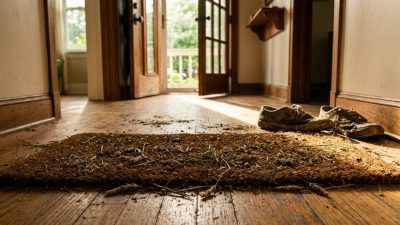
Yes. The EPA notes that most pesticide brought indoors arrives on footwear. Taking shoes off at the door is one of the simplest and most effective steps for keeping lawn and outdoor chemicals out of the dust your family lives with.
Use integrated pest management, the approach the EPA recommends. Pull weeds by hand, seal cracks, store food properly, and remove what attracts pests before reaching for a spray. When a product is needed, choose the lowest-toxicity option and follow the label exactly.
A pesticide is any substance made to kill, repel, or control a pest. The word covers several groups, and each one targets something different. Herbicides kill weeds. Insecticides kill insects. Fungicides control mold and mildew. Rodenticides kill rats and mice. The lawn and garden aisle holds all of them.
The chemistry matters because it decides how long a product lasts and how it behaves once applied. Older organochlorine pesticides like DDT were banned in the United States in 1972, yet the EPA notes traces still turn up in soil today because they break down so slowly. Newer classes act faster and clear sooner, but many, including the organophosphates and pyrethroids common in home products, still carry health effects worth understanding before you spray.
Most household pesticide exposure starts in four places, and none of them require a farm.
The lawn is the largest. Homeowners apply pesticides to about 40 million acres of lawn in the United States, an area larger than any single food crop, and those chemicals sit on the grass where children play and pets walk. The garden adds more, with products sprayed directly on soil and food plants. Indoor use brings the exposure closest of all, since sprays, foggers, and bait for ants, roaches, and rodents leave residue on floors, baseboards, and counters where hands and food make contact.
The fourth source arrives without your consent. Pesticides drift. Spray applied on a neighbor's yard or a nearby farm field travels on the wind, and the USGS has detected agricultural pesticides in the air, rain, and soil of areas miles from where they were used. If you live near farmland, drift can deposit chemicals on your property that you never bought.
A pesticide's job ends quickly. Its presence often does not. Many products bind to soil particles and stay in the top few inches of ground, the layer where people and pets make the most contact, and how long they last depends on the chemical, the soil, and the weather.
Indoors, they last even longer. Sunlight and rain break pesticides down outside, but neither reaches a chemical tracked in on shoes or sprayed along a baseboard. The result is that residue collects in household dust and stays there. A study by the American Chemical Society found pesticides in the dust of the large majority of homes it tested, including chemicals that had been banned for years. That dust settles on floors, carpets, and toys, which is exactly where the youngest members of a household spend their time.
The health effect depends on the chemical and the dose, but the risks are documented. Organophosphate insecticides, one of the most common home and agricultural classes, work by disrupting the nervous system of pests, and the EPA notes they act on the same nervous system pathway in humans. High exposure can cause headaches, nausea, dizziness, and in severe cases far worse. Long-term, low-level exposure is the concern for most households.
Children carry the heaviest risk. They breathe faster, weigh less, and spend more time on the floor where residue collects, so they take in more pesticide relative to their body size than an adult in the same room. The American Academy of Pediatrics has linked children's pesticide exposure to effects on the developing brain and nervous system, and research published in the journal Pediatrics associated exposure to certain organophosphates with attention and behavioral problems in children. Pregnant women face added concern, since some pesticides can cross the placenta. For most adults, the risk is lower, but the people most sensitive to these chemicals are the ones least able to avoid the floors and yards where they land.
Reduce what you apply first, because the pesticide you never use is the one you never have to worry about. Pull weeds by hand, accept a lawn that is not flawless, and seal cracks and store food properly to keep pests out before you reach for a spray. The EPA promotes this approach, called integrated pest management, as a way to control pests with the least chemical exposure.
When you do use a product, follow the label exactly, since the instructions set the dose shown to work with the least excess. Keep children and pets off treated areas for the time the label specifies. Take shoes off at the door, the single most effective step for keeping lawn and outdoor residue out of the house, since the EPA notes that most pesticide brought indoors arrives on footwear. Store products in their original containers, away from food and out of a child's reach. If you grow food, choose lower-toxicity options and wash all produce well. And if you live near farmland, close windows during known spraying seasons and consider a vegetative buffer of shrubs or trees to catch some of the drift before it reaches your home.
Outdoors, sun and rain finish a pesticide inside a season. Indoors nothing touches it, so a house keeps every application…
Air quality, mold, EMF, light and water all shape how a house feels and how the people in it feel. Whatever your concern is, the first step is finding out what is there.
Our certified team of environmental professionals and advocates can help.