


North Central Florida has lost 80% of its monarch butterflies
North Central Florida's monarch population has fallen 80% since 2005, with development, pesticides, and a parasite called OE all contributing to the decline. The figure comes from a 37-year survey at the Florida Museum of Natural History.
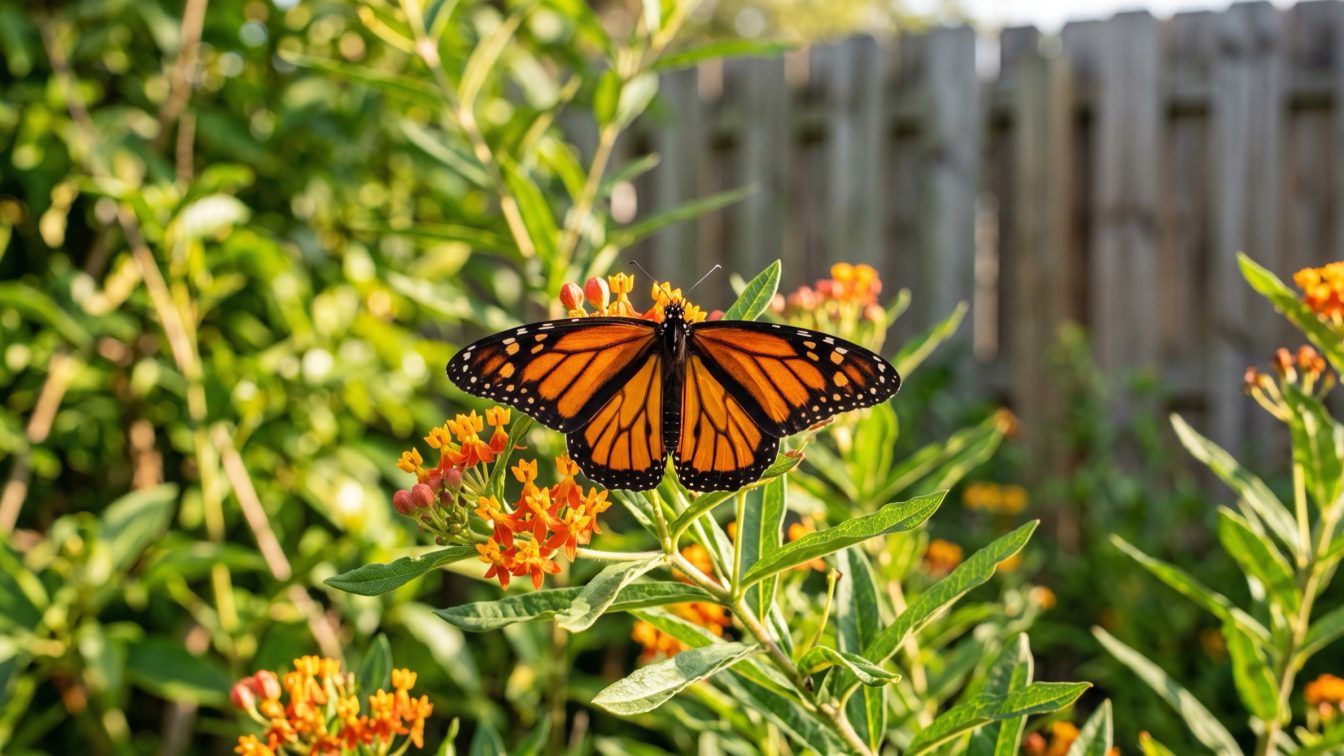
Table of contents
- Two monarchs, one region
- Why monarchs matter beyond their wings
- The source: development strips out milkweed
- The first exposure pathway: pesticides in plant tissue
- The second exposure pathway: the OE parasite
- The fix: plant native milkweed
- The warning: skip tropical milkweed
- Practical fixes for your yard
- Community effort adds up
- The bottom line
Summary of this article
- Monarch caterpillars and butterflies in North Central Florida dropped 80% since 2005, according to a 37-year survey published by the Florida Museum of Natural History in 2018.
- North Central Florida hosts two monarch types: the migratory Eastern Monarch, which travels to Mexico and breeds in Florida, and a non-migratory Florida Monarch that stays year-round.
- The three biggest drivers of the decline are development, pesticide overuse, and the parasite Ophryocystis elektroscirrha, known as OE, said Jaret Daniels of the Florida Museum's McGuire Center for Lepidoptera & Biodiversity.
- Milkweed is the only plant monarchs use to lay eggs and the sole food source for their caterpillars. As development removes milkweed, monarchs lose the resource they need to reproduce.
- Pesticides absorb into plant tissue and can remain for weeks. A monarch caterpillar that eats a treated leaf dies, said Vaughn Shirey, assistant curator of butterflies and moths at the Florida Museum.
- OE spreads through spores on milkweed and causes crumpled wings, weakness, and failure to emerge from the chrysalis. Migratory monarchs can clear the infection; Florida's non-migratory population cannot.
- Florida has 21 species of native milkweed. Pink swamp milkweed, butterfly weed, and aquatic milkweed are the most accessible and easy to grow, Daniels said.
- Tropical milkweed is invasive and does not die back in winter, which disrupts migration and creates an "ecological sink." Plant native milkweed instead.
Monarch butterflies in North Central Florida have fallen 80% since 2005. That figure comes from a 37-year survey the Florida Museum of Natural History published in 2018. The survey tracked both caterpillars and adult butterflies across the region.
The decline is not a mystery. Jaret Daniels curates at the Florida Museum’s McGuire Center for Lepidoptera & Biodiversity. He points to three drivers: development, pesticide overuse, and a parasite called Ophryocystis elektroscirrha, known as OE. Each one attacks the monarch through a different pathway, and each one has a practical fix.
“No matter how you look at it, the North American population of monarchs is declining, and has been declining for some years,” Daniels said.
The core lesson is a building-biology one. You solve a problem by controlling its source, not by chasing symptoms. For monarchs, the source is habitat, and the single most important element of that habitat is one plant.
Two monarchs, one region
North Central Florida holds an unusual mix. The region hosts both a migratory population and a resident one, and that split shapes how the decline plays out.
“It’s kind of this weird place, we have migratory individuals that come through that migrate and breed, and then we have a true non-migratory population,” Daniels said.
The migratory Eastern Monarch travels to Mexico in the fall and uses Florida as its first breeding ground before heading north in spring. The non-migratory Florida Monarch stays year-round, sometimes drifting south in winter but returning north as it warms. Disease makes that difference matter, as the OE parasite shows later.
Both populations depend on the same resource, and both are losing it.
Why monarchs matter beyond their wings
Monarchs are a pollinator. When a monarch lands on a flower to sip nectar, pollen settles on its body. It travels to the next plant, fertilizing flowers so they can reproduce.
That role makes the monarch a stand-in for a much larger group, valued for its migration and its recognizable orange, black, and white wings. When monarch numbers fall, they signal pressure on the broader web of insects that pollinate crops and wild plants alike.
The monarch’s entire life cycle hinges on a single plant: milkweed. Milkweed is the only plant monarchs can use to lay their eggs, and it is the sole food source for their caterpillars. Remove milkweed, and you remove the monarch’s ability to reproduce.
The source: development strips out milkweed
The first driver is habitat loss, and it traces directly to Florida’s growth. Several Florida cities have appeared on lists of the fastest-growing U.S. metro areas for years. That growth converts wild land into homes and commercial lots.
Native Florida milkweed thrives on the kind of land development erases. It grows on unkept lots, roadsides, and pastures. When that land is cleared and landscaped, the milkweed goes with it, and the monarchs lose their nursery.
The replacement landscapes offer nothing. “I mean, if you take a ride through all of these developments, there’s not a single flower in any of these landscapes,” said John Calta, a hobby gardener in High Springs. “It’s all shrubs, bushes, trees. That’s a desert for pollinators.”
Control the source, and you address the largest share of the problem. For a homeowner, that means putting milkweed back into a landscape that development stripped bare.
The first exposure pathway: pesticides in plant tissue
The second driver is pesticide overuse, and its danger is that it hides inside the plant. Pesticide is a broad term covering insecticides, herbicides, and fungicides, all of which can harm pollinators.
Pesticides are lethal to caterpillars because of where the chemical ends up. Sprayed on a plant, it absorbs into the tissue and can stay there for weeks. A caterpillar that eats a treated leaf ingests the chemical and dies, even if the spraying happened long before. Pesticide indoors does not break down the way it does outside, which is why residue builds up year on year.
“Most people don’t like bugs,” said Vaughn Shirey, assistant curator of butterflies and moths at the Florida Museum. “One of the biggest contributors to this larger pattern of global insect decline is just like the overuse of pesticides in our environment.”
The exposure pathway is not limited to plants that were sprayed on purpose. Most pesticide applications aim at mosquitoes. But the chemical drifts on the wind onto native plants nearby, contaminating milkweed a gardener never treated.
The second exposure pathway: the OE parasite
The third driver is OE, a naturally occurring parasite that spreads plant to plant. Its transmission works like a contaminated surface.
OE spores sit on top of milkweed leaves. When a monarch touches an infected plant, it can carry the spores to other plants. A newly hatched caterpillar then eats those spores along with the leaf.
Shirey used a plain comparison. “A sick person touches a door handle and then you get sick because you touched it,” he said. “It’s the same idea.” The infection causes crumpled wings, physical weakness, and can prevent a butterfly from emerging from its chrysalis at all.
Here the two populations diverge. Migratory monarchs can clear the infection during their long journey. Infected individuals fly less well and often die before arriving, which filters the parasite out of the population. Florida’s resident monarchs get no such filter. Without migrating, they cannot clear the infection, so OE accumulates in the non-migratory Florida population.
The fix: plant native milkweed
The most powerful action is also the simplest. Plant native milkweed, and you rebuild the source the monarch needs.
Florida has 21 species of native milkweed, which gives gardeners room to choose. Daniels names three as the most accessible and easy to grow: pink swamp milkweed, butterfly weed, and aquatic milkweed. Any of them restores the egg-laying site and caterpillar food that development removed.
Native milkweed also carries a built-in defense against OE. Native species die back in winter, which clears the accumulated spores from the plant before the next generation of caterpillars arrives. That seasonal reset is a natural break in the disease pathway. Pollinators sit outside most exposure rules entirely, and no US regulation covers wildlife exposure to wireless radiation.
The warning: skip tropical milkweed
Not all milkweed helps. Tropical milkweed is one of the most commonly sold varieties, marketed as an ornamental, and it works against the monarchs it attracts.
The problem is that tropical milkweed does not die back in winter the way native species do. Because it stays alive year-round, it disrupts migration and encourages winter breeding, and it lets OE spores build up on leaves that never drop.
“That plant is sort of setting monarchs up as, like, an ecological sink,” Daniels said. “It’s drawing them in, to use that plant, and that can have negative consequences on the butterfly.” An ecological sink is a place that attracts animals but harms their survival or reproduction.
If you already grow tropical milkweed, there is a workaround. John Calta keeps his in vases and brings it inside in winter to cut it back to the stems. That clears lingering OE spores and pesticides, and mimics the die-back of native plants.
Practical fixes for your yard
The science points to a short list of actions any gardener can take.
Plant native milkweed. Pink swamp milkweed, butterfly weed and aquatic milkweed are the easiest of Florida’s 21 native species to grow. They give monarchs both an egg-laying site and caterpillar food.
Stop using pesticides on pollinator plants. Pesticides linger in plant tissue for weeks and kill caterpillars that feed on treated leaves. John Calta stopped spraying entirely after learning about pollinator declines. “We’re gonna let ecosystems work. We’re gonna let Mother Nature take this course,” he said.
Cut back milkweed in winter to break the OE cycle. Whether you grow native or tropical milkweed, trimming the plant to the stems in winter clears accumulated spores. Stacey Calta noticed the difference: “I haven’t seen any OE in a monarch since we stopped with the enclosures.”
Plant a mix of flowers, not just shrubs. A landscape of “shrubs, bushes, trees,” as Calta put it, is a desert for pollinators. Nectar flowers feed adult monarchs alongside the milkweed that feeds their young.
Start small. The Caltas began with a single milkweed plant and now have a property full of natives. “We got our first milkweed planted, and, oh, look, we got a caterpillar. Then that’s when it all started,” John Calta said.
Community effort adds up
Individual yards connect into something larger. The Florida Museum of Natural History held its fourth annual Pollinator Palooza the last week of June, at First Magnitude Brewing Company in Gainesville. Native plant giveaways ran alongside the talks.
The event’s message was that protection does not require expertise. Alachua County has the largest population of entomologists per capita in the U.S., which is why the local decline is so well documented. The fixes are available to anyone with a patch of yard.
The bottom line
North Central Florida’s monarchs have dropped 80% since 2005. Three causes are known: development that removes milkweed, pesticides that poison plant tissue, and the OE parasite Florida’s resident monarchs cannot clear.
Each driver has a counter. Plant native milkweed to rebuild the source. Stop spraying to close the pesticide pathway. Cut milkweed back in winter to break the OE cycle. Skip tropical milkweed so you do not build an ecological sink.
The monarch is a poster species for every pollinator, which means the plant you put in the ground does more than help one butterfly. As John Calta learned, it takes just one caterpillar to start.
Sources
- WUSF / WUFT News. North Central Florida's monarch butterfly population is declining. Here's why (2026) by Kaley Mantz, published July 18, 2026
- Jaret Daniels, curator, Florida Museum of Natural History, McGuire Center for Lepidoptera & Biodiversity (quoted in WUSF/WUFT reporting)
- Vaughn Shirey, assistant curator of butterflies and moths, Florida Museum of Natural History (quoted in WUSF/WUFT reporting)
- John Calta and Stacey Calta, hobby gardeners, High Springs, Florida (quoted in WUSF/WUFT reporting)
- Florida Museum of Natural History, 2018 research news article reporting a 37-year monarch survey and an 80% decline in North Central Florida since 2005
- Florida native milkweed guidance (21 species statewide; pink swamp milkweed, butterfly weed, and aquatic milkweed cited as most accessible; tropical milkweed identified as invasive), as reported by WUSF/WUFT
Questions people ask
How much have monarch butterflies declined in North Central Florida?
Monarch caterpillars and butterflies dropped 80% since 2005, according to a 37-year survey published by the Florida Museum of Natural History in 2018.
What is causing the decline?
Three main drivers, according to Jaret Daniels of the Florida Museum: development that removes milkweed, pesticide overuse, and the parasite Ophryocystis elektroscirrha (OE). Each harms monarchs through a different pathway.
Why is milkweed so important to monarchs?
Milkweed is the only plant monarchs use to lay their eggs, and it is the sole food source for their caterpillars. Without milkweed, monarchs cannot reproduce. As development removes it, the population loses the resource it depends on.
How do pesticides harm monarchs?
Pesticides absorb into plant tissue and can stay there for weeks. A caterpillar that eats a treated leaf dies, said Vaughn Shirey of the Florida Museum. Sprays aimed at mosquitoes can also drift onto native plants nearby.
What is OE, and why does it hit Florida's monarchs harder?
OE is a parasite whose spores sit on milkweed leaves and spread from plant to plant. It causes crumpled wings, weakness, and failure to emerge from the chrysalis. Migratory monarchs can clear the infection during their journey, but Florida's non-migratory population cannot, so OE accumulates.
Which milkweed should I plant?
Plant native milkweed. Florida has 21 species, and Daniels names pink swamp milkweed, butterfly weed, and aquatic milkweed as the most accessible and easy to grow.
Why should I avoid tropical milkweed?
Tropical milkweed is invasive and does not die back in winter. That disrupts migration, encourages winter breeding, and lets OE spores build up, creating what Daniels calls an "ecological sink" that attracts monarchs but harms them.
What if I already have tropical milkweed?
Cut it back to the stems in winter, as gardener John Calta does, to clear lingering OE spores and pesticides and mimic the natural die-back of native milkweed.
What are the two types of monarchs in North Central Florida?
The migratory Eastern Monarch travels to Mexico and breeds in Florida before heading north, and the non-migratory Florida Monarch stays year-round. The two differ in how they handle the OE parasite.
How can I start helping today?
Plant native milkweed, stop using pesticides on pollinator plants, add nectar flowers alongside the milkweed, and trim milkweed in winter. Starting with a single plant is enough; the Caltas built a full pollinator garden from one milkweed.


Have questions about the environment inside your home?
Air quality, mold, EMF, light and water all shape how a house feels and how the people in it feel. Whatever your concern is, the first step is finding out what is there.
Our certified team of environmental professionals and advocates can help.