


3M’s $12.5 billion PFAS settlement leaves private well owners out
3M's own filing says it admitted nothing, and no judge ever ruled on who caused the contamination. The money goes to water utilities, while private well owners are excluded by name.
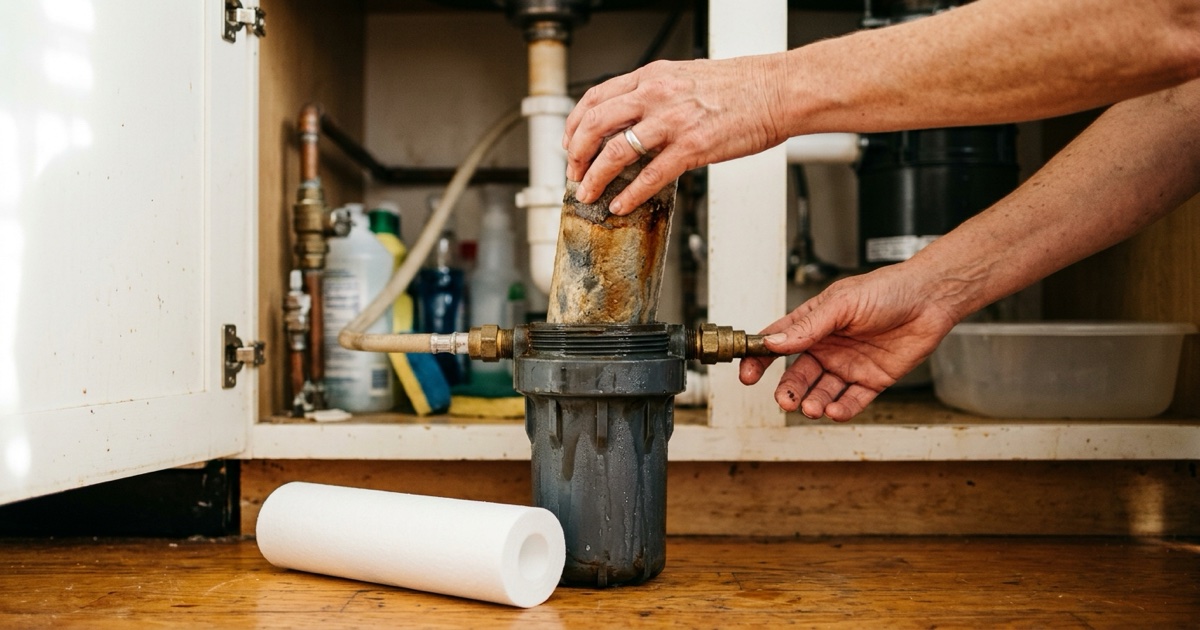
Table of contents
- What did the PFAS settlements decide?
- Did anybody admit fault?
- Does a private well get any of this money?
- What happened to utilities that did nothing?
- How is a town’s share worked out?
- Will a settlement lower your water bill?
- Why did 18 Alabama systems opt out?
- How do you find out what is in your own water?
Summary of this article
- Both settlements were approved by Judge Richard M. Gergel in the U.S. District Court for the District of South Carolina, in MDL 2873, master docket 2:18-mn-2873-RMG.
- 3M agreed to pay $10.5 billion to $12.5 billion, scheduled from 2024 through 2036. The court approved it in March 2024 and it took effect that May.
- Chemours, DuPont, Corteva and EIDP paid $1,185,000,000 into a fund, approved on 8 February 2024 and funded in full by September 2023.
- Every agreement states it is not an admission of liability, and no jury or judge decided who was at fault.
- The class members are public water systems. A household is not a claimant, and a private well is excluded from the 3M class by name.
- Awards are calculated from flow rate and PFAS concentration, an estimate of treatment cost rather than a measure of harm.
- EPA put the total annualized cost of its PFAS drinking water rule at $1,549 million a year, so the settlements contribute toward a recurring bill rather than retiring it.
What did the PFAS settlements decide?
Judge Richard M. Gergel approved both of them, and neither one decided who put PFAS in anybody’s water.
Gergel runs a single federal docket where firefighting foam cases from all over this country got pooled together, about 15,200 of them still pending on 1 July 2026. Two are about drinking water and nothing else.
The smaller deal came first. Chemours, DuPont, Corteva and EIDP agreed to pay “one billion one hundred eighty-five million dollars,” which their own notice calls a total and a maximum. Gergel granted final approval on 8 February 2024. Chemours had wired its half, $592 million, into a Water District Settlement Fund back in September 2023.
The other one is far bigger. 3M agreed to a total somewhere between $10.5 and $12.5 billion, spread out from 2024 through 2036. Gergel approved that in March 2024 and it took effect in May.
| Who settled | What they owe water systems | When it gets paid |
|---|---|---|
| 3M Company | $10.5 billion to $12.5 billion | 2024 through 2036 |
| Chemours, DuPont, Corteva, EIDP | $1,185,000,000 | Funded in full, September 2023 |
| Tyco Fire Products and Chemguard | $750 million | Paid off by December 2024 |
| BASF Corporation | Not printed here | See below |
BASF settled too, and its deal carries final approval like the other three. A dollar figure for it floats around in trade coverage, and we went looking for a filing that states it and came back empty-handed, so it stays out of our table.
Did anybody admit fault?
Each company says so itself, in its own quarterly filing, on the record.
Open one and the sentence is sitting there in a note near the back, where a company keeps its lawsuits. 3M writes that its deal “does not admit any liability or wrongdoing” and waives no defenses. Chemours calls its agreement “not in any way an admission of liability or fault.” Johnson Controls said the same for Tyco. No admission of liability. No wrongdoing.
Then there is a notice 3M paid to mail to every water system in its class, and that one is blunter. 3M “denies the allegations in the Litigation,” denies having any liability to anybody, and says it would have fought every claim to the end.
A judge signing off is not a finding either, and that same notice says so in a line of its own. It “should not be understood as an expression of any opinion by the Court as to the merits” of either side.
Gergel’s job at that hearing was narrower than most people assume. He had to decide whether a bargain was fair to systems it would bind. So he ruled on that bargain. Nobody ruled on the chemistry.
Money moved and no finding happened. Both halves are true at once, and we would say a story that prints the billions without those denials, or prints them as though the money were imaginary, has got it wrong.
Does a private well get any of this money?
Water systems get paid. A household isn’t a claimant, and a private well is excluded by name.
Picture a list somebody drew up. Every active public water system in this country with a tainted source as of 22 June 2023 is on it. So is any system that has to test for PFAS under a federal monitoring round, or that serves more than 3,300 people.
Now read who got left off. Transient systems of any size. Some state and federal systems with no power to sue on their own. And one line names your backyard, excluding any privately owned well that serves only the household of whoever owns it, or of their tenant.
Water out of a pipe in your own yard was never in this. Not because it came back clean. Because you aren’t a utility, and every dollar in these deals was written to travel from a chemical company to a utility and stop there.
Even on public water, no check arrives at your door, and we would rather say that flatly than leave anybody watching a mailbox. Payment lands with whoever runs your pipes, or with a state fund that hands it on.
What happened to utilities that did nothing?
A system that ignored its mail stayed in the class. A system that stayed in gave up any right to ever sue 3M or DuPont over this.
Maine’s attorney general spelled that out in writing for every water system in that state. A system that does not opt out “will lose the legal right to file a separate lawsuit against 3M or DuPont.” No form to file. No hearing to sit through. Silence signed it.
Some read that and got out. A Notice Administrator appointed by the court sat down in February 2024, worked through the DuPont exclusions one at a time and kept a tally, and it came to roughly 1,000 of 14,167 systems named on his list. About 300 more asked to leave who had never been on it at all.
That same office wrote the document we would hand a reader first. The state negotiated neither deal, its sheet notes, and Maine’s own lawsuits chase far more money than its water systems are likely to see from a national class. A state quietly telling its towns that it wants more than what is on offer is worth more than any press release we have read about this.
How is a town’s share worked out?
Two inputs, and harm is not one of them. Maine’s sheet gets it down to one line, that the formula requires two inputs, the flow rate for the public water system and the level of PFAS detected.
That’s a plumbing estimate, and it’s worth knowing that before you read another headline about a billion-dollar payout. How much water a system moves, and how much PFAS turned up in it. Nobody in that arithmetic is sick.
New Hampshire shows what it looks like when money lands. On 24 September 2025 its attorney general announced that $7,960,660.29 had arrived from 3M. Read that to the penny. Somebody worked it out to the cent, and that’s the whole character of this thing: an invoice, not a verdict. It is a first slice of roughly $56 million, headed into that state’s Drinking Water and Groundwater Trust Fund, with smaller payments running on through 2033.
3M’s pot gets carved up in advance. Systems that had already found PFAS share $6,875,000,000. Systems that had not yet looked share $3,625,000,000 to $5,625,000,000. DuPont’s fund divides on a 55 to 45 split the same way, and lawyers’ fees come out of those pots rather than sitting on top.
Will a settlement lower your water bill?
It reaches your utility, toward treatment. Nothing comes back to a household as a refund, and what does arrive covers a slice of what treatment is expected to cost.
EPA priced that bill when it wrote its PFAS rule. Call it $1,549 million a year, most of it treatment. Note the shape of that figure. It isn’t a lump sum anybody pays off. It arrives every year, the way your own water bill does.
Now compare carefully, because this is where arithmetic gets abused. That $12.5 billion is a ceiling paid out over thirteen years, while that yearly cost is discounted and stretched across a horizon running past the end of this century. Dividing one by the other invents a precision neither has.
What survives is direction, and we’d sooner hand you that than a division dressed up as a fact. These deals pay toward a bill that keeps arriving. They don’t retire it.
Lawyers who negotiated that smaller deal said something close to it themselves. Class counsel had “a reasonable basis to believe” those defendants make up “a very small share” of the PFAS liabilities alleged across this litigation, on the order of 3-7% or less.
Why did 18 Alabama systems opt out?
They kept a right to sue by opting out, and in April 2026 they used it.
Auburn, Grove Hill, West Escambia, Childersburg, Talladega, Tuskegee and Weaver went to federal court. Eighteen systems in all, once you count state courts too. By May the panel that assigns these cases had pulled seven of them into Gergel’s docket, where they sit alongside a class they refused to join.
One board got further than the rest. The Water Works and Sewer Board of the town of Center, Alabama, opted out, carried its case all the way into a courtroom and started trial on 26 January 2026. Then the trial stopped. It settled before it ended, for a sum Chemours told shareholders didn’t move its results for that quarter.
Personal injury is still wide open, and it’s the half of this we’d watch. That court set a first test trial for October 2025, vacated the schedule in August 2025, and has set no new date since. A court-appointed mediator runs those talks now.
States keep cutting their own deals. 3M agreed in May 2025 to pay New Jersey up to $450 million, again admitting nothing, and it was still waiting on a ruling in July 2026.
How do you find out what is in your own water?
Your utility has to tell you once a year, and that yearly notice is the answer we’d give anybody who asks us whether a settlement means their water came back clean. A settlement check tells you nothing about your faucet.
Every community water system publishes a yearly water quality report, with an average and a range for whatever turned up in it. Systems in the federal PFAS testing round have to tell customers those results exist. A private well appears in neither.
An enforceable limit for PFOA and for PFOS is 4.0 parts per trillion. EPA also set a health goal for both at zero, with nothing behind it to enforce, and it picked 4.0 because that’s the lowest a lab can reliably measure. It marks what a machine can see. It says nothing about what a body can take.
Dates are moving too. Systems are supposed to comply by 26 April 2029. EPA proposed in May 2026 to let systems that ask push PFOA and PFOS out to 2031, and a companion proposal would drop limits for four other PFAS. Comments closed on 20 July 2026. Neither is final, and a proposed rule changes nothing today.
So these settlements bought treatment. Money sorted by flow rate and lab result, paid to utilities over a decade or more, against a bill that arrives again every year. They closed one kind of claim for systems that stayed in the class. They established nothing about anybody being harmed, decided nothing about who was at fault, and they can’t tell you what came out of your tap this morning. That last question has its own answer, published once a year, addressed to you.
Sources
- 3M Company. Form 10-Q for the quarterly period ended June 30, 2026, Note 15, PFAS Litigation (2026) filed 21 July 2026, CIK 0000066740
- The Chemours Company. Form 10-Q for the quarterly period ended June 30, 2026, Note 17, Commitments and Contingent Liabilities (2026) filed 5 August 2026, CIK 0001627223
- Johnson Controls International plc. Form 10-Q for the quarterly period ended June 30, 2026, Water Systems AFFF Settlement Agreement (2026) filed 29 July 2026, CIK 0000833444
- U.S. District Court for the District of South Carolina. Aqueous Film-Forming Foam (AFFF) Products Liability Litigation, MDL 2873, public water system settlements, Frequently Asked Questions (3M) (2024) Master Docket No. 2:18-mn-2873-RMG; City of Camden v. 3M Company, No. 2:23-cv-03147-RMG. Read via Internet Archive; the live host blocks automated readers.
- U.S. District Court for the District of South Carolina. AFFF MDL 2873 public water system settlements, Frequently Asked Questions (DuPont) (2024) Master Docket No. 2:18-mn-2873-RMG. Read via Internet Archive.
- Office of the Maine Attorney General. Information Sheet on PFAS Settlement for Public Water Systems (2023) In re Aqueous Film-Forming Foams Products Liability Litigation, MDL No. 2:18-mn-2873
- New Hampshire Department of Justice, Office of the Attorney General. New Hampshire Receives First PFAS Settlement Payment of Nearly $8 Million from 3M Company for Public Drinking Water Systems (2025) press release, 24 September 2025. Read via Internet Archive; the live host blocks automated readers.
- US Environmental Protection Agency. PFAS National Primary Drinking Water Regulation, final rule (2024) 89 FR 32532, published 26 April 2024, document 2024-07773
- US Environmental Protection Agency. Extending the Compliance Deadline for the PFOA and PFOS Maximum Contaminant Levels, proposed rule (2026) 91 FR 29425, published 20 May 2026, Docket ID EPA-HQ-OW-2025-1742
- US Environmental Protection Agency. Rescission of Regulatory Determinations and Removal of Related Provisions for Four PFAS Substances, proposed rule (2026) 91 FR 29413, published 20 May 2026
Questions people ask
Do I get money from the 3M or DuPont PFAS settlement?
No. The settlement classes are public water systems, not individuals. Payments go to the utility or, in some states, to a state fund that distributes to eligible systems. A privately owned well serving one household is excluded from the 3M class by name.
How much did 3M agree to pay for PFAS in drinking water?
Between $10.5 billion and $12.5 billion in total, scheduled from 2024 through 2036, under the class settlement approved in MDL 2873. 3M recorded a pre-tax charge of $10.3 billion in 2023, the discounted present value of the expected $12.5 billion in nominal payments.
How much did DuPont, Chemours and Corteva pay?
$1,185,000,000 into a qualified settlement fund, described in the class notice as the total and maximum amount. Chemours contributed 50 percent, or $592 million, deposited on 6 September 2023. DuPont and Corteva together contributed the other half.
Did 3M or DuPont admit that PFAS harmed anyone?
No. 3M's filing states the settlement provides that it does not admit any liability or wrongdoing. Chemours states its agreement was entered into solely by way of compromise and is not in any way an admission of liability or fault. A judge approving a class settlement decides whether the deal is fair to the class, not who was right.
Which court is handling the PFAS firefighting foam cases?
The U.S. District Court for the District of South Carolina, in the AFFF multidistrict litigation, MDL 2873, master docket 2:18-mn-2873-RMG, before Judge Richard M. Gergel. About 15,200 cases were pending in it as of 1 July 2026.
How is each water system's payment calculated?
From two inputs: the flow rate of the system and the level of PFAS detected. The allocation procedures are built around the cost of treating contaminated water, so the award reflects an engineering estimate rather than any finding about health.
What do the settlements not cover?
Personal injury claims, state natural resource damage claims, stormwater and wastewater claims, and the claims of systems that opted out. There is no global settlement of the personal injury cases in MDL 2873, and no trial date has been set since the court vacated the October 2025 bellwether schedule.
Have questions about the environment inside your home?
Air quality, mold, EMF, light and water all shape how a house feels and how the people in it feel. Whatever your concern is, the first step is finding out what is there.
Our certified team of environmental professionals and advocates can help.