


Backyard chicken eggs near e-waste sites carried flame retardants
Eggs from backyard chickens living on or beside e-waste recycling ground carried especially high levels of PBDE flame retardants. The hens pick up the chemicals from contaminated soil.
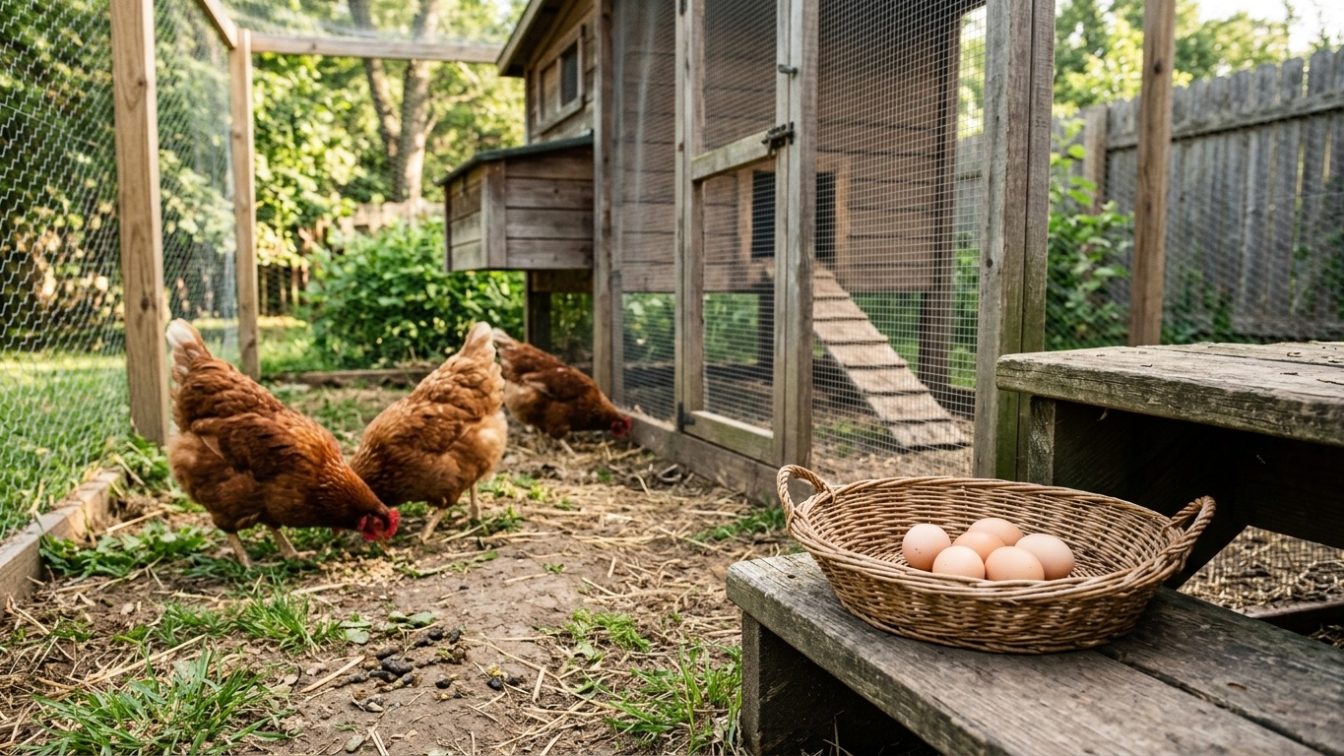
Table of contents
Summary of this article
- High levels of brominated flame retardant (BFR) contamination, specifically PBDEs, were detected in eggs from backyard chickens raised near e-waste recycling sites and locations where trash is open-burned, Environmental Health News (EHN) reported on January 9, 2026.
- PBDE levels in eggs were highest in poultry flocks living on and near e-waste recycling areas, according to the underlying research.
- PBDEs (polybrominated diphenyl ethers) are flame retardants added for decades to electronics, foam furniture, and plastics to slow ignition.
- The exposure pathway runs through soil: chickens ingest contaminated soil and dust while foraging, and the fat-soluble chemicals accumulate in the fatty egg yolk.
- PBDEs are associated with thyroid disruption and effects on brain development, with young children and developing fetuses at greatest risk.
- A home-raised egg from a contaminated yard can carry a higher contaminant load than a commercial egg.
- Source control is the primary fix: identify e-waste and open-burn activity nearby, test yard soil, and site coops away from contaminated ground.
- Eggs are a monitoring tool as well as a risk, testing eggs can reveal soil contamination a homeowner did not know was present.
Eggs from backyard chickens raised near e-waste recycling sites and open trash-burning locations carry high levels of brominated flame retardant contamination. Environmental Health News (EHN) reported the finding on January 9, 2026, citing research that detected elevated PBDEs, a class of flame retardant, in home-raised eggs. PBDE levels were highest in flocks living on and near e-waste recycling areas.
The finding upends a common assumption. Backyard eggs are widely treated as the cleaner alternative to store-bought. Near the wrong source, the opposite can be true.
For anyone who keeps hens, gardens, or lives close to a recycling operation or a place where trash is burned, the story is not about eggs alone. It is about what sits in the soil, how it moves into food, and how a family can control the source before it reaches the plate.
What PBDEs Are and Where They Come From
PBDEs, polybrominated diphenyl ethers, are a family of brominated flame retardants. For decades, manufacturers added them to electronics, foam furniture, carpet padding, and plastics to slow ignition and buy escape time in a fire.
That widespread use created a widespread waste problem. When electronics reach the end of their life, the PBDEs inside them do not disappear. Two activities release the chemicals back into the environment:
E-waste recycling. Breaking apart old electronics, especially informal recycling that shreds, melts, or open-burns components to recover metal, scatters PBDE-laden dust and residue.
Open trash burning. Burning household waste that contains treated plastics and foam sends brominated compounds into smoke that settles onto nearby ground.
Both activities share a common endpoint: the chemicals land in soil and dust. PBDEs are persistent, meaning they do not readily break down. They can remain in soil for years after the burning or recycling that deposited them.
The Pathway: From Soil to Yolk
The building-biology principle is that exposure follows a pathway, a source, a route, and a person at the end of it. With backyard eggs, the pathway is unusually direct.
Start with the chicken. A foraging hen is a ground-level vacuum. It pecks constantly, and in doing so it swallows soil and dust along with the bugs, seeds, and grit it is after. Studies of free-range poultry consistently show that soil ingestion, not feed, is the dominant route for soil-borne contaminants entering the bird.
Then the chemistry takes over. PBDEs are fat-soluble, they dissolve in fat rather than water. Once inside the hen, they move into fatty tissue and concentrate in the yolk, which is the fattiest part of the egg. The bird acts as a biological concentrator, pulling diffuse contamination out of the soil and packing it into a food a family eats daily.
That is why a home-raised egg from a contaminated yard can carry a higher contaminant load than a commercial egg. Caged commercial hens rarely touch soil. A backyard hen that free-ranges over contaminated ground has continuous access to the source.
Why the Source Location Decides the Risk
The research points to a clear gradient: PBDE levels in eggs were highest in flocks living on and near e-waste recycling areas. Distance from the source matters.
The reason is how contamination spreads from a burn or recycling site. Smoke and dust deposit heavily close to the source and thin out with distance. A yard directly downwind of open burning receives more deposition than one a mile away. The soil under the coop records that difference, and the eggs record the soil.
This makes proximity the single most important variable a homeowner can assess. You cannot see PBDEs in soil. But you can identify whether an e-waste operation, a metal-recovery yard, or a recurring trash fire sits nearby, and whether your property lies downwind of it.
Why PBDEs Matter for Health
PBDEs are not inert. They are associated with two categories of harm that fall hardest on the youngest.
Thyroid disruption. PBDEs interfere with thyroid hormone, the chemical signal that regulates metabolism and, critically, brain development in infants and children. The thyroid system is a common target because parts of the PBDE molecule resemble thyroid hormone closely enough to disrupt it.
Neurodevelopmental effects. Research links PBDE exposure to effects on brain development, including attention and cognition, with prenatal and early-childhood exposure of greatest concern. A developing brain is more sensitive to interference than a mature one.
The exposure route sharpens the concern. Eggs are a staple food, eaten often and in quantity, and children eat more food per pound of body weight than adults. A contaminant delivered through a daily food consumed by a child is a contaminant with frequent, repeated access.
The Fix Is Source Control
In building biology, the most reliable fix is source control, stopping a contaminant at its origin rather than managing exposure after it reaches you. With PBDEs in eggs, source control operates at two points: the environment around the flock and the flock’s access to it.
You cannot filter a yard the way you filter tap water. But you can decide where hens forage, what soil they touch, and whether the surrounding environment is one that continues to deposit contamination. Those decisions determine what ends up in the yolk.
The same biology that makes eggs a risk also makes them a tool. Because a hen concentrates soil contaminants into her eggs, testing an egg can reveal soil contamination a homeowner never suspected. An egg is both an exposure route and an early-warning monitor.
Practical Steps You Can Take
You cannot shut down a neighboring recycling operation from your backyard. You can control your flock’s exposure, test what you cannot see, and reduce what reaches your table.
Map what is nearby and upwind. Before you keep hens, identify any e-waste recycling, metal-recovery, or scrapping operation within about a mile, and note any recurring open burning. A property downwind of these sources is higher risk. This assessment is free and is the single most protective step.
- Test your soil
- Have a certified lab test your yard soil for PBDEs and, if a burn source is nearby, for heavy metals such as lead, which often travel with the same waste. Sample the specific area where hens forage and where children play.
- Test your eggs if a source is nearby
- If you live near e-waste recycling or open burning, have your eggs analyzed. Because the yolk concentrates fat-soluble contaminants, an egg test can confirm whether soil contamination is reaching your food.
- Control where hens forage
- If soil is contaminated or a source is close, confine hens to a run with clean, imported soil or a hard, cleanable surface rather than letting them free-range over suspect ground. This breaks the soil-ingestion route directly.
- Cover bare, contaminated soil
- Grass, clean mulch, or ground cover reduces both the dust hens ingest and the airborne particles that carry contamination onto surfaces and into your home.
- Never burn trash on your property
- Open-burning household waste that contains treated plastics and foam creates the exact PBDE deposition this research describes. Eliminating on-site burning removes a source you fully control.
- Take shoes off and wet-clean indoors
- Contaminated yard soil tracks inside on shoes and paws, becoming house dust. Removing shoes at the door and wet-mopping, rather than dry dusting, keeps soil-borne PBDEs from concentrating indoors.
- Reduce dietary fat from a suspect flock
- Because PBDEs concentrate in fat, trimming egg consumption from an untested flock near a known source lowers the dose while you test and remediate. Once soil is confirmed clean, this precaution is no longer needed.
Why This Matters Now
The finding is specific and measurable: PBDE contamination in backyard eggs is highest for flocks living on and near e-waste recycling areas, EHN reported. The chemical is persistent, the pathway is direct, and the food is a daily staple often fed to children.
The larger point is that “local” and “clean” are not the same thing. A backyard egg carries the chemistry of the backyard it comes from. Where that yard sits downwind of burning electronics or treated plastics, the egg can concentrate what the soil holds and deliver it straight to the table.
The response is the one source control always demands: find the source, test the ground, and cut the pathway before it reaches food. Map what is nearby, test the soil and the eggs, and keep hens off contaminated ground. The contamination may be invisible, but the exposure it causes is a matter of where a chicken pecks, and that is something a homeowner can control.
Sources
- Environmental Health News (EHN). E-waste recycling and trash incineration tied to flame retardant contamination in eggs (2026) (January 9, 2026):
- ScienceDirect. Review of brominated flame retardants and PBDE levels in poultry eggs near e-waste recycling sites :
- U.S. Environmental Protection Agency (EPA), Polybrominated Diphenyl Ethers (PBDEs):
- U.S. Agency for Toxic Substances and Disease Registry (ATSDR), Toxicological Profile for PBDEs:
- National Institute of Environmental Health Sciences (NIEHS), Flame Retardants:
Questions people ask
What did the study find?
High levels of brominated flame retardant (BFR) contamination, specifically PBDEs, were detected in eggs from backyard chickens raised near e-waste recycling sites and locations where trash is open-burned, Environmental Health News reported on January 9, 2026. PBDE levels were highest in flocks living on and near e-waste recycling areas.
What are PBDEs?
PBDEs (polybrominated diphenyl ethers) are brominated flame retardants added for decades to electronics, foam furniture, carpet padding, and plastics to slow ignition. They are persistent, meaning they do not break down readily and can remain in soil for years.
How do the flame retardants get into the eggs?
Through soil. When e-waste is recycled or trash is open-burned, PBDEs settle into soil and dust. Foraging chickens swallow that soil and dust while pecking for food. Because PBDEs are fat-soluble, they concentrate in the fatty egg yolk, turning the egg into a delivery route to the plate.
Are backyard eggs more contaminated than store-bought?
They can be, if the yard is contaminated. Commercial caged hens rarely touch soil, while a backyard hen that free-ranges over contaminated ground has continuous access to the source. A home-raised egg from a contaminated yard can carry a higher contaminant load than a commercial one.
Why are PBDEs a health concern?
PBDEs are associated with thyroid disruption and effects on brain development. Young children and developing fetuses are at greatest risk, because the thyroid system regulates brain development and a developing brain is more sensitive to interference. Children also eat more food per pound of body weight than adults.
How do I know if my yard is a risk?
Proximity is the key indicator. Identify any e-waste recycling, metal-recovery, or scrapping operation within roughly a mile, and note any recurring open burning, especially if your property is downwind. To confirm, have a certified lab test your soil for PBDEs and heavy metals, and consider testing your eggs.
What can I do to protect my family and flock?
Map nearby sources before keeping hens, test your soil and eggs, confine hens to clean soil or a cleanable surface if the ground is suspect, cover bare contaminated soil, never burn trash on your property, remove shoes indoors, and wet-clean rather than dry dust. These steps control the source and break the soil-to-egg pathway.


Have questions about the environment inside your home?
Air quality, mold, EMF, light and water all shape how a house feels and how the people in it feel. Whatever your concern is, the first step is finding out what is there.
Our certified team of environmental professionals and advocates can help.