


The EPA pulled a 27-foot abandoned boat off a Shinnecock beach
A 1,200-pound navigational buoy came off a second beach in the same operation, after more than five years aground. The EPA worked with the Shinnecock Nation and the Coast Guard.
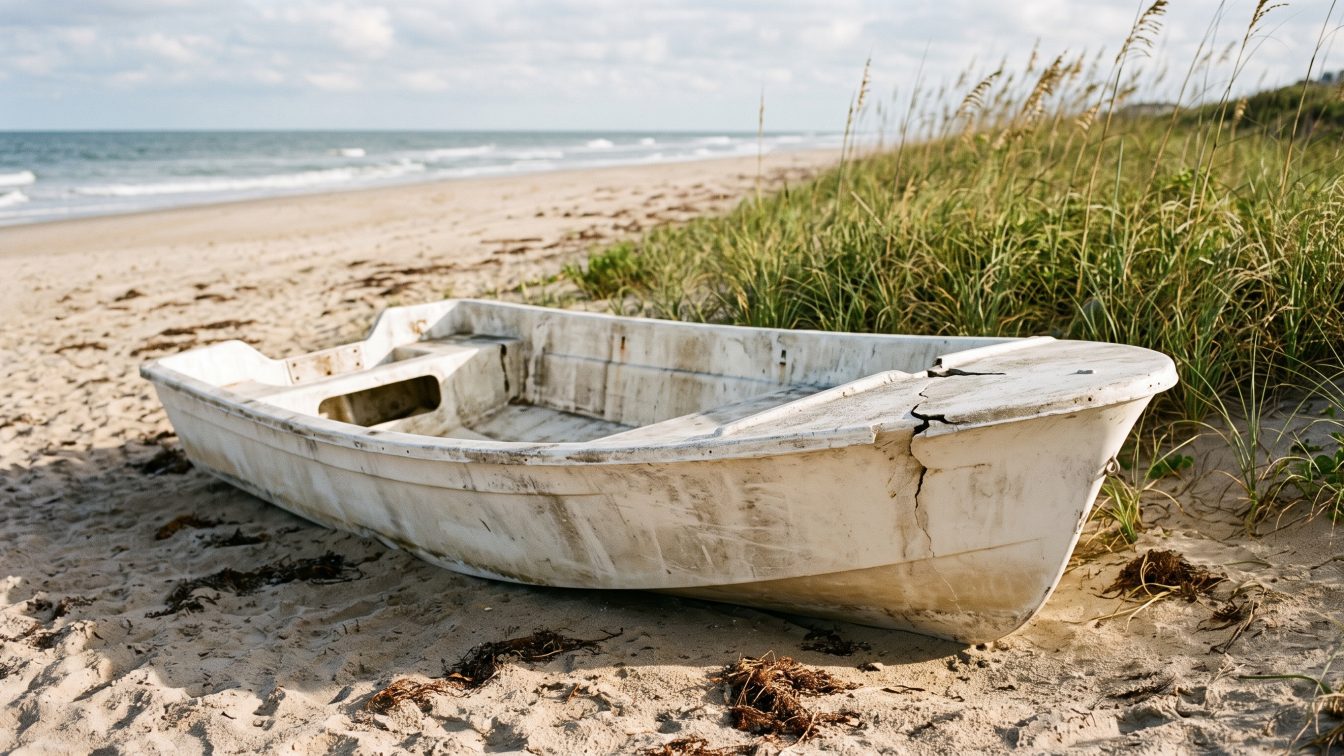
Table of contents
Summary of this article
- The EPA, the Shinnecock Indian Nation, and the U.S. Coast Guard removed a 27-foot abandoned boat from Westwoods Beach and a 1,200-pound navigational buoy from a second Shinnecock beach, the EPA announced on July 10, 2026.
- The buoy had been stranded on land for more than five years. The boat was identified in 2025 and fully removed by May 2026.
- Abandoned vessels can leach fuel residue, antifouling paint, and heavy metals into coastal sediment and water as they break apart.
- Marine debris also poses direct physical hazards to swimmers, waders, and wildlife.
- Faster removal lowers cleanup cost and difficulty. The longer debris sits, the more it fragments and spreads contamination.
- The cleanup reflects a broader environmental justice pattern: tribal and coastal communities often carry the burden of debris they did not create.
A 27-foot boat sat abandoned on Westwoods Beach on Long Island. A 1,200-pound navigational buoy sat stranded on a nearby Shinnecock Nation beach for more than five years. On July 10, 2026, the U.S. Environmental Protection Agency announced that both were finally gone, removed through a joint effort with the Shinnecock Indian Nation and the U.S. Coast Guard.
The removal reads like a simple cleanup story, and it is not one. Every day a vessel or a piece of heavy marine hardware sits stranded on a shoreline, it changes the chemistry of the sand and water around it. Understanding how that happens explains why prompt removal matters for habitat, for water quality, and for the people who use these beaches.
A stranded hull leaks fuel, paint and metal
Marine debris is any human-made object that ends up in the ocean or along the coast. That includes obvious items like plastic bottles and fishing nets. It also includes large, hard-to-move objects: abandoned boats, shipping containers, dock sections, and navigational equipment like the buoy pulled off the Shinnecock beach.
Large debris arrives in a few predictable ways. Storms tear vessels from moorings and push them ashore. Owners walk away from boats that are too costly to repair or dispose of. Navigational buoys break loose from their anchor chains and drift until they ground on land. The Shinnecock buoy is a textbook case. It washed up, then stayed put, weighing 1,200 pounds and too heavy for the community to move on its own.
Once these objects strand, they stop being neutral hardware. They become slow-release sources of pollution.
How a Stranded Boat Pollutes the Ground It Sits On
A boat is built from materials designed to survive at sea. Those same materials become hazards when a hull cracks open on a beach.
Fuel comes first. Even a vessel that looks empty can hold residual diesel or gasoline in its tank, lines and bilge. As the hull degrades under sun, salt, and wave action, that fuel seeps out. Petroleum products carry compounds that are toxic to marine life at low concentrations and can coat the gills of fish and the feathers of shorebirds.
Then there is the paint. Most boats are coated below the waterline with antifouling paint, designed to stop barnacles, algae, and other organisms from attaching to the hull. It works by being poisonous. Many antifouling paints contain copper and, historically, other biocides. As paint flakes and the hull breaks down, these metals enter the sand and shallow water. Copper is particularly harmful to the small organisms at the base of the coastal food web.
Heavy metals round out the list. Batteries, wiring, engine components, and older marine hardware can contain lead, zinc, and other metals. Unlike fuel, which eventually breaks down, metals do not disappear. They settle into sediment and stay there, working their way up the food chain into shellfish, fish, and the people who eat them.
“Marine debris like this can pose public safety risks, damage sensitive habitats, and release pollutants,” EPA Regional Administrator Michael Martucci said. That single sentence names all three problems at once: physical danger, habitat loss, and chemical contamination.
The Exposure Pathways You Cannot See
The pollution from a stranded vessel does not stay in one place. It moves through the coastal environment along several pathways.
The first is sediment. Contaminants bind to sand and mud, concentrating in the top layers where clams, worms, and other bottom-dwellers live. Filter feeders like shellfish take in these contaminants directly. Because many coastal communities harvest shellfish, this pathway connects a beached boat to the dinner table.
The second is the water column. Fuel sheens and dissolved metals spread with the tide, exposing fish, larvae, and any person swimming or wading nearby.
The third is direct contact. A degrading boat sheds sharp fiberglass shards, rusted metal, and splintered wood across the sand. Anyone walking the beach, especially children, faces a physical injury risk. Wildlife faces entanglement and ingestion hazards.
Source control follows that logic, and it is a core principle in both environmental health and building biology. The most effective way to reduce exposure is removing the source rather than managing its effects afterwards. You do not filter fuel out of an entire tidal zone. You remove the boat before it leaks.
Why Speed Changes Everything
Timing is the difference between a manageable removal and a spreading problem.
A recently stranded vessel can often be lifted out mostly intact. The longer it sits, the more it fragments. Waves and weather break the hull into pieces, scatter contaminants across a wider area, and drive debris deeper into the sand. What starts as one object becomes a diffuse field of pollution that is far harder and more expensive to clean.
The Shinnecock timeline shows the cost of delay. Five years passed before the stranded buoy was removed. The boat, identified in 2025, took until May 2026 to fully extract. Both required the resources and legal authority of federal agencies, coordination the community could not marshal alone.
A Stewardship Story, and an Environmental Justice One
The people closest to a stranded vessel are usually the ones least equipped to remove it. That gap defines much of the environmental justice conversation around marine debris.
Tribal and coastal communities frequently inherit debris they did not create and lack the heavy equipment, funding, and jurisdictional reach to remove large objects. For years, the Shinnecock Nation tried to have the boat removed without success.
“Our shorelines are a very special place for us, there we find peace, joy, and connection,” said Shavonne F. Smith, Environmental Director of the Shinnecock Environmental Department. “For multiple years and through different agencies, staff and leadership tried to have the boat removed to no avail. We greatly appreciate the support and effort of the EPA Region 2 staff to successfully assist us with this tremendous task.”
Her words reframe the cleanup. Pollutants and hazards were only part of it. Restoring access to a place central to the Nation’s cultural life mattered as much. The partnership with EPA Region 2 and the Coast Guard turned a years-long frustration into a solved problem.
What Coastal Communities Can Do
Large debris removal requires outside help, but communities can take practical steps that speed the process and limit harm in the meantime.
Report stranded vessels and large debris early. The sooner a boat is documented, the sooner a removal process can begin, and the less it will have degraded.
Identify the right agency. Federal partners like the EPA and the U.S. Coast Guard have the authority and equipment for large removals. Local environmental departments can serve as the bridge to those agencies.
Keep people and pets away from degrading debris. Sharp fiberglass, rusted metal, and fuel residue make a beached boat a direct hazard, not just a chemical one.
Document the debris. Photos, GPS coordinates, and dates build the case for prioritized removal and help agencies plan the operation.
Avoid attempting to move heavy hardware. A 1,200-pound buoy is not a job for volunteers. Cutting into a hull can release trapped fuel and hazardous materials.
The Takeaway
The removal of a boat and a buoy from two Long Island beaches is a small operation with a large lesson. Marine debris is not inert. Every piece of it is a source, and sources leak. Fuel, antifouling paint, and heavy metals move from stranded objects into sediment, water, and the food chain along pathways most beachgoers never see.
The most reliable fix is the oldest one in environmental health: remove the source. On the Shinnecock shoreline, that took years, three organizations, and a genuine partnership. The result is a cleaner beach, safer water, and a community reconnected to a place that matters to it.
Sources
Questions people ask
What did the EPA and Shinnecock Nation remove?
They removed a 27-foot abandoned boat from Westwoods Beach and a 1,200-pound navigational buoy from a second Shinnecock Nation beach on Long Island, New York. The U.S. Coast Guard coordinated on the buoy removal. The EPA announced the completed work on July 10, 2026.
Why is an abandoned boat considered a pollution source?
As a hull breaks down, it can release residual fuel, antifouling paint containing copper and other biocides, and heavy metals from batteries, wiring, and engine parts. These contaminants enter coastal sediment and water and can move up the food chain into shellfish and fish.
How long had the debris been there?
The buoy had been stranded on land for more than five years. The boat was identified in 2025 and fully removed by May 2026.
Why does removing marine debris quickly matter?
The longer debris sits, the more it fragments. Waves break the hull into pieces, spread contaminants over a wider area, and drive debris deeper into the sand. Prompt removal is cheaper, easier, and limits how far pollution spreads.
Can a community remove a large boat or buoy on its own?
Usually not. Large marine debris requires heavy equipment, funding, and legal authority that most communities lack. Cutting into a hull can also release trapped fuel and hazardous materials. Federal partners like the EPA and U.S. Coast Guard have the resources for these removals.
What should I do if I find a stranded boat or large debris on a beach?
Document it with photos, GPS coordinates, and the date. Report it to your local environmental department or coastal authority as early as possible. Keep people and pets away from the debris, since degrading hulls shed sharp material and can leak fuel.
Have questions about the environment inside your home?
Air quality, mold, EMF, light and water all shape how a house feels and how the people in it feel. Whatever your concern is, the first step is finding out what is there.
Our certified team of environmental professionals and advocates can help.