


Ohio is dredging toxic sediment out of the Maumee
More than $34 million will fund dredging along a one-mile stretch where decades of industrial discharge left PAH contamination in the riverbed. The cleanup targets a polluted section of the Maumee Area of Concern.
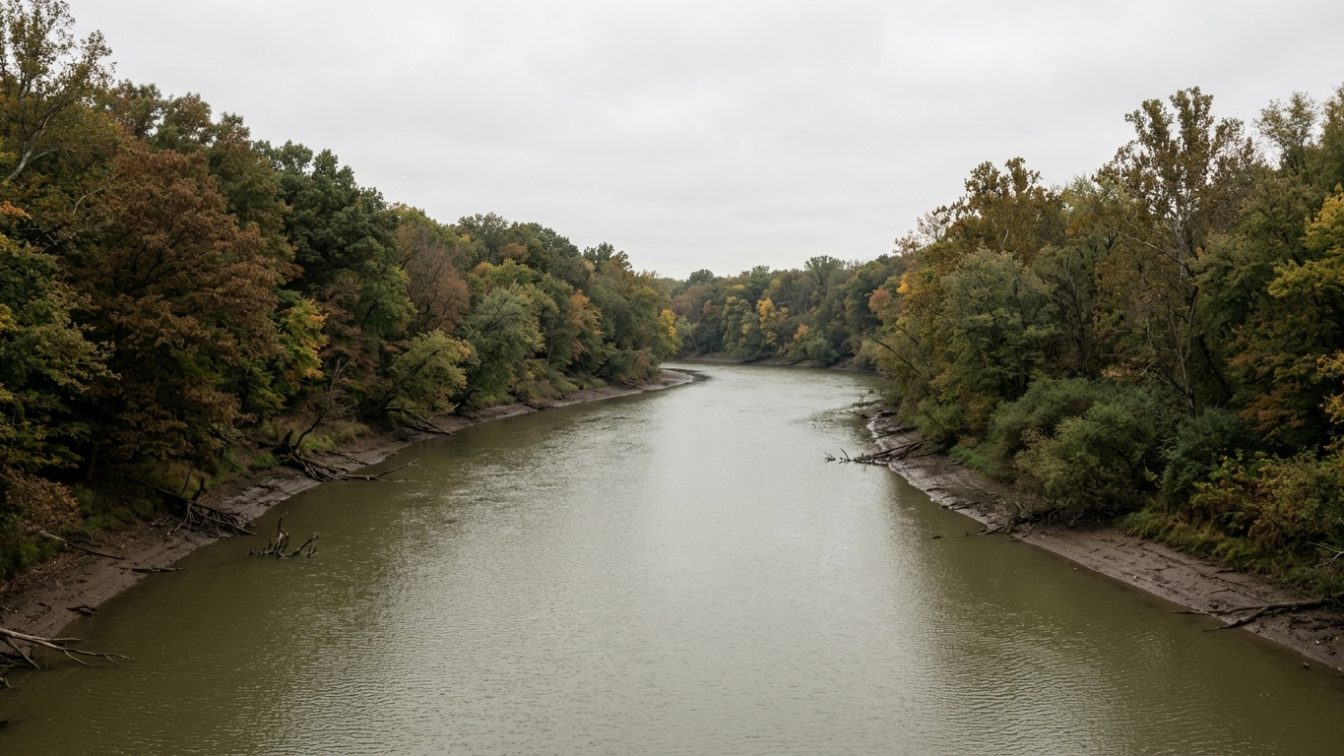
Table of contents
Summary of this article
- The U.S. Environmental Protection Agency (EPA), Ohio EPA, and local partners announced more than $37.6 million to restore the Maumee Area of Concern in northwest Ohio on August 12, 2026.
- More than $34 million funds the Toledo-Lucas County Port Authority to dredge approximately 121,000 cubic yards of sediment contaminated with polycyclic aromatic hydrocarbons (PAHs) and other contaminants from a one-mile stretch of the Lower Maumee River.
- The EPA is providing $32.34 million of that from the Great Lakes Restoration Initiative; Ohio EPA is providing $1.75 million to cover disposal at the Toledo Harbor confined disposal facility.
- The City of Toledo receives $2.6 million to rebuild fish habitat in the Ottawa River through floating wetlands, rock shoals, fish shelves, and woody habitat.
- Ohio EPA receives $1 million to evaluate cleanup options for a zone of polychlorinated biphenyl (PCB) contamination about 8 river miles upstream from Lake Erie.
- The Maumee Area of Concern covers 787 square miles, 1,900 miles of streams, and 45 miles of Lake Erie shoreline; it was designated in 1987 due to decades of industrial pollution, untreated waste, stormwater runoff, and habitat loss.
- The designation carried 10 beneficial use impairments, official restrictions on normal water uses such as swimming, eating fish, and accessing beaches.
- The EPA and partners have completed 42 of 53 planned management actions, removed more than 300,000 cubic yards of contaminated sediment, restored more than 3,500 acres of habitat, and lifted 4 impairments.
The U.S. Environmental Protection Agency (EPA) and its partners committed more than $37.6 million to restore the Maumee Area of Concern in northwest Ohio. The agency announced the investment on August 12, 2026, at the National Museum of the Great Lakes in Toledo.
The money targets contamination that has sat in the region’s rivers for decades. The largest share, more than $34 million, will dredge approximately 121,000 cubic yards of sediment contaminated with polycyclic aromatic hydrocarbons (PAHs) and other contaminants from a one-mile stretch of the Lower Maumee River. Two smaller awards address a related problem: $2.6 million to rebuild fish habitat in the Ottawa River, and $1 million for Ohio EPA to study a zone of polychlorinated biphenyl (PCB) contamination about 8 river miles upstream from Lake Erie.
“When we clean up contaminated sediment and rebuild habitat, we don’t just heal a watershed, we unlock opportunity,” EPA Regional Administrator Anne Vogel said.
For anyone who fishes the Maumee or Ottawa, swims in Lake Erie, or lives along these waters, the investment matters because of where the contamination ends up. PAHs and PCBs do not stay in the mud. They move up the food chain and concentrate in the fish people catch and eat.
What the $37.6 Million Buys
The package funds three distinct projects, each addressing a specific piece of the problem.
The centerpiece is dredging. The Toledo-Lucas County Port Authority will remove roughly 121,000 cubic yards of PAH-contaminated sediment from a one-mile area of the Lower Maumee River and place it in the Toledo Harbor confined disposal facility, an engineered site built to contain the material. The EPA is providing $32.34 million from the Great Lakes Restoration Initiative, and Ohio EPA is providing $1.75 million to cover disposal.
The second project rebuilds habitat. The City of Toledo receives $2.6 million to improve fish habitat in the Ottawa River by constructing floating wetlands, rock shoals, fish shelves, and woody habitat. A healthier river supports a healthier fishery, and it returns the water to public use. “For decades, contamination kept Toledoans from accessing their own river,” Toledo Mayor Wade Kapszukiewicz said, describing projects that bring “calm-water kayaking, a better fishery, and hands-on learning” back to the Ottawa River.
The third project is investigation. Ohio EPA receives $1 million to evaluate cleanup options and design a project addressing PCB contamination about 8 river miles upstream from Lake Erie. That study is the step that precedes a full cleanup, you cannot remediate a contaminant you have not fully mapped.
What an “Area of Concern” Means
The Maumee Area of Concern is one of the largest in the United States. It covers 787 square miles in northwest Ohio, including 1,900 miles of streams and 45 miles of Lake Erie shoreline.
The designation dates to 1987, when the U.S. and Canadian governments identified it because of decades of industrial pollution, untreated waste discharges, stormwater runoff, and habitat deterioration. Those problems produced 10 beneficial use impairments, official restrictions on normal uses of the water, including swimming, eating fish, and accessing beaches.
“Beneficial use impairment” is regulatory language for a plain idea: the water is too contaminated to use the way people should be able to. A fish-consumption advisory is one such impairment. A beach closure is another. The goal of the cleanup is to lift every restriction, at which point the area can be formally delisted.
The progress is measurable. The EPA and partners have completed 42 of the 53 planned management actions, removed more than 300,000 cubic yards of contaminated sediment, and restored more than 3,500 acres of habitat. That work has already enabled the EPA to remove four beneficial use impairments, including fish consumption advisories and limits on dredging. The new $37.6 million pushes toward the remaining actions.
What PAHs and PCBs Are
The two contaminants driving this cleanup are different chemicals with a shared problem: they persist, and they accumulate.
PAHs. Polycyclic aromatic hydrocarbons form whenever carbon-based material, coal, oil, wood, fuel, is burned or heated. Industrial operations, spills, and runoff deposited them into the Maumee’s sediment over decades. Several PAHs, including benzo[a]pyrene, are classified as carcinogens. They bind tightly to sediment and do not readily break down.
PCBs. Polychlorinated biphenyls are manufactured chemicals once used widely in electrical equipment, coolants, and industrial fluids. The United States banned their manufacture in 1979, but the PCBs already released do not degrade, they remain in sediment for generations. PCBs are probable human carcinogens and are linked to immune, reproductive, and developmental effects.
Both chemicals share the trait that makes river sediment so hard to leave alone. They are fat-soluble, which means they dissolve in fat rather than water. That single property sets up the pathway that reaches people.
How River Contamination Reaches Your Body
The building-biology principle is that exposure follows a pathway, a source, a route, and a person at the end of it. With PAHs and PCBs in river sediment, the dominant route runs through fish.
1. Eating Contaminated Fish
This is the primary pathway. Because PAHs and PCBs are fat-soluble, fish absorb them from contaminated sediment and food faster than their bodies can shed them. The chemicals build up in fatty tissue over the fish’s lifetime, a process called bioaccumulation, and concentrate further as larger fish eat smaller ones, called biomagnification.
The result is a stark gap between the water and the fish. A large, older, fatty fish can carry contaminant levels far higher than the sediment it feeds on. That is why the biggest exposure risk is not touching the river. It is eating what comes out of it. Fish-consumption advisories exist precisely because this pathway concentrates the danger onto a plate.
2. Direct Sediment Contact
Wading, swimming, boating, and cleanup work put skin against contaminated sediment. This is a lower-dose route than eating fish, but it matters because it moves contaminated mud onto skin, hands, and clothing, and, through tracking, into the home. It is one reason the 1987 designation restricted swimming and beach access.
3. Contaminated Dust
Where contaminated sediment dries out, on exposed banks, dredge-staging areas, or shoreline, it becomes dust that carries PAH and PCB particles into the air and onto surfaces. Tracked indoors on shoes, that dust settles where children play. Children are the highest-risk group across every pathway, because they play on the ground and put hands to mouths.
The Threshold That Guides You
The practical benchmark for a contaminated waterway is the fish-consumption advisory. State agencies test fish, and when PAH, PCB, or mercury levels are high enough to pose a risk, they publish advice on how much of a given species is safe to eat, often measured in meals per month, and sometimes recommending that vulnerable groups eat none.
In Ohio, the Department of Health and Ohio EPA publish these advisories for specific waters, including the Maumee and Ottawa Rivers and Lake Erie. The rule for a household is simple: check the current advisory before eating any fish you catch. The advisory reflects actual testing, and it is the difference between a safe meal and a repeated dose of a persistent chemical.
The advisory is also a yardstick for the cleanup. Removing four impairments, including fish consumption advisories, shows the dredging works. As the remaining 121,000 cubic yards come out, the long-term goal is fish clean enough to loosen the advisories further.
The Fix Is Source Control
The most reliable fix for a contaminant is source control, removing it at its origin rather than managing exposure around it. Dredging PAH-contaminated sediment out of the Lower Maumee is source control at the scale of a watershed.
Removing the sediment removes the supply that fish absorb and that dust and contact carry to people. Placing it in a confined disposal facility keeps it contained rather than washing downstream toward Lake Erie during high flows. The habitat work and the PCB study extend the same logic: rebuild what the contamination degraded, and map the next source before removing it.
That containment matters because the chemistry offers no shortcut. PAHs and PCBs do not break down on any useful timescale. The only way to reduce the hazard is to take the contaminated sediment out of the river.
Practical Steps You Can Take
You cannot dredge a river yourself. You can control the pathway that matters most and reduce the smaller risks of contact and dust.
- Follow the fish-consumption advisory
- Check the Ohio Department of Health and Ohio EPA advisory for the Maumee River, Ottawa River, and Lake Erie before eating any fish you catch. Treat “do not eat” advice as absolute, especially for pregnant women, nursing mothers, and children.
- Protect the most vulnerable first
- PCBs affect development, so pregnant women, women who may become pregnant, nursing mothers, and young children should follow the strictest limits.
- Choose lower-contaminant fish
- Favor smaller, younger, leaner fish over large, older, fatty ones, which concentrate the most PAHs and PCBs. Because both chemicals store in fat, trimming skin and fatty portions before cooking reduces PCB content, though it will not remove it entirely.
- Do not count on cooking alone
- Cooking does not eliminate PCBs or PAHs bound in fish tissue. Choosing species and portions, and following the advisory, is the reliable control.
- Avoid contact with contaminated sediment
- Keep children and pets out of the mud along contaminated stretches, and wash skin after any contact with river sediment.
- Keep sediment out of the home
- Remove shoes after being near the river, and wet-clean floors rather than dry dusting, so tracked-in sediment does not become house dust. A vacuum with a HEPA filter captures fine particles standard vacuums recirculate.
- Stay clear during dredging
- Sediment removal can temporarily disturb the riverbed. Follow local guidance to avoid staging areas and disturbed shoreline.
Filter your drinking water if you draw from a private source. Public systems treat their water, but if you use a private intake near contaminated waters, a filter certified to NSF/ANSI Standard 53 (activated carbon) reduces many organic contaminants including PCBs. Confirm the certification lists the contaminant.
Why This Matters Now
The Maumee cleanup is a decades-long effort with a measurable record: 42 of 53 planned actions complete, more than 300,000 cubic yards of contaminated sediment already removed, more than 3,500 acres of habitat restored, and four of ten restrictions lifted. The new $37.6 million funds the next 121,000 cubic yards and the study that will guide the PCB work upstream of Lake Erie.
The stakes run through the food chain. PAHs and PCBs do not break down, and because they are fat-soluble, fish concentrate them until a single large fish carries far more than the sediment it feeds on. For the person who fishes the Maumee or Ottawa, that turns an invisible sediment problem into a direct exposure at the dinner table.
Two forms of source control apply. At the watershed scale, the EPA and Ohio EPA are pulling the contamination out and containing it. At the household scale, checking the advisory, protecting children and pregnant women, and keeping sediment off skin and out of the house cut the exposure that reaches your body. The contamination is old and buried in mud. Whether it reaches your plate is a matter of the fish you choose, and that is something you can control.
Sources
- U.S. Environmental Protection Agency (EPA). EPA, State, and Local Partners Announce $37.6 Million Investment to Restore Maumee Area of Concern in Northwest Ohio (2026) (August 12, 2026):
- U.S. Environmental Protection Agency (EPA), Maumee Area of Concern profile:
- U.S. Environmental Protection Agency (EPA), Great Lakes Restoration Initiative:
- U.S. Environmental Protection Agency (EPA), Polychlorinated Biphenyls (PCBs):
- U.S. Environmental Protection Agency (EPA), Polycyclic Aromatic Hydrocarbons (PAHs) fact sheet:
- U.S. Agency for Toxic Substances and Disease Registry (ATSDR), Toxicological Profile for PCBs:
- Ohio Department of Health and Ohio EPA, Fish Consumption Advisories:
- NSF International, Drinking Water Treatment Units certification:
Questions people ask
What did the EPA and partners announce for the Maumee Area of Concern?
On August 12, 2026, the EPA, Ohio EPA, and local partners announced more than $37.6 million to restore the Maumee Area of Concern in northwest Ohio. The funding covers dredging PAH-contaminated sediment from the Lower Maumee River, rebuilding fish habitat in the Ottawa River, and studying PCB contamination upstream of Lake Erie.
How is the $37.6 million being spent?
More than $34 million goes to the Toledo-Lucas County Port Authority to dredge about 121,000 cubic yards of PAH-contaminated sediment from a one-mile stretch of the Lower Maumee River (with $32.34 million from the EPA's Great Lakes Restoration Initiative and $1.75 million from Ohio EPA for disposal). The City of Toledo receives $2.6 million for Ottawa River fish habitat, and Ohio EPA receives $1 million to study PCB contamination about 8 river miles upstream from Lake Erie.
What is an "Area of Concern"?
It is a designation the U.S. and Canadian governments use for severely degraded Great Lakes waters. The Maumee Area of Concern was designated in 1987 because of decades of industrial pollution, untreated waste, stormwater runoff, and habitat loss. It covers 787 square miles, 1,900 miles of streams, and 45 miles of Lake Erie shoreline, and carried 10 official restrictions on normal water uses.
What are PAHs and PCBs?
PAHs (polycyclic aromatic hydrocarbons) form when carbon-based material like coal, oil, or wood is burned; several, including benzo[a]pyrene, are carcinogens. PCBs (polychlorinated biphenyls) are manufactured chemicals banned in the U.S. in 1979 but still present in sediment; they are probable carcinogens linked to immune, reproductive, and developmental effects. Both persist and both are fat-soluble.
How do these contaminants reach people?
The primary pathway is eating contaminated fish. Because PAHs and PCBs are fat-soluble, fish accumulate them in fatty tissue (bioaccumulation) and concentrate them up the food chain (biomagnification). Lesser pathways are direct skin contact with contaminated sediment and inhalation or ingestion of contaminated dust. Children face the highest risk across all pathways.
How do I know what fish are safe to eat?
Check the fish-consumption advisory from the Ohio Department of Health and Ohio EPA for the Maumee River, Ottawa River, and Lake Erie before eating any fish you catch. The advisory is based on actual fish testing and tells you how many meals of a given species are safe, with the strictest limits for pregnant women, nursing mothers, and children.
How much progress has the cleanup made?
The EPA and partners have completed 42 of 53 planned management actions, removed more than 300,000 cubic yards of contaminated sediment, and restored more than 3,500 acres of habitat. That work has lifted four of the ten beneficial use impairments, including fish consumption advisories and limits on dredging. Once all restrictions are removed, the area can be delisted.
What can I do to reduce my exposure at home?
Follow the fish-consumption advisory, choose smaller and leaner fish, trim skin and fatty portions, avoid contact with contaminated sediment, remove shoes and wet-clean to control tracked-in dust, stay clear of active dredging areas, and filter drinking water with an NSF/ANSI 53 carbon system if you use a private intake near contaminated waters. Cooking does not remove PCBs or PAHs from fish.
Have questions about the environment inside your home?
Air quality, mold, EMF, light and water all shape how a house feels and how the people in it feel. Whatever your concern is, the first step is finding out what is there.
Our certified team of environmental professionals and advocates can help.