


Your Water Company Must Send You a Consumer Confidence Report by July 1 Every Year
Every community water system has to put its water source in writing and get it to you by 1 July, every year. If you rent, a stack of copies in a lobby counts as telling you. And 43 million people on wells are sent nothing at all.
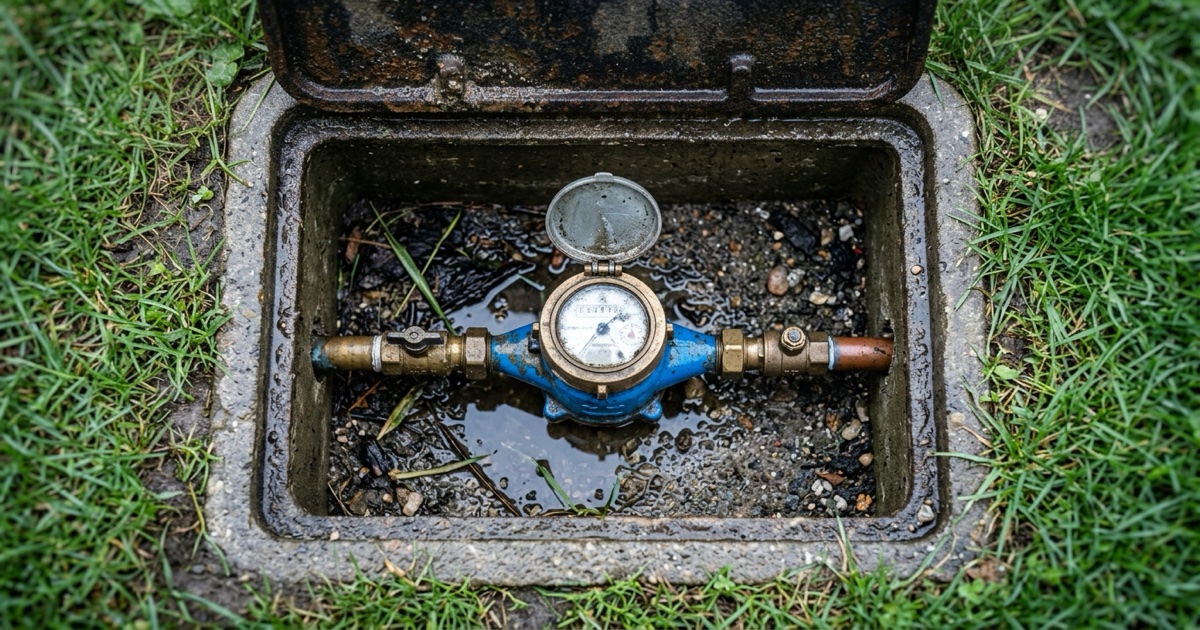
Table of contents
Summary of this article
- EPA runs a free tool that names the system serving your address, and every community system must send a report by 1 July.
- Federal rule sets what goes in it, so two reports from two towns can be compared directly.
- Lead is reported as a 90th percentile from a set of higher-risk homes, because it comes from your pipes rather than the utility.
- EPA now publishes a service line inventory. Unknown is a common entry and it is a real answer rather than a gap.
- A running annual average can sit under a limit while individual samples sat over it. Utilities will give you the samples if you ask.
- More than 43 million people, around 15 percent of the country, are on private wells and get no report at all.
- Every one of these tools is free and public, and nothing in the system ever tells you they exist.
Who fills your kettle every morning?
Somebody you’ve never met, and they owe you one letter a year with a name. EPA requires every community water system to deliver a Consumer Confidence Report, also called an annual drinking water quality report, to its customers by July 1. Water shows up in your kitchen at whatever hour you want it, and behind that wall stands an outfit with a name, a phone number, and somebody on shift tonight watching a screen.
Most of us can’t name that outfit. Nothing about the arrangement ever asks us to. A tap works, a bill arrives or gets folded into rent, and a decade goes by.
Your bill names it, if a bill reaches you at all. If one does not, EPA runs a free lookup called Find Your Local CCR that lists community water systems by state and county, and finding yours takes about as long as ordering coffee.
More than 148,000 public water systems run in this country, and regulated systems deliver drinking water to 90 percent of Americans. Yours is one line in that pile, and it’s been there your whole life.
A low bar gets an outfit onto that list. 15 service connections, or an average of 25 people for at least 60 days a year. Serve those same people year-round and you become a community water system, which is a category that comes with homework.
What arrives in your mailbox every July?
A folded sheet in with a bill. Or a postcard with a link on it. Or an email you archived in about four seconds, one July, some year you no longer remember.
Federal rule at 40 CFR 141.155(j)(1) makes every community water system get that document to its customers by July 1, every year. Not a courtesy. A deadline with a date on it, the same date in every state.
Its formal name is a Consumer Confidence Report. Everybody else says annual drinking water quality report. We will use that one, because it’s closer to what the thing does.
Serve 50,000 people or more and you also have to post it on a public website and leave it up for at least 3 years. Serve 10,000 or more and it goes out twice a year, with a second one by December 31.
One part of this we keep coming back to. If you rent, or your water is folded into rent, you aren’t a customer of that system. You are a consumer, and rule 141.155(b) asks your system only for a good faith effort to reach you, meaning a postcard to service addresses, an ad in a local paper, a note on social media, or a stack of copies dropped at an apartment building for somebody to hand out.
A stack of copies in a lobby. That is a legally adequate way of telling a whole building what is in the water they drink.
Why do two towns’ water reports read the same?
Pick one up from your town and one from wherever you grew up, and the two are almost identical. That is on purpose, and we think it’s the most useful thing about them.
We have read enough of these to promise the shape never moves. 40 CFR 141.153 sets what has to be inside, so your utility writes the cover and federal rule writes the contents. Four things are always in there, whoever is doing the typing.
Where your water comes from, by type and by name. Surface or ground, plus the everyday name of that river, lake or aquifer, and where it stands. That is the sentence you came for, and it is normally near the front.
Results from testing, drawn from last calendar year, or from a most recent year where sampling runs on a longer cycle. Nothing older than 5 years is allowed to sit in there.
Definitions, printed verbatim, identical in every town in America. What a Maximum Contaminant Level is. What a Maximum Contaminant Level Goal is. What an Action Level triggers. Boring, and worth knowing before you look at a single result, because they change how everything above them lands.
And a phone number. 141.153(h)(2) makes a system print the number of whoever owns or runs it, alongside the time and place of board meetings you’re allowed to walk into. That number is there because somebody decided a reader has to have somewhere to go with a question.
Why is the lead figure not about your tap?
Everything else in that document describes water leaving a plant or moving through mains. One system, one set of results, and your utility controls all of it.
Lead doesn’t come from there. Lead comes from a service line running to your building, and from plumbing inside it, so how much of it you drink depends on your house rather than on theirs.
So federal rule handles lead differently. Utilities sample a set of higher-risk homes, then print the 90th percentile of that round, meaning the figure 90 percent of those samples came in under. It describes a tail, and the houses in that tail belong to somebody else.
Honest, and still not about you, which is the part we watch people miss. Your own tap could come in well beneath it or high above, and nothing printed in that document can tell you which.
Today’s trigger is 15 ppb, tripped when more than 10% of sampled taps come in above it. Read that twice, because it’s a treatment trigger rather than a limit on your water. Nobody anywhere is promising you 15 ppb is fine to drink. The health-based goal for lead in drinking water is zero.
That trigger drops to 0.010 mg/L, or 10 ppb, on November 1, 2027. Nothing about the pipes or the houses changes, only the bar. Plenty of systems clearing it comfortably this summer won’t clear it then, and that’s worth knowing now rather than in 2027.
Who owns the pipe to your house?
Run a line from a water main in your street to your kitchen, and it crosses a property boundary on its way. That crossing matters. Your utility owns one half of that pipe. You own the other.
Every water system in America had to write down what those pipes are made of and hand that inventory to its state by October 16, 2024. It has to be public, keyed to a street address, and systems serving more than 50,000 people have to put it online. Instructions for reaching yours are required to be printed in your July document.
Four answers are possible, and one of them does a lot of quiet work.
| What an inventory says | What that means |
|---|---|
| Lead | Lead, confirmed |
| Galvanized Requiring Replacement | Galvanized pipe the rule requires replacing |
| Non-Lead | Confirmed to be something other than lead |
| Lead Status Unknown | No documented evidence either way |
Unknown is a defined legal answer rather than a gap somebody forgot to fill in, written into rule as no documented evidence reliably supporting a material. Nobody dug that pipe up. Nobody found a card in a file. So it went down as unknown and stayed there.
Which puts you in a strange position, and we would rather name it than dress it up. Half of a pipe carrying water into your kitchen is yours, and there’s a decent chance nobody on earth currently knows what it’s made of.
What does an average hide?
Four samples across a year. One high, three low. Average them and that year looks calm.
Where compliance runs on a running annual average, federal rule doesn’t let a utility print only that average. 141.153(d)(4)(iv)(B) makes it print the highest average of any monitoring location alongside a range of individual sample results.
That range column is the honest half of a page nobody says. An average is arithmetic somebody performed. A range is made of real single samples that somebody drove out and pulled. We take the range every time, given both.
Averaging isn’t a trick, and we should say so. It is right for harm that builds across decades, where one rough quarter genuinely matters less. It is the wrong shape for a question about a few specific months, and pregnancy is a few specific months. So is a baby on formula.
How many spots get sampled tracks how many people are on the network. A supply serving fewer than 500 people from a river or a lake gets two spots, sampled once a year. Cross 1,000,000 and it’s 16. Whichever month the stuff left behind by disinfecting runs highest, that’s the month a system has to go out and sample, which is federal rule refusing to let anybody pick an easy week.
What if nothing arrives at all?
No sheet in July. No postcard. No board meeting, no phone number, no template.
EPA counts around 15 percent of this country, more than 43 million people, drinking from a private well, and EPA doesn’t regulate a drop of it under the Safe Drinking Water Act. Neither do most states.
Which drops all of it on whoever owns that well. Nobody samples it. No letter gets written. No deadline goes by that anybody would notice going by, and that silence is the whole problem, because a gap you were never handed paperwork about is a gap you can live inside for a lifetime without once feeling it.
Our advice on a well is the boring kind. Test through a state-certified lab on a schedule you keep, and test again after anything unusual happens nearby. Flooding. Drilling. A fire. New construction. A spill.
What replaces that letter, where you have no letter, is a panel you pay for and a comparison you ask for. Four tests a year covers the basics, and an outdoor comparison is what a public system’s report gives its own customers for nothing. Nobody sends it to you, and nobody is going to.
Where no letter comes, the schedule is yours to keep.
What should you do this weekend?
Four moves, and none of them costs a cent.
Look at your water bill for a system name. If no bill ever reaches you, run your state and county through that free lookup and find whichever system serves your address.
Open last July’s document and read its source line before you read a single result. That is where your river gets named, and we find it lands harder than anybody expects. Most never learn the answer, and nothing in their life was ever going to offer it.
Find your service line inventory. Instructions are printed inside that same document. Unknown plus an old building is a question you now own rather than an answer you were given.
Then call that phone number and ask two things: what your own service line is made of, and when your street was last sampled. That is a phone call rather than a favor you’re asking for. Somebody put that number in print precisely so it would get used.
One last thing, said plainly. Every tool in here is free, public and already paid for out of your bill and out of our bills too. None of it announces itself. PLACEHOLDERs that nobody ever told you it was yours.
Sources
- U.S. Environmental Protection Agency. Information about Public Water Systems (2026)
- U.S. Environmental Protection Agency. Find Your Local CCR (2026)
- U.S. Environmental Protection Agency. SDWIS Federal Reporting Services (2026)
- U.S. Environmental Protection Agency. Private Drinking Water Wells (2026)
- Code of Federal Regulations. 40 CFR 141.153, Content of the reports (2026) 40 CFR 141.153
- Code of Federal Regulations. 40 CFR 141.155, Report delivery, reporting, and recordkeeping (2026) 40 CFR 141.155
- Code of Federal Regulations. 40 CFR 141.151, Purpose and applicability of this subpart (2026) 40 CFR 141.151
- Code of Federal Regulations. 40 CFR 141.80, General requirements and action level (2026) 40 CFR 141.80
- Code of Federal Regulations. 40 CFR 141.84, Service line inventory and replacement requirements (2026) 40 CFR 141.84
- U.S. Environmental Protection Agency, Office of Water. Introduction to the Stage 1 and Stage 2 Disinfectants and Disinfection Byproducts Rules (2024)
- U.S. Environmental Protection Agency. National Primary Drinking Water Regulations (2026)
- U.S. Environmental Protection Agency. Lead and Copper Rule (2026)
Questions people ask
How do I find out who supplies my water?
Your water bill names the utility. If you rent or the bill is folded into your rent, EPA runs two free lookups: the Find Your Local CCR tool and SDWIS Federal Reporting Services, which both list community water systems by state and county.
When am I supposed to get my water quality report?
40 CFR 141.155(j)(1) requires each community water system to distribute reports by July 1 each year. Systems serving 50,000 or more people must also post the current year's report on a public website, and keep it up for at least 3 years.
What is a Consumer Confidence Report?
It is the annual drinking water quality report a community water system must deliver to its customers. 40 CFR 141.151 states the subpart applies only to community water systems, so private well owners never receive one.
What is the difference between an MCL and an MCLG?
An MCL is a regulatory limit, the highest level of a contaminant allowed in drinking water, and it is legally enforceable. An MCLG is a health-based goal, the level below which there is no known or expected risk to health. 40 CFR 141.153(c) requires your report to print both definitions.
Why does my water report show a range as well as an average?
40 CFR 141.153(d)(4)(iv)(B) requires both the highest locational running annual average and the range of individual sample results for all monitoring locations. The range is made of real single samples, so it shows hot spots that an average smooths away.
What does the lead number in my water report mean?
It is a 90th percentile of tap samples across the system, not an average and not your tap. EPA describes the current action level as 15 parts per billion, exceeded when more than 10% of sampled customer taps come in above it. It is a treatment trigger, not a limit on your water.
How do I find out whether I have a lead service line?
40 CFR 141.84 requires your utility to keep a publicly accessible service line inventory identifying the material and location of every service line, keyed to a street address. Systems serving more than 50,000 people must put it online, and instructions for reaching it must appear in the Consumer Confidence Report.
Have questions about the environment inside your home?
Air quality, mold, EMF, light and water all shape how a house feels and how the people in it feel. Whatever your concern is, the first step is finding out what is there.
Our certified team of environmental professionals and advocates can help.