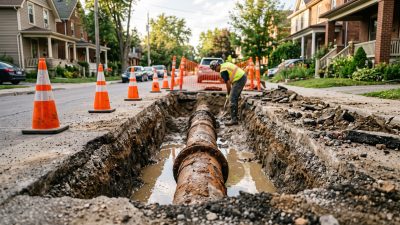
America loses 6 billion gallons of water a day from leaking pipes
A water main breaks somewhere in the United States every 2 minutes, and much of the buried pipe is 50…


About 43 million Americans draw their drinking water from a private well, and no federal agency is required to test a single one of them, according to the CDC.
Everyone else gets water from a public system that treats and monitors what it delivers. That first fact, where your water starts, decides more about its quality than almost anything else.
Your water source is the exposure you rarely think about. It carries whatever it picks up from the ground it sits in and the land around it, long before it ever reaches a treatment plant or a kitchen tap.
Surface water and groundwater. Surface water sits in rivers, lakes, and reservoirs. Groundwater collects underground in aquifers. The USGS reports groundwater supplies drinking water for about 44% of the U.S. population, with the rest relying mainly on surface water.
Your water bill names the supplier, and its annual Consumer Confidence Report lists the source. Most utilities post it online. If you have no bill and no water meter, you almost certainly draw from a private well.
Yes. Surface water carries farm runoff, stormwater, and industrial discharge from the land around it. Groundwater picks up minerals and metals like arsenic and radon from the rock it flows through. The source decides which contaminants a household has to watch for.
About 43 million, according to the CDC. These wells are not covered by the Safe Drinking Water Act, so no federal agency tests, treats, or monitors them. The owner carries full responsibility for water quality.
You do, or no one does. The EPA and CDC recommend testing annually for coliform bacteria, nitrate, pH, and total dissolved solids, but neither agency can require it. Use a state-certified laboratory for reliable results.
Not always. Groundwater is better protected from surface pollution because it moves slowly underground, but it dissolves minerals and metals from the surrounding rock, including arsenic and radon. Each source carries its own set of risks.
Not necessarily. The source sets the starting point, but water still travels through treatment, public mains, and your plumbing. Lead, for instance, usually enters from pipes and fixtures on the house side of the meter, not from the source.
Learn what it is. Reading your Consumer Confidence Report or, for a well, running a basic annual test tells you what your water starts with. That knowledge shapes every other decision, including whether you need a filter and which one.
Tap water comes from one of two places: surface water or groundwater. The difference shapes what your water holds before anyone treats it.
Surface water sits in the open, in rivers, lakes, and reservoirs. Groundwater collects underground in aquifers, layers of rock and sand that hold water in the spaces between them. The U.S. Geological Survey reports that groundwater supplies drinking water for about 44% of the U.S. population, while the rest rely mainly on surface sources. Both start as rain and snow, but where the water settles determines what it contains by the time you use it.
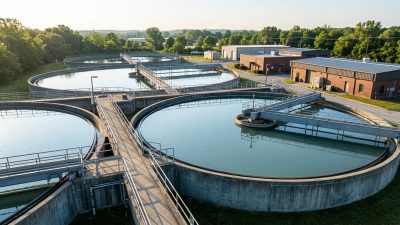
Most people in the United States drink from a public water system. The EPA reports there are roughly 148,000 public water systems in the country, and they serve more than 300 million Americans.
Large cities tend to rely on surface water. New York City pulls from upstate reservoirs, and Los Angeles draws from rivers and imported supplies hundreds of miles away. Smaller towns and rural areas lean more on groundwater from local wells. The source is not a detail buried in a report. It sets the starting point for every contaminant a system has to treat and every one it cannot.
Water takes on the character of the place it comes from. It dissolves and carries whatever it touches, which is why surface water and groundwater rarely look alike on a lab report.
Surface water reflects the land around it. Farm runoff, stormwater, road pollution, and industrial discharge all drain into the same rivers and lakes that supply millions of homes, which means surface systems often treat for nitrate, bacteria, and seasonal spikes after heavy rain. Groundwater moves slower and stays cleaner from surface pollution, but it picks up what the rock around it holds. The USGS notes that groundwater commonly carries naturally occurring minerals and metals such as arsenic, radon, and manganese, dissolved from the geology it flows through. The source does not just affect quality. It decides which problems a household has to watch for.
The gap between a well and a public system is a gap in oversight. Public systems answer to the Safe Drinking Water Act, which requires regular testing for more than 90 contaminants and a public report each year. Private wells answer to no one but their owner.
That is roughly 43 million Americans, the CDC reports, whose water is never tested unless they pay for it themselves. No agency treats it, monitors it, or warns them when something is wrong. A well can sit a few hundred feet from a public water line and follow entirely different rules, which means the responsibility that a utility carries for one home falls entirely on the owner of the next. The EPA and CDC both recommend that well owners test annually for coliform bacteria, nitrate, pH, and total dissolved solids, and neither can require it.
Source water sets the baseline, but it is not the whole story. Clean water leaving a reservoir or an aquifer still has to travel through treatment, public mains, and your own plumbing before it reaches a glass.
That journey can add things the source never held. Lead is the clearest example. The EPA notes it rarely comes from the source itself, entering instead from lead service lines and older fixtures on the house side of the meter. So the source tells you what the water starts with, and the pipes tell you what happens on the way in. Knowing both is the only way to understand what actually pours from your tap.
Find out where your water comes from first, because everything else follows from the source. Your water bill names the utility, and its annual Consumer Confidence Report, published by July 1 each year, lists the source and every contaminant detected. No bill and no meter usually means a private well.
If you are on a well, take over the job no agency does for you. Test annually through a state-certified laboratory, starting with coliform bacteria, nitrate, pH, and total dissolved solids, then add tests based on what surrounds your property. Nearby farmland points to nitrate and pesticides. Old industrial sites or gas stations point to solvents and metals. If you are on a public system, read the range of results in your report rather than the average alone, and check your utility's service line inventory to learn what the pipe to your home is made of. Buy a filter last, once a test tells you what you are actually treating, since a unit rated for taste does nothing about lead or nitrate.
A water main breaks somewhere in the United States every 2 minutes, and much of the buried pipe is 50…
The association appeared in 2 childhood cancers and not in the others the study examined, which sharpens what the finding…
Sarasota County moved to a Phase 3 water shortage in April 2026, and reports of watering violations jumped from 200…
Chemical contamination is outpacing the speed at which U.S. treatment plants can be upgraded, leaving drinking water systems years behind…
In EPA testing, PFAS appeared in 42.4% of large water systems and 28.4% of small ones, with the sharpest gap…
Private wells have no routine inspector, no required monthly sample, and no rule saying they should. The biggest survey of…
Every community water system has to put its water source in writing and get it to you by 1 July…
Air quality, mold, EMF, light and water all shape how a house feels and how the people in it feel. Whatever your concern is, the first step is finding out what is there.
Our certified team of environmental professionals and advocates can help.