


Nobody tests private wells, and 13% exceed a federal drinking-water limit
Private wells have no routine inspector, no required monthly sample, and no rule saying they should. The biggest survey of wells like yours found 13% over an enforceable federal limit.
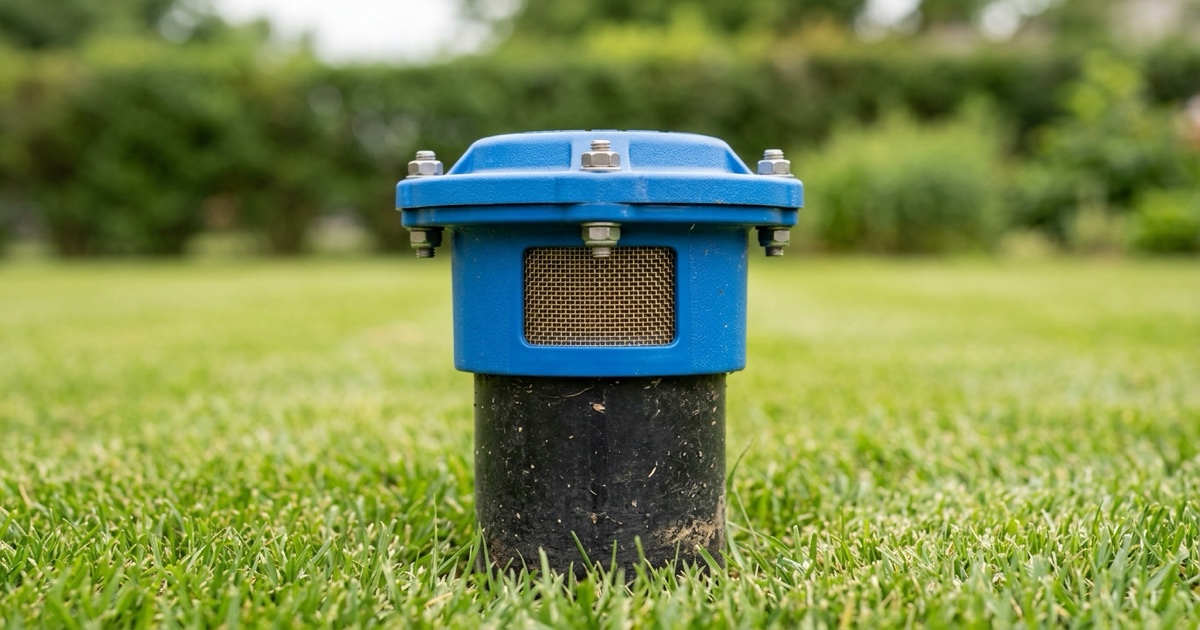
Table of contents
- Who checks a private well?
- What should you test a private well for every year?
- What else should you test for near your well?
- When should you test a well right away?
- Where do you send a well water sample?
- How much does testing a private well cost?
- How often does well water come back contaminated?
- Do federal drinking water limits apply to my well?
- What should you put in your calendar?
Summary of this article
- EPA states private well water is not regulated by the Federal Government under the Safe Drinking Water Act, nor by most state governments and laws.
- CDC states that government officials do not regulate, treat, or monitor tap water from private wells.
- EPA and CDC both name the same annual panel: total coliform bacteria, nitrate, pH and total dissolved solids.
- What else to test for is decided by what stands near the well. EPA publishes a table of nearby conditions and matching tests.
- Both agencies say to use a state-certified laboratory. EPA cannot test residential water on request.
- A Maximum Contaminant Level is legally enforceable against public water systems, so on a private well it is a reference value rather than a limit.
- USGS Circular 1332 sampled about 2,100 domestic wells and found 23 percent above at least one human-health benchmark.
- Michigan's state laboratory charges $23 for total coliform and E. coli and $66 for partial chemistry on its October 1, 2026 schedule.
Who checks a private well?
Nobody. No inspector, no monthly sample, no lab on retainer, and no rule anywhere saying one ought to exist. The largest survey ever run at wells like yours put 13 percent over an enforceable federal limit.
Go stand next to yours. A steel pipe a foot out of grass, a cap bolted across it, a few hundred feet of hole underneath. That pipe is a water utility, and you’re its entire staff.
Your neighbor on city water has a different deal, because every July a report arrives in her mail saying what was in her water last year, whether she wondered about it or not. Nothing like that is coming to you. No violation record covers you either.
We keep meeting people who assume somebody is watching anyway. A county. A state health office. Somebody. EPA counts around 15 percent of this country drinking from a private well, over 43 million people across more than 23 million households, and nobody at all is checking any of them.
Nothing in the Safe Drinking Water Act reaches your tap. Most state law doesn’t reach it either. Plenty of states run a program to help a well owner who asks, and every one of them waits for you to ask first.
One state is the exception, on the day a house changes hands, and it is New Jersey. Whoever sells or buys a property with a drinkable well has to test untreated groundwater for up to 43 parameters, and results go in front of both sides before closing.
Picture that afternoon. A folder of paper nobody looks at closely, and one page inside it saying what comes out of a kitchen tap somebody is about to own.
It was signed in March 2001 and has run since September 2002, and the best thing about it is how little it claims. A consumer information law rather than a standard. A bad result doesn’t stop a sale. It only has to be in front of both people while money is still on the table.
Landlords there test every five years and hand each tenant a copy. Roughly 25 percent of wells in that state have been through it. Everywhere else, closing day comes and goes and nobody asks.
What should you test a private well for every year?
Total coliform bacteria, nitrate, pH and total dissolved solids. EPA and CDC each wrote that list on their own and settled on an identical four, which is rare enough that we went and read both pages.
Three of those four aren’t hunting for harm. Coliform, pH and dissolved solids are rarely dangerous themselves. They’re tripwires.
Coliform is loudest. Those bacteria get into a well by the same route harmful germs use, and they’re cheap to find, while chasing viruses and parasites one at a time isn’t. Find coliform and you have good reason to think something worse rode in beside it.
Nitrate is a different creature. You test for it because of what it does, which is make people sick. Babies most of all.
So we’d read that yearly panel like a smoke alarm in a hallway. It can’t see fire. It sees smoke, it costs very little, and a quiet one buys you a good morning while saying nothing whatsoever about anything else in that water.
What else should you test for near your well?
Not a calendar. Our first question at any well is what stands within a few hundred feet of that wellhead. A corn field, a filling station, an old landfill, a road salted every winter. That is the whole of it.
| What’s near your well | What EPA says to test for |
|---|---|
| Intensive agriculture | Nitrate, nitrite, pesticides, coliform bacteria |
| Dump, junkyard, landfill, factory, gas station or dry cleaner | Volatile organic compounds, total dissolved solids, pH, sulfate, chloride, metals |
| Gas drilling operations | Chloride, sodium, barium, strontium |
| Coal or other mining | Metals, pH, corrosion |
| A radon-rich region, or radon in indoor air | Radon |
| Lead in household plumbing or a service line | pH, lead, copper |
| A heavily salted roadway, or a salty taste | Chloride, total dissolved solids, sodium |
| Stomach trouble that keeps coming back | Coliform bacteria |
Some rows are about comfort rather than health, and worth knowing all the same. Hardness is the clearest case, because softening it trades calcium for sodium in every glass you pour. Scale on a kettle and soap that won’t lather mean hard water. Stained laundry means iron, copper and manganese. Neither one tells you whether that water is safe.
A second way to ask this starts with geography instead of hazards. Where a well stands on your property. Which state you’re in. Whether your area is rural or urban. It comes with a short list of chemicals to raise with a health department: volatile organic compounds, lead, arsenic, mercury, radium, and pesticides or herbicides. A federal hotline takes this exact question at (800) 426-4791.
Ask before you order. These climb in price fast, and we’d hate to watch you buy a panel your surroundings never justified.
When should you test a well right away?
Four moments call for a test right away, and not one of them is a date. Trouble with water known in your area. A big change near your well. Any repair to your system. Or something you can taste or smell.
Take that second one apart, because we find it gets missed most. A flood obviously counts. So do land disturbances, and new construction, and industrial activity. A neighbor’s project, on land that isn’t yours, changing what moves through the ground under yours.
That repair trigger catches more than you’d guess. Replace or repair any part of a well system, and the whole thing stood open while you did it. Pulling a pump counts.
Two more arrive with people rather than weather. Somebody in that house becomes pregnant. A child starts living there. Small children, older adults, anyone pregnant or nursing, each of those is reason to test more than once a year.
And one job every spring costs nothing at all, so we’d set a phone reminder for it today. Walk out and look at your well. Cracked, corroded or damaged casing. A broken or missing cap. Ground settling or cracking around a surface seal. That cap is a plastic or aluminum lid with a vent in it, and it’s all that stands between your drinking water and whatever crawls, walks or washes across your yard.
Where do you send a well water sample?
To a state-certified drinking water lab. Not a strip from a hardware store, and not a company that turns up wanting to sell you a softener.
Certification here isn’t a trade badge. States certify labs to run drinking water analyses under 40 CFR 142.10(b)(3), and a state-by-state contact list goes up online, last posted in August 2025.
EPA is blunt about one thing it won’t do for you. It can’t test residential or commercial drinking water on request. Call your state program, or call a certified lab yourself, and pay.
A local health department is the cheaper door. A good number of them run coliform, nitrate, volatile organic compound and pH tests in-house, and some do a private well for nothing. They also keep a roster of certified labs near you, worth getting long before you need it.
A store-bought strip can’t do the last part anyway. A person has to interpret that result and say what happens next, and every federal page here routes you back to a health department for it.
Get the roster now, while nothing is wrong. Finding a lab is a twenty-minute job on a quiet Tuesday and a miserable one the morning after a flood.
How much does testing a private well cost?
There is no price anybody sets nationally, because no federal program set one. What exists instead is a published fee schedule at every certified lab, and each of those is a public document you can read before you dial.
Michigan publishes one we can walk you through. Total coliform and E. coli, $23. Partial chemistry, meaning nitrate, nitrite, chloride, fluoride, hardness, iron, sodium, sulfate, calcium and magnesium, $66. A pH determination on its own, $13. Nitrate and nitrite alone, $41.
Three of those get you most of that yearly panel at a Michigan address. Coliform, nitrate and pH covered. Total dissolved solids appears in no package on that list, so a fourth test has to come from somewhere else, and partial chemistry carries an extra $13 for sample preparation.
Heavier work climbs fast. Complete metals, $136 plus preparation. Volatile organic compounds, $147. PFAS, $320.
Those prices start October 1, 2026, so booking before then costs less. That lab hadn’t raised a fee since 2007.
Now the other end. A mandated New Jersey panel, up to 43 parameters with a field blank for PFAS and VOCs, averages $1,200 to $1,500.
Neither figure is your quote, and we can’t guess yours. Your own state lab publishes its list, and a health department may well do the basics for free.
How often does well water come back contaminated?
23 percent, in the largest sweep anybody has run at wells like yours, came back carrying at least one contaminant above a health benchmark.
DeSimone, Hamilton and Gilliom pulled samples from about 2,100 domestic wells in 48 states, sitting in parts of 30 aquifers that run across whole regions, between 1991 and 2004, and measured up to 219 things in every one of them. USGS published it in 2009 as Circular 1332.
That 23 percent comes from 1,389 wells where everything got measured. 13 percent of that same set came back over an enforceable federal limit. Both rest on a proposed radon standard of 4,000 picocuries per liter, and neither counts germs.
What went over was mostly geology. Radon, trace elements including arsenic and uranium, nitrate and fluoride, each above its own benchmark in roughly 1 to 7 percent of wells. Nitrate is the one we put there ourselves.
Man-made chemicals showed up constantly and mattered rarely. Detected in 60 percent of wells. Above a benchmark in under 1 percent.
Germs were measured in only about 400 of those wells and turned up in up to a third of them, which is a small enough sample that we’d take it as proof this happens rather than as odds on your own well.
And 48 percent had something outside the range recommended for how water ought to taste, look or smell. Not a health finding. Only the reason we see so much well water behind a filter.
We think this is the half people miss. That survey sampled wells, not people, and not one of those wells was yours. Its own authors write that a screening-level assessment is not designed to evaluate specific effects on human health, nor is it a substitute for a risk assessment.
Do federal drinking water limits apply to my well?
A Maximum Contaminant Level, printed beside your result. It is enforceable against public water systems, and nothing delivers your water.
So it arrives in your kitchen as a comparison rather than as a rule. We’d still use it, because it’s the best comparison going and the one every federal page points you at. Simply not something anybody can enforce on your behalf.
Two softer kinds can turn up beside your result. Secondary standards cover 15 contaminants, mostly taste, color and staining, and nobody enforces those on purpose. Health-Based Screening Levels cover chemicals nobody wrote a limit for, built from standard methods and current toxicity information, binding no one.
New Jersey’s form keeps three of these apart, and we’d copy that habit anywhere. A maximum contaminant level, an action threshold and a recommended upper limit are three different animals, and a form that runs them together will scare you or reassure you for no reason.
What should you put in your calendar?
A short list, and no one to remind you. Four tests a year. A spring look at your cap and casing. A lab that already publishes what it charges.
Put a date in your own calendar. Your neighbor gets her July report whether she thinks about it or not, and your well gets as much attention as you schedule for it and not one hour more.
One more thing is worth knowing if you have only recently bought the place. A well that sat unused through a vacancy is a different well from one in daily service, because water standing in a casing for months goes stale and whatever grows in it has had a season to do so. Run it hard for a day, then sample. The same goes for a seasonal cabin opened in May and a rental between tenants.
Nobody is coming. That is the whole of it, and it is also the good news, because the entire job is four tests, one spring look at your cap, and a date you set yourself.
We’d rather hand you that table than a limit we can’t support. No federal dataset knows what stands around your yard. A health department has seen wells near you and can name what turns up in them.
Then keep this nearby when a result comes back. Above a benchmark doesn’t mean harm is certain. Below one doesn’t mean harm is impossible. It means you have an answer, and a private well offers no other kind.
Sources
- US Environmental Protection Agency. Private Drinking Water Wells (2026)
- US Environmental Protection Agency. Protect Your Home's Water (2026)
- US Environmental Protection Agency. Contact Information for Certification Programs and Certified Laboratories for Drinking Water (2026) 40 CFR 142.10(b)(3)
- US Environmental Protection Agency. Secondary Drinking Water Standards: Guidance for Nuisance Chemicals (2026)
- Centers for Disease Control and Prevention. Guidelines for Testing Well Water (2024)
- US Geological Survey. Quality of water from domestic wells in principal aquifers of the United States, 1991-2004, by DeSimone, Hamilton and Gilliom (2009) USGS Circular 1332
- Michigan Department of Environment, Great Lakes, and Energy. Preview: Water Testing Fee Schedule, effective October 1, 2026 (2026)
- New Jersey Department of Environmental Protection. Private Well Testing Act (PWTA) (2026) N.J.S.A. 58:12A-26 et seq.
Questions people ask
Does any federal rule cover a private well?
No. EPA states that the quality and safety of drinking water from private domestic wells are not regulated by the Federal Government under the Safe Drinking Water Act, nor by most state governments and laws. CDC states that government officials do not regulate, treat, or monitor tap water from private wells.
How often should you test a private well?
EPA says test annually for total coliform bacteria, nitrates, total dissolved solids and pH. CDC says at least once every year for the same four. Both add immediate testing after flooding, a repair to the well system, or a change in taste, color or smell.
What should a private well be tested for?
The four annual analytes both agencies name, plus whatever your surroundings suggest. EPA pairs nearby conditions with tests: intensive agriculture means nitrate, nitrite, pesticides and coliform bacteria; a landfill, gas station or dry cleaner means volatile organic compounds, total dissolved solids, pH, sulfate, chloride and metals.
Which laboratory can test private well water?
A state-certified drinking water laboratory. State certification programs certify laboratories under 40 CFR 142.10(b)(3), and EPA publishes a state-by-state contact list. EPA states it is unable to test residential drinking water on request, and notes your local health department may test a private well for free.
What does a private well water test cost?
It depends on the laboratory, and there is no national price. Michigan's state laboratory lists $23 for total coliform and E. coli, $66 for partial chemistry and $136 for complete metals on its schedule effective October 1, 2026. NJDEP estimates $1,200 to $1,500 for its mandated 43-parameter panel.
Does a Maximum Contaminant Level apply to a private well?
Not as law. USGS states that EPA Maximum Contaminant Levels are legally enforceable standards specifying the maximum permissible level of a contaminant delivered by public water systems. Nothing delivers well water, so an MCL reaches your kitchen as a reference value rather than an enforceable limit.
How many private wells come back over a health benchmark?
USGS Circular 1332 found at least one contaminant above a human-health benchmark in 23 percent of the 1,389 domestic wells where all contaminants were measured, and above an established MCL in 13 percent. Those wells were sampled between 1991 and 2004 across 48 states.
Have questions about the environment inside your home?
Air quality, mold, EMF, light and water all shape how a house feels and how the people in it feel. Whatever your concern is, the first step is finding out what is there.
Our certified team of environmental professionals and advocates can help.