


A Houston couple hasn’t paid an electric bill in more than a year
Their home batteries send power back when the grid runs short, turning a rooftop solar setup into a paid resource instead of just a backup. That has covered their electric costs for more than a year.
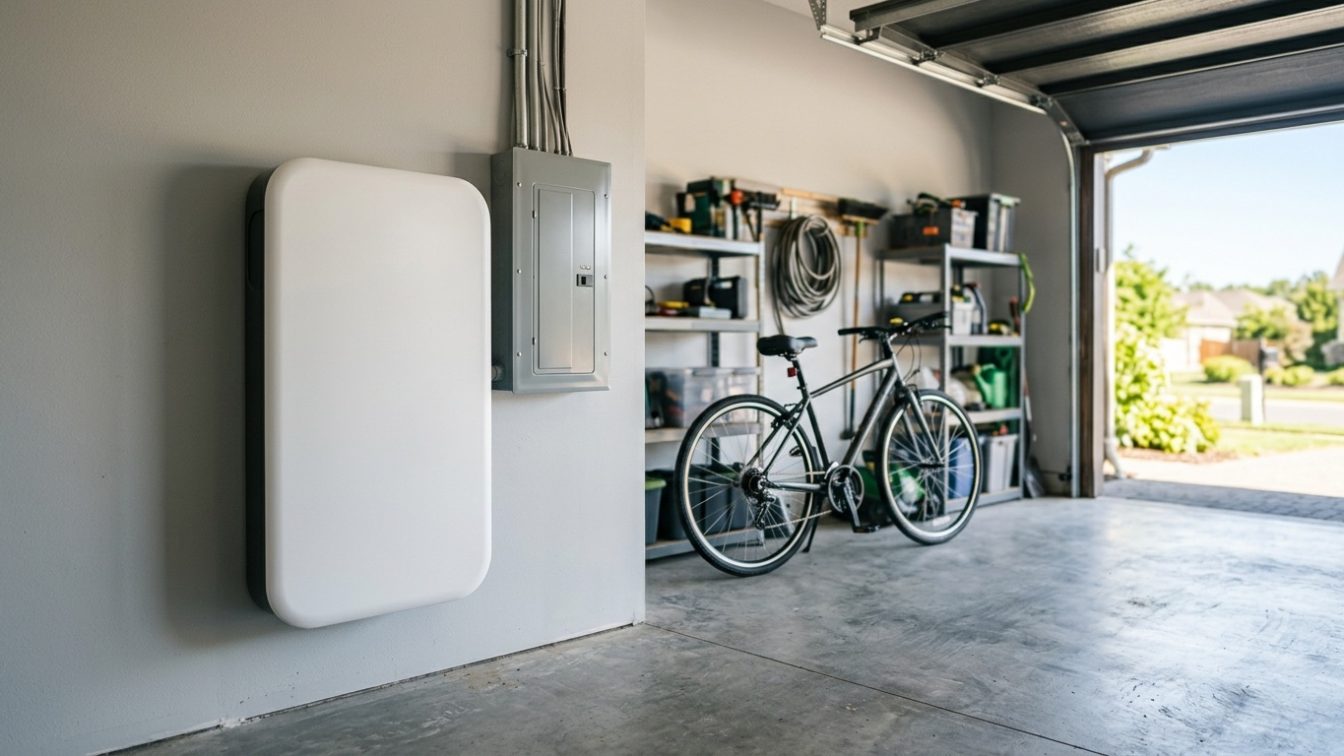
Table of contents
Summary of this article
- Jeff and Jenny Wright of Houston have not paid an electric bill in more than a year, using rooftop solar and two Tesla battery packs enrolled in Sunrun's virtual power plant (VPP), according to NBC News reporting by Maya Huter and Brian Cheung published May 30, 2026.
- Americans pay 40% more, on average, for electricity than they did six years ago; energy prices jumped 4% in April 2026 alone, driven partly by the U.S.-Israel war with Iran.
- Sunrun has 107,000 VPP customers nationwide who contributed 18 gigawatt-hours back to the grid in 2025, enough to power 15 million homes for one hour, and the company paid them $17 million for that energy.
- The Rocky Mountain Institute projects VPPs could cut U.S. peak demand by 60 gigawatts by 2030 and reduce power-sector spending by $17 billion a year; the Department of Energy says the country needs about 200 gigawatts of new peak-demand resources.
- A home battery keeps power flowing during grid strain and outages, which protects against heat-related illness, the health risk that rises fastest when air conditioning fails during extreme heat.
Jeff and Jenny Wright have not paid an electric bill for their Houston home in more than a year. They sell their unused power back to the grid instead, NBC News reported on May 30, 2026, in an article by Maya Huter and Brian Cheung.
The Wrights did it with two pieces of equipment: rooftop solar panels and two Tesla battery packs mounted on the side of their home. The batteries are what turned their house from a stand-alone solar home into part of a virtual power plant, a network utilities and energy companies call a VPP. Excess energy the Wrights do not use gets stored in the batteries and sent back to the central grid during times of peak demand.
The timing matters. Americans pay 40% more, on average, for electricity than they did six years ago, according to NBC News. Nationwide, energy prices jumped 4% in April 2026 alone, driven higher in part by the U.S.-Israel war with Iran. A system that eliminates a monthly bill lands hardest at exactly this moment.
But the money is only half the story. The other half is what a home battery does when the grid is under strain and the power would otherwise go out. Here is how a VPP works, why it protects your health during a heat emergency, and how to join one.
What a virtual power plant actually is
A virtual power plant is not a building. It is a network of thousands of homes and devices, coordinated to act like a single power plant when the grid needs help.
The concept is straightforward. A conventional power plant is one large facility that feeds electricity into the grid. A VPP achieves the same result by pooling small amounts of power from many households, the excess electricity in home batteries, the flexibility of smart thermostats, the stored charge in parked electric vehicles. When demand spikes, the operator draws on all of them at once. The combined output stabilizes the grid the way a single plant would.
Paul Dickson, president of Sunrun, America’s largest distributed energy company, put the scale in plain terms. “The 100,000 homes that we do every year equates to the same output as a nuclear power plant,” he told NBC News. The speed advantage is larger still. Building a conventional power plant takes 10 to 12 years, and a nuclear facility can take decades, Dickson said. A functioning VPP can be running in a few months.
VPPs now exist, or are in the works, in 35 states and Washington, D.C., according to NBC News. The largest networks are in California and Texas.
The money: what participants earn
The financial case is concrete, and the Wrights are a working example.
In Texas, the Wrights are paid a $240 yearly reward from their solar provider, Sunrun, on top of monthly credits that have reached $30 once all their power needs are met, according to NBC News. The combination is what zeroed out their bill.
The pattern holds at scale. Sunrun has 107,000 VPP customers nationwide. In 2025, those customers contributed 18 gigawatt-hours of power back to the grid, enough to power 15 million homes for one hour, and the company paid them $17 million for that energy, according to NBC News. Reliant, one of Texas’s primary energy providers, says it has 300,000 customers participating in VPPs.
One caveat is important. Credits and bill savings may not immediately cover the cost of installing solar panels, which can run into the tens of thousands of dollars and sometimes involve leasing plans, NBC News reported. The payback period depends on your system, your rates, and your program. The Wrights concluded the energy independence was worth it. Every household’s math is different.
Why this reaches your health
Building biology studies how the built environment affects human health. Its first principle is source control: solve a problem where it originates rather than manage the damage after it spreads. For grid reliability, source control means generating and storing power at the home, so a grid emergency never becomes a health emergency inside your walls.
The health pathway runs through heat. When a heat wave pushes the grid past its limit, the result can be a blackout, and a blackout during extreme heat cuts off the air conditioning that keeps a home survivable. Heat-related illness rises fastest among older adults, infants, and people with chronic conditions. The danger climbs at night. Health experts note that high overnight temperatures are particularly dangerous, because the body’s core temperature has no chance to cool down and recover from daytime heat.
A home battery breaks that chain. When the grid strains or fails, a battery keeps the essential circuits running, the air conditioning, the refrigerator holding medication, the equipment a household depends on. The Wrights described exactly this resilience. “I never notice it, the lights don’t dim,” Jeff Wright said. “We’ve never come close to running out of energy.”
The distinction is between managing an outage and preventing its harm. A generator started after the power fails is a reaction. A battery that never lets the power drop is source control. For a household with a heat-vulnerable member, that difference is measured in body temperature during the hours a grid is down.
Why the grid needs this now
The Wrights’ individual benefit connects to a national problem, and the scale is specific.
America’s power grid is not generating enough power to meet what experts predict will be needed for the AI data centers being planned and built across the country, according to NBC News. The Department of Energy says the country will need to add new resources to support about 200 gigawatts of peak demand. For reference, one gigawatt can power about 750,000 homes for a year.
The grid has not seen this kind of growth in decades. “The grid hasn’t seen growth for decades, and people don’t realize that,” Dickson said. “That’s getting turned on its head over the next 15 years, the grid is anticipating 40% growth, and so it’s a lot of strain on the same poles and wires.” The last comparable surge came around the year 2000, as air conditioning, the internet, and personal computers spread. For the two decades since, efficiency gains in appliances, light bulbs, and cars offset most demand growth. That offset is ending.
VPPs are one answer, and the projected impact is large. The Rocky Mountain Institute estimates VPPs could reduce U.S. peak demand by 60 gigawatts by 2030 and cut annual power-sector spending by $17 billion, according to NBC News. Sunrun aims to grow its fleet of dispatchable battery systems to 10 gigawatt-hours by the end of 2028.
The individual and the collective align. A battery that protects one home during a heat wave also relieves the grid strain that causes heat-wave blackouts in the first place. “What we have is not going to stabilize the entire grid,” Jeff Wright said, “but if enough of us get together and do this, it will help everybody in Texas and ourselves as well.”
You do not need solar to participate
The common assumption is that a VPP requires an expensive rooftop solar array. It does not.
VPPs can draw power from a variety of sources. A smart thermostat can be part of a VPP system, adjusting your cooling by a few degrees during peak demand in exchange for credits. “You really don’t need a bunch of fancy devices in order to be a participant in any of our virtual power plant programs,” Bill Clayton, senior vice president of Reliant, told NBC News.
The next frontier is the electric vehicle in your garage. Reliant is working on ways to power VPPs through parked EVs. “EVs are the crown jewel in terms of putting demand or putting supply back on the grid or reducing demand on the grid,” Clayton said. “It’s going to be a critical phase for us.” An EV battery is far larger than a typical home battery, which makes a parked, plugged-in car a substantial reserve of stored power.
What you can do
You cannot build a power plant. You can turn your home into a piece of one, at a range of price points.
Start with what you already own. If you have a smart thermostat, check whether your utility or energy provider offers a demand-response or VPP program you can enroll it in. This is the lowest-cost entry, it earns credits without new equipment.
Ask your provider about EV participation. If you own an electric vehicle, ask whether your utility offers a program that draws on your parked, plugged-in car. Programs like Reliant’s are expanding.
Price a battery against your outage risk. A home battery is the equipment that delivers both the income and the resilience. Weigh its cost against how often your area loses power and whether anyone in your home is heat-vulnerable or relies on powered medical equipment.
Read the payback terms before you install solar. Solar panels can cost tens of thousands of dollars, and leasing plans have their own terms. Ask your provider for the specific payback period based on your rates and program, not a national average.
Confirm the battery covers your critical loads. If health resilience is the goal, verify the system is sized and wired to keep your air conditioning, refrigerator, and any medical equipment running during an outage, not just a few lights.
Prepare for heat regardless. Even without a battery, know your nearest cooling center, keep windows sealed against daytime heat, and have a plan for high overnight temperatures, when the body cannot recover from the day’s heat.
Jeff and Jenny Wright turned rooftop solar and two batteries into a home that pays for itself and keeps its lights on when the grid strains. Sunrun paid 107,000 customers $17 million in 2025 for doing the same. The equipment that earns that money is the same equipment that keeps a home cool when a heat wave knocks out the power, which is why, for a heat-vulnerable household, a VPP is as much a health decision as a financial one.
Sources
- NBC News. Utility companies want to pay you to generate power for the electrical grid (2026) by Maya Huter and Brian Cheung (May 30, 2026):
- U.S. Department of Energy, Virtual Power Plants overview:
- Rocky Mountain Institute. Virtual Power Plants, Real Benefits :
- Federal Reserve Bank of St. Louis (FRED), average price of electricity data
- SEPA, states and utilities took 106 actions to advance VPPs in 2025:
- Centers for Disease Control and Prevention, heat and health risk:
- U.S. Department of Energy, home battery storage and energy resilience
Questions people ask
What is a virtual power plant?
A virtual power plant, or VPP, is a network of thousands of homes and devices, home batteries, smart thermostats, and parked electric vehicles, coordinated to act like a single power plant. When demand spikes, the operator draws small amounts of stored or flexible power from all of them at once to stabilize the grid. VPPs exist, or are in the works, in 35 states and Washington, D.C., according to NBC News.
How much money can I earn from a VPP?
It varies by program and equipment. In Texas, Jeff and Jenny Wright earn a $240 yearly reward from Sunrun plus monthly credits up to $30, which zeroed out their electric bill, NBC News reported. Nationally, Sunrun paid its 107,000 VPP customers a combined $17 million in 2025 for the 18 gigawatt-hours they sent back to the grid. Savings may not immediately cover the cost of solar panels, which can run into the tens of thousands of dollars.
Do I need solar panels to join a VPP?
No. A smart thermostat can be part of a VPP, and "you really don't need a bunch of fancy devices," Bill Clayton, senior vice president of Reliant, told NBC News. Reliant is also developing programs that draw on parked electric vehicles, which Clayton called "the crown jewel" for putting supply back on the grid. A home battery delivers the most benefit, but lower-cost entry points exist.
How does a home battery protect my health?
When a heat wave pushes the grid past its limit, the result can be a blackout that cuts off air conditioning. Heat-related illness rises fastest among older adults, infants, and people with chronic conditions, and high overnight temperatures are especially dangerous because the body cannot recover from daytime heat. A home battery keeps essential circuits, cooling, refrigeration, medical equipment, running during grid strain or an outage.
Why does the grid need VPPs right now?
America's grid is not generating enough power to meet demand from AI data centers being built nationwide, and the Department of Energy says the country needs about 200 gigawatts of new peak-demand resources, according to NBC News. The Rocky Mountain Institute projects VPPs could cut U.S. peak demand by 60 gigawatts by 2030 and reduce power-sector spending by $17 billion a year. VPPs can be running in months, versus 10 to 12 years for a conventional plant.
Have questions about the environment inside your home?
Air quality, mold, EMF, light and water all shape how a house feels and how the people in it feel. Whatever your concern is, the first step is finding out what is there.
Our certified team of environmental professionals and advocates can help.