


Big Tech underreports what its data centers cost communities
A 2026 analysis found that company disclosures leave out much of what data centers cost the places around them, including water use, power demand, and land impacts. That makes independent review hard.
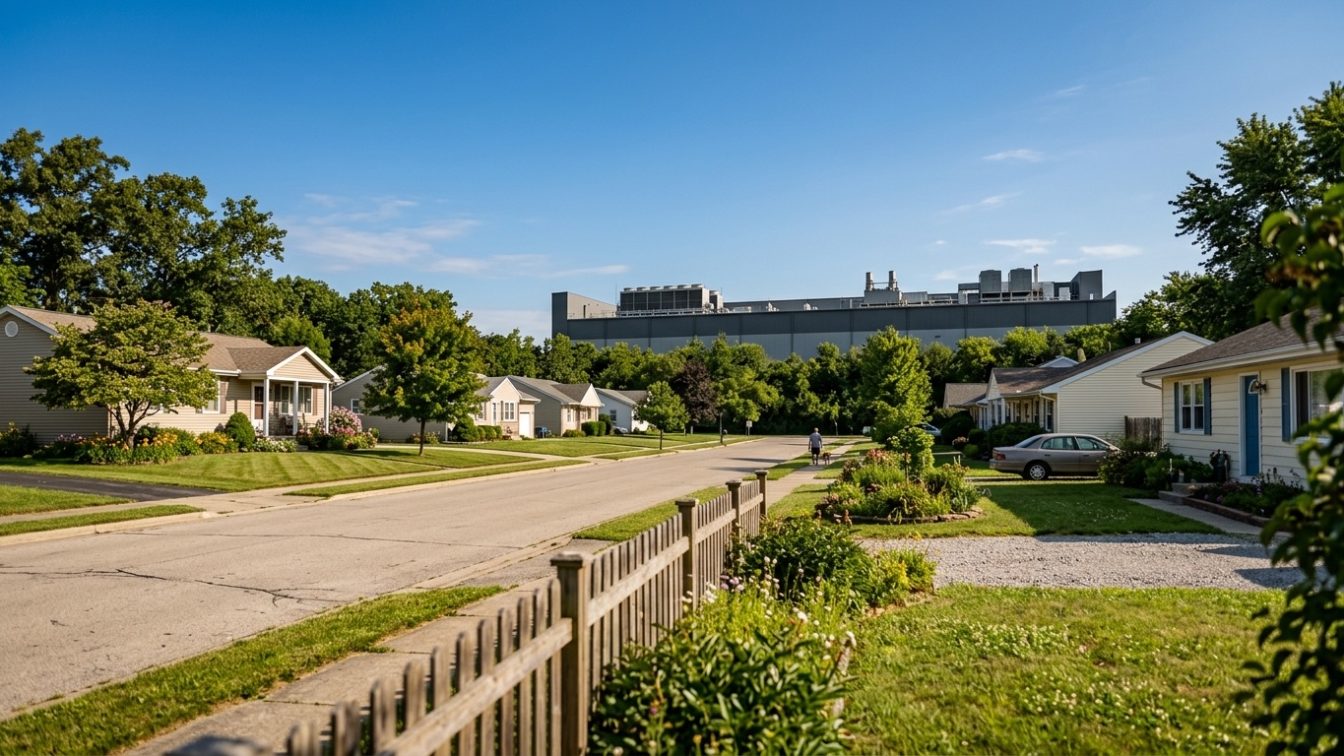
Table of contents
Summary of this article
- A 2026 analysis covered by Environmental Health News (1 May 2026) found that a lack of transparent reporting from big tech companies means the true environmental costs of data centers are likely significantly underestimated. The companies control the numbers, and independent reviewers say those numbers are incomplete.
- A data center is an always-on facility. It houses the computers that power the internet, cloud storage, and AI, and it consumes electricity and water 24 hours a day to run and cool that hardware.
- The impacts are local, not just global. Residents near data centers face water drawdown, grid stress, constant cooling-system noise, and waste heat, exposures concentrated in the surrounding neighborhood.
- Water is a direct community cost. Data centers use large volumes of water for cooling, and some are draining supplies in already dry regions, according to reporting covered by Environmental Health News.
- Grid stress is spreading. Google's emissions have spiked faster than reported, driven by AI and data center expansion, and rising demand can strain local power and raise costs for nearby ratepayers.
- Oversight is shrinking as demand grows. The Trump administration has moved to limit environmental reviews for AI data center projects, reducing the scrutiny that would otherwise surface these costs.
- Communities have leverage at the local level. Water, power, and noise disclosure, baseline measurement, and participation in zoning and permit hearings are where the real decisions get made.
A lack of transparent reporting from big tech companies means the true environmental impacts of data centers are likely significantly underestimated. That is the finding of a 2026 analysis covered by Environmental Health News on 1 May 2026, under the headline “Lack of big tech transparency hides reality of data center environmental costs.”
The problem is structural. The companies building data centers control what gets disclosed. Independent reviewers cannot verify the water, power, and emissions figures those companies release, and when they try, the reported numbers come up short. The reality, the analysis concluded, is larger than the public record shows.
This is not only a climate story about distant emissions. It is a neighborhood story. A data center is a physical building, sited on real land, drawing water and power from a real community, and the people who live next to it absorb the costs the reporting leaves out.
What a data center actually is
Start with the building, because most people have never been told what it does.
A data center is a windowless warehouse filled with rows of computer servers. Those servers run the internet: the websites you load, the files you store in the cloud, the streaming you watch, and the artificial intelligence tools now scaling at enormous speed. The building runs 24 hours a day, every day, with no off switch.
Two demands define it. First, electricity, the servers themselves draw continuous power. Second, water and more electricity for cooling, because thousands of computers running nonstop generate intense heat that has to be removed before the hardware fails. That cooling load is where much of the local impact comes from.
The AI boom has multiplied both demands. Training and running large AI models requires far more computing power than older internet services, and the buildout of new data centers has accelerated to match. More facilities, larger facilities, and higher consumption per facility.
Why the numbers are unreliable
The core finding is about trust in the data, so it is worth being precise about the gap.
Companies self-report their environmental figures. There is no independent meter the public can read. When outside analysts examine the disclosures, they find the accounting incomplete, categories left out, consumption undercounted, and impacts attributed elsewhere. The result is a public record that reads cleaner than the facility on the ground.
Google is the documented example. The company’s emissions have spiked faster than it reported, driven by AI and data center expansion, according to reporting covered by Environmental Health News. When one of the largest and most scrutinized companies in the world undercounts its own footprint, the reporting from smaller and less-examined operators warrants even more skepticism.
The oversight that would catch this is shrinking rather than growing. The Trump administration has moved to limit environmental reviews for AI data center projects, according to Environmental Health News, reducing exactly the scrutiny that would otherwise force these costs into the open. Fewer reviews mean fewer chances to verify what a facility will actually consume before it is approved and built.
What residents near data centers actually experience
Here is where the abstract becomes concrete. A data center does not keep its impact inside its walls. It pushes it into the surrounding area, and the exposures are the kind building biology treats as most significant: invisible, constant, and inescapable because you live inside them.
Water drawdown. Cooling a data center consumes large volumes of water, and some facilities are draining supplies in some of the world’s driest regions, according to reporting covered by Environmental Health News. In a water-stressed area, a single facility drawing continuously competes with residents, farms, and existing businesses for a shrinking resource. The community shares the aquifer. The data center shares the bill only on paper.
Grid stress. A data center’s power demand does not appear gradually. A large facility can draw as much electricity as a small city, added to a local grid that was not built for it. That strain can raise costs for nearby ratepayers, tighten supply during peak demand, and force utilities to build new generation, often fossil-fueled, to keep up. The neighborhood absorbs the higher bills and the added pollution from that new generation.
Constant noise. The cooling systems that keep servers from overheating run continuously, and they are loud. The dominant sound is low-frequency, a persistent hum and drone that carries farther than higher-pitched noise and passes through walls and windows that block ordinary sound. For residents nearby, it does not stop. Continuous low-frequency noise is linked to sleep disruption, stress, and reduced quality of life, and it runs through the exact overnight hours the body needs quiet to recover.
Waste heat. The heat pulled off thousands of servers has to go somewhere, and much of it is expelled into the surrounding air. A large facility functions as a heat source in its immediate area, adding to local temperatures alongside the noise and the water draw.
Each of these is a 24-hour exposure. None of them switches off. That is the pattern that makes them matter, the same reason building biology prioritizes the constant, low-level exposures inside a home over the occasional ones.
Where these fights are actually decided
The national debate about AI and energy can feel remote. The decisions that determine whether a data center lands next to a specific neighborhood are not. They happen locally, and they happen at meetings most residents never hear about until it is too late.
Data center expansion is being challenged at the community level. In Virginia, home to the largest concentration of data centers in the country, environmental advocates are challenging data center expansion directly, according to Environmental Health News. These fights turn on zoning approvals, permits, water agreements, and utility contracts, decided by county boards and planning commissions in public hearings.
That is the leverage point. A company controls its own environmental report. It does not control whether a local government approves the land, the water, and the grid connection the facility needs. Those approvals are where the incomplete numbers can be forced open, before the building goes up, not after. The cost lands on the bill. Data centers drove a $23 billion electricity price rise across 14 states.
What individuals and communities can do
Building biology treats exposure as something you manage at the source. For a data center, the source is the facility itself, and the moment to act on it is before it is approved. The tools are civic, and they are effective at the local level.
1. Demand disclosure before approval. The central problem is missing information, so require it. Before a county board approves a data center, residents can demand that the company disclose projected water use, power draw, backup generator emissions, and expected noise levels, in verifiable terms, not company summaries. If a facility will not say what it will consume, that refusal is itself the answer.
2. Measure the baseline first. You cannot prove a change without a starting point. Communities can measure existing noise levels, air quality, and water table data before construction begins. Low-frequency noise is measured in decibels with a sound meter capable of reading the low-frequency range; a baseline reading gives residents hard numbers to hold the facility to once it is running.
3. Show up to the hearings. Zoning and permit hearings are where these decisions are made, and they are open to the public. Attendance, testimony, and organized questions carry real weight with the local officials casting the votes. The Virginia challenges show that organized residents can force conditions, delays, and denials.
4. Push for enforceable conditions. Approval does not have to be all-or-nothing. Communities can negotiate binding conditions, water use caps, noise limits at the property line, mandatory monitoring, and independent verification, written into the permit rather than left to the company’s discretion.
5. Protect your own home if a facility is near. If you already live near a data center, the building-biology response inside your walls still applies. Low-frequency noise can be reduced with heavy curtains, sealed windows, and white-noise masking in the bedroom, and measuring the noise at your pillow gives you documentation for a complaint to local authorities.
The bottom line
The 2026 analysis covered by Environmental Health News does not accuse big tech of a single hidden number. It documents a structural gap: the companies control the reporting, the reporting is incomplete, and the true environmental cost of data centers is likely significantly larger than the public record shows.
For residents, the cost is not abstract. It is water drawn from a shared supply, strain on a local grid, constant low-frequency noise, and waste heat, all of it running 24 hours a day next to where people live. Oversight is shrinking as the AI buildout accelerates, which puts the burden on communities. The record can be forced open, but it happens at the county board and the permit hearing, before the building goes up. When the facility will not disclose what it consumes and the reviews are being weakened, demanding the numbers first is the reasonable default.
Sources
- Environmental Health News (Environmental Health Sciences Staff). "Lack of big tech transparency hides reality of data center environmental costs." 1 May 2026.
- Environmental Health News. "Google's emissions spike faster than reported, driven by AI and data center expansion."
- Environmental Health News. "Big tech's water-guzzling data centers are draining some of the world's driest regions."
- Environmental Health News. "Environmental advocates challenge data center expansion in Virginia."
- Environmental Health News. "Trump moves to limit environmental reviews for AI data center projects."
Questions people ask
What did the 2026 analysis actually find?
The analysis, covered by Environmental Health News (1 May 2026), found that a lack of transparent reporting from big tech companies means the true environmental impacts of data centers are likely significantly underestimated. Companies self-report their figures, independent reviewers cannot verify them, and when they examine the disclosures, the reported numbers come up short of the real consumption on the ground.
What is a data center, in plain terms?
A data center is a windowless warehouse full of computer servers that run the internet, cloud storage, and artificial intelligence tools. It operates 24 hours a day and consumes large amounts of electricity to run the servers and large amounts of water and additional electricity to cool them, since thousands of computers running nonstop generate intense heat.
How does a data center affect people who live nearby?
Residents near data centers face four main exposures, all running around the clock: water drawn from local supplies, strain on the local power grid that can raise costs, constant low-frequency noise from cooling systems, and waste heat expelled into the surrounding air. Because these run continuously, they overlap with the overnight hours people need for rest and recovery.
Why is the water use a problem?
Data centers use large volumes of water for cooling, and some facilities are draining supplies in some of the world's driest regions, according to reporting covered by Environmental Health News. In a water-stressed area, a single facility drawing continuously competes with residents, farms, and businesses for a shrinking shared resource.
Why are the reported numbers not trustworthy?
Companies report their own environmental figures with no independent public verification. Google's emissions, for example, spiked faster than the company reported, driven by AI and data center expansion. At the same time, the Trump administration has moved to limit environmental reviews for AI data center projects, reducing the scrutiny that would otherwise verify these costs before a facility is approved.
What can my community do about a proposed data center?
The decisions are made locally, at zoning and permit hearings. Communities can demand disclosure of projected water, power, and noise before approval; measure baseline noise, air quality, and water data before construction; attend and testify at hearings; and negotiate enforceable permit conditions such as water caps, noise limits, and independent monitoring. Organized residents in Virginia are actively challenging data center expansion through these channels.


Have questions about the environment inside your home?
Air quality, mold, EMF, light and water all shape how a house feels and how the people in it feel. Whatever your concern is, the first step is finding out what is there.
Our certified team of environmental professionals and advocates can help.