


Heat waves are cutting people off from each other, and homes are part of why
People cancel plans and stay indoors during extreme heat, losing the everyday contact that helps protect health. The Surgeon General has linked chronic isolation to measurable harm.

Table of contents
Summary of this article
- Extreme heat reduces face-to-face contact. When temperatures climb, people cancel plans, stay indoors, and lose the daily social interaction that protects mental and physical health.
- Loneliness carries a measurable health cost. Research cited by the U.S. Surgeon General links chronic social isolation to a mortality risk comparable to smoking up to 15 cigarettes a day.
- Older adults face the highest exposure. People over 65 are both more vulnerable to heat and more likely to withdraw socially during heat waves.
- Indoor temperature is a social lever, not just a comfort setting. A home that stays below 78°F can remain a place to gather; a home that overheats becomes a place people avoid.
- Source control beats reactive cooling. Shading, insulation, and ventilation cut heat gain before it enters, reducing both energy bills and the isolation that overheated homes produce.
Loneliness has a climate driver. As heat waves grow longer and more frequent, they are pulling people apart, canceling gatherings, emptying public spaces, and trapping vulnerable residents inside homes that no longer feel safe to leave or share. Researchers writing in The Conversation describe a feedback loop that most people never name: extreme weather disrupts the everyday social contact that human health depends on.
The consequence is not trivial. The U.S. Surgeon General’s 2023 advisory linked chronic loneliness to a mortality risk comparable to smoking up to 15 cigarettes a day, and connected social isolation to a 29% increased risk of heart disease and a 32% increased risk of stroke. Heat waves now sit upstream of that risk. When the temperature outside climbs past what bodies and buildings can handle, the connections that buffer people against illness thin out.
This is where building biology enters. Your home is not a passive shelter during a heat wave. It is either a place people can gather in, or a place they flee and avoid. The difference comes down to measurable indoor conditions you can control.
How Heat Breaks Social Connection
The mechanism is straightforward. Heat changes behavior before it changes health.
When outdoor temperatures spike, people stop walking to see neighbors. They cancel community events. Parks, markets, and sidewalks empty out during the hottest hours. For anyone without reliable air conditioning, staying home is not a choice, it is survival. And staying home alone, day after day during a prolonged heat event, is isolation by another name.
Older adults absorb the worst of this. People over 65 are more physiologically vulnerable to heat because their bodies regulate core temperature less efficiently and they sweat less. They are also more likely to live alone. During the 2003 European heat wave, which killed more than 70,000 people according to research published in Comptes Rendus Biologies, a large share of the dead were elderly people found alone in overheated apartments. Social isolation did not just accompany that disaster. It amplified the death toll, because isolated people had no one to check on them.
Extreme weather also severs connection through disruption. Power outages knock out cooling and communication at once. Wildfire smoke keeps people indoors with windows sealed. Flooding cuts off the physical routes people use to reach one another. Each event chips away at the routine contact, the coffee with a neighbor, the walk to a friend’s porch, that keeps social ties intact.
The Indoor Threshold That Matters
There is a temperature above which a home stops working as a social space. Health researchers generally identify 78°F as the upper edge of the safe indoor comfort range during hot weather, with sustained exposure above 86°F posing real danger to health.
The problem is that homes routinely blow past these numbers. A study of indoor conditions during heat waves found that even young, healthy adults can face dangerously hot bedrooms overnight, because heat that builds up in a building during the day does not escape after sunset. Overnight indoor temperatures matter most. Health researchers note that high nighttime temperatures are especially dangerous because the body never gets the chance to cool its core and recover from daytime heat.
A home that holds heat past 80°F into the night is not a place anyone wants to host a meal, invite a grandchild, or sit with a neighbor. Thermal discomfort quietly cancels the social life of a house.
Source Control: Stop the Heat Before It Enters
Building biology treats heat the way it treats any indoor pollutant, you control it at the source, not after it arrives. Every degree you block from entering is a degree you don’t have to fight with an overworked air conditioner.
Shade the glass. Windows are the single largest source of unwanted heat gain in most homes. Exterior shading, awnings, shutters, or planted trees, stops solar heat before it passes through the glass. The U.S. Department of Energy notes that exterior shading is far more effective than interior blinds, because once sunlight enters the glass, the heat is already inside.
Seal and insulate the envelope. Attic insulation and air sealing slow the rate at which outdoor heat leaks in. A well-insulated attic can reduce heat gain through the ceiling substantially, keeping the living space closer to the safe range for longer during a heat event.
Reflect the roof. Cool roofs and light-colored surfaces reflect solar radiation instead of absorbing it. The Department of Energy estimates that reflective roofing can stay up to 50°F cooler at the surface than a standard dark roof under peak sun.
Exposure Pathways: Where Heat Sneaks In
To fix a hot house, find the pathways. Heat enters through four main routes, and each has a targeted fix.
Conduction through walls and roof. Insulation is the countermeasure. Prioritize the attic, where the most heat enters.
Radiation through windows. Exterior shading and low-emissivity window film block the sun’s energy.
Convection through gaps and cracks. Air sealing around doors, windows, and penetrations stops hot outdoor air from leaking in during the day.
Internal gains from appliances. Ovens, dryers, and old incandescent bulbs add heat. Cooking outside and switching to LED lighting removes a source you control directly.
Practical Fixes That Keep a Home Gatherable
The goal is a home that stays in the safe range so it can stay social. These steps move a house toward that threshold.
Create a cool room. You do not need to cool an entire house to protect health and preserve social contact. Designate one well-insulated, shaded room, ideally on the north side and on a lower floor, as a cool refuge. This becomes the room where people can safely gather during the worst hours.
Ventilate on a schedule. Open windows during the cool hours after midnight and before dawn to flush accumulated heat, then close and shade the house before the day heats up. This night-flush strategy can lower indoor temperatures several degrees without air conditioning.
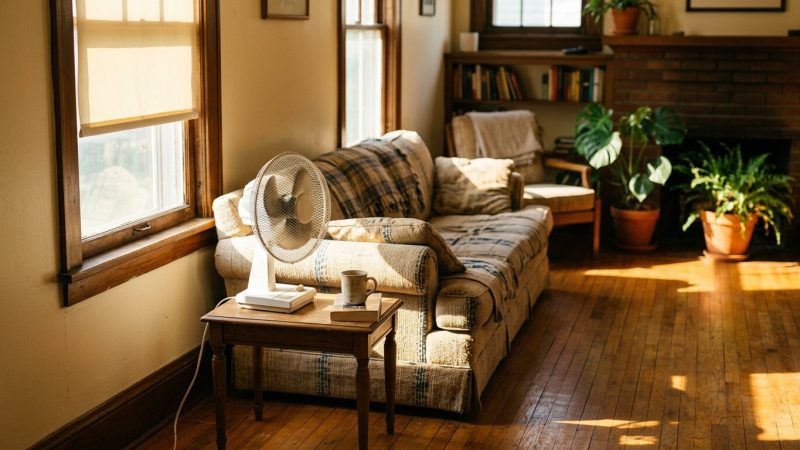
Run fans correctly. Ceiling and portable fans make a room feel roughly 4°F cooler through air movement, according to the Department of Energy. Fans cool people, not rooms, so they only help when someone is present.
Check on the isolated. The most important fix is not mechanical. During heat waves, direct contact saves lives. A daily call or visit to an older neighbor breaks the isolation and catches heat illness before it turns fatal. The building keeps the space safe; the social habit keeps the person safe.
Measure, Then Manage
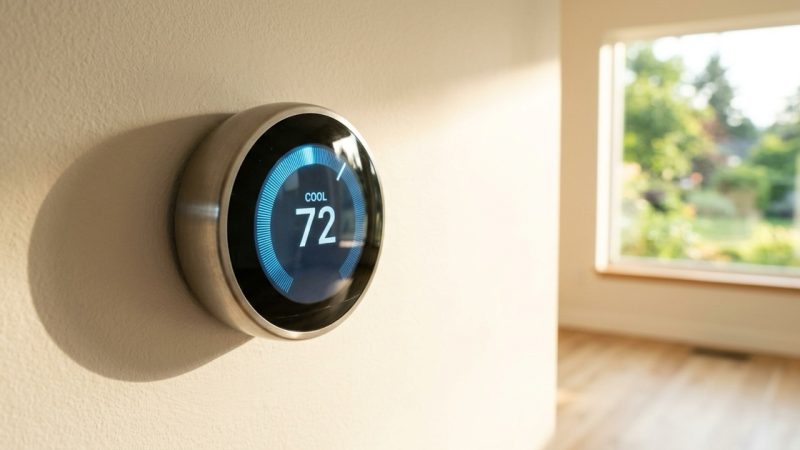
You cannot manage what you do not measure. A basic indoor thermometer or a $20 hygrometer turns guesswork into data. Track the temperature in your main living space and your sleeping area, especially overnight. If your bedroom sits above 78°F at bedtime and does not drop through the night, your envelope is losing the heat battle, and both your health and your social life pay for it.
The connection researchers draw is clear. Heat waves isolate people, and isolation carries a health cost measured in heart disease, stroke, and early death. A cool, controlled home reverses the first link in that chain. It stays a place worth gathering in, and that, more than any thermostat setting, is what keeps a community connected through a warming climate. The nights are the part that does not recover. The heat no longer breaks after dark in many US cities.
Sources
- The Conversation. Climate change may be making us lonelier: How heat waves and extreme weather disrupt social connections everyone relies on
- U.S. Surgeon General. Our Epidemic of Loneliness and Isolation (2023) 2023 Advisory
- U.S. Department of Energy, guidance on window shading, cool roofs, insulation, and fan use
- Comptes Rendus Biologies, research on mortality during the 2003 European heat wave
Questions people ask
What indoor temperature is considered safe during a heat wave?
Health researchers generally identify 78°F as the upper edge of safe indoor comfort during hot weather. Sustained indoor exposure above 86°F poses a real health risk, and high overnight temperatures are especially dangerous because the body cannot cool its core and recover from daytime heat.
How does a heat wave actually increase loneliness?
Heat changes behavior before it changes health. When temperatures spike, people cancel gatherings, stop visiting neighbors, and stay indoors during the hottest hours. For anyone without reliable cooling, remaining home alone through a prolonged heat event becomes a form of enforced isolation.
Why are older adults most at risk?
People over 65 regulate core body temperature less efficiently and sweat less, making them more physiologically vulnerable to heat. They are also more likely to live alone, which means fewer people check on them. During the 2003 European heat wave, which killed more than 70,000 people, many victims were elderly people found alone in overheated homes.
What is the single most effective way to keep heat out of my home?
Shade the windows from the outside. Windows are the largest source of unwanted heat gain, and the U.S. Department of Energy notes that exterior shading, awnings, shutters, or trees, is far more effective than interior blinds, because once sunlight passes through glass, the heat is already inside.
Do I need to air condition my whole house?
No. Designating one well-insulated, shaded "cool room" on the north side or a lower floor protects health and preserves a safe space for people to gather during the hottest hours, without the cost of cooling an entire home.
How can I tell if my home is overheating?
Use an inexpensive indoor thermometer or hygrometer to track temperatures in your living and sleeping areas, especially overnight. If your bedroom stays above 78°F at bedtime and does not drop through the night, your home is retaining too much heat and your building envelope needs attention.

Have questions about the environment inside your home?
Air quality, mold, EMF, light and water all shape how a house feels and how the people in it feel. Whatever your concern is, the first step is finding out what is there.
Our certified team of environmental professionals and advocates can help.