


A strong El Nino is lining up to reshape your winter air and water
The National Weather Service put the odds of a very strong event at 63% for November through January. It pushes the jet stream south, spreading drought, floods and coastal toxins by region.
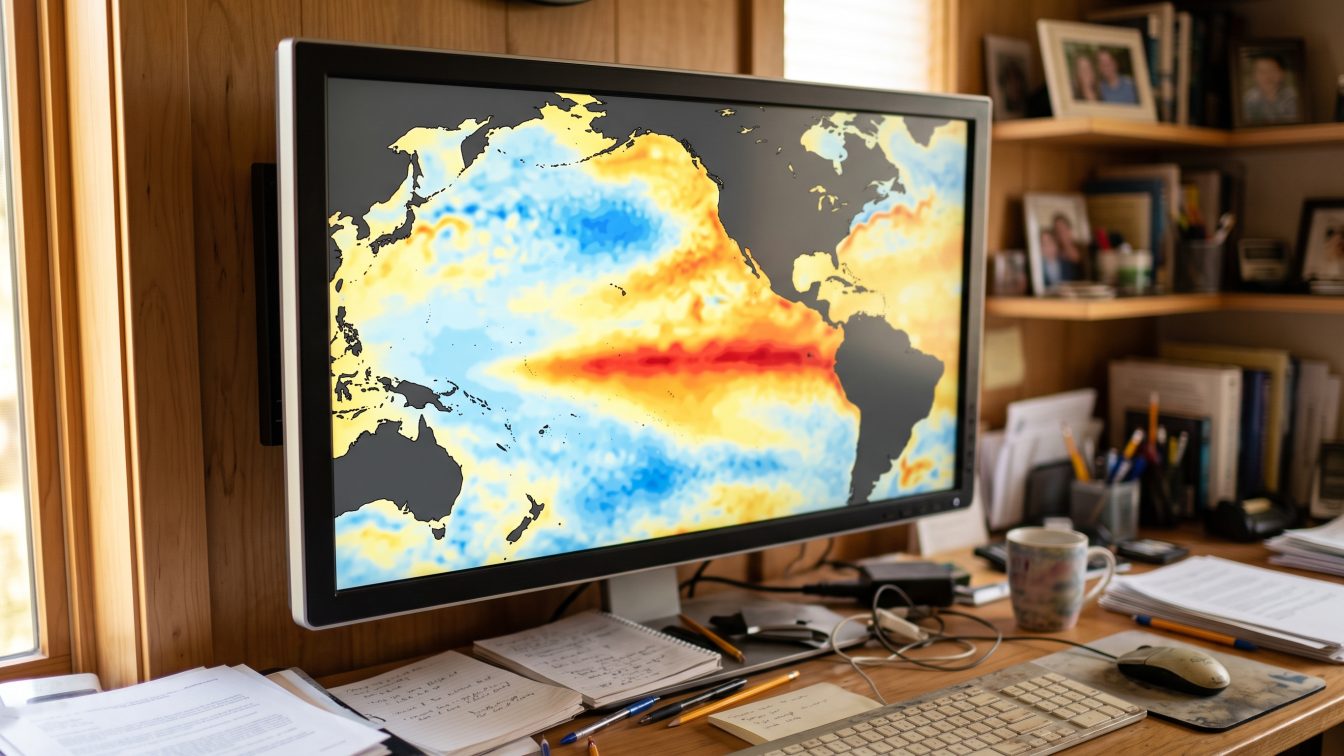
Table of contents
Summary of this article
- The National Weather Service declared El Niño on June 11, 2026, with a 63% chance it becomes a very strong event during the November, January window, potentially ranking among the largest in the historical record.
- El Niño shifts the jet stream south, bringing drier, warmer winters to the Pacific Northwest, which is already in drought, and wetter winters to Southern states, raising flood risk.
- The pattern drives marine heat waves that fuel harmful algal blooms. These blooms can release neurotoxins that harm sea life and degrade coastal air and water quality.
- El Niño raises average global temperatures on top of climate change. 2024 was the hottest year on record, about 2.65°F above the mid-19th-century average, and the past 11 years are the 11 hottest ever recorded, according to NASA.
- Your home is the buffer between these outdoor shifts and your indoor air. Sealing your building envelope, running HEPA-and-carbon filtration, and controlling indoor humidity below 50% are the core defenses.
The National Weather Service declared El Nino on June 11, 2026. There is a 63% chance it becomes a very strong event between November and January, ranking among the largest on record, the agency said.
That forecast changes the math for millions of homes. You can see a hurricane or a wildfire coming. El Nino works quietly, warming the ocean and reshaping a whole winter, with drought in one region, flooding in another and marine heat waves that seed toxins along the coast.
“There is a 63% chance that we’re looking at a very strong El Nino during the November to January time period that could rank among the largest El Nino events in the historical record,” Ariel Cohen, a meteorologist for the NWS in Los Angeles, said at a news conference. “We’re already seeing those warm temperatures lining up.”
When the weather outside your home stays off-kilter for months, it reaches the air you breathe and the water you drink. Here’s how, region by region, and what you can do about each.
What El Nino actually is
El Nino is a natural climate pattern that warms surface water in the tropical Pacific every few years. It reaches your daily life through the jet stream, a ribbon of fast-moving air that circles the Northern Hemisphere and steers storms.
El Nino shoves that ribbon south. Where it settles decides which risks land at your address this winter.
It also nudges up average global temperatures, stacking its heat on top of climate change. That’s why the readings keep climbing. The hottest year on record was 2024, 2.65 degrees Fahrenheit warmer than the mid-19th-century average, according to NASA. Even 2025 came in third-hottest despite a La Nina, which usually cools things off. The past 11 years are the 11 hottest ever measured.
If you live in the Pacific Northwest: drought and wildfire
El Nino usually hands the Pacific Northwest a dry, warmer-than-normal winter. That stings this year, because much of the region is already in drought after a season of thin snow.
Dry air, low snowpack and heat feed a longer, meaner wildfire season. For your home, the danger is smoke, and you can measure it.
Smoke carries fine particles called PM2.5, smaller than 2.5 microns, small enough to reach deep into your lungs and slip into your blood. The Air Quality Index, or AQI, tracks it. Under 50 is good. From 100 to 150, the air turns unhealthy for sensitive groups. Above 150, it’s unhealthy for everyone.
Most people miss what happens indoors. Your house isn’t sealed, so indoor smoke climbs right along with the outdoor count. During the 2015 wildfire season and every big smoke event since, indoor PM2.5 has risen with the air outside unless a home is actively filtered.
You can fight back. Weatherstrip doors, caulk gaps around windows, and close off attic and crawlspace leaks. Run a portable air purifier with a true HEPA filter, which traps at least 99.97% of particles at 0.3 microns. Set your HVAC filter to MERV 13 or higher, the point where it starts pulling fine smoke out of the air. On the worst days, keep windows shut and recirculate the air inside instead of drawing it in from outside.
If you live in the South: flooding and moisture
El Nino usually soaks Southern states with an unusually wet winter, and that primes the region for flooding.
Here the threat is water, and the mold that follows it. Standing water and damp indoor air give mold what it needs, and it starts colonizing wet surfaces within 24 to 48 hours.
Watch your indoor humidity. Keep it below 50%, ideally between 30% and 50%. Above 60%, mold takes off fast. A hygrometer, a humidity gauge that costs a few dollars, shows you the number in real time.
The fixes are cheap and doable. Run a dehumidifier in basements and low rooms. Push rainwater away from your foundation by extending downspouts and sloping the soil away from the house. Seal foundation cracks where groundwater seeps in. If water does get in, dry everything within 48 hours. Anything porous that stays wet longer, like drywall, carpet and insulation, often has to come out rather than dry.
The coastal threat: marine heat waves and neurotoxins
El Nino drives powerful marine heat waves. Two are already hitting the Pacific, one near the California coast and another farther out, and NOAA models suggest El Nino will push ocean temperatures even higher this fall.
“One of the most important things for the animals in the ecosystem is not necessarily just how hot it is … but just how long they’re exposed to the heat,” Andrew Leising, a research oceanographer with NOAA’s Southwest Fisheries Science Center, said. He described a stretch of Southern California where one heat wave rolls straight into the next.
Those long heat waves have driven harmful algal blooms, which can release neurotoxins that harm sea life. In 2015, a marine heat wave nicknamed “The Blob” pushed ocean temperatures 7 degrees Fahrenheit above normal and killed off seals, sea lions, whales and seabirds, likely from lost food and rising toxins from the blooms.
For coastal homes, the risk comes through your seafood and your coastal air. Algal toxins build up in shellfish, which is why authorities close fisheries during blooms. The Blob shut down West Coast Dungeness crab, sea urchin and salmon fishing worth millions. Some blooms also throw toxins into the air, irritating eyes and airways near the shore.
Protect yourself. Follow local shellfish advisories and fishery closures every time, since you can’t see, smell or taste these toxins in seafood. During a coastal bloom, keep windows shut if you live near the water and run indoor air filtration. Odd fish are an early warning too. Past El Nino events brought yellowfin tuna, mahi-mahi and even whale sharks to California waters, along with more shark sightings as warm water spread their range north.
One home, every threat
Smoke, flood moisture and coastal toxins all reach you the same way, through your home’s connection to the outdoors. Treat the house as a system that either keeps threats out or lets them walk right in.
That gives you a short checklist no matter where you live. Seal the shell of the house so outside air comes in only when you want it. Filter indoor air with HEPA for particles and activated carbon for gases and odors. Hold humidity below 50% so moisture never gets a start. Track the numbers that matter, AQI for smoke and relative humidity for mold, so you act on data instead of guesswork.
El Nino has arrived with a 63% chance of ranking among the strongest ever. The winter it drives will look different depending on where you live. What stands between you and it is the same everywhere: the building you’re in, and how carefully you get it ready.
Sources
Questions people ask
How strong will this El Niño be?
The National Weather Service gave a 63% chance that this El Niño becomes a very strong event during the November-to-January window, potentially ranking among the largest in the historical record. NWS meteorologist Ariel Cohen said warm Pacific temperatures were already lining up when the pattern was declared on June 11, 2026.
How does El Niño affect the weather where I live?
El Niño pushes the jet stream south, which typically brings dry, warmer winters to the Pacific Northwest and wetter winters to Southern states. The Pacific Northwest faces higher wildfire risk this year because it entered the season already in drought, while Southern states face elevated flood risk.
What indoor humidity level prevents mold after flooding?
Keep indoor relative humidity below 50%, ideally between 30% and 50%. Above 60%, mold growth accelerates. Mold can begin growing on damp surfaces within 24 to 48 hours, so dry any flooded materials within 48 hours and remove porous items like drywall and carpet that stay wet longer.
What air filter removes wildfire smoke?
A true HEPA air purifier captures at least 99.97% of particles at 0.3 microns, effectively removing the fine PM2.5 in wildfire smoke. For your HVAC system, use a filter rated MERV 13 or higher. On heavy-smoke days, keep windows closed and recirculate indoor air rather than drawing in outside air.
Are marine heat wave toxins dangerous to people?
Harmful algal blooms driven by marine heat waves can release neurotoxins that concentrate in shellfish and, in some cases, become airborne near the shore. Follow all local shellfish advisories and fishery closures, since the toxins are undetectable by sight, smell, or taste. During a coastal bloom, keep windows closed and filter indoor air.
Is El Niño the same as climate change?
No. El Niño is a natural, recurring pattern that warms the tropical Pacific and raises average global temperatures temporarily. Climate change is the primary long-term driver of record heat. The two stack together, 2024 was the hottest year on record at about 2.65°F above the mid-19th-century average, and the past 11 years are the 11 hottest ever recorded, according to NASA.

Have questions about the environment inside your home?
Air quality, mold, EMF, light and water all shape how a house feels and how the people in it feel. Whatever your concern is, the first step is finding out what is there.
Our certified team of environmental professionals and advocates can help.