


A Keystone pipeline spill dumped 543,000 gallons of crude into a Kansas creek
The 2022 Keystone rupture dumped 13,000 barrels of oil into Mill Creek, the largest spill in that system's history. A settlement over the damage arrived three and a half years later.
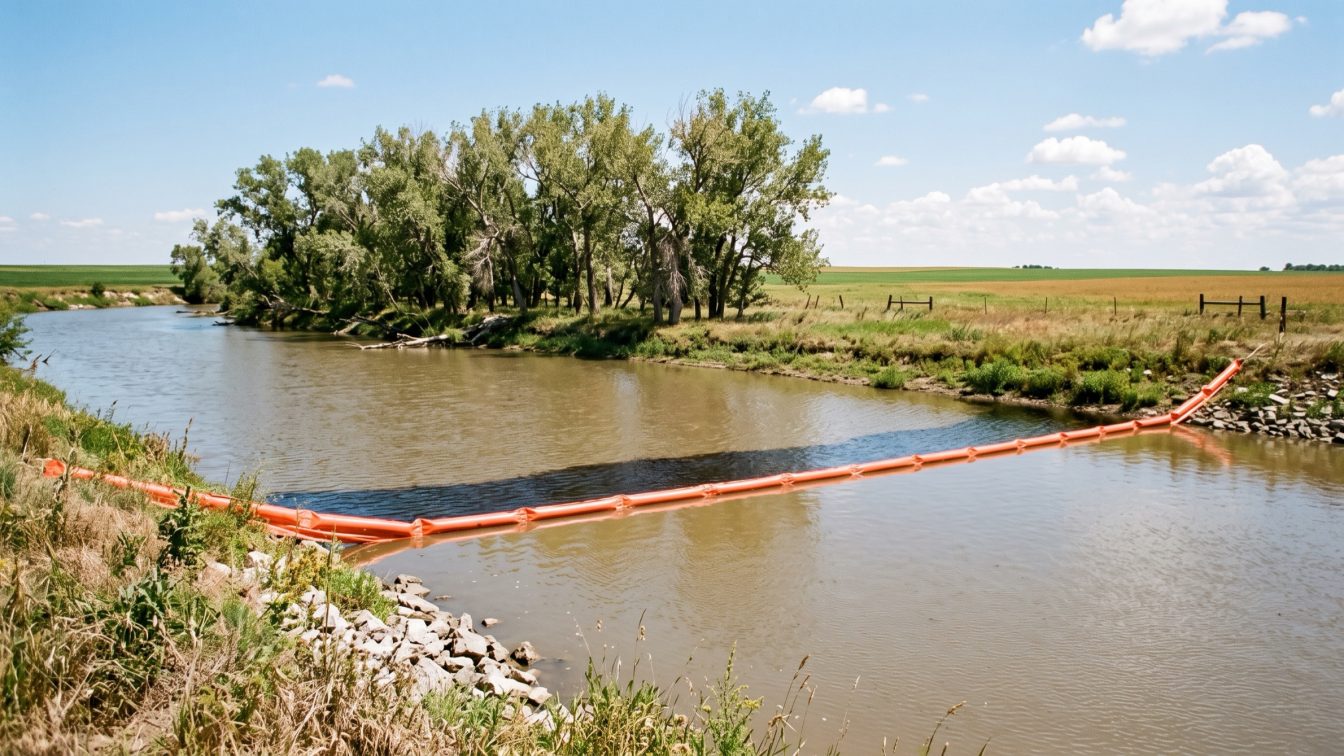
Table of contents
Summary of this article
- On December 7, 2022, the Keystone Pipeline ruptured in Washington County, Kansas, releasing nearly 13,000 barrels of crude oil, approximately 543,000 gallons, over land and into Mill Creek, one of the largest inland oil spills in recent history and the largest ever from the Keystone system, according to the EPA.
- On July 10, 2026, the EPA, the U.S. Department of Justice, and the state of Kansas announced a settlement with South Bow (USA) LP and South Bow Infrastructure Operations Inc., the pipeline's owner and operator, to resolve Clean Water Act violations.
- The settlement requires South Bow to pay a civil penalty of more than $26 million, complete prevention work the company estimates at approximately $40 million, and contribute over $3 million to Kansas for natural resource restoration.
- Crude oil covered Mill Creek bank-to-bank for 3.5 miles downstream, oil residue was found across 35 surrounding acres, and the spill killed or impacted more than 2,700 animals, according to the complaint.
- The Kansas Department of Health and Environment issued a stream advisory prohibiting contact with Mill Creek by people, livestock, and pets, naming the direct exposure pathways a crude oil spill opens.
On December 7, 2022, the Keystone Pipeline ruptured in Washington County, Kansas. Nearly 13,000 barrels of crude oil, approximately 543,000 gallons, leaked over land and into Mill Creek. The EPA calls it one of the largest inland oil spills in recent history and the largest discharge ever from the Keystone Pipeline system.
On July 10, 2026, the consequences arrived in dollars. The EPA, the U.S. Department of Justice, and the state of Kansas announced a settlement with South Bow (USA) LP and South Bow Infrastructure Operations Inc., the pipeline’s owner and operator, resolving allegations that the rupture violated the Clean Water Act.
The numbers in that settlement matter. So do the numbers describing the damage. Together they tell you what a crude oil spill does when it reaches a waterway, and why prevention at the pipe is the only clean fix. Here is how the oil moved, what it reached, and what a household downstream of any pipeline should know.
What the settlement requires
South Bow agreed to three payments, each tied to a different purpose.
The company will pay a civil penalty of more than $26 million. It will complete work designed to prevent similar future discharges, which South Bow estimates will cost approximately $40 million. And it will contribute over $3 million to the state of Kansas for natural resource restoration projects, resolving violations of Kansas state law. The consent decree was filed with the U.S. District Court for the District of Kansas and is subject to a 30-day public comment period.
The EPA framed the penalty as a measure of the harm. “The substantial penalty reflects the seriousness of the environmental harm, and the other requirements of the settlement reflect the need to prioritize pipeline integrity and maintenance for this critical infrastructure,” said Jeffrey A. Hall, Assistant Administrator for the EPA’s Office of Enforcement and Compliance Assurance.
The prevention work is the part that addresses the source. A civil penalty punishes a past failure. The roughly $40 million in integrity and maintenance work is meant to stop the next one, the difference between paying for damage and preventing it.
The damage, measured
The complaint did not describe the spill in adjectives. It described it in distances, acres, and animal counts.
Crude oil covered Mill Creek bank-to-bank for 3.5 miles downstream of the rupture site. In the immediate area, oil residue was found across the 35 acres surrounding the discharge. The spill killed or impacted more than 2,700 animals.
That is the physical footprint of 543,000 gallons entering a creek. The oil did not stay at the rupture point. It moved with the water, coating the streambed, the banks, and the vegetation for more than three miles, then settled into the soil across dozens of surrounding acres.
The Keystone Pipeline is a 2,687-mile liquid oil system running between Hardisty, Alberta, and Port Arthur, Texas. The rupture occurred in the section that stretches from Steele City, Nebraska, to Cushing, Oklahoma. A single point of failure along that line put crude into a Kansas waterway that people, livestock, and wildlife depend on.
The exposure pathways a crude spill opens
Building biology studies how the built environment affects human and animal health. Its first principle is source control: stop a contaminant where it originates rather than manage it after it spreads. A pipeline spill is a source-control failure at the largest scale, and once crude enters a creek, the exposure pathways multiply.
The Kansas Department of Health and Environment named those pathways directly. After the spill, the department issued a stream advisory prohibiting contact with Mill Creek by people, livestock, and pets. That single advisory identifies the three routes crude oil takes into living bodies. Crude moves on events far from any pipeline, and oil went from $66 to $101 a barrel after the Strait of Hormuz closed.
Water. Crude oil carries compounds that are toxic to humans and animals, including benzene, a known human carcinogen, and other volatile organic compounds. When oil enters a creek, those compounds dissolve into the water and coat the surface. Anyone drawing water downstream, for drinking, for irrigation, for livestock, draws from a contaminated source until cleanup and monitoring confirm it is safe. This is why the health advisory came first.
Soil. Oil residue across 35 acres does not evaporate cleanly. Heavier crude fractions bind to soil, where they can persist and slowly leach into groundwater. A private well near an oiled floodplain draws from the same shallow aquifer the residue can reach. Soil contamination is the pathway that outlasts the visible slick.
Direct contact, animals first. The advisory prohibited contact by livestock and pets for a reason. Animals do not read warning signs. A cow, a dog, or wildlife will drink from an oiled creek or walk through an oiled bank, ingesting crude through drinking and through grooming oil off their coats. More than 2,700 animals were killed or impacted in this spill. Cattle that drink contaminated water face liver and kidney damage; dogs that lick oil from their fur ingest the same toxic compounds. For a rural household with livestock or pets near a pipeline route, the animals are the first and most exposed line.
The through-line is proximity to the water. The closer a home, a well, a pasture, or an animal is to the contaminated creek, the higher the exposure. Distance downstream and depth of groundwater are the variables that determine who is affected.
Why the prevention work is the real story
The $26 million penalty is the headline. The $40 million in prevention work is the fix.
Pipeline integrity and maintenance are source control at the infrastructure scale. A pipeline that is monitored, tested, and repaired before a weak point fails does not rupture. The prevention requirements in this settlement exist because the 2022 rupture demonstrated the cost of a failure: 543,000 gallons, 3.5 miles of oiled creek, 35 acres of residue, and 2,700 animals. Ownership decides who carries the cost, the way a $66.8 billion merger would build the largest US utility.
The Justice Department made the same point. “Pipelines are the safest means of transporting large quantities of oil and other liquids and gases over long distances,” said Principal Deputy Assistant Attorney General Adam Gustafson of the Justice Department’s Energy and Natural Resources Division. “However rare, when a pipeline leaks, it can quickly escalate. That’s why an important part of this proposed settlement is the work the company has committed to do to help prevent future leaks.”
That phrase, “it can quickly escalate”, describes exactly what happened at Mill Creek. A rupture is not a slow drip. Half a million gallons of crude entered land and water fast enough to coat a creek bank-to-bank for miles before it could be contained.
Following a 2023 EPA cleanup order, South Bow removed oil from the creek and surrounding areas and completed restoration of aquatic habitat, stream banks, and shorelines. Cleanup is necessary, but it is remediation, managing harm after it happens. Prevention keeps the crude in the pipe.
What residents near a pipeline can do
You cannot inspect a 2,687-mile pipeline yourself. You can know your exposure, protect your water and animals, and act through the channels that remain open.
Find out if you live near a pipeline route. The National Pipeline Mapping System, run by the federal Pipeline and Hazardous Materials Safety Administration, lets residents check for transmission pipelines near their address. Knowing you are downstream of one is the first step.
Test your well water after any nearby spill. If a spill occurs near your property, have a private well tested by a state-certified laboratory for petroleum compounds, including benzene, toluene, ethylbenzene, and xylene, the group known as BTEX. The EPA’s drinking-water limit for benzene is 5 parts per billion. Private wells are not covered by routine monitoring.
Obey any health advisory immediately, and keep animals away. A stream advisory like the one Kansas issued is the clearest exposure warning available. Keep people, livestock, and pets out of and away from an affected waterway until officials lift the advisory. Animals are the first exposed and cannot protect themselves.
Provide clean water for livestock and pets. If your animals normally drink from a creek or pond that could be affected, switch them to a confirmed-clean water source at the first sign of a spill. Do not wait for confirmation that the water is contaminated.
Watch the soil around a spill. Oil residue in soil can leach for years. If your land was oiled, ask state environmental officials about soil testing and remediation, and keep gardens and grazing off affected ground until it is cleared.
Comment on the settlement. The consent decree carries a 30-day public comment period through the Justice Department. That window lets residents weigh in on whether the penalty and prevention terms are adequate.
The Keystone rupture put 543,000 gallons of crude into a Kansas creek, oiled 3.5 miles of streambed, and killed or harmed more than 2,700 animals. The $70 million settlement addresses the past and funds prevention for the future. For anyone living downstream of a pipeline, the lesson is the same one the settlement is built on: the only reliable protection is keeping the oil in the pipe, because once it reaches the water, the exposure reaches everything the water touches.
Sources
- EPA. EPA and DOJ Reach Settlement with Keystone Pipeline Owner and Operator for 2022 Pipeline Rupture in Kansas (2026) (July 10, 2026):
- EPA, South Bow L.P. Clean Water Act Settlement Summary:
- U.S. Department of Justice, Proposed Consent Decrees (Energy and Natural Resources Division):
- EPA, Clean Water Act enforcement programs:
- EPA, Benzene in drinking water and health effects:
- Pipeline and Hazardous Materials Safety Administration, National Pipeline Mapping System:
- Agency for Toxic Substances and Disease Registry (ATSDR), crude oil and petroleum health effects:
Questions people ask
What happened in the Keystone Pipeline spill?
On December 7, 2022, the Keystone Pipeline ruptured in Washington County, Kansas, releasing nearly 13,000 barrels of crude oil, approximately 543,000 gallons, over land and into Mill Creek. The EPA calls it one of the largest inland oil spills in recent history and the largest discharge ever from the Keystone system. Crude covered the creek bank-to-bank for 3.5 miles.
What does the July 2026 settlement require?
On July 10, 2026, the EPA, the Department of Justice, and Kansas announced a settlement with South Bow (USA) LP and South Bow Infrastructure Operations Inc., the pipeline's owner and operator. South Bow agreed to pay a civil penalty of more than $26 million, complete prevention work it estimates at approximately $40 million, and contribute over $3 million to Kansas for natural resource restoration. It resolves Clean Water Act violations.
How much damage did the spill cause?
Crude oil covered Mill Creek bank-to-bank for 3.5 miles downstream, oil residue was found across 35 surrounding acres, and the spill killed or impacted more than 2,700 animals, according to the complaint. The Kansas Department of Health and Environment issued a stream advisory prohibiting contact with the creek by people, livestock, and pets.
How does an oil spill reach people, livestock, and pets?
Through three pathways. Crude oil carries toxic compounds, including benzene, that dissolve into water drawn downstream. Heavier oil binds to soil and can leach into groundwater and private wells. And animals, livestock, pets, and wildlife, drink from and walk through oiled water, ingesting crude directly. Kansas prohibited contact by all three groups for this reason.
What can I do if I live near a pipeline?
Check the National Pipeline Mapping System to learn if a pipeline runs near your address. After any nearby spill, test private well water at a certified lab for benzene and related petroleum compounds; the EPA's benzene drinking-water limit is 5 parts per billion. Obey any health advisory immediately, keep animals away from affected water and provide a clean source, and comment during the settlement's 30-day public comment period.

Have questions about the environment inside your home?
Air quality, mold, EMF, light and water all shape how a house feels and how the people in it feel. Whatever your concern is, the first step is finding out what is there.
Our certified team of environmental professionals and advocates can help.