


When solar projects shut down, gas and coal fill the gap
Demand doesn't fall when a solar plant goes offline, so fossil-fuel plants step in to keep power flowing. One alternative being floated is space-based solar that would beam electricity down from orbit.
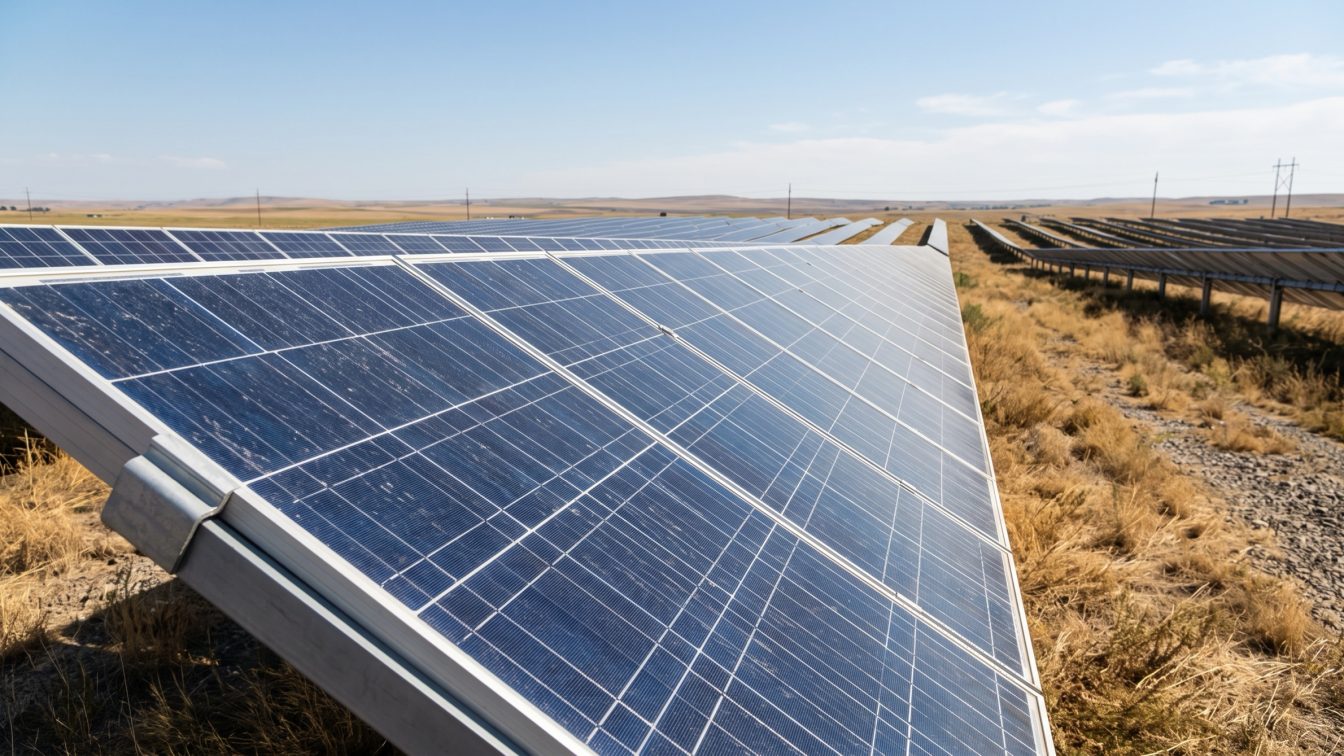
Table of contents
Summary of this article
- Solar plants and projects are being shut down, and cheaper alternatives, including space-based solar, are being explored, NBC News reported on October 14, 2025, in a segment featuring environmentalist Bill McKibben.
- Space-based solar power uses satellites to collect sunlight 24 hours a day above the clouds and atmosphere, then beams that energy to receivers on Earth, typically via microwaves, with zero tailpipe emissions at the point of generation.
- When terrestrial solar generation goes offline, electricity demand does not fall with it; fossil-fuel plants often make up the difference, releasing fine particulate matter (PM2.5) and nitrogen oxides (NOx) into the air.
- The EPA's annual health-based standard for PM2.5 is 9 micrograms per cubic meter of air, lowered from 12 in 2024; PM2.5 is linked to asthma, heart disease, and premature death.
- Every kilowatt-hour a clean source generates is a kilowatt-hour a fossil-fuel plant does not burn, making the source of your electricity a direct factor in the air quality near your home.
Solar plants and projects are being shut down. As they close, cheaper alternatives are being explored, including space-based solar power. NBC News reported it on October 14, 2025, in a segment where correspondent Ellison Barber spoke with environmentalist Bill McKibben about the shutdowns and what comes next for solar.
The closures matter for a reason that is easy to miss. When a solar project stops generating, the electricity it produced does not vanish from demand. Homes, businesses, and data centers still need that power. Something else has to make it, and that something is frequently a fossil-fuel plant that burns gas, coal, or oil.
That substitution is the whole story for your household. A fossil-fuel plant releases pollution that a solar array does not. When one replaces the other, the air near the people downwind carries a heavier load. The source of your electricity reaches the air in your home. What follows is how satellites would change that, the thresholds worth watching, and what you can do now.
Panels in orbit, power beamed to the ground
Space-based solar power moves the solar panel off the roof and into orbit. The principle is simple, even though the engineering is not.
A conventional solar panel on the ground has two built-in limits. It stops producing at night, and it produces less when clouds, haze, or weather block the sun. Roughly half of every day is dark, and much of the daylight is dimmed by atmosphere and weather.
A satellite in orbit removes both limits. Sunlight reaches it around the clock, because a properly positioned satellite never passes into night, and it arrives at full strength above the clouds. From there the satellite converts that sunlight into energy and beams it to a receiving station on Earth, usually as microwaves. The station turns it back into electricity for the grid.
The key feature, from a health standpoint, is what the process does not involve. Nothing is combusted. There is no fuel, no smokestack, and no tailpipe. The generation produces zero emissions at the point where the energy is captured. Rooftop solar shares that clean profile. Panels in orbit add the ability to run around the clock.
Why a shuttered solar project reaches your lungs
Building biology studies how the built environment affects human health. It works by source control: stop a pollutant where it starts rather than manage it after it spreads. The source of your electricity is one of the clearest places that principle applies.
The connection runs through a simple accounting rule. Electricity demand is a fixed quantity at any given moment, and the grid must meet it from some source. When a clean source supplies part of that demand, a combustion source supplies less. When a clean source shuts down, a combustion source often supplies more. The pollution that combustion source releases is not optional. Burning fuel to make the power the solar project no longer makes produces it directly.
Two pollutants carry the health weight.
Fine particulate matter (PM2.5). Burning fossil fuel produces microscopic particles small enough to bypass the body’s defenses and lodge deep in the lungs. The EPA links PM2.5 to asthma attacks, heart disease, and premature death.
Nitrogen oxides (NOx). These gases form when fuel burns at high temperature. They irritate the airways, worsen asthma, and react in sunlight to form ground-level ozone. Fossil generation is priced by events elsewhere, and oil went from $66 to $101 a barrel after the Strait of Hormuz closed.
Both travel from the plant into the neighborhoods around it and, on regional air currents, well beyond. A fossil-fuel plant that fires up to replace a closed solar project adds those pollutants to the same airshed the surrounding population breathes.
The thresholds that matter
The risk is measurable, and the EPA sets the numbers.
The EPA’s annual health-based standard for PM2.5 is 9 micrograms per cubic meter of air. The agency lowered that limit from 12 in 2024, a change that reflects the growing evidence of harm at lower concentrations. For nitrogen dioxide, the EPA sets a 1-hour health standard of 100 parts per billion.
Exposure follows proximity and prevailing wind. People who live closest to a fossil-fuel plant, or downwind of one, face the highest concentrations. But fine particles travel long distances. A plant brought online to replace lost solar generation can raise PM2.5 across a wide region, not only nearby.
There is a second health pathway, and it compounds the first. Clean generation, especially solar, produces the most during hot, sunny hours, the same hours when air-conditioning demand peaks. When that clean supply shrinks and the grid strains, the risk of price spikes and outages rises. A blackout during extreme heat cuts off cooling, and heat-related illness rises fastest among older adults, infants, and people with chronic conditions. High overnight temperatures are especially dangerous. The body’s core temperature gets no chance to cool down and recover from the daytime heat.
Why the 24/7 feature is the key advantage
The steadiest problem with ground-based renewables is intermittency. Solar stops at night. Wind idles on calm days. That variability is why a grid leaning on them still needs backup generation, and the backup is frequently a fossil-fuel plant on standby. Household solar faces its own obstacle, because an HOA can block the panels outright.
Space-based solar is built to close that gap. Because a satellite collects sunlight continuously, it can supply power around the clock. Night and cloud, which would sideline a ground array, do not reach it. A clean source that runs continuously could replace the fossil-fuel baseload plants running today. Those plants burn fuel every hour of every day.
That distinction matters for the air. Each continuous fossil-fuel plant taken offline is a permanent reduction in the PM2.5 and NOx load its neighbors breathe. A clean source that matches the plant’s around-the-clock output removes the pollution. Anything less shifts it to a different hour.
Space-based solar remains an emerging technology, earlier in its development than rooftop or utility-scale solar. No American home draws power from it yet. Two things put it on the table, as the NBC News segment noted. Shutdowns are hitting solar on the ground, and the search is on for cleaner, cheaper power without solar’s day-night limit.
What you can do
You cannot launch a solar satellite or reopen a shuttered plant. You can reduce your own exposure to combustion pollution and support the clean generation that displaces it.
Track your local air against the standard. Use the EPA’s AirNow data or a home PM2.5 monitor, and compare readings to the 9 micrograms per cubic meter annual standard. A reading consistently above it signals a pollution problem worth acting on.
Filter the indoor air. A portable air cleaner with a HEPA filter reduces indoor PM2.5. For whole-house coverage, a MERV-13 filter in a central HVAC system captures fine particles across every room.
Know your distance to a plant. If you live near or downwind of a fossil-fuel generating station, treat that as an elevated-exposure zone. Check whether a nearby solar closure has brought more fossil generation online.
Seal the intake pathway. Keep windows closed on the side facing a plant or busy road during high-pollution hours. Seal gaps around any door or window facing the source.
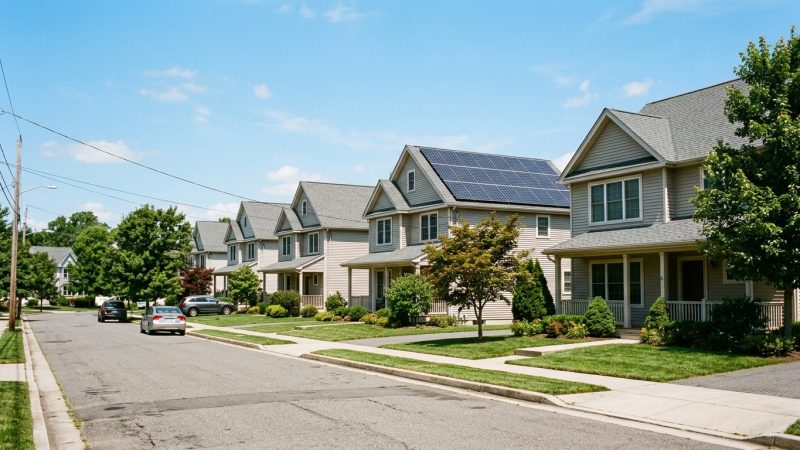
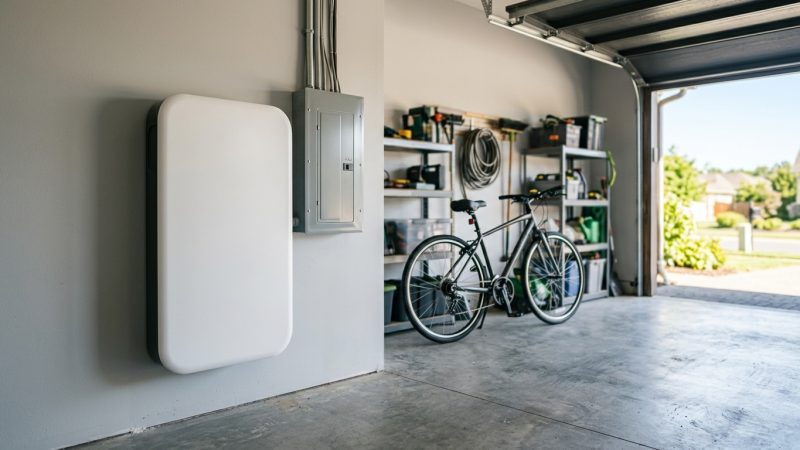
Add your own clean generation where you can. Rooftop solar and a home battery shift part of your demand off the grid entirely, cutting the fossil generation your household triggers. A battery also keeps cooling running during a heat-driven outage.
Support clean-generation choices. Your utility may offer a renewable-power option, or local decisions may favor clean generation over new fossil-fuel plants. Either way, backing them means less combustion in the air you breathe.
Solar projects are shutting down, and the electricity they made still has to come from somewhere. When a fossil-fuel plant fills the gap, its PM2.5 and NOx reach the homes around it. Space-based solar is one of the alternatives now being explored to keep clean power flowing. Satellites collect sunlight 24 hours a day and beam it to Earth with zero tailpipe emissions. Whether it reaches the grid near you is years away. The air you breathe today, you can measure, filter, and act on now.
Sources
- NBC News. Space-based solar power emerging as alternative as other solar projects shut down (2025) (Oct. 14, 2025):
- U.S. Department of Energy, Space-Based Solar Power overview
- EPA, Particulate Matter (PM2.5) basics and health effects:
- EPA, Final Reconsideration of the National Ambient Air Quality Standards for Particulate Matter (2024):
- EPA, Basic information about NO2 (nitrogen dioxide) and health:
- EPA, National Ambient Air Quality Standards (NAAQS) table:
- EPA, AirNow real-time air quality data:
- Centers for Disease Control and Prevention, heat and health risk:
- U.S. Department of Energy, home battery storage and energy resilience
Questions people ask
What did NBC News report about space-based solar power?
On October 14, 2025, NBC News reported that solar plants and projects are being shut down and that cheaper alternatives, including space-based solar power, are being explored. In the segment, correspondent Ellison Barber spoke with environmentalist Bill McKibben about the impact of the shutdowns and what comes next for solar power.
How does space-based solar power work?
Satellites in orbit collect sunlight 24 hours a day, above the clouds and the atmosphere where sunlight arrives at full strength and there is no night to interrupt collection. The satellite converts that sunlight into energy and beams it down to a receiving station on Earth, typically as microwaves, which the station converts back into electricity for the grid. Nothing is burned, so there are zero tailpipe emissions at the point of generation.
Why does a solar project shutting down affect my air quality?
Electricity demand does not fall when a solar project closes, homes and businesses still need the power. A fossil-fuel plant often makes up the difference, and burning gas, coal, or oil releases fine particulate matter (PM2.5) and nitrogen oxides (NOx). Both reach the neighborhoods around and downwind of the plant. PM2.5 is linked to asthma, heart disease, and premature death.
What is a safe level of PM2.5?
The EPA's annual health-based standard for PM2.5 is 9 micrograms per cubic meter of air, lowered from 12 in 2024. For nitrogen dioxide, the EPA sets a 1-hour health standard of 100 parts per billion. You can compare your local air against these thresholds using EPA AirNow data or a home air-quality monitor.
What can I do to reduce my exposure right now?
Track your local air against the 9 micrograms per cubic meter PM2.5 standard with AirNow or a home monitor, run a HEPA air cleaner indoors, and use a MERV-13 filter in central HVAC. Keep windows closed on the side facing a plant or busy road during high-pollution hours. Where you can, add rooftop solar and a home battery to cut the fossil generation your household triggers, and choose a renewable-power option if your utility offers one.
Have questions about the environment inside your home?
Air quality, mold, EMF, light and water all shape how a house feels and how the people in it feel. Whatever your concern is, the first step is finding out what is there.
Our certified team of environmental professionals and advocates can help.