


Oil prices surged after the Strait of Hormuz closed
The price spike sent money to very different places depending on who owned the well, from shareholder payouts in West Texas to government revenue in state-run producers. The same barrel can enrich investors or states.

Table of contents
Summary of this article
- U.S. crude oil rose from $66 a barrel in late February 2026 to $101 a barrel on April 13, after the U.S.-Israel war with Iran closed the Strait of Hormuz, according to federal data cited by The Conversation.
- The bulk of the extra money flows to oil companies, then splits by ownership: private shareholders in West Texas receive dividends, buybacks, and reinvestment, while state-owned producers direct it to governments.
- Saudi Arabia's government owns and controls nearly all its oil through Aramco, so high prices fund public spending; Norway routes oil revenue into a sovereign wealth fund valued at over $2 trillion, and Alaska sends residents an annual oil-funded dividend.
- Russian oil, dominated by government-controlled companies tied to President Vladimir Putin, mainly benefits oligarchs and the military-industrial complex rather than ordinary Russians, The Conversation reports.
- For U.S. consumers, energy economists Matthew Oliver and Tibor Besedeš write, "there's not much to do but pay the price" in the short run, but reducing household reliance on fossil fuels lowers exposure to future price shocks.
U.S. crude oil cost $66 a barrel in late February 2026. By April 13, it cost $101. The jump followed the U.S.-Israel war with Iran, which closed the Strait of Hormuz and cut off a major route for the world’s oil, according to federal data cited by The Conversation.
That $35-a-barrel increase did not stay in the United States. It traveled. Oil is a global commodity, so a supply shock in the Persian Gulf raises the price everywhere at once, and the extra money each driver pays at the pump flows outward along a specific path.
Energy economist Matthew Oliver and international trade economist Tibor Besedeš traced that path in The Conversation. The bulk of the money, they write, heads toward the source of the oil itself: the companies that produce it. What happens next depends on who owns those companies and the laws they operate under. Here is the full route the money takes, and why it matters for the health and cost of running your home.
Why one war moves the price everywhere
Crude oil may be the most important commodity in the global economy. It fuels transportation, paves roads, and serves as a raw material for plastics, packaging, and even fertilizer. It is difficult to name a supply chain that does not touch oil at some point.
Because the market is global, price is set by global supply and demand. When supply drops, competition among buyers drives the price up. The Strait of Hormuz is one of the world’s most important oil chokepoints. When the U.S. and Israeli strikes on Iran effectively blocked it, a significant share of the world’s oil supply was cut off with little warning. Prices rose sharply in a matter of weeks.
The question Oliver and Besedeš field during every such episode is the one every driver asks: where does all that additional money go, and who benefits from it? The answer is a map.
West Texas gets a windfall
The Permian Basin in West Texas is the largest oil field in the United States, and it sits thousands of miles from the Persian Gulf. When a war in the Middle East drives global prices up, producers in West Texas get a windfall. Their prices rise quickly; their costs do not, at least in the short run.
The immediate effect is more income. That money largely goes to company owners, shareholders, through several channels. Companies pay dividends, reduce debt, buy back their own stock, and reinvest in drilling and production. Over time, some producers spend part of the windfall building new production capacity or pipelines to move more oil to market.
The key point for a U.S. consumer: the extra dollars you pay at the pump during a Middle East crisis do not fund a rival power. A large share flows to domestic producers and their shareholders. Whether you benefit from that depends on whether you own oil stocks, directly or through a retirement fund.
The Middle East: state-owned, government-directed
In the Middle East, the ownership model is different, and so is the destination of the money.
Producers in the region face real new risk from the war in Iran, threats to production sites, processing facilities, and shipping routes raise their costs for insurance, security, and transportation. But production costs in the region are relatively low, so higher global prices still translate into strong profits.
For a major exporter such as Saudi Arabia, the government owns and controls nearly all oil production through Aramco. High prices benefit the government’s finances directly. Saudi oil revenue has historically funded public spending. So when the price of a barrel doubles, the beneficiary is not a private shareholder but a national treasury.
The North Sea model: sovereign wealth and citizen dividends
Between Great Britain and Scandinavia, the North Sea offers a third model, one that funnels oil money toward the public in a structured way.
In the United Kingdom, private shareholders are the primary beneficiaries of higher oil profits, but an additional tax on oil and gas company profits means the government collects a significant share to cover public expenses.
Norway goes further. Its oil revenue flows into the Government Pension Fund Global, the world’s largest sovereign wealth fund, valued at over $2 trillion. Laws govern how much can be withdrawn and for what purposes, so the fund supports public spending while preserving wealth for future generations. Alaska runs a similar program. Its state-owned oil fund pays for government services and sends an annual dividend to every permanent resident.
The contrast is instructive. In these systems, a price spike partly returns to citizens, through public services, or in Alaska’s case, a check. In most of the U.S., that direct return does not exist for the average consumer.
Russia: oligarchs and the military complex
The final stop on the map is the one where the money does the most harm. Ownership shapes the domestic bill too, and a $66.8 billion merger would build the largest utility in the country.
Russian oil is subject to stringent sanctions imposed by major industrial countries after Russia’s invasion of Ukraine. The U.S. cannot control what Russia charges, but it can control the shipping, insurance, and financing needed to move Russian oil. Under the price cap, Western services may be used only if Russian crude sells below $60 a barrel.
Russia’s oil industry is dominated by government-controlled companies whose leaders maintain close ties to President Vladimir Putin. The main beneficiaries of high oil prices, The Conversation reports, are likely those figures and Putin’s military-industrial complex, not the Russian people. When global prices spike, some of the extra money paid by drivers worldwide strengthens a sanctioned war economy.
Why this money trail reaches your home
Building biology studies how the built environment affects human health. Its first principle is source control: reduce a harm where it originates rather than manage the damage after it spreads. For a household, the relevant source is not the Strait of Hormuz. It is your own energy demand. Some households have stepped off the bill entirely, and one Houston couple has not paid for power in over a year.
Here is the connection. A price spike set by a distant war lands in your home as higher costs for gasoline, heating fuel, and, because much electricity generation depends on fuel, your power bill. For U.S. consumers, Oliver and Besedeš write, in the short run “there’s not much to do but pay the price.” That squeeze carries measurable health consequences through three pathways.
Heat. When energy bills rise, households ration cooling. Skipping air conditioning during extreme heat is a direct hazard, especially for older adults, infants, and people with chronic conditions. High overnight temperatures are particularly dangerous, because the body needs cooler night hours to recover from daytime heat.
Food access. A household budget is fixed. When fuel and utility costs climb, families often cut spending on fresh, nutritious food to keep the lights on and the home livable.
Stress. Sustained worry over bills elevates the body’s stress response, disrupts sleep, and is linked to higher rates of anxiety and depression. Energy insecurity is a recognized burden in its own right. The same system spills. In Kansas, the Keystone pipeline put 543,000 gallons of crude into a creek.
The more your household depends on oil and fuel-driven electricity, the more a war thousands of miles away can force those trade-offs. Cutting that dependence is source control at the household scale.
What you can do
You cannot set the global price of crude. You can shrink the share of your budget exposed to it, and the long-run fix that Oliver and Besedeš point to, diversifying away from fossil fuels, starts at home.
Seal the leaks first. Weatherstripping and air sealing around doors, windows, and attic gaps is the cheapest, highest-return step. A tighter home holds conditioned air, cutting the energy needed to heat and cool it.
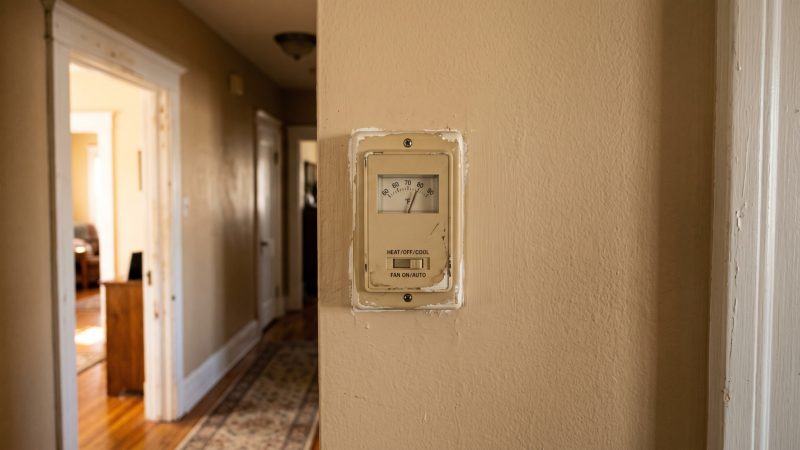
Set the thermostat strategically. In cooling season, each degree higher reduces energy use. A programmable thermostat that eases settings when no one is home lowers bills without sacrificing comfort when it counts.
Never ration cooling in extreme heat. If a bill forces the choice, cool a single room rather than shutting off entirely. Check whether you qualify for the Low Income Home Energy Assistance Program (LIHEAP), which helps cover both cooling and heating costs.
Cut vehicle fuel exposure. Combine errands into single trips, keep tires properly inflated, and remove excess weight from the vehicle. Each reduces the fuel a price spike can drain from your budget.
Upgrade the biggest energy users. Water heating, cooling, and refrigeration dominate a home’s load. Higher-efficiency models and clean HVAC filters lower the baseline demand that a price spike multiplies.
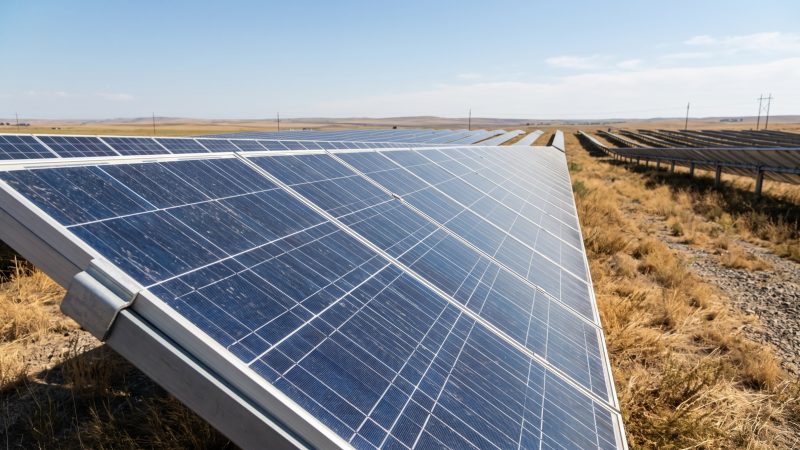
Reduce fossil-fuel reliance over time. Rooftop solar, a heat pump, or an electric vehicle shifts part of your energy use off the volatile oil market. Each is a long-run buffer against the next Hormuz-style shock.
Oil went from $66 to $101 a barrel, and the extra money traveled to Texas shareholders, Saudi coffers, Norway’s $2 trillion fund, and Russian oligarchs. You cannot redirect that flow. But every unit of energy your home does not need is a dollar a distant war cannot take, and one less heat-or-food trade-off for the people under your roof.
Sources
- The Conversation. When oil prices spike, where does the money go? :
- U.S. Energy Information Administration, crude oil price data:
- Norges Bank Investment Management, Government Pension Fund Global (Norway sovereign wealth fund):
- Alaska Permanent Fund Corporation, oil-funded dividend program:
- Reuters, Saudi Aramco and state oil ownership:
- U.S. Energy Information Administration, Strait of Hormuz oil chokepoint:
- U.S. Department of Health and Human Services, Low Income Home Energy Assistance Program (LIHEAP):
- U.S. Department of Energy, home weatherization and energy efficiency
- Centers for Disease Control and Prevention, heat and health risk:
Questions people ask
Why did oil prices spike in 2026?
U.S. crude rose from $66 a barrel in late February 2026 to $101 a barrel on April 13, according to federal data cited by The Conversation. The cause was the U.S.-Israel war with Iran, which closed the Strait of Hormuz, one of the world's most important oil shipping routes. Because oil is a global commodity, cutting off that supply raised prices everywhere at once.
Where does the extra money go when oil prices spike?
The bulk flows to oil companies, then splits by ownership. In West Texas, private shareholders receive it through dividends, buybacks, and reinvestment. Saudi Arabia's government collects it through state-owned Aramco. Norway routes it into a sovereign wealth fund worth over $2 trillion, and Alaska sends residents an annual dividend. In Russia, it mainly reaches oligarchs and Putin's military complex.
Does my gas money fund Russia?
Some of it can, indirectly, because oil is a global market. Russian oil is dominated by government-controlled companies tied to President Vladimir Putin, and The Conversation reports the main beneficiaries of high prices are those figures and the military-industrial complex, not the Russian people. Western sanctions cap the price at which Russian crude can use Western shipping and financing at $60 a barrel.
Can U.S. consumers do anything about a price spike?
In the short run, not much. Energy economists Matthew Oliver and Tibor Besedeš write that "there's not much to do but pay the price." Over the long run, they point to diversifying away from fossil fuels. Reducing your household's reliance on oil and fuel-driven electricity lowers your exposure to the next supply shock.
How does an oil price spike affect my health?
Through your household budget. When fuel and utility costs rise, families ration air conditioning, raising heat-illness risk for older adults, infants, and people with chronic conditions, cut spending on nutritious food, and carry more financial stress, which disrupts sleep and is linked to anxiety and depression. Cutting home energy demand reduces all three exposures.
Have questions about the environment inside your home?
Air quality, mold, EMF, light and water all shape how a house feels and how the people in it feel. Whatever your concern is, the first step is finding out what is there.
Our certified team of environmental professionals and advocates can help.