


One frozen valve forced 60,000 people from their homes over a chemical threat
A frozen valve pushed a methyl methacrylate tank to the top of its gauge and triggered a mass evacuation around a Garden Grove aerospace plant. 60,000 people had to leave.
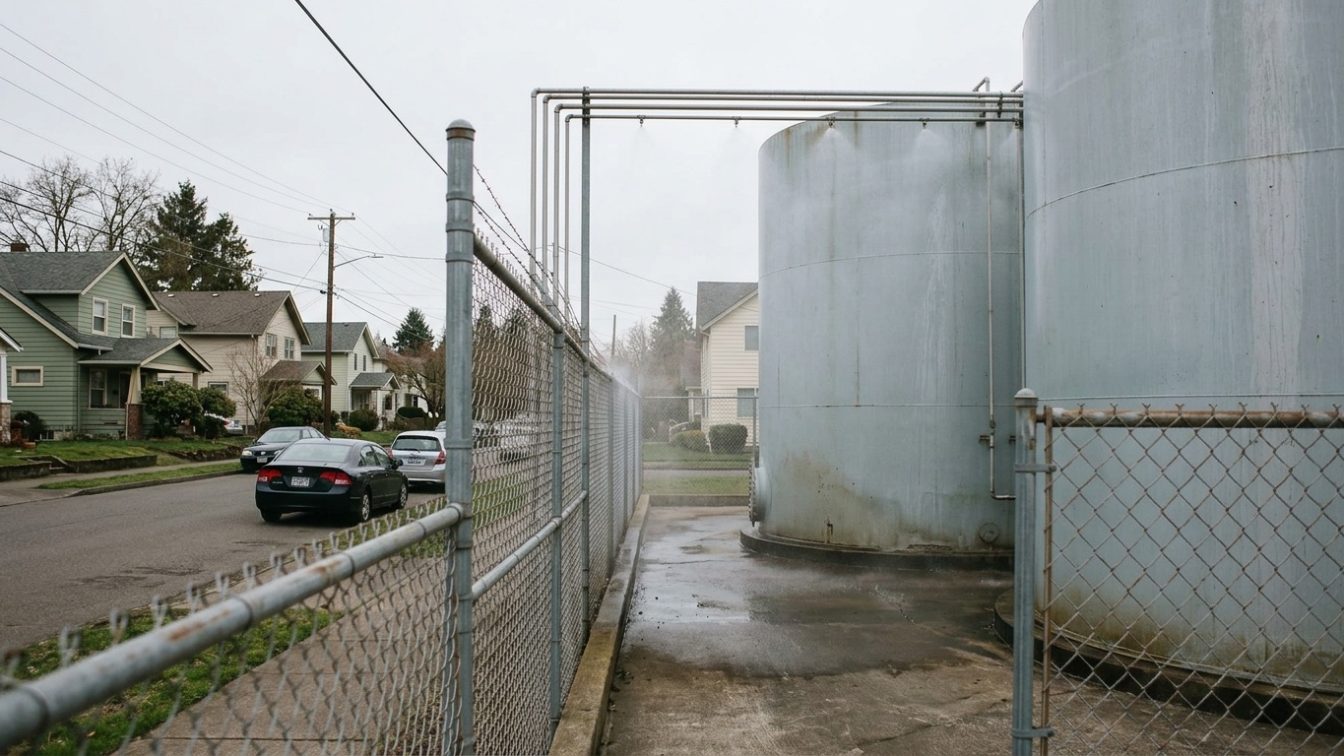
Table of contents
Summary of this article
- A single valve froze in the refrigeration system cooling a chemical storage tank at a GKN Aerospace facility in Garden Grove, California, in May 2026, allowing about 7,000 gallons of methyl methacrylate to overheat, NBC News reported.
- The tank reached at least 100 degrees Fahrenheit, the top of its gauge, against a boiling point of roughly 212 degrees, prompting fears of a "boiling liquid expanding vapor explosion," or BLEVE.
- Around 60,000 residents were evacuated at the peak, later reduced to about 16,000, before Orange County fire officials declared the explosion threat eliminated.
- EPA air monitoring with 20,000 instruments detected "no exceedances" throughout the incident, said Chris Myers, the federal on-scene coordinator.
- Residents near industrial sites can lower their risk by signing up for emergency alerts, preparing a shelter-in-place kit, and running a HEPA-and-carbon air purifier during a release.
One valve froze. That is where the Garden Grove chemical crisis began.
In May 2026, a valve in the refrigeration system cooling a chemical storage tank at a GKN Aerospace facility in Garden Grove, California, froze up and stopped circulating, NBC News reporters Aria Bendix and Phil Helsel wrote on May 25. Inside the tank sat about 7,000 gallons of methyl methacrylate, a toxic liquid kept stable at 50 degrees Fahrenheit. When the cooling failed, the chemical began to heat.
Within days, roughly 60,000 people were ordered to evacuate their homes with no scheduled return date. Southern California officials feared one of the worst chemical incidents in state history. The threat was real enough that President Donald Trump approved an emergency declaration and California Gov. Gavin Newsom declared a state of emergency in Orange County.
The crisis was averted. But it offers a clear lesson for the millions of Americans who live near facilities storing hazardous chemicals: the danger does not stay behind the fence.
What Methyl Methacrylate Is
Methyl methacrylate is a toxic liquid used to manufacture resins and plastics, including Plexiglas. It is common in industry and unremarkable under normal conditions, as long as it stays cool and contained.
Its health effects are direct. Exposure can cause eye or skin irritation. Inhaling it can lead to coughing, wheezing, dizziness, headache, or shortness of breath. These are not distant, long-term risks; they appear during and shortly after exposure.
The chemical’s central hazard is its volatility. It evaporates readily and it is flammable. That combination is manageable at 50 degrees. It becomes a threat when the temperature climbs.
The BLEVE Risk, Explained Plainly
Fire officials feared a specific disaster: a boiling liquid expanding vapor explosion, or BLEVE.
A BLEVE happens when a flammable liquid inside a sealed tank heats past its boiling point. The liquid turns to vapor, pressure builds, and the tank ruptures in a massive fireball. Andrew Whelton, a professor of civil, environmental, and ecological engineering at Purdue University, offered a plain comparison to NBC News.
“If you leave it in there, it’s going to blow up because the pressure in the soda can get too great,” Whelton said, describing a soda can left in a hot car. “If you put a hole in it, it will let some of the gases out.”
The scale of the Garden Grove threat went beyond the one tank. Officials feared a blast would set off two nearby tanks of methyl methacrylate. That is how a single container becomes a chain reaction.
The Chain of Events
The failure was mechanical and sequential. Each step made the next one worse.
The tank was held at 50 degrees by a recirculating refrigeration system. “One of the valves in that system froze up, so it was no longer being circulated,” said Fire Division Chief Craig Covey, the incident commander. Without circulation, the tank went into a heating-up process.
At its peak, the tank reached at least 100 degrees Fahrenheit, the highest reading its gauge could show, meaning the actual temperature may have been higher. The boiling point of methyl methacrylate is around 212 degrees, according to chemical manufacturer BASF. The tank began to bulge.
Crews faced a grim choice. “That was what we were handed, a leaking tank or a tank that blows up,” Covey said. Firefighters could not neutralize the failing tank the way they had a neighboring one, because its valves were “broken” and “gummed up.”
By Monday, the numbers moved in the right direction. The temperature dropped to 93 degrees. A crack at the top of the tank released pressure without leaking the chemical. Fire officials declared the BLEVE threat eliminated. Evacuation orders fell from about 60,000 people to roughly 16,000.
One theory explains the cooling. Some chemical engineers believe the methyl methacrylate reacted with itself, forming long chains of molecules that bind together and turn solid, a process called curing. “Once it’s in that condition, it doesn’t pose a threat anymore,” Whelton said. By Monday, officials confirmed some of the material had cured into a solid state.
How the Danger Reaches Your Home
A building-biology approach starts with one fact: your indoor air is only as clean as the outdoor air feeding it. During a chemical incident, three pathways carry contaminants toward the homes nearby.
The first is vapor. Methyl methacrylate evaporates into the air, and vapor drifts. The crack that released pressure in Garden Grove sat at the top of the tank, which, Whelton noted, could in theory allow vapor and gases to escape.
The second is a toxic plume. Had the tank exploded, it would have sent a cloud of gas and burning particles downwind. Wind direction and speed decide which neighborhoods a plume reaches, and how fast.
The third is air intrusion. A house is not sealed. Outdoor air enters constantly through cracks around windows and doors, through vents, and through every ventilation system that pulls in outside air. During a release, that normal exchange becomes a route of exposure.
This is why evacuation zones stretch for miles. The tank sits in one place. The air does not.
What the Air Monitoring Found
The monitoring data offered real reassurance. The EPA enabled air monitoring at 20 locations around the area, and a White House official said FEMA activated its Interagency Modeling and Atmospheric Assessment Center to model airborne hazards.
Chris Myers, the federal on-scene coordinator for the EPA, said monitoring with 20,000 instruments detected “no exceedances” in the region throughout the incident. In plain terms, sensors did not measure chemical concentrations above safety thresholds in the surrounding air.
That outcome was not guaranteed. It reflected both the response effort and a measure of luck, the tank cracked and cooled rather than exploded. The monitoring confirmed the outcome; it did not create it.
What Residents Near Industrial Sites Can Do
The most effective protection is built before an incident. These steps put you in control.
Know what operates near you. Facilities storing large volumes of hazardous chemicals must report to regulators. Contact your Local Emergency Planning Committee or fire department to learn which sites are nearby and what they store.
Sign up for emergency alerts. Register for your county or city notification system. In Garden Grove, evacuation orders moved tens of thousands of people out of the danger zone. Alerts protect you only if you receive them.
Build a shelter-in-place kit. Sometimes staying inside is safer than leaving. Identify an interior room with few windows. Keep plastic sheeting, painter’s tape, and a battery radio on hand to seal gaps and follow updates.
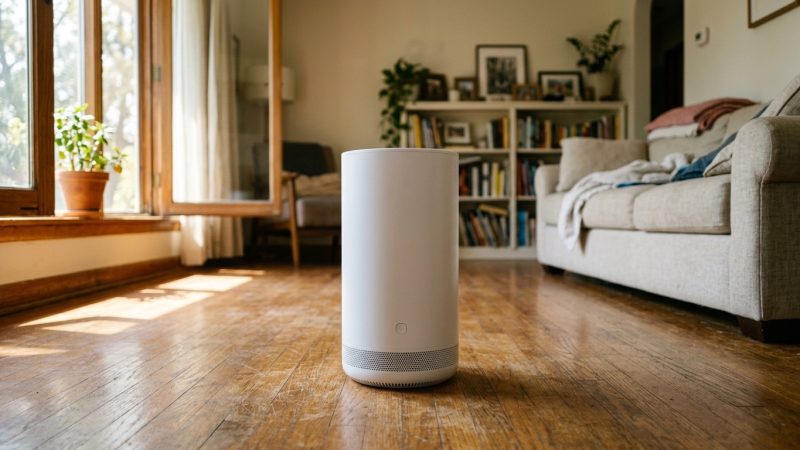
Own a HEPA-and-carbon air purifier. A true HEPA filter captures fine particles. For chemical vapors, choose a unit that also contains an activated-carbon filter, which adsorbs many gaseous compounds that HEPA alone cannot.
During and After an Incident
When an alert arrives, follow the exact instruction from officials, evacuate or shelter, without delay. The decision accounts for the chemical, the wind, and the size of the release.
If told to shelter in place, close all windows and doors. Turn off anything that pulls in outside air: HVAC units, bathroom fans, and kitchen exhaust fans. Move to your interior room. If the air smells or irritates, seal the door and vents with plastic and tape. Run your purifier and keep it running after the all-clear, since contaminants that entered during the event linger indoors.
Once officials confirm the outdoor air is safe, ventilate thoroughly. Open windows, run fans, and wet-clean surfaces with a damp cloth rather than dry dusting, which sends settled particles back into the air.
The Question That Remains
The near-miss raised a direct question about inspection. Judith Enck, a former EPA regional administrator who now leads the nonprofit Beyond Plastics, put it plainly to NBC News.
“This is why you need environmental regulators to do inspections,” Enck said. “A fair question for EPA and the South Coast Air Quality Management District is ‘When is the last time this particular tank was inspected, and what was found?'”
Whelton pointed to the same weak spots. Investigators, he said, should examine how often the tank was maintained or cleaned, and whether the chemical itself had solidified and clogged the valves. The Orange County District Attorney’s Office launched an investigation, and two Garden Grove residents filed a class-action lawsuit against GKN Aerospace.
The chemistry was nearly catastrophic. The trigger was mundane, one frozen valve in a refrigeration system. That gap between a small mechanical failure and a 60,000-person evacuation is where the risk lives for anyone near an industrial facility. The most reliable protection combines knowing your industrial neighbors with a home prepared to keep their worst day from becoming yours.
Sources
Questions people ask
What caused the Garden Grove chemical tank to overheat?
A valve in the tank's recirculating refrigeration system froze up and stopped circulating, according to incident commander Craig Covey. The system had kept the tank at 50 degrees Fahrenheit. Once circulation stopped, the roughly 7,000 gallons of methyl methacrylate inside began heating toward a potential explosion.
What is a BLEVE?
BLEVE stands for boiling liquid expanding vapor explosion. It occurs when a flammable liquid in a sealed tank heats past its boiling point, builds extreme pressure, and ruptures in a fireball. Fire officials feared this scenario in Garden Grove, along with the risk it would set off two nearby tanks.
Was anyone exposed to the chemical?
EPA air monitoring with 20,000 instruments detected "no exceedances" throughout the incident, said federal on-scene coordinator Chris Myers. The chemical was not released in a large quantity, and the tank cooled and partly solidified rather than exploding. About 60,000 people were evacuated as a precaution.
How do I know if a dangerous chemical is stored near my home?
Facilities storing large volumes of hazardous chemicals must report to state and local regulators. Contact your Local Emergency Planning Committee, fire department, or state environmental agency to request information on nearby sites and what they hold.
Should I evacuate or shelter in place during a chemical incident?
Follow the instruction from local officials, who weigh the chemical, wind conditions, and the size of the release. Evacuation is safest in some cases; sealing yourself indoors limits exposure in others. Sign up for local emergency alerts so you receive the guidance quickly.
Does a regular air purifier protect against chemical vapors?
A standard HEPA filter captures fine particles but not gaseous chemicals. To reduce chemical vapors indoors, use a purifier that also includes an activated-carbon filter, which adsorbs many volatile compounds. Combine it with sealing windows, doors, and vents during an incident.

Have questions about the environment inside your home?
Air quality, mold, EMF, light and water all shape how a house feels and how the people in it feel. Whatever your concern is, the first step is finding out what is there.
Our certified team of environmental professionals and advocates can help.