


Radioactive waste beside a Tampa-area school keeps growing
The pile holds radium, which breaks down into radon gas, and both can cause cancer. Its owner wants to keep expanding it beside a middle school and two recreation fields near Progress Village.
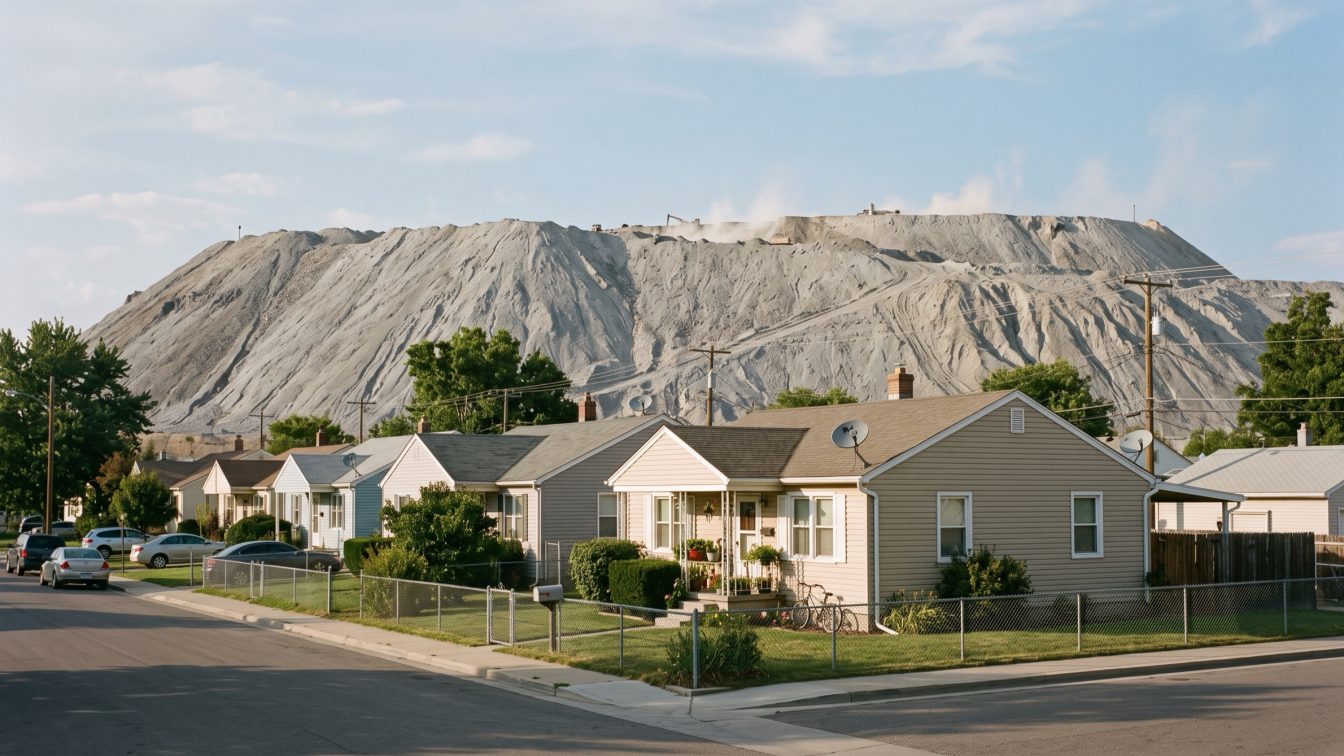
Table of contents
Summary of this article
- A radioactive phosphogypsum stack owned by Mosaic sits next to Progress Village, a historically Black community southeast of Tampa established during the late 1950s, WUSF reported.
- The waste contains radium, which decays into radon gas. Both are radioactive and both cause cancer. The EPA identifies radon as the second-leading cause of lung cancer.
- Mosaic is seeking a Clean Water Act permit to expand the stack in a $260 million project projected to begin construction in January 2028, according to WUSF.
- African Americans are 75 percent more likely to live in a community next to an industrial site, according to a 2025 lawsuit cited by WUSF.
- More than 1 billion tons of phosphogypsum is stored in stacks across Florida, with the fertilizer industry adding about 40 million tons a year, according to the Center for Biological Diversity.
- The exposure pathways are airborne dust, radon gas, and contamination of groundwater, an important drinking water source.
- You cannot remove the stack, but you can control your exposure: test for radon, limit dust entry, test private well water, and engage the permit process.
A radioactive waste pile sits next to Progress Village, a small community southeast of Tampa. It is called a phosphogypsum stack, and it holds the toxic byproduct of fertilizer production. WUSF reported that the stack, owned by Mosaic, looms tall and wide beside the neighborhood, near the Johnson Recreation Center, the Larry Sanders Sports Complex, and Progress Village Magnet Middle School.
The waste is dangerous by its chemistry. It contains radium. As radium decays, it forms radon gas. Both are radioactive. Both cause cancer. The EPA identifies radon as the second-leading cause of lung cancer.
This is a source-control story. Building biology treats the strongest fix as controlling a hazard at its origin rather than managing the harm later. The origin here is the stack, and the residents of Progress Village did not put it there. Understanding how the waste reaches people is the first step to lowering the exposure.
What a phosphogypsum stack is
Florida holds one of the world’s largest deposits of phosphate, concentrated in a region known as Bone Valley across Hardee, Hillsborough, Manatee, and Polk counties. Phosphate is used mainly to make fertilizer for food crops.
Making fertilizer creates waste. That waste is phosphogypsum. It is usually dumped in engineered piles called stacks, or gypstacks, to limit public exposure to radon. The stacks can span more than a square mile and rise hundreds of feet. They are, in effect, uncovered open dumps that can be mistaken for a landfill.
The scale is large. More than 1 billion tons of phosphogypsum is stored in stacks across Florida, and the fertilizer industry adds about 40 million tons a year, according to the Center for Biological Diversity. The stacks also hold process wastewater, which is toxic and corrosive because of its acidity.
How the waste reaches the body
The exposure pathways run through air and water. Three routes matter most.
Radon gas is the first. Radium in the waste decays continuously into radon, a colorless, odorless gas. It can drift from the stack through the air and seep into nearby homes through cracks in foundations and gaps around pipes, the same way radon enters homes anywhere.
Dust is the second. Dust from gypstacks can blow into nearby communities. WUSF reported that this dust can make its way into groundwater or decay into a gas and drift through the air. Residents breathe it.
Groundwater is the third. Contaminated material and process wastewater can reach the aquifer, an important drinking water source. At Mosaic’s New Wales stack in Polk County, a 2016 sinkhole released about 215 million gallons of process wastewater and an undisclosed amount of phosphogypsum solids into the Floridan aquifer, according to WUSF.
Why radon is the central health concern
Radon is the reason gypstacks are engineered to limit exposure in the first place. The EPA identifies it as the second-leading cause of lung cancer, behind smoking, and the leading cause among people who have never smoked.
The mechanism is radioactive decay inside the lungs. When a person inhales radon, it decays into tiny radioactive particles that lodge in lung tissue. Over years, the radiation they emit damages the DNA in lung cells, and that damage can lead to cancer.
Some residents suspect the effect is already present. Bettye Napier, 85, who has lived in Progress Village for 65 years, told WUSF that she knows people with lung problems who wonder whether the stack may be responsible. “My friend has asthma really, really bad, and she’s been getting worse,” she said.
The environmental justice pattern
Progress Village was built for a specific population under specific circumstances. The community was established during the late 1950s to provide affordable housing for segregated Black residents displaced by the construction of Interstate 75, WUSF reported. The population has more than doubled in 16 years to at least 11,000.
The stack came later, over community objection. Hillsborough County commissioners approved its construction in 1984 despite significant community opposition, one of many examples nationwide of polluting facilities built in communities of color, according to WUSF. The stack was expanded a decade later.
The pattern is measurable. African Americans are 75 percent more likely to live in a community next to an industrial site, according to a 2025 lawsuit cited by WUSF and filed by conservation and environmental justice groups. “It’s a system,” Robin Lockett, regional director at the grassroots organization Florida Rising, told WUSF. “The system is working well because so many people are left behind.”
The expansion now underway
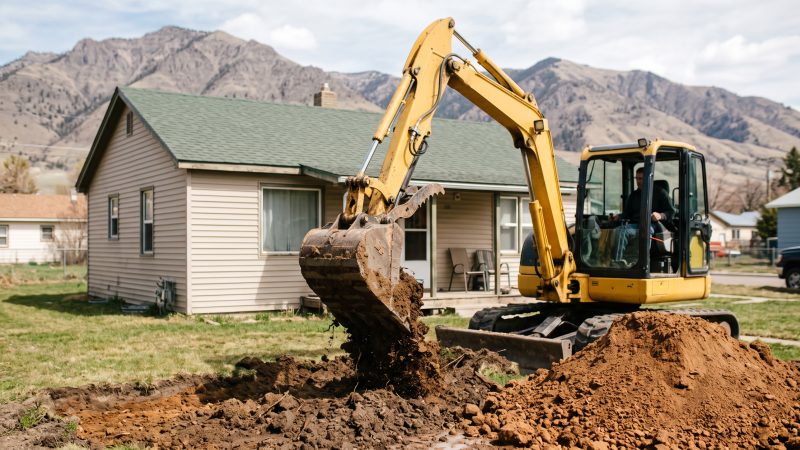
Mosaic wants to make the stack bigger. WUSF reported that the company is seeking a Clean Water Act permit from the U.S. Army Corps of Engineers for a $260 million expansion. Construction is projected to begin in January 2028 and take about two and a half years.
The expansion would extend the life of Mosaic’s Riverview manufacturing plant by about 16 years. The current stack has roughly six years of remaining storage capacity.
The project sits less than a mile from Hillsborough Bay. Mosaic has said the project is designed to minimize environmental impacts, would be built primarily on already disturbed land, and would include a dike and ditch system to prevent seepage. The proposal has been expedited through the federal approval process under a Trump administration executive order calling for accelerated domestic critical mineral production. Ragan Whitlock, staff attorney at the Center for Biological Diversity, told WUSF the rush could mean a less thorough environmental review. “This is directly perched on Tampa Bay,” he said. “There could not be a worse place to have a radioactive waste storage facility.”
The storm and flood risk
The stacks have failed before, and the area faces intensifying storms. In 2024, hurricanes Helene and Milton damaged collection manways at a closed gypstack at the Riverview site, forcing the release of at least 39,600 gallons of process wastewater into Tampa Bay, according to the litigation cited by WUSF.
Larger failures have occurred elsewhere. A pond at the Piney Point site in Manatee County leaked in 2021, forcing the evacuation of more than 300 homes and releasing 215 million gallons of process wastewater into Tampa Bay. That release dumped about 200 tons of nitrogen into the bay and triggered one of the worst red-tide outbreaks in 50 years, killing more than 1,600 tons of marine life, WUSF reported.
Flooding is a persistent problem in Progress Village. Hurricanes Helene and Milton flooded parts of the community with two or three feet of water. “It could have been some lives lost right here in Progress Village,” resident Sean Bell Sr., 53, told WUSF. “Almost every street was flooded.”
Practical fixes: control your exposure
You cannot remove the stack or reverse the county’s decision. You can control what reaches your lungs and your water, and you can engage the process that decides the expansion. These steps target the exposure pathways.
Test your home for radon. Radon has no color, odor, or taste, so a test is the only way to detect it. A short-term test kit costs about 15 to 25 dollars. Place it in the lowest lived-in level of the home. The EPA recommends acting on any result at or above 4 picocuries per liter.
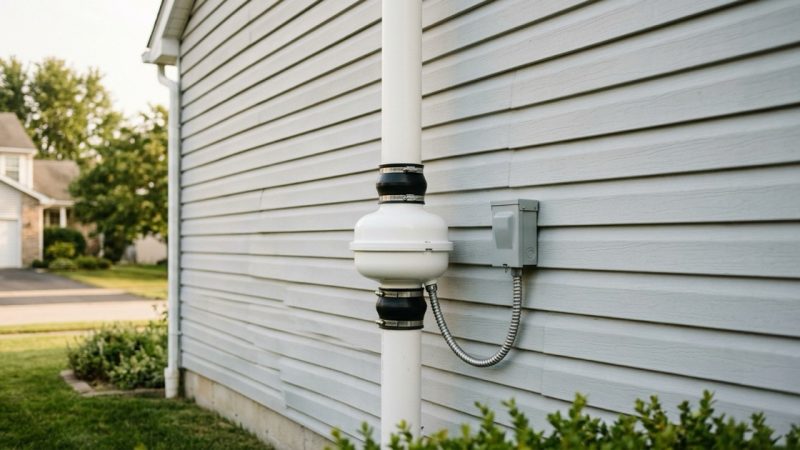
Install a radon mitigation system if levels are high. A sub-slab depressurization system vents radon from beneath the home above the roofline. The EPA reports these systems reduce radon by up to 99 percent.
Limit dust entry on windy days. Keep windows and doors closed when wind or visible dust is moving off the stack. Run a MERV-13 filter in the central system and a HEPA air cleaner in bedrooms to capture fine particles.
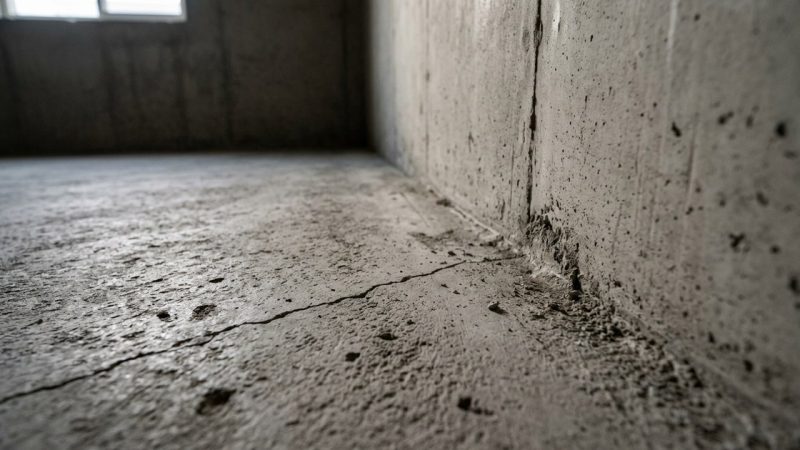
Seal foundation openings. Caulk cracks in floors and walls and seal gaps around pipes and utility lines. These are the same openings radon and vapor use to enter a home.
Test private well water. If you draw from a private well, have it tested by a certified laboratory for radium, gross alpha radiation, and heavy metals. No agency tests private wells for you.
Use a certified water filter if needed. Reverse osmosis systems reduce radium and many contaminants. Match the filter to what your test finds, and replace cartridges on schedule.
Watch for air monitor data. Mosaic agreed to install air monitors at Progress Village Magnet Middle and nearby Gibsonton Elementary, according to WUSF. Ask your school district and county for the readings.
Engage the permit process. The expansion requires a Clean Water Act permit from the U.S. Army Corps of Engineers. Attend public meetings, submit written comment, and document dust, odor, and health concerns in writing.
The bottom line
A radioactive phosphogypsum stack owned by Mosaic sits beside Progress Village, a historically Black community of at least 11,000 people southeast of Tampa. The waste holds radium that decays into radon gas, which the EPA identifies as the second-leading cause of lung cancer. Florida stores more than 1 billion tons of this waste in stacks, and Mosaic is seeking a permit to expand this one in a $260 million project set to begin in 2028. The stack was approved in 1984 over community objection, part of a pattern in which African Americans are 75 percent more likely to live next to industry. You cannot move the pile. You can test your home for radon, seal it, test your well, filter your water, and press the permit process. The waste is the source. Controlling what reaches your lungs is the defense.
Sources
- WUSF (Amy Green, Inside Climate News). Growing radioactive waste stack deepens worries among Progress Village residents, August 3, 2026, on the Mosaic stack, the expansion permit, resident accounts, and the environmental justice history.
- Center for Biological Diversity, cited by WUSF. Data on phosphogypsum stored in Florida stacks and the 2025 lawsuit seeking hazardous waste classification, including the statistic that African Americans are 75 percent more likely to live next to an industrial site.
- Environmental Protection Agency. Health Risk of Radon, on radon as the second-leading cause of lung cancer and the 4 picocuries per liter action level.
- Environmental Protection Agency. A Citizen's Guide to Radon and Consumer's Guide to Radon Reduction, on testing and mitigation systems.
Questions people ask
What is a phosphogypsum stack and why is it radioactive?
A phosphogypsum stack is an engineered pile that holds the waste left over from making fertilizer from phosphate rock. The waste contains radium, a naturally radioactive element. As radium decays, it forms radon gas, which is also radioactive. Both cause cancer, which is why the stacks are engineered to limit public exposure to radon, according to WUSF.
How does the stack next to Progress Village threaten health?
Through three pathways. Radium in the waste decays into radon gas, which can drift through the air and seep into homes. Dust from the stack can blow into the community and be inhaled. And contaminated material and process wastewater can reach the groundwater, an important drinking water source. WUSF reported that dust from gypstacks can enter groundwater or drift through the air.
Why is radon so dangerous?
The EPA identifies radon as the second-leading cause of lung cancer, behind smoking, and the leading cause among people who have never smoked. When inhaled, radon decays into radioactive particles that lodge in lung tissue. Over years, the radiation damages lung cell DNA, which can lead to cancer. Radon has no color, odor, or taste, so it can only be detected with a test.
Why was the stack built next to a Black community?
Progress Village was established during the late 1950s for Black residents displaced by Interstate 75, WUSF reported. Hillsborough County commissioners approved the stack in 1984 despite significant community opposition, one of many examples nationwide of polluting facilities built in communities of color. African Americans are 75 percent more likely to live next to an industrial site, according to a 2025 lawsuit cited by WUSF.
What is Mosaic planning to do with the stack?
Mosaic is seeking a Clean Water Act permit from the U.S. Army Corps of Engineers to expand the stack in a $260 million project, WUSF reported. Construction is projected to begin in January 2028 and take about two and a half years. The expansion would extend the life of the Riverview manufacturing plant by about 16 years. The stack currently has about six years of storage capacity left.
What can residents near the stack do to protect themselves?
Test the home for radon with a kit costing 15 to 25 dollars, and install a mitigation system if levels reach 4 picocuries per liter or higher. Seal foundation cracks and gaps around pipes. Keep windows closed on windy, dusty days and run air filtration. Test private well water for radium and heavy metals through a certified laboratory. And engage the Army Corps permit process through public comment.
Have questions about the environment inside your home?
Air quality, mold, EMF, light and water all shape how a house feels and how the people in it feel. Whatever your concern is, the first step is finding out what is there.
Our certified team of environmental professionals and advocates can help.