


You’ll Need to Test More Than Once to Get Your True Radon Reading
One short test catches whichever two days it sat there, and radon moves with heating, rain, wind and an open window. EPA's own guide says two tests averaging 4.1 leave about a 50 percent chance the year comes in under 4.
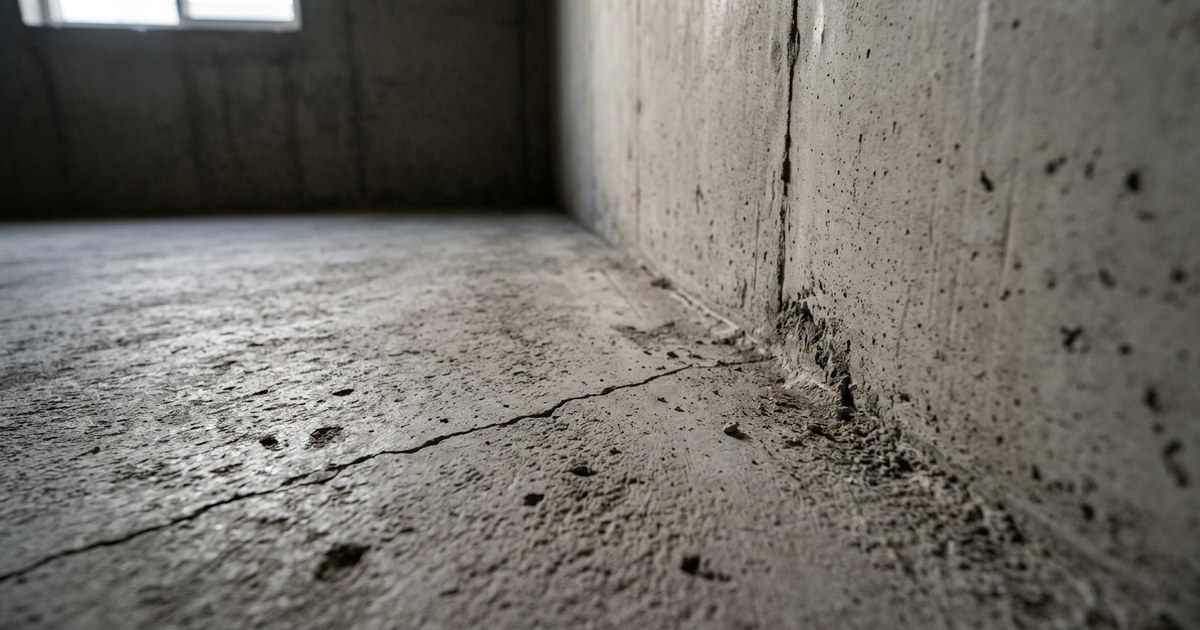
Table of contents
- Why doesn’t 4.1 settle anything?
- What moves radon between Tuesday and Thursday?
- Does any of this apply to an apartment or a condo?
- Where did 4 come from anyway?
- Why do building biologists use a lower number?
- How do you get a true radon average?
- What happens if it comes back high?
- What does your neighbor’s 12 tell you?
Summary of this article
- EPA writes that if two short-term tests average 4.1, there is about a 50 percent chance the year-round average is somewhat below, or above, 4. Near 4 is not a verdict.
- Radon is not a fixed property of a building. It moves with weather, with heating, and with whether somebody left a window open while the kit sat there.
- EPA and the Surgeon General recommend testing all homes below the third floor, which puts garden apartments, ground-floor condos and slab houses inside the advice rather than outside it.
- Soil gas needs a path, not a basement. A slab in Florida, a coastal house on piers, a row house, an elevator shaft from a parking level all have one.
- EPA says to fix at 4 or higher and consider fixing between 2 and 4, and adds that levels below 4 still pose a risk.
- For proportion: the average US home runs about 1.3 and outdoor air about 0.4. Congress set a goal of getting indoor levels down to outdoor ones.
- Building Biology puts radon in four bands for sleeping areas, and its severe band starts at 60 Bq per cubic meter, about 1.6 pCi/L. Nobody enforces that anywhere.
- A renter or a condo owner cannot cut a slab or claim a roofline. Test anyway, because a result is the only thing that moves a landlord or a board.
Somebody in your house tore open a cardboard kit, set it down for two days, and left it alone. Two weeks later an envelope came back with one figure on it. 4.1.
Four is where everybody tells you to fix a house. Yours starts with a four. So now you’re pricing fans, reading contractor sites at eleven at night, and working out whether you have to tell a buyer.
Stop before you spend anything. That figure decides less than it looks like it decides, and EPA is the one who says so.
Why doesn’t 4.1 settle anything?
Because EPA’s own guide says so. If the average of two short-term tests is 4.1, EPA writes, there is about a 50 percent chance the year-round average is somewhat below, or above, 4.
Read that twice. Same building, same ground, same family. Flip a coin.
Square footage is a fixed property of a building. Radon behaves nothing like it. What that kit caught was whatever happened to be seeping up out of the ground and pooling indoors across two particular days, and those are two different things that get treated as one every day of the week.
So 4.1 and 3.9 can describe one room on two weekends. People treat one as over and one as under. They’re trusting a decimal place that was never that solid.
A result far from 4 in either direction settles the question. 0.6 is low. 14 is high. Everything crowded up against 4 means one thing only, which is that the building needs a second look.
Near 4 is an instruction to test again, and that’s all it is.
What moves radon between Tuesday and Thursday?
Weather, mostly. That, and whether anybody opened a window.
Radon rises out of soil because air inside a building rests at slightly lower pressure than the gas in the ground beneath it. A building pulls. Anything that changes how hard it pulls changes what collects inside.
A cold snap runs the heat, warm air climbs and leaks out at the top, and the lowest floor sucks harder on soil to make up for it. Heavy rain fills pores in the ground and caps what would otherwise vent to open sky, so more of it travels sideways and comes up through your floor instead. Wind and passing storms swing pressure around by the hour.
Then there is whoever lives there. Somebody props a window open for two nights in July, and a kit dutifully records a building that does not exist for the other 363 days of the year.
Which is why winter results come in higher than summer ones across most of this country. One address, sealed in January and aired out in June, can hand you two results pointing at two different decisions, and both of those results are honest.
A short test measures a week of weather as much as it measures your ground.
Does any of this apply to an apartment or a condo?
Yes, and here is the sentence almost nobody prints. EPA and the Surgeon General recommend testing all homes below the third floor for radon.
Below the third floor. That is a fourth-floor apartment out and a garden-level condo very much in, and it covers a great deal of housing that gets written out of radon coverage entirely because the writer pictured a basement.
Soil gas does not need a basement. It needs a path. A slab-on-grade house in Florida or Texas has one. So does a coastal place up on piers with a room enclosed underneath it later. So does a row house sharing party walls, a garden apartment, a converted ground-floor unit, and a stair core or a lift shaft running from the parking level to the units above it.
What changes is your control over it, and the physics stays put. An owner can cut a slab and mount a fan. A renter and a condo owner mostly can’t, because the floor is common property and the roofline belongs to somebody else.
Test first anyway. A result is the only thing that’ll make a landlord, a board or a management company move, and asking without one gets you a shrug.
Where did 4 come from anyway?
Somebody weighed money against lungs and drew a line, and it was never a point where danger switches on. EPA attributes about 21,000 lung cancer deaths a year in this country to radon, which is why anybody drew one at all.
EPA tells you to fix at 4 picocuries per liter or higher, and to consider fixing between 2 and 4. The same guide adds that levels below 4 still pose a risk, and that plenty of those can be brought down too. Only the first half of that ever travels, and hearing it alone leaves a person either complacent or frightened.
Two figures for proportion, both EPA’s. The average indoor level comes in around 1.3. Outdoor air runs about 0.4. Your porch has radon in it right now, and a building concentrates whatever lies underneath.
Congress went further and set a long-term goal that indoor levels shouldn’t run higher than outdoor ones. EPA says plainly that this is not yet achievable everywhere, and that plenty of homes can get to 2 or less.
| What it is | Where it sits | |
|---|---|---|
| 0.4 | outdoor air | the goal Congress wrote |
| 1.3 | the average US home | what most people already breathe |
| 2 | what plenty of homes reach after a fix | EPA’s own consider-fixing floor |
| 4 | fix it | a judgment about cost and risk, not a cliff |
Below 4 still carries risk. EPA says so in the same sentence that gives you the 4.
Why do building biologists use a lower number?
Because they are answering a different question, about the room you sleep in rather than what a country can justify spending.
The Building Biology Evaluation Guidelines set four bands for radon in a sleeping area, counted in becquerels per cubic meter. Anything under 30 is no anomaly. The next band, 30 to 60, is slight. Then 60 to 200 is severe, and anything above 200 is extreme. Their own sheet prints the conversion, and 60 works out to about 1.6 picocuries. So their severe band opens well below where EPA tells you to fix.
Nobody enforces that anywhere on earth. It’s a precautionary value rather than a rule, and treating it as a rule would be dishonest in the other direction.
Set the two beside each other and something odd falls out. A federal fix line of 4 falls inside a band that a bedroom standard already calls severe. Both parties know it. Neither is being dishonest, because they were asked different questions.
One number asks what a country should require. The other asks what you want over your bed.
How do you get a true radon average?
Average across a season instead of acting on one slip of paper. EPA defines a short test as two to 90 days depending on the device, and a long test as anything past 90, and says a long result is the one more likely to tell you your year-round average.
EPA describes two honest ways to get that average. Run one test past 90 days, through a winter if you can, and let the seasons cancel each other out. Or put two short kits together in the same spot for at least 48 hours and average them. EPA’s fixing threshold is 4 or higher either way, on the long result or on the average of the two.
Order matters. Start short, because it’s cheap and fast and tells you whether to keep going.
Short tests come with housekeeping that people skip, and skipping it is how a result stops meaning anything. Close windows and outside doors. A two or three day kit needs them shut 12 hours before you even start. Don’t run one through a severe storm or a spell of unusual wind, because pressure will shove it around.
That closed-up rule is easier in a house than in a rented unit with one operable window and a neighbor who props the stair door. Where you can’t control the building, run the long test instead and let 90 days average out what you can’t control.
Act on an average, never on one slip of paper.
What happens if it comes back high?
You fix it, and it stays fixed. Radon might be a rare household problem that has an ending that good.
A crew cuts through the lowest floor, drops in a pipe, seals around it, and mounts a fan where that pipe runs up past a roofline. The fan drags soil gas out from underneath and releases it above the building, where it thins into open air. EPA says plenty of homes come down to 2 or less.
Cracks get sealed as part of the same job. Sealing on its own is not a fix, though plenty of people try it first and hope. Its real purpose is stopping that fan pulling heated air out of your rooms instead of out of soil.
Cost tracks how a building is built, and any quote gets written against a real result. A building at 12 and one at 4.2 need different work, and the second may need none at all.
In a condo or a rental the same physics gets a different route. The pipe has to reach a roofline somebody else owns, so the conversation is with a board or a management company, and it starts with your result rather than with your worry.
Plenty of household hazards have no fix, or one nobody can afford. This one is a pipe and a fan.
What does your neighbor’s 12 tell you?
That the ground under your street makes radon. About your own address, almost nothing.
Two homes on one block can differ by more than 4, because what decides it is soil under one foundation, cracks in one floor, and how hard one building breathes. A finished basement with a sump pit and a floor drain has more ways in than the crawlspace next door on identical dirt. Two units in one stack can differ for the same reason.
So a county map decides whether you test at all. Your own result decides what you do next. A map describes an area, drawn from what somebody knows about the ground underneath it, and it was never looking at your address.
Here’s the week. Buy a kit and put it in the lowest room your household lives in, whether that’s a basement, a ground-floor bedroom or the only floor you have. Not the crawlspace nobody enters, and not a kitchen or bathroom, where humidity throws a device off. Two feet out from a wall, roughly at breathing height, clear of vents, windows and heat.
Write down when it started and what the weather did while it sat there. If it comes back anywhere near 4, put a long-term kit in that same spot and leave it through a winter. One of those beats ten quick ones.
And this last part matters more than everything above it put together. Where anybody sleeping on that floor smokes, move faster than any of this suggests. EPA publishes two separate risk tables at every radon level, one for smokers and one for people who never smoked, and the gap between them is not small. The same 4.1 that is arguable for one person is not arguable for another.
Sources
- US EPA. Home Buyer's and Seller's Guide to Radon, EPA 402/K-24/001 (2024)
- Baubiologie Maes / IBN. Building Biology Evaluation Guidelines for Sleeping Areas, standard point 6, Radioactivity (2024)
Questions people ask
Is a radon result of 4.1 high?
It is borderline, and EPA says so in its own guide. If the average of two short-term tests is 4.1, there is about a 50 percent chance the year-round average is somewhat below, or above, 4. A result far from 4 in either direction tells you much more.
Why do radon results change between tests?
Because radon moves with conditions. A building sits at slightly lower pressure than the ground beneath it, so it pulls soil gas in, and anything changing that pull changes the result. Cold snaps, heavy rain, wind, and an open window all move it, which is why winter results run higher than summer ones.
Do apartments and condos need a radon test?
Below the third floor, yes. EPA and the Surgeon General recommend testing all homes below the third floor for radon. Soil gas needs a path rather than a basement, and a garden apartment, a ground-floor condo, a converted unit or a stair core from a parking level all provide one.
What can a renter or condo owner do about high radon?
Test first, then take the result to whoever owns the building. A mitigation pipe has to reach a roofline and cut through a floor, and neither is yours in most units. A landlord, board or management company moves on a measured result and rarely on a request without one.
Where did the 4 pCi/L action level come from?
From a judgment about cost and risk rather than a point where danger begins. EPA attributes about 21,000 lung cancer deaths a year to radon, tells you to fix at 4 or higher, and to consider fixing between 2 and 4. The same guide says levels below 4 still pose a risk.
How do I calculate a true radon average?
Two ways, and EPA describes both. Run one test past 90 days, through a winter if you can, so the seasons cancel each other out and the result reflects your year-round average. Or place two short kits side by side in the same spot for at least 48 hours and average them. EPA's threshold for fixing is 4 or higher on either the long result or the average of the two.
Does my neighbor's radon result tell me anything?
That the ground under your street produces radon, and almost nothing about your own address. Two homes on one block can differ by more than 4, because soil under one foundation, cracks in one floor and how hard one building breathes all decide it. Use a map to decide whether to test, and a test to decide what to do.

Have questions about the environment inside your home?
Air quality, mold, EMF, light and water all shape how a house feels and how the people in it feel. Whatever your concern is, the first step is finding out what is there.
Our certified team of environmental professionals and advocates can help.