


No US Agency Sets an EMF Limit for a Bedroom. FCC Rules Cover a Different Frequency
FCC exposure limits are enforceable and cover radiofrequency transmitters. Household wiring runs at 60 hertz and falls outside them entirely. What remains is unresolved research and one cautious bedroom target.
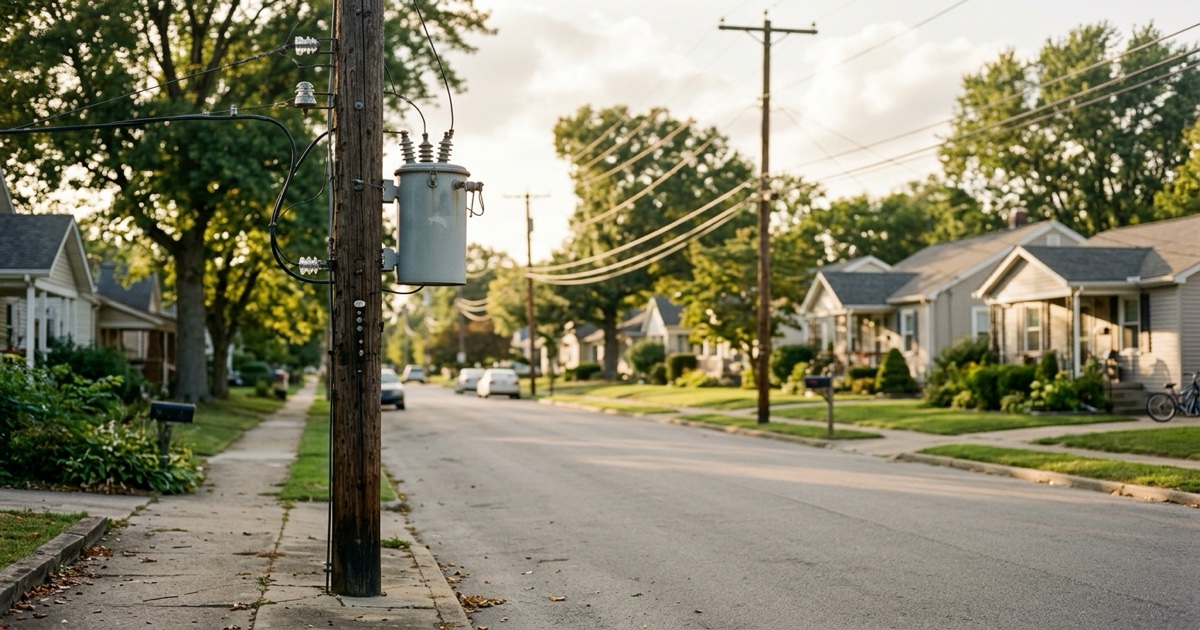
Table of contents
Summary of this article
- No US agency sets an exposure limit for the magnetic field from household wiring in a bedroom.
- FCC exposure limits are enforceable but govern radiofrequency transmitters. Household wiring runs at 60 hertz, a different kind of field, and no rule crosses that gap.
- Ahlbom and colleagues pooled nine studies and reported a twofold increase in childhood leukemia among children at 4 milligauss or higher, in the British Journal of Cancer in 2000.
- Under 1 percent of the children in those studies lived at 4 milligauss or higher, so the finding rests on a very thin slice of childhood.
- A later pooling of fifteen studies produced a 1.7-fold increase above 3 milligauss, with a little more than 3 percent of children at that level.
- IARC classified low-frequency magnetic fields as possibly carcinogenic, Group 2B, in 2002, on limited evidence. That describes the strength of the evidence rather than the size of any risk.
- Building biology bands for sleeping areas: below 0.2 milligauss no anomaly, 0.2 to 1 slight, 1 to 5 severe, above 5 extreme. These are cautious targets, not limits.
- Distance is the one thing everyone in the argument agrees on. Clearing a bedside costs nothing and is the highest-return step available.
No US agency sets an exposure limit for the magnetic field coming off household wiring in a bedroom.
FCC exposure limits are enforceable and somebody gets fined for breaking them, but they govern radiofrequency energy from transmitters: cell towers, broadcast masts, anything pushing a signal into open air. Household wiring runs at 60 hertz and produces a magnetic field of a different kind entirely. No rule in this country crosses that gap.
That distinction is the single most useful thing to carry into this subject, because a large share of what circulates online compares two things that were never about each other.
What exists instead is research, which is unresolved, and one cautious target somebody wrote specifically for bedrooms. Here is what each says, and what is worth doing tonight.
What the childhood leukemia research found
Ahlbom and colleagues pooled raw numbers from nine studies and reported a twofold increase in childhood leukemia among children at 4 milligauss or higher, published in the British Journal of Cancer in 2000.
The detail that rarely travels with that finding: under 1 percent of the children in those studies lived at 4 milligauss or higher. Whatever the result describes, it was measured on a very thin slice of childhood.
Two further attempts at the same question came out lower. Fifteen studies, pooled differently, produced a 1.7-fold increase above 3 milligauss, with a little more than 3 percent of children at that level.
The International Agency for Research on Cancer classified low-frequency magnetic fields as possibly carcinogenic to humans, Group 2B, in 2002, on limited evidence from human studies about childhood leukemia. Group 2B is a crowded category containing many ordinary things, and the classification describes the strength of the evidence rather than the size of any risk.
The bedroom bands are a target, not a limit
Building biology guidelines for sleeping areas set four bands in milligauss: below 0.2 is no anomaly, 0.2 to 1 slight, 1 to 5 severe, and above 5 extreme.
Those numbers are cautious targets written for sleep, and 0.2 is strict. They are not a pass mark and there is no legal limit to check them against. Noise runs the same way: no federal rule says how quiet a bedroom has to be.
Keeping the two apart matters. Radio exposure limits are enforceable and cover transmitters. Bedroom bands are guidance written for a different frequency and a different purpose. Neither answers for the other, and almost every confusing article on this subject has quietly swapped them.
Where the field in a bedroom comes from
The wall behind a headboard usually carries a cable running current to a socket, a switch, or an entire upstairs. It has done that every night since the house was wired, and nobody has measured it because nobody is required to.
The sources that matter are close and specific: a distribution panel on the other side of a bedroom wall, a heavy circuit running behind the headboard, and anything electrical sitting on a bedside table. An electrician can find a circuit with a clamp meter, which is not the same instrument as the panel itself.
What to change tonight
Distance is the one point on which everyone arguing about this subject agrees, and it costs nothing.
Clear the bedside of anything electrical that does not need to be there. It is the highest-return step available and it is free.
Move the bed off a wall carrying a panel or a heavy circuit, if a measurement says that matters.
Measure before spending money on shielding, and measure again afterwards. Most people who buy shielding products do neither, which means they cannot say whether it did anything.
Where this leaves a household
Nobody sets a limit for a bedroom. The research is genuinely unresolved rather than settled in either direction. And distance works, which nobody disputes.
That is an unusual place for a subject to end up, and forcing it into either a scare or a shrug helps nobody who has to sleep in the room. Nothing here can tell you what is in yours. Moving a charger tonight is the one action nobody argues about.
Sources
- National Cancer Institute. Electromagnetic Fields and Cancer (2026)
- International Agency for Research on Cancer. Non-ionizing Radiation, Part 1: Static and Extremely Low-frequency (ELF) Electric and Magnetic Fields (2002) IARC Monographs Volume 80
- British Journal of Cancer. Ahlbom A, Day N, Feychting M, et al. A pooled analysis of magnetic fields and childhood leukaemia (2000)
- Baubiologie MAES and Institute of Building Biology + Sustainability (IBN). Building Biology Evaluation Guidelines for Sleeping Areas, supplement to the Standard of Building Biology Testing Methods SBM-2024 (2024) SBM-2024, 9th edition
- Federal Communications Commission. 47 CFR 1.1310, Radiofrequency radiation exposure limits (2025) 47 CFR 1.1310
Questions people ask
Is there a safe EMF limit for a bedroom in the US?
No US agency sets one. FCC exposure limits are enforceable but govern radiofrequency energy from transmitters. Household wiring runs at 60 hertz and produces a different kind of magnetic field that those rules never reach.
Why do FCC limits not apply to house wiring?
They were written for transmitters pushing a signal into open air, such as cell towers and broadcast masts. A wall carrying current at 60 hertz emits no signal of that kind. No rule has been built across the gap between the two.
What did the childhood leukemia research find?
Ahlbom and colleagues pooled raw data from nine studies and reported a twofold increase in childhood leukemia among children at 4 milligauss or higher, in the British Journal of Cancer in 2000. Under 1 percent of children in those studies were at that level.
Have other analyses found the same thing?
A pooling of fifteen studies produced a lower figure, a 1.7-fold increase above 3 milligauss, with a little more than 3 percent of children that high. The research is genuinely unresolved rather than settled either way.
What does the IARC Group 2B classification mean?
IARC classified low-frequency magnetic fields as possibly carcinogenic to humans in 2002, on limited evidence from human studies about childhood leukemia. Group 2B is a crowded category of ordinary things, and it describes evidence strength rather than risk size.
What levels do building biology guidelines use?
For sleeping areas, below 0.2 milligauss is no anomaly, 0.2 to 1 slight, 1 to 5 severe, and above 5 extreme. Those are cautious targets written for sleep. They are not a pass mark and no legal limit exists to check them against.
How do I find out what is in my bedroom?
An electrician can trace a circuit with a clamp meter. The sources that matter are close and specific: a distribution panel on the far side of a bedroom wall, a heavy circuit behind the headboard, and anything electrical on a bedside table.
What should I do tonight?
Clear the bedside of anything electrical that does not need to be there, which is free and the highest-return step available. Move the bed off a wall carrying a panel or heavy circuit if a measurement says it matters. Measure before and after buying any shielding.


Have questions about the environment inside your home?
Air quality, mold, EMF, light and water all shape how a house feels and how the people in it feel. Whatever your concern is, the first step is finding out what is there.
Our certified team of environmental professionals and advocates can help.