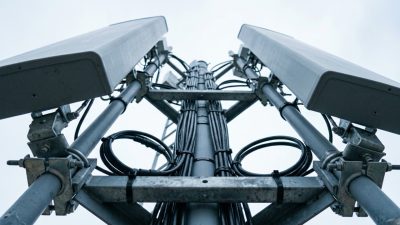
Half the wireless around you comes from towers. The rest is closer
Researchers walking 38 routes across New York City found that half of measured exposure came from towers talking to phones…


Electromagnetic fields surround every wire, appliance, and power line you live near.
The World Health Organization reports that exposure to low level EMF is present everywhere in the developed world, and after decades of study, the evidence for harm at typical household levels remains weak.
Still, EMF is one of the most searched and most misunderstood exposures in the home, which is why it helps to separate what the science shows from what it does not.
An invisible area of energy created wherever electricity flows. Your home produces low energy, non-ionizing fields from wiring, appliances, and wireless devices, which is a different and far weaker category than the ionizing radiation of X rays.
The World Health Organization concluded that current evidence does not confirm any health effects from the low level EMF people encounter at home. The fields from your wiring and devices sit well below any level shown to cause harm.
The International Agency for Research on Cancer classified extremely low frequency magnetic fields as "possibly carcinogenic" based on a weak statistical link. The NIEHS notes no biological mechanism has been found, and the fields involved are far higher than a typical home ever produces.
The WHO reports that no adverse health effects have been established from the radiofrequency exposure of phones and Wi-Fi at everyday levels. A phone against your head is the closest exposure you get, which is why speaker mode or headphones lower it easily.
Field strength drops sharply with distance. Directly beneath a high voltage line the field is measurable, but about 100 feet away it falls close to the level inside any ordinary home. If you want certainty, a gauss meter gives you a real reading.
No. The Federal Trade Commission has warned that shields, stickers, and pendants offer no proven benefit. Some phone shields can even raise output, because the device works harder to keep a signal through the blocker.
Distance does most of the work. Keep your phone off your body, use headphones for long calls, move the router away from bedrooms, and unplug electric blankets before sleep. These steps cost nothing and lower exposure without any special equipment.
Yes. An inexpensive gauss meter measures extremely low frequency fields from wiring and power lines, and radiofrequency meters read wireless sources. A direct measurement tells you far more than assumptions about a nearby line or device.
Electromagnetic fields are invisible areas of energy produced wherever electricity flows. They come in two types, and the difference matters for your health.
Ionizing radiation, at the high end of the spectrum, carries enough energy to damage DNA directly. X rays and gamma rays fall here, and their risks are well established. The EMF in your home is the other kind, called non-ionizing radiation, which does not carry enough energy to break chemical bonds. Power lines, household wiring, phones, and Wi-Fi all produce this lower energy field. The National Institute of Environmental Health Sciences, the federal agency that has led U.S. research on the question, groups everyday EMF into extremely low frequency fields from power and wiring, and radiofrequency fields from wireless devices.
Every device that uses or carries electricity generates a field. The strength depends on the current and how close you are to the source.
Power lines produce extremely low frequency fields, and the ones running along a street or through a transmission corridor create the strongest fields most people encounter outside a workplace. Inside the house, wiring in the walls, the electrical panel, and large appliances add to the background level. Microwave ovens, hair dryers, electric blankets, and anything with a motor produce measurable fields when running. Wireless sources sit in a separate category. Cell phones, Wi-Fi routers, and smart meters emit radiofrequency energy, and a phone held against your head delivers the closest and most direct exposure of any device you own.
This is where the noise drowns out the data, so start with the agencies that have reviewed it. The World Health Organization concluded that current evidence does not confirm any health consequences from exposure to low level electromagnetic fields.
The one exception worth knowing about involves childhood leukemia. The International Agency for Research on Cancer classified extremely low frequency magnetic fields as "possibly carcinogenic to humans," a category that also includes pickled vegetables and aloe vera. That label came from studies showing a weak statistical link between very high, sustained magnetic field exposure and childhood leukemia. The NIEHS notes that the association is weak, that no biological mechanism has been found to explain it, and that the fields involved are far higher than what most homes ever see. For radiofrequency fields from phones and Wi-Fi, the WHO reports that no adverse health effects have been established at the exposure levels people encounter day to day.
Distance is the single biggest factor in how much EMF you absorb. The field strength drops sharply as you move away from the source, so a few feet often makes a larger difference than the device itself.
Stand directly under a high voltage power line and the field is measurable. Walk 100 feet away and it falls close to the background level of an ordinary home. The same rule governs appliances. A microwave produces a strong field at the door and almost nothing across the kitchen. A phone pressed to your ear delivers far more radiofrequency energy than the same phone across the room on speaker. This is why the practical question is rarely whether a device produces a field, but how close you keep it and for how long.
There is no evidence that everyday EMF harms healthy adults, so the goal here is informed comfort, not fear. If you want to lower your exposure, distance does nearly all the work for free.
Keep your phone away from your body when you can. Use speaker mode or wired headphones for long calls, and avoid sleeping with the phone under your pillow. Move the Wi-Fi router out of bedrooms and away from where people sit for hours. Skip electric blankets, or unplug them once the bed is warm rather than running them all night. If a power line runs near your property and you want a real number, an inexpensive gauss meter measures the field directly, which beats guessing. Ignore products marketed as EMF shields, stickers, and pendants. The Federal Trade Commission has warned that these devices offer no proven benefit, and some that claim to block radiation can actually raise a phone's output as it works harder to hold a signal.
Researchers walking 38 routes across New York City found that half of measured exposure came from towers talking to phones…
FCC exposure limits are enforceable and cover radiofrequency transmitters. Household wiring runs at 60 hertz and falls outside them entirely…
Air quality, mold, EMF, light and water all shape how a house feels and how the people in it feel. Whatever your concern is, the first step is finding out what is there.
Our certified team of environmental professionals and advocates can help.