Your Gas Stove Leaks More With the Knobs Off Than While You Cook
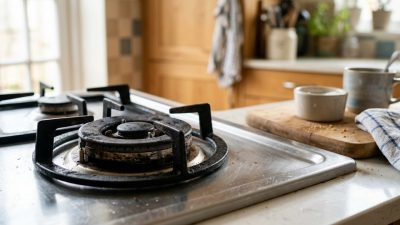
Researchers measured 53 American kitchens and found more than three-quarters of a gas stove's methane escaped while every knob was…


The average American spends about 90% of their time indoors, according to the EPA.
That single number reshapes how you should think about air. The air inside your home is the air you breathe for the vast majority of your life, and it is often 2 to 5 times more polluted than the air outdoors.
Indoor air is the exposure hiding in plain sight. It surrounds you while you sleep, cook, clean, and relax, and it carries whatever the house holds onto because nothing is there to move it along.
Often, yes. The EPA reports indoor air can be 2 to 5 times more polluted than outdoor air, because pollutants get trapped inside and build up over time.
You breathe it most of your life. Americans spend about 90% of their time indoors, so the air in your home is the air with the greatest effect on your health.
Two places. Outdoor air drifts in through windows and cracks, and indoor sources like cooking, cleaning products, paint, furniture, and gas appliances add their own load on top of it.
Volatile organic compounds are gases that evaporate from products at room temperature. Paint, cleaners, air fresheners, new furniture, and flooring all release them, and indoor levels usually run higher than outdoor levels.
Gas stoves release nitrogen dioxide and fine particles, and frying or searing on any stove sends particulate into the air. Running the exhaust fan while you cook clears most of it.
Yes. It has no color or smell, and the CDC links it to more than 100,000 emergency room visits a year. A detector on every level of your home is the only reliable way to catch it.
When the outdoor air is clean, yes. Fresh air dilutes indoor pollutants and moisture. On a high pollution or wildfire smoke day, keep windows closed and rely on filtration instead.
A HEPA unit sized for the room removes fine particles like dust, smoke, and pollen effectively. It does little for gases like carbon monoxide or radon, so pair it with ventilation and detectors rather than relying on it alone.
Your lungs process thousands of gallons of air a day, and most of that happens inside. Whatever floats in a room enters your body with every breath, hour after hour, in the one place people assume is clean.
The EPA ranks indoor air pollution among the top five environmental risks to public health. The reason comes down to time and concentration. A pollutant that would disperse quickly outside gets trapped in a closed room, so a small source can build into a real dose over a long evening at home.
Indoor air starts as outdoor air. Every home breathes in what surrounds it through open windows, doorways, cracks, and vents, so the quality of the air on your street becomes the baseline for the air in your living room.
On a high pollution day, particulate and ozone from traffic and industry drift inside and settle in. That outside air then mixes with everything the house generates on its own. The result is a blend that reflects both the neighborhood and the household, and the indoor side of that mix usually wins because the air moves so slowly once it is inside.
A modern home is built to hold air in. Tighter construction and better insulation save energy, and they also trap the air inside for longer, giving pollutants more time to accumulate before anything clears them out.
Indoor sources add to the load all day. Cooking, especially on a gas stove, releases nitrogen dioxide and fine particles. Cleaning products, paint, new furniture, and flooring give off volatile organic compounds, a group of gases that evaporate at room temperature and linger in the air. The California Air Resources Board found that indoor levels of many VOCs run consistently higher than outdoor levels, because the sources sit right there in the room with you.
Moisture is one of the biggest problems. When indoor humidity climbs above 50%, mold gets what it needs to grow, and dust mites thrive alongside it. Both are common triggers for asthma and allergies, and both come from conditions a household can measure.
Combustion adds an invisible layer. Gas stoves, furnaces, water heaters, and fireplaces can release carbon monoxide, a gas with no color and no smell that the CDC says sends more than 100,000 Americans to the emergency room each year. Radon rises from the soil and collects in lower floors. Fine particles from cooking and candles hang in the air long after the source is gone. None of these announce themselves, which is why the air can feel perfectly fine while it carries a load worth clearing.
Ventilation does the most for the least. Run the kitchen exhaust fan every time you cook, use the bathroom fan during and after a shower, and open windows when the outdoor air is clean to flush stale air out of the house.
Control moisture next. Keep indoor humidity between 30 and 50%, fix leaks quickly, and run a dehumidifier in damp spaces so mold never gets a foothold. Add a carbon monoxide detector on every level of your home, since it is the only way to catch a gas you cannot sense. Choose low-VOC paints and cleaners when you can. If you use a portable air cleaner, pick one with a HEPA filter sized for the room, and change filters on schedule so the unit keeps pulling particles out of the air you breathe all day.
Researchers measured 53 American kitchens and found more than three-quarters of a gas stove's methane escaped while every knob was…
Air quality, mold, EMF, light and water all shape how a house feels and how the people in it feel. Whatever your concern is, the first step is finding out what is there.
Our certified team of environmental professionals and advocates can help.