


EPA plan may let diesel trucks pollute longer near your highways
The EPA proposal ends the deratement that forced repairs when a truck's NOx controls failed, and it shortens emissions warranties, shifting the cost of a broken system onto operators sooner.
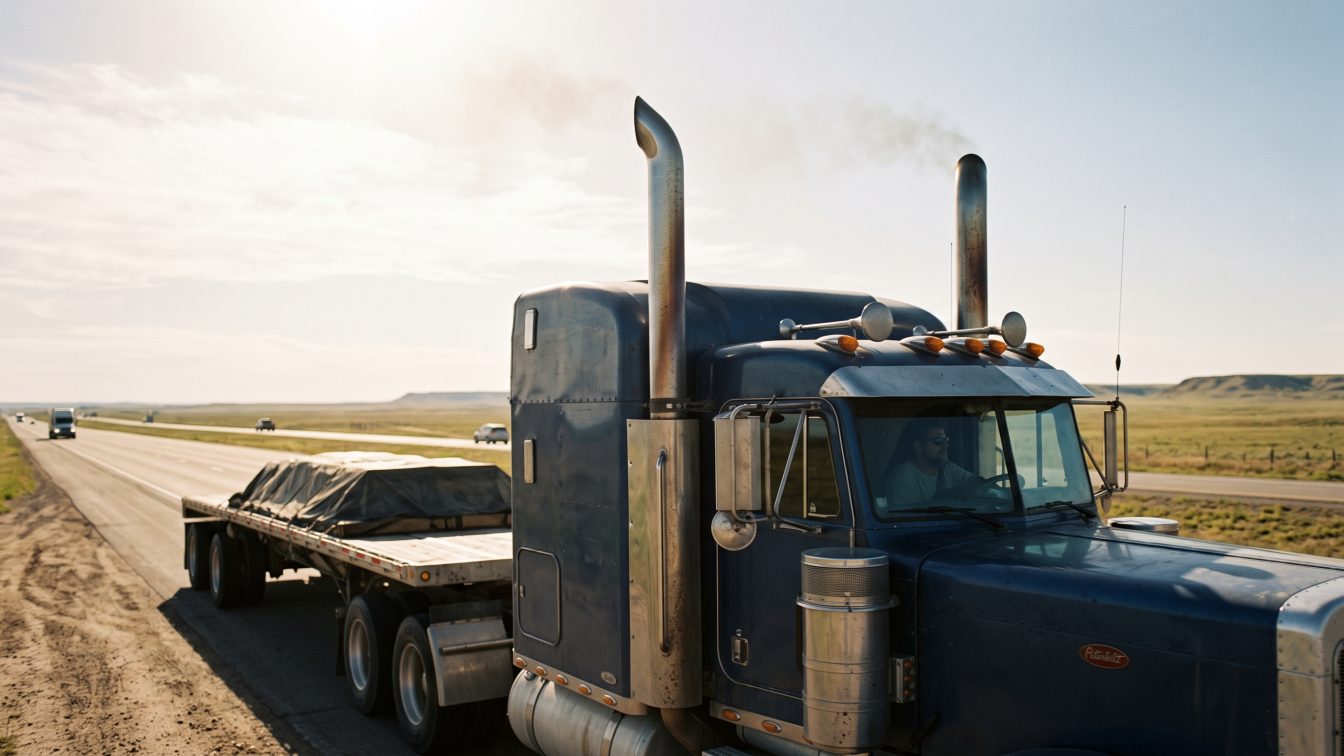
Table of contents
Summary of this article
- The EPA published a media roundup on July 14, 2026, compiling coverage from more than a dozen outlets and industry groups praising its proposal to save American truckers $12 billion, with savings up to $6,000 per new truck.
- The proposal eliminates Diesel Exhaust Fluid (DEF) deratements, automatic engine slowdowns, for newly manufactured engines and scales back the emissions warranty requirements the EPA calls the largest single cost of the 2023 rule.
- According to CCJ, the Biden-era rule required manufacturers to extend emissions warranties to 450,000 miles from 100,000, and useful-life limits to 650,000 miles from 435,000; industry estimated the requirements added upwards of $20,000 per truck.
- The EPA says the proposal keeps the underlying NOx standard, including nearly 90% of the 2023 rule's NOx reductions, and adds nonconformance penalties that let temporarily non-compliant engines keep selling.
- Diesel exhaust carries fine particulate matter (PM2.5) and NOx that concentrate within 300 to 500 feet of freight routes; the public has a 45-day comment period and a public hearing to weigh in.
On July 14, 2026, the EPA published a roundup of news coverage showing how widely its latest diesel proposal was praised. More than a dozen outlets and industry groups made the list, from Fox News and the Washington Examiner to Transport Topics, CCJ, and the American Trucking Associations.
The proposal would save American truckers $12 billion, EPA Administrator Lee Zeldin said, with savings up to $6,000 per new truck. It ends Diesel Exhaust Fluid deratements for newly built engines and scales back the emissions warranties set by the Biden-era 2023 rule.
Manufacturers, fleets, and trade groups all welcomed the change. When the people who pay for emissions rules cheer a rollback, it’s worth asking what the rollback does to their costs, and to the air near the roads their trucks run.
Who cheered, and what that signals
The praise came from the businesses that foot the bill for emissions compliance.
Cummins, one of the largest diesel engine makers in the country, sent its top executive to Washington for the announcement. “We’re very pleased to have that (proposed) rule come out,” Cummins Chair and CEO Jennifer Rumsey told The Republic. “We’ve been working very collaboratively with the EPA.”
The American Trucking Associations, which says it represents 8.4 million workers, joined Zeldin on the National Mall. ATA President and CEO Chris Spear called the proposal a rollback of “onerous, unachievable heavy-duty NOx standards implemented by the previous administration.”
The trade press counted the change in dollars. CCJ reported the proposal would “end DEF derates for good, scale back warranty requirements.” Transport Topics called it a “cost-saving revision.” Heavy Duty Trucking said it “could ease 2027 truck costs and buying uncertainty.”
Every endorsement circled back to money. When the companies paying for a rule uniformly welcome its revision, the revision has cut what they spend. For anyone living near a truck route, the question is what that cheaper compliance changes about the exhaust coming off the road.
The warranty numbers that got less attention
The $12 billion got the headlines. The warranty rules did the work, and the numbers behind them tell you what shifted.
The Biden-era rule made manufacturers stretch emissions warranties to 450,000 miles from 100,000, and raise useful-life limits to 650,000 miles from 435,000, according to CCJ. Manufacturers claimed those rules added upwards of $20,000 per truck onto fleets, CCJ reported, a figure the industry believes the new proposal could cut in half.
An emissions warranty is the maker’s promise to repair or replace pollution-control parts that fail within a set mileage. That promise is what pushes manufacturers to keep emissions systems working over a truck’s life. Stretch it to 450,000 miles and the maker has to stand behind the NOx hardware for far longer than a 100,000-mile warranty asks.
Truck News reported the details. The proposal keeps the current 5-year, 100,000-mile warranty instead of the longer one, and pushes back the scheduled jump in regulatory useful life by three years, moving the 11-year, 650,000-mile requirement for heavy-duty trucks to 2030.
Shorten the warranty and the repair bill for a failing emissions system lands on the operator sooner. Once a DEF system or catalyst wears out past the warranty window, fixing it comes out of the operator’s pocket. An operator staring at that bill may put the fix off. A truck that keeps running with worn-out NOx controls is where the air problem starts.
What the EPA keeps
The NOx standard itself stays on the books, and the EPA is clear about that.
The agency says the proposal holds the underlying emission standards, keeping nearly 90% of the nitrogen oxide cuts from the 2023 rule. Heavy Duty Trucking backed up that account, reporting the proposal “would leave in place the stringent nitrogen oxide (NOx) emissions standard scheduled to take effect with 2027 model-year heavy-duty diesel engines” while delaying “some of the rule’s costly implementation requirements.”
So the target on paper holds. What loosens is everything built to enforce it: the warranty length, the useful-life timeline, and the deratement that used to force a repair when the system failed.
The proposal also adds nonconformance penalties. These are fees an engine maker pays to keep selling an engine that can’t yet meet the new NOx standard while it works toward compliance. The EPA says the penalties prevent supply disruptions and preserve consumer choice. In plain terms, they let some higher-emitting engines onto the road during the switch. How many, and at what NOx level, sit inside the proposed rule.
The consumer-price chain
The industry’s argument runs from the truck lot to the grocery aisle.
“Even if you’ve never driven a truck in your life, when it costs less to move goods, it costs less to buy them,” Zeldin said in his announcement, according to the Washington Examiner. “Those savings get passed down to you at the grocery store and the hardware store on nearly everything a truck delivers.”
Cheaper trucks mean cheaper freight, and cheaper freight, in theory, means cheaper goods. Fox News reported the proposal would “ease supply chain costs that make everyday goods more expensive for Americans.”
Those savings are one side of the deal. The air is the other. The same rule that lowers the price of moving goods by cutting compliance spending also loosens what kept emissions systems maintained. Cheaper delivery on one hand, roadside air on the other. The savings spread out to every shopper. The exhaust piles up on the homes closest to the freight routes.
How diesel exhaust reaches your home
For a diesel truck, the source of the exhaust is the tailpipe, and the DEF system is what keeps that tailpipe clean. Stop the pollution there and it never reaches the neighborhood. Let the system slide and it does.
Two pollutants drive the worry. Fine particulate matter, or PM2.5, is made of particles small enough to slip past the body’s defenses and lodge deep in the lungs. The EPA links PM2.5 to asthma attacks, heart disease, and early death. Nitrogen oxides, the gases the DEF system controls, irritate the airways, worsen asthma, and cook in sunlight into ground-level ozone.
Here’s who breathes it:
Homes near freight corridors. People living within 300 to 500 feet of a highway or major truck route face higher exposure to PM2.5 and NOx. A single corridor can carry thousands of trucks a day, and every truck with worn-out controls adds to the load.
Schools near truck routes. Kids breathe faster than adults and take in more air for their size. A school near a freight route or distribution hub exposes students through the hours they can’t leave.
Idling and loading zones. Warehouses, ports, and distribution centers stack up idling diesel trucks. The exhaust pools in those zones and drifts into nearby neighborhoods, often the lower-income communities built closest to the freight activity.
Farm areas. The proposal also covers nonroad engines, including farm equipment. Diesel exhaust from tractors and harvesters reaches farmworkers and rural households directly.
The warranty and the deratement are the tools that kept NOx controls working across a truck’s life. Change how those tools work, and you change how much NOx and PM2.5 the whole diesel fleet pumps into these places.
The 45-day window
The proposal isn’t final. The EPA will hold a 45-day public comment period and a public hearing before deciding whether to lock it in.
That window is your chance to weigh in. Once engines are built and sold under a final rule, how they pollute is fixed for the life of the vehicle. The industry has already spoken. The EPA’s own roundup logs more than a dozen endorsements from manufacturers, fleets, and trade groups. The comment period is where people living near freight routes can put their own words on the same record.
What you can do
You can’t rebuild a diesel engine’s emissions system. You can act on your exposure, and you can act on the rule.
Submit a public comment. The 45-day comment period and public hearing are the formal channel. Ask how the shorter warranty and the end of deratements affect real-world NOx, and how long nonconformance penalties would let higher-emitting engines stay on the road.
Know your distance to a freight route. If you live within 300 to 500 feet of a highway or major truck corridor, treat it as a high-exposure zone. Distance is the single biggest factor in diesel exposure.
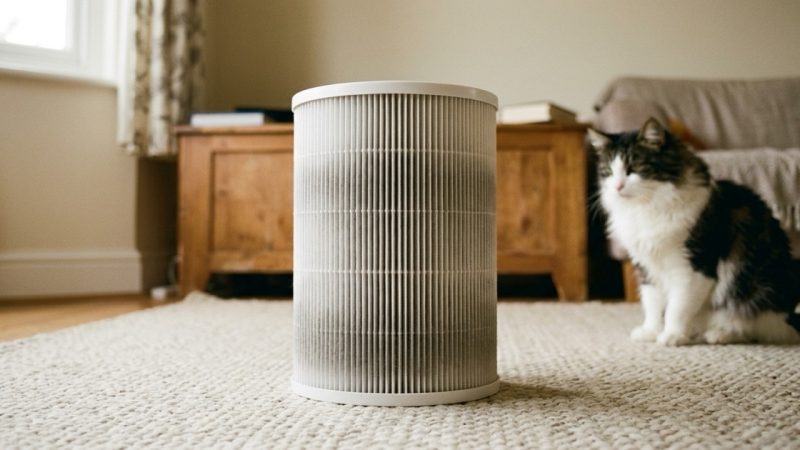
Filter your indoor air. A portable air cleaner with a HEPA filter cuts indoor PM2.5. For homes close to freight routes, a MERV-13 filter in a central HVAC system catches fine particles across the whole house.
Block the intake. Keep windows closed on the side facing a truck route during heavy traffic hours, and seal gaps around doors and windows that face the road.
Push for anti-idling rules near schools. If a school sits near a freight route or distribution hub, ask the district and local officials about idling limits, tree plantings, and air monitoring. Idling limits can be written into law and enforced.
Track the final rule. Watch whether the finished version keeps the nearly 90% NOx cut the EPA describes, and what the nonconformance penalty terms and warranty length end up being.
The trucking industry welcomed a proposal that saves it $12 billion. The savings are real, and so is the trade behind them. Whether the air near freight corridors holds as the warranty shrinks and deratements end comes down to the final rule, and to the 45 days the public has to shape it.
Sources
- EPA. ICYMI: Across the Board Coverage of the Trump EPA's Proposal to Save American Truckers Billions and Remove DEF Deratements Entirely (2026) (July 14, 2026):
- EPA. Trump EPA Unveils Proposal to Save Truckers $12 Billion by Revising Unworkable Biden-Era Rule (2026) (July 9, 2026):
- CCJ. EPA proposes to end DEF derates for good, scale back warranty requirements :
- Heavy Duty Trucking. EPA Proposal Could Ease 2027 Truck Costs and Buying Uncertainty :
- Truck News. EPA proposes tweaks to NOx rule, end of DEF deratements :
- The Republic. Rumsey: Cummins 'pleased' to see EPA rule changes for DEF systems :
- American Trucking Associations. ATA's Chris Spear Joins EPA Administrator to Announce Revised NOx Rule :
- Washington Examiner. Zeldin proposes rolling back Biden-era truck emissions rules :
- EPA, Particulate Matter (PM2.5) basics and health effects:
- EPA, Basic information about NO2 (nitrogen dioxide) and health:
Questions people ask
What did the EPA publish on July 14, 2026?
The EPA published an "ICYMI" roundup compiling media and industry coverage of its proposal to save American truckers $12 billion by ending Diesel Exhaust Fluid (DEF) deratements and revising Biden-era NOx rules. The roundup featured more than a dozen outlets and groups, including Cummins, the American Trucking Associations, CCJ, and Transport Topics. Savings could reach $6,000 per new truck.
How did the emissions warranty change?
According to CCJ, the Biden-era rule required manufacturers to extend emissions warranties to 450,000 miles from 100,000, and useful-life limits to 650,000 miles from 435,000. Truck News reported the proposal maintains the current 5-year, 100,000-mile warranty and delays the 650,000-mile useful-life requirement to 2030. Industry estimated the original requirements added upwards of $20,000 per truck.
Does the proposal weaken the NOx standard?
The EPA says no. According to the agency, the proposal keeps the underlying NOx standard, including nearly 90% of the 2023 rule's NOx reductions, and scales back the warranty requirements. Heavy Duty Trucking confirmed the 2027 NOx standard stays in place while some implementation requirements are delayed. The open question is whether a shorter warranty and the end of deratements keep as much NOx out of the air.
How would this lower grocery prices?
The argument runs through freight costs. "When it costs less to move goods, it costs less to buy them," Zeldin said, according to the Washington Examiner. Lower truck costs reduce freight costs, which the EPA says pass down to consumers on goods trucks deliver. Fox News reported the proposal would ease supply-chain costs that raise everyday prices.
How does diesel truck exhaust affect people living nearby, and how can I weigh in?
Diesel exhaust carries fine particulate matter (PM2.5), tied to asthma and heart disease, and nitrogen oxides (NOx), which irritate airways and form ozone. Exposure is highest within 300 to 500 feet of freight routes, near schools by truck corridors, and around idling zones at warehouses and ports. The public has a 45-day comment period and a public hearing to submit input.
Have questions about the environment inside your home?
Air quality, mold, EMF, light and water all shape how a house feels and how the people in it feel. Whatever your concern is, the first step is finding out what is there.
Our certified team of environmental professionals and advocates can help.