


Broken diesel emissions systems may no longer force trucks to slow down
EPA's proposal would replace today's forced slowdown with a warning light when a truck's emissions system fails, a change it says could save truckers $12 billion. Drivers could keep moving with broken pollution controls.
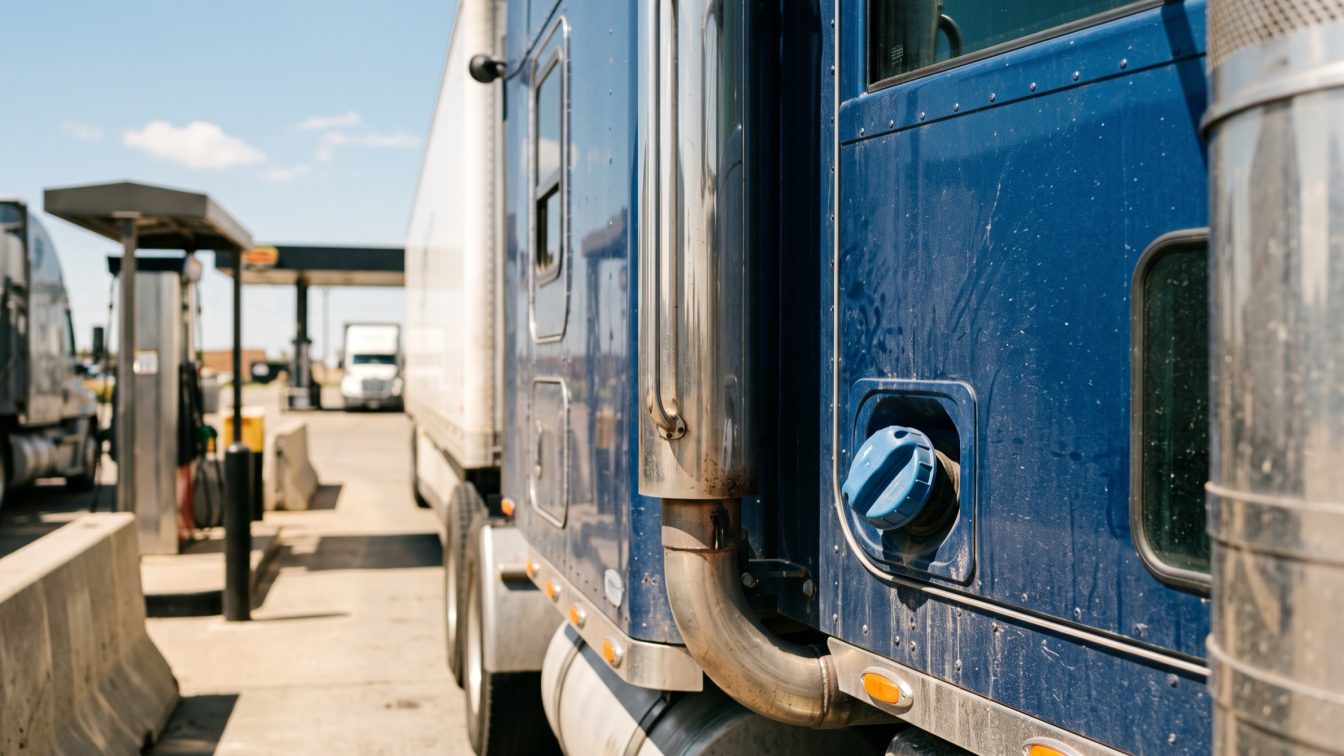
Table of contents
Summary of this article
- The EPA announced a proposal on July 9, 2026, that Administrator Lee Zeldin says will save American truckers $12 billion by revising Biden-era diesel emissions rules, with savings reaching up to $6,000 per new vehicle.
- The core change eliminates "deratements", automatic speed and power reductions triggered by Diesel Exhaust Fluid (DEF) system failures, for newly manufactured highway and nonroad engines, replacing them with visible or audible alerts.
- The EPA says the proposal maintains the underlying emission standards, including nearly 90% of the nitrogen oxide (NOx) reductions from the 2023 rule, while scaling back the emissions warranty requirements.
- The agency proposed nonconformance penalties as a temporary compliance bridge, allowing engines that cannot yet meet the new NOx standards to keep selling while manufacturers catch up.
- Diesel exhaust carries fine particulate matter (PM2.5) and NOx that concentrate near homes, schools, and freight corridors; the public has a 45-day comment period plus a public hearing to weigh in.
Diesel trucks slow themselves down when their pollution controls fail. A rule the EPA proposed on July 9, 2026 would stop that, swapping the forced slowdown for a warning light. Administrator Lee Zeldin puts the savings at $12 billion, or up to $6,000 on a new truck.
Both halves of the rule touch the same equipment: the system that strips nitrogen oxides, or NOx, out of diesel exhaust. Those parts decide how much of it reaches homes, schools and freight routes.
Why a truck slows down when the fluid system fails
Modern diesel trucks run on Diesel Exhaust Fluid, or DEF, a liquid that turns NOx into nitrogen and water before it leaves the tailpipe. Trucks need it to meet federal pollution limits.
When the DEF system fails or runs low, the truck’s software cuts engine speed and power to force a repair. Drivers call it a deratement. It can leave a loaded truck crawling down a highway or a tractor stalled in a field.
Zeldin calls those sudden speed losses a safety problem. “Americans depend on reliable trucks to move essential goods across the country,” he said. His proposal would drop deratements for newly built highway engines and for nonroad engines, farm equipment included.
A driver would instead get a light or an alarm, and could keep going until it was safe to stop and fix it.
EPA says the pollution limit itself stays
Nothing in the proposal lowers the emission standard. Nearly 90% of the NOx reductions from the 2023 rule survive it, by the agency’s own account. What gets scaled back is the emissions warranty, which the EPA calls the single largest cost that rule added for truckers.
“Once again, the Trump EPA is demonstrating that environmental protection and economic prosperity do not need to be a binary choice,” the agency said in its announcement.
That does not settle it for anyone living near truck traffic. A pollution limit only works if the equipment still works on the road. Removing the deratement removes what used to force the repair. An alert relies on the driver acting. A deratement did not.
Will a warning light keep as much NOx out of the air as a forced slowdown did? For anyone living beside a busy freight route, that is the whole rule.
Engines that miss the standard can still be sold
Truck makers, suppliers, fleets and dealerships told the EPA that the 2023 rule’s NOx targets could not be hit in time. So the agency proposed “nonconformance penalties”: a fee an engine maker pays to keep selling an engine that falls short while it works toward compliance.
Those fees preserve consumer choice and prevent supply disruptions, the EPA says, and companies are still expected to comply within a reasonable time. For the air, a nonconformance penalty lets some dirtier engines onto the road during the transition. How many, for how long, and at what NOx level decide the real effect, and those numbers sit inside the proposed rule and the comment record.
Where the exhaust actually lands
Building biology starts from source control: stop a pollutant where it begins instead of chasing it after it spreads. For a diesel truck the source is the tailpipe, and DEF is what keeps that tailpipe clean. Outdoor air moves indoors the same way red tide toxins travel inland from the coast.
Two pollutants carry the health risk, and both have a direct path into the places people live.
Fine particulate matter (PM2.5). Diesel engines throw off particles small enough to slip past the body’s defenses and settle deep in the lungs. The EPA links PM2.5 to asthma attacks, heart disease and early death.
Nitrogen oxides (NOx). NOx irritates the airways, worsens asthma, and reacts in sunlight to make ground-level ozone, another lung irritant. Every argument about deratements is an argument about NOx, because a DEF failure is a NOx-control failure.
Four places carry most of the exposure:
Homes near freight corridors. Live within roughly 300 to 500 feet of a highway or major truck route and you breathe measurably more PM2.5 and NOx. Every truck with degraded controls adds to that load, and a freight corridor concentrates hundreds or thousands of them a day.
Schools near truck routes. Children breathe faster than adults and take in more air for their size. A school beside a freight route or a distribution hub exposes them during the hours they can least avoid it.
Idling and loading zones. Warehouses, ports and distribution centers gather idling trucks. Exhaust pools there and drifts into the neighborhoods next door, which are usually the lower-income ones built closest to the freight.
Agricultural areas. Nonroad engines fall under this proposal too. Exhaust from tractors and harvesters reaches farmworkers and rural households with nothing in between.
DEF controls NOx at the source. Change how that system is maintained, or which engines can be sold while falling short, and you change what the whole diesel fleet puts into those four places.
45 days to say something
None of this is final. A 45-day public comment period and a public hearing come before the EPA decides.
That window is the leverage. Source control at the policy level happens during rulemaking, not after. Once engines are built and sold under a final rule, how they pollute is fixed for the life of the vehicle.
Clean air stays a stated goal in the agency’s own framing. “The Trump EPA is committed to making trucking safe and reliable again while protecting human health and the environment,” Zeldin said. The comment period is where the public gets to test the second half of that sentence.
What you can do
Nobody rebuilds a truck’s emissions system from their living room. You can act on your exposure, and you can act on the rule.
Submit a public comment. Ask how removing deratements changes real-world NOx, and how long nonconformance penalties would keep higher-emitting engines on the road. Those two questions are the ones the record is thin on.
Know your distance to a freight route. Within 300 to 500 feet of a highway or truck corridor, treat where you live as an elevated-exposure zone. Distance moves diesel exposure more than anything else you control.
Filter the indoor air. A portable cleaner with a HEPA filter cuts indoor PM2.5. Very close to a freight route, a MERV-13 filter in a central HVAC system catches fine particles for the whole house.
Control the intake pathway. Keep windows shut on the side facing the truck route during heavy hours, and seal the gaps around doors and windows that face the road.
Push for buffers near schools. Ask the district and local officials about anti-idling policies, vegetative buffers and air monitoring. Idling limits are enforceable and measurable, which is why they work.
Watch the final rule. Check whether it still holds the nearly 90% NOx reduction the EPA describes, and what the nonconformance terms turn out to be. Those numbers are the outcome.
Ending deratements saves truckers $12 billion and up to $6,000 a truck, and the EPA says nearly 90% of the NOx reductions stay. Whether that survives contact with the road, near the homes and schools and corridors where diesel exhaust collects, comes down to the final rule and the 45 days the public has to shape it. Air rules loosened in Washington land on a particular street, the same way who certifies a car’s emissions parts does, and the same way open burning does where nobody enforces it.
Sources
- EPA. Trump EPA Unveils Proposal to Save Truckers $12 Billion by Revising Unworkable Biden-Era Rule (2026) (July 9, 2026):
- EPA, Proposed Rule: Amendments and Nonconformance Penalties:
- EPA. EPA Administrator Zeldin Visits Iowa, Announces New EPA DEF Guidance (2025) (August 2025):
- EPA, Particulate Matter (PM2.5) basics and health effects:
- EPA, Basic information about NO2 (nitrogen dioxide) and health:
- EPA, Diesel Particulate Matter and health effects
- EPA. Administrator Zeldin Takes Additional Measures to Address Diesel Exhaust Fluid (DEF) Issues (2026) (February 2026):
Questions people ask
What did the EPA propose on July 9, 2026?
EPA Administrator Lee Zeldin announced a proposal the agency estimates will save American truckers $12 billion by revising Biden-era diesel emissions compliance rules. The centerpiece eliminates "deratements", automatic engine speed and power reductions triggered by Diesel Exhaust Fluid (DEF) system failures, for newly manufactured highway and nonroad engines. Savings could reach $6,000 per new vehicle.
What is a DEF deratement, and why does it matter for air quality?
Diesel Exhaust Fluid (DEF) is a system that converts nitrogen oxides (NOx) in diesel exhaust into harmless nitrogen and water. When it fails, the truck's software triggers a deratement, cutting speed and power to force a repair. That deratement was the mechanism that pushed drivers to fix a failed NOx-control system. The proposal replaces it with a visible or audible alert, so the effect on air depends on the driver acting.
Does the proposal weaken emissions standards?
The EPA says no. According to the agency, the proposal maintains the underlying emission standards, including nearly 90% of the NOx reductions from the 2023 rule, and scales back only the emissions warranty requirements. The open question for residents is whether an alert keeps as much NOx out of the air as a forced deratement did.
What are nonconformance penalties?
A nonconformance penalty is a fee an engine maker pays to keep selling an engine that temporarily cannot meet the new NOx standard while it works toward compliance. The EPA proposed them to prevent supply disruptions and preserve consumer choice. For air quality, they act as a bridge that allows some higher-emitting engines onto the road during the transition.
How does diesel truck exhaust affect people living nearby?
Diesel exhaust carries fine particulate matter (PM2.5) and nitrogen oxides (NOx). PM2.5 lodges deep in the lungs and is tied to asthma and heart disease; NOx irritates airways and forms ground-level ozone. Exposure is highest within 300 to 500 feet of highways and freight routes, near schools by truck corridors, and around idling zones at warehouses and ports. The public has a 45-day comment period and a public hearing to weigh in.


Have questions about the environment inside your home?
Air quality, mold, EMF, light and water all shape how a house feels and how the people in it feel. Whatever your concern is, the first step is finding out what is there.
Our certified team of environmental professionals and advocates can help.