


EPA let a trade group decide whether your car parts meet emissions rules
SEMA, the aftermarket trade association, can now certify that emissions parts meet federal rules in place of EPA's own review. That shifts a federal gatekeeping job to an industry group.
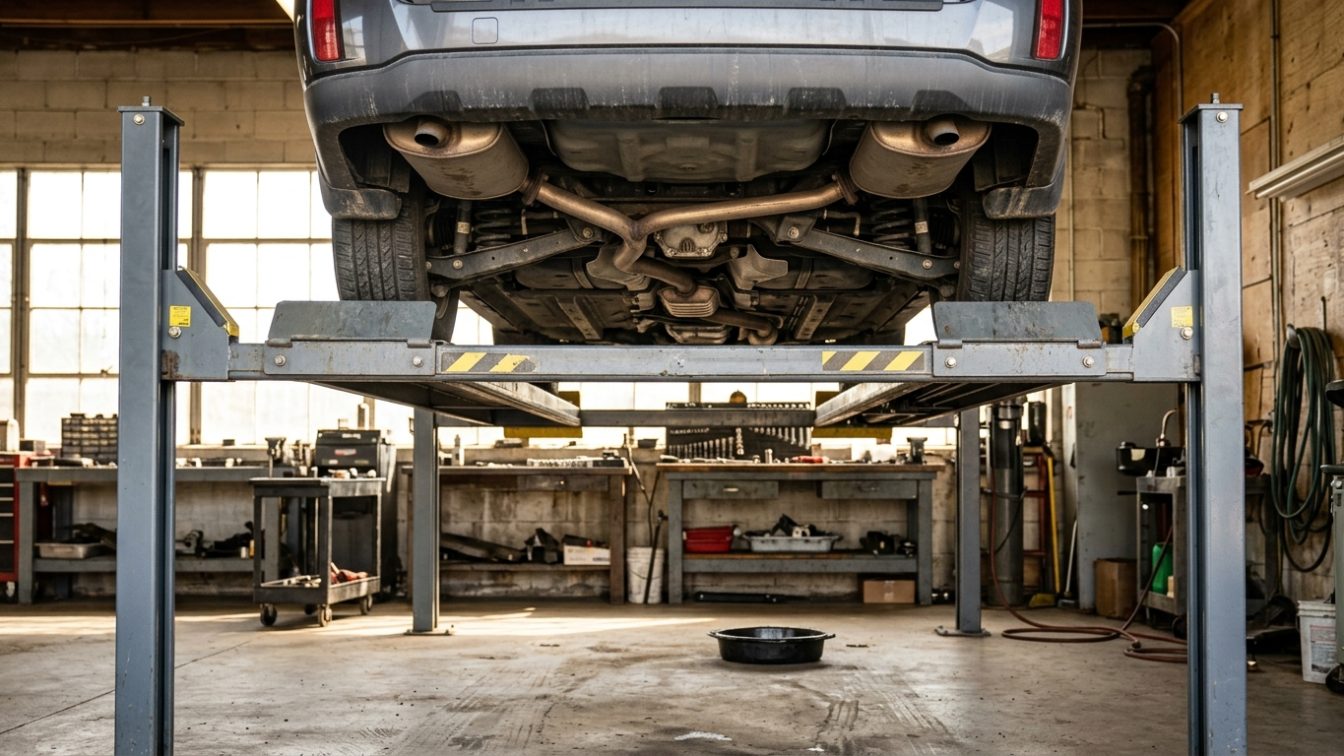
Table of contents
Summary of this article
- On July 8, 2026, the EPA confirmed it had recognized the Specialty Equipment Market Association (SEMA) as an alternative certification authority for aftermarket vehicle parts, under President Trump's "Lowering the Cost of Living by Promoting the Freedom to Fix" memorandum.
- Approved parts can now use SEMA's Certified-Emissions Program to demonstrate Clean Air Act compliance, reducing reliance on the California Air Resources Board (CARB) certification process.
- SEMA Board Chair Melanie White said the recognition "helps unlock access to sales in 49 states," a scale that determines how many drivers can legally buy these parts.
- The parts you install on a vehicle's exhaust and fuel systems directly control tailpipe emissions of fine particulate matter and nitrogen oxides, pollutants that accumulate in attached garages and near homes.
- Source control means choosing certified parts and avoiding emissions "delete" devices; a certified part is engineered to hold emissions within Clean Air Act limits, while an uncertified one can raise them.
On July 8, 2026, the EPA confirmed a change to how aftermarket vehicle parts get certified for emissions. The agency recognized the Specialty Equipment Market Association, known as SEMA, as an alternative certification authority. Approved parts can now use SEMA’s Certified-Emissions Program to show they comply with the Clean Air Act.
The move followed President Trump’s June 2026 memorandum, “Lowering the Cost of Living by Promoting the Freedom to Fix.” EPA Administrator Lee Zeldin took the action on July 1, 2026, reducing reliance on the California Air Resources Board (CARB) certification process for aftermarket products.
That sounds like a bureaucratic reshuffle. It is not only that. The parts a driver bolts onto a car’s exhaust and fuel systems decide how much pollution comes out the tailpipe, and that pollution reaches the air in garages, driveways, and homes near busy roads. This change alters who verifies those parts are clean.
Here is what the rule actually does, how vehicle emissions reach the spaces where you live, and how to choose parts that control the problem at its source.
What “aftermarket certification” means in plain English
An aftermarket part is any component made by a company other than the vehicle’s original manufacturer. Think replacement catalytic converters, exhaust systems, fuel injectors, air intakes, and performance upgrades.
Some of those parts touch a car’s emissions systems directly. A catalytic converter, for example, chemically breaks down harmful exhaust gases before they leave the tailpipe. Swap in a poorly made or non-compliant version, and the car can release far more pollution than it did before.
That is why emissions certification exists. Certification is a formal check that a part does not increase a vehicle’s emissions beyond legal limits. Before this change, manufacturers often leaned on the California Air Resources Board process, CARB, as the reference standard, because California sets the strictest vehicle emissions rules in the country and many states follow its lead.
The EPA’s action gives manufacturers a second path. SEMA’s Certified-Emissions Program can now serve as proof of Clean Air Act compliance. “The EPA has verified what SEMA for years has told regulators at the state and federal levels: that the automotive aftermarket industry has a precise mechanism to support emissions testing compliance with federal laws,” SEMA CEO Mike Spagnola said.
The scale: 49 states
The reach of this change is specific. SEMA Board Chair and Hellwig Products CEO Melanie White said the recognition “helps unlock access to sales in 49 states, providing greater clarity and confidence for manufacturers, retailers, and consumers alike.”
Forty-nine states is the number to hold onto. It means the SEMA certification path applies almost nationwide, with California, which runs its own CARB process, standing apart.
For a consumer, that scale cuts two ways. It gives part makers a faster, cheaper route to market, which the EPA and industry groups say lowers costs and expands choice. It also shifts the reference standard for what counts as a clean part away from CARB, the strictest emissions regulator in the country, toward an industry-run program. The health question is whether the parts that reach 49 states hold emissions to the same real-world limits.
How vehicle emissions reach the air in your home
Building biology studies how the built environment affects human health. Its first principle is source control: stop a pollutant where it originates instead of managing it after it spreads. For vehicle emissions, the source is the tailpipe, and the part on the exhaust system decides what comes out of it.
Two pollutants matter most, and both have direct exposure pathways into homes.
Fine particulate matter (PM2.5). These are microscopic particles small enough to bypass the body’s defenses and lodge deep in the lungs. The EPA links PM2.5 to asthma attacks, heart disease, and premature death. Diesel and gasoline engines both produce it, and a compromised emissions system produces more.
Nitrogen oxides (NOx). These gases form when engines burn fuel at high temperatures. NOx irritates the airways, worsens asthma, and reacts in sunlight to form ground-level ozone, a lung irritant. The EPA noted that even its separate heavy-duty truck proposal preserves “nearly 90% of the nitrogen oxide (NOx) reductions”, a signal of how central NOx control is to clean-air policy.
The exposure pathways are close to home in the most literal sense:
Attached garages. When you start a cold engine in an attached garage, exhaust pollutants seep through shared walls and doorways into living space. A cold start is when a car emits the most, and a compromised catalytic converter makes that worse. This is the single most direct pathway from tailpipe to lungs.
Driveways and idling. A car idling in a driveway sends exhaust toward windows, doors, and outdoor living areas. Children playing nearby breathe it at a lower height, closer to the tailpipe.
Homes near busy roads. People who live within about 300 to 500 feet of heavy traffic face measurably higher exposure to PM2.5 and NOx. Every vehicle with a degraded emissions system adds to that load.
The link between policy and lungs is direct. A rule that governs which aftermarket parts reach the road governs, in aggregate, how much of these pollutants the vehicle fleet emits into the spaces where people live.
The “delete” problem this does not fix
There is a distinction worth drawing clearly. The EPA’s action recognizes a certification path for compliant parts. It does not legalize illegal ones.
Emissions “delete” devices, parts sold to disable or remove a vehicle’s pollution controls, remain illegal under the Clean Air Act. These include catalytic converter delete pipes and software tunes that shut off emissions equipment. A single diesel truck with its controls deleted can emit particulate matter and NOx many times above the legal limit, releasing the pollution of dozens of compliant vehicles. Cardiologists have started counting the exposures too, since environmental toxins are driving a heart disease crisis. Ratings can mislead the same way, since the 99.97% on the box is the filter’s worst score. The number you read may not describe your block: the 9.0 on your monitor was written about the air over a region. Counts can come from a single instrument, the way a pollen number is read off one roof.
Certified parts are the opposite of delete devices. A SEMA Certified-Emissions part, like a CARB-certified one, is engineered and tested to keep a vehicle’s emissions within Clean Air Act limits. The certification is the proof that the part controls pollution rather than defeating it.
For a consumer focused on the air in a garage or near a home, that distinction is the whole game. The label on the box tells you whether the part is a source-control device or a source-of-pollution device.
Where the debate sits
Industry groups welcomed the change without reservation. John Bozzella, president and CEO of the Alliance for Automotive Innovation, said the White House memorandum “should end the confusion and controversy around automotive repair once and for all.” SEMA and its member companies described a faster, clearer path to market for small manufacturers. The bigger move is upstream of any single rule: the administration is rescinding the finding that made CO2 regulation possible.
The health consideration is the counterweight. CARB has historically set the most stringent vehicle emissions standards in the United States, and many states adopt them precisely because they deliver measurable air-quality gains. Shifting the reference standard toward an industry-administered program raises a real question about whether real-world emissions stay as tightly controlled. The EPA’s own framing, recognizing SEMA “to show compliance with the Clean Air Act and verify that approved aftermarket parts do not negatively impact vehicle emissions”, keeps the Clean Air Act as the legal floor. The practical test will be whether certified parts hold that floor on the road, not just on paper.
For the individual driver, the policy debate does not have to be settled to act. The controllable variable is the part you choose.
What you can do
Source control is a decision made at the parts counter. These steps put it in your hands.
Buy parts with a documented emissions certification. Look for a SEMA Certified-Emissions marking or a CARB Executive Order (EO) number on the part or its packaging. Both indicate the part was tested to keep emissions within legal limits. Keep the documentation.
Never install an emissions “delete” device. Catalytic converter deletes, EGR deletes, and tuner software that disables pollution controls are illegal under the Clean Air Act and sharply increase the pollutants that reach your garage and driveway.
Prioritize the catalytic converter. If you replace one, a certified converter is the most important single part for controlling PM2.5 and NOx. A cheap, uncertified converter can fail quickly and let emissions climb.
Protect the garage pathway. Never let an engine idle in an attached garage, even with the door open. Back the car out first, then let it warm. Seal and weatherstrip the door between the garage and the house to block exhaust migration.
Keep the system maintained. A well-tuned engine with functioning emissions controls emits far less than a neglected one. Address check-engine lights tied to emissions codes promptly.
Match the standard where you live. If your state follows California’s rules, a CARB EO number ensures the part is legal there. In the other 49-state market, confirm the part carries valid emissions certification before you install it.
The EPA changed who certifies aftermarket emissions parts across 49 states. What it did not change is the physics: the part on your exhaust decides what comes out of the tailpipe, and that air ends up in your garage, your driveway, and your lungs. The certification on the box is your source control. Read it before you buy. The same agency moved on diesel. A proposal would let trucks keep running with a failed emissions system.
Sources
- EPA. What They Are Saying: U.S. Leaders, American Automakers and Consumers Cheer EPA's Implementation of President Trump's 'Freedom To Fix' Memo, Greenlighting SEMA's Certification of Aftermarket Products (2026) (July 8, 2026):
- EPA. EPA Implements New Freedom to Fix Presidential Memorandum, Gives SEMA Greenlight to Certify :
- The White House. Lowering the Cost of Living by Promoting the Freedom to Fix presidential memorandum:
- EPA, Particulate Matter (PM2.5) basics and health effects:
- EPA, Nitrogen oxides (NOx) and health:
- California Air Resources Board, aftermarket parts and Executive Order certification
- Specialty Equipment Market Association (SEMA), SEMA Certified-Emissions Program:
Questions people ask
What did the EPA actually do on July 8, 2026?
The EPA confirmed it had recognized the Specialty Equipment Market Association (SEMA) as an alternative certification authority for aftermarket vehicle parts. Approved parts can now use SEMA's Certified-Emissions Program to demonstrate Clean Air Act compliance. The action, taken by Administrator Lee Zeldin on July 1, 2026, followed President Trump's "Freedom to Fix" memorandum and reduces reliance on the California Air Resources Board (CARB) process.
Does this make illegal "delete" parts legal?
No. Emissions "delete" devices, parts that disable or remove a vehicle's pollution controls, remain illegal under the Clean Air Act. The EPA's action recognizes a certification path for compliant parts that keep emissions within legal limits. It does not authorize parts designed to defeat emissions controls.
How do aftermarket parts affect the air near my home?
Parts on a vehicle's exhaust and fuel systems control tailpipe emissions of fine particulate matter (PM2.5) and nitrogen oxides (NOx). These pollutants accumulate in attached garages during cold starts, drift from idling cars in driveways, and reach homes near busy roads. PM2.5 lodges deep in the lungs and is tied to asthma and heart disease; NOx irritates the airways and forms ground-level ozone.
How do I know if an aftermarket part is emissions-compliant?
Look for a SEMA Certified-Emissions marking or a CARB Executive Order (EO) number on the part or its packaging. Both indicate the part was tested to keep a vehicle's emissions within legal limits. Keep the documentation. If your state follows California's rules, a CARB EO number confirms the part is legal there.
Why does the "49 states" number matter?
SEMA Board Chair Melanie White said the recognition "helps unlock access to sales in 49 states." That scale determines how widely the SEMA certification path applies, almost nationwide, with California running its own CARB process separately. It shifts the reference standard for a clean part toward an industry-run program across most of the country.

Have questions about the environment inside your home?
Air quality, mold, EMF, light and water all shape how a house feels and how the people in it feel. Whatever your concern is, the first step is finding out what is there.
Our certified team of environmental professionals and advocates can help.