


Florida leprosy cases are rising, and armadillos may be part of why
Florida recorded 36 leprosy cases in 2025, up from 8 in 2022, and health officials say people can catch the disease by touching an armadillo or soil around its burrow. That puts a familiar backyard animal at the center of the rise.
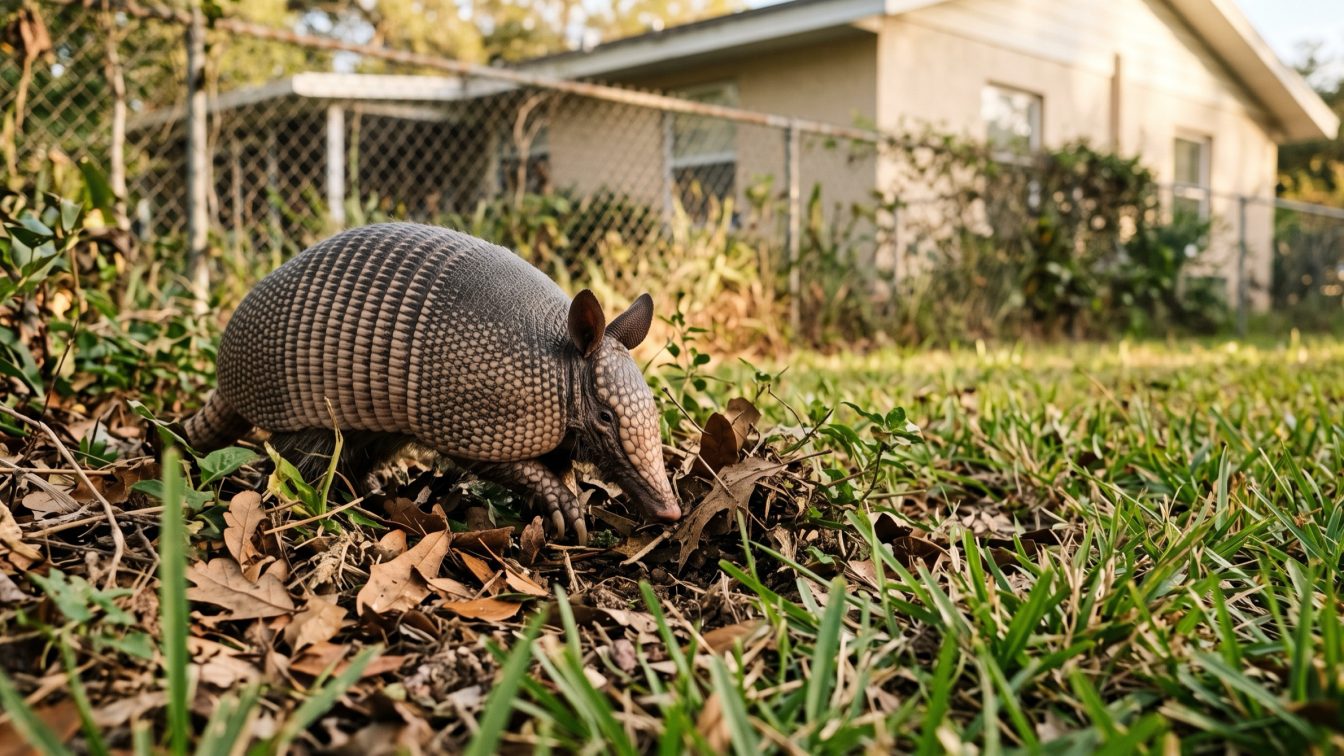
Table of contents
- The case count, year by year
- Why the numbers are climbing
- The exposure pathway: armadillos, carcasses, and burrow soil
- The built edge: why human-wildlife contact is rising
- The reassuring math: immunity and cure
- The warning signs: what to watch for
- The practical fix: avoidance and an honest medical history
- The bottom line
Summary of this article
- Reported leprosy cases in Florida rose from 8 in 2022 to 23 in 2023, 20 in 2024, and 36 in 2025. As of July 18, 2026, the state had already recorded 17 cases, with more expected.
- Armadillos are the likely link. The animals carry Mycobacterium leprae, the bacteria that causes leprosy, also known as Hansen's disease.
- The exposure pathway is direct contact: touching the animal, handling its carcass, ingesting it, or disturbing soil from its burrows, said Dr. Norman Beatty of the University of Florida.
- The rising count does not necessarily mean more people are getting infected. Growing awareness over the past 20 years has surfaced cases that were previously misdiagnosed, Beatty said.
- About 95% of people are naturally immune to leprosy, according to the U.S. Health Resources and Services Administration. The disease is curable with antibiotics.
- Early signs are red lesions on the skin, usually on the abdomen and limbs, with decreased sensation at the infection site.
- The disease mimics many other skin conditions, so it is often missed, said Dr. Sally Alrabaa of the University of South Florida. Tell your dermatologist about any recent contact with nature or animals.
- The practical defense is avoidance and awareness: do not touch armadillos, their carcasses, or their burrow soil, and report symptoms early.
Florida recorded 36 leprosy cases in 2025, up from 8 in 2022. That is more than a fourfold increase in three years. The likely link is an animal many Floridians see in their own yards: the armadillo.
Armadillos carry Mycobacterium leprae, the bacteria that causes leprosy, also known as Hansen’s disease. Most of the cases in the north and central parts of the state trace back to direct contact with the animal or its habitat, said Dr. Norman Beatty, an associate professor at the University of Florida.
The headline number reads like a crisis. The doctors tracking it say the truth is more complicated, and far less frightening, than the count alone suggests.
The case count, year by year
The trend is clear and steady. Florida reported 8 leprosy cases in 2022, 23 in 2023, 20 in 2024, and 36 in 2025. As of July 18, 2026, the state had already logged 17 cases, according to state health data.
More cases are still being reported for the year. Because of that, this year’s total will likely be higher than last year’s, Beatty said.
A rising number normally signals a spreading disease. Here, the explanation is different, and it changes how you should read the data.
Why the numbers are climbing
More reported cases does not necessarily mean more people are getting infected, scientists say. It means more cases are being found.
Awareness of leprosy and how it spreads has grown significantly over the past 20 years. That growth has surfaced infections that were previously overlooked. “We have a clinic here in Gainesville focused on leprosy, and we are identifying new cases each month that have otherwise been either misdiagnosed or they’ve been having signs and symptoms for years,” Beatty said.
In other words, part of the increase reflects better detection, not a runaway outbreak. Cases that once slipped through the cracks are now being caught and counted.
The exposure pathway: armadillos, carcasses, and burrow soil
Most armadillos in Florida are not infected. But the ones that carry the bacteria can pass it to humans through direct contact, and the routes are specific.
The risk comes from handling the animal, touching its carcass, ingesting it, or disturbing the soil it has been burrowing in. “To stay safe, you would want to avoid directly touching the animal, its carcass or ingesting the animal, as well as avoiding soil that the animal could have been burrowing in or disrupting,” Beatty said. “That’s really the best way someone can prevent transmission here in Florida.”
That last route matters more than it sounds. Armadillos dig extensively, and the bacteria can linger in the soil they disturb. Gardening, landscaping, and yard work near active burrows all become potential contact points.
Geography narrows the risk further. Most Florida cases come from the north and central parts of the state. A case in Manatee County is the only one reported so far in the greater Tampa Bay region. Exposure that arrives through the ground is not unusual; lead paint dust works the same way indoors.
The built edge: why human-wildlife contact is rising
The exposure pathway sits at the boundary between developed land and wild habitat. As neighborhoods expand into former wildlife territory, the distance between people and armadillos shrinks.
Armadillos adapt well to suburban yards, golf courses, and roadsides. They dig for insects in lawns and gardens, and they nest under sheds, decks, and foundations. Each of those contact points is a place where a person and an infected animal, or its disturbed soil, can meet.
This is the practical core of habitat at the built edge. The bacteria is not new, and neither are armadillos. What changes is how often human routines, digging in a flower bed, clearing brush, moving a dead animal off the driveway, intersect with an animal that carries a treatable but serious pathogen.
Understanding the source lets you control the exposure. You cannot remove every armadillo from the landscape, but you can control how you interact with them and the ground they disturb.
The reassuring math: immunity and cure
The disease is serious, but two facts limit its reach.
First, most people cannot catch it. About 95% of people are naturally immune to leprosy, according to the U.S. Health Resources and Services Administration. The disease affects the skin and the nerves, but the large majority of the population will never develop it even after exposure.
Second, it is curable. Leprosy is treated and cured with antibiotics. Caught early, treatment stops the disease before it causes lasting nerve damage. Contact with soil is one route among several, and PFAS reaches people through drinking water.
“We truly want to demystify this disease and recognize that it’s another infectious disease here in our state that we can treat and recognize as being present,” Beatty said. The gravity lies not in the risk of catching it, but in the risk of missing it.
The warning signs: what to watch for
Early detection depends on recognizing the symptoms, and they are easy to overlook. The first signs of leprosy are red lesions on the skin, usually on the abdomen and limbs, Beatty said.
The hallmark sign is different from a typical rash. It is decreased sensation at the site of the infection. A patch of skin that looks discolored and also feels numb is the signature clue that separates leprosy from ordinary skin conditions.
That overlap with other conditions is exactly why the disease gets missed. “Because it’s rare and because it mimics so many other skin conditions, the diagnosis can be missed,” said Dr. Sally Alrabaa, a professor of infectious disease at the University of South Florida.
The practical fix: avoidance and an honest medical history
Two actions protect you: control the source, and give your doctor the full picture. What lands in a house tends to stay there, which is why indoor pesticide residue builds up year on year.
Source control is straightforward. Do not touch armadillos, living or dead. Do not handle their carcasses with bare hands. Avoid disturbing soil around active burrows, and wear gloves for yard work in areas where armadillos are active. Never handle or consume the animal.
The second action is about diagnosis. Because leprosy mimics common skin problems, your doctor needs your context to catch it. People should pay attention to any reactions after interacting with nature, Alrabaa said, and bring that history to their provider.
“Being out and about and being exposed to various animals and such, you kind of have to remember and bring it up to your dermatologist or your practitioner,” she said. Knowing the symptoms is essential for an early diagnosis and faster treatment.
The full history matters as much as the symptom. A red, numb patch of skin is a clue. That same clue, paired with “I was clearing brush near an armadillo burrow last month,” gives a dermatologist what they need to test for the right thing.
The bottom line
The case count is rising, but the risk to any individual stays low. Armadillos are the likely source, direct contact is the pathway, and 95% of people are immune. The disease is curable when caught early.
The defense is not fear. It is awareness. Keep your hands off armadillos and their burrow soil, watch for a skin patch that looks red and feels numb, and tell your doctor where you have been. Those three habits turn a rising headline into a manageable, treatable condition.
Sources
- WUSF / Health News Florida. Armadillos likely behind Florida's increasing leprosy cases, but doctors say don't worry (2026) by Joana Riva, published July 27, 2026
- Dr. Norman Beatty, associate professor, University of Florida (quoted in WUSF reporting)
- Dr. Sally Alrabaa, professor of infectious disease, University of South Florida (quoted in WUSF reporting)
- Florida Department of Health, leprosy case counts and FLHealthCharts frequency data (8 cases in 2022, 23 in 2023, 20 in 2024, 36 in 2025, 17 as of July 18, 2026)
- Florida Department of Health, Hansen's disease (leprosy) symptom information
- U.S. Health Resources and Services Administration, Hansen's disease frequently asked questions (natural immunity figure of approximately 95%)
Questions people ask
Can I catch leprosy from an armadillo in my yard?
It is possible but unlikely. Most armadillos in Florida are not infected, and about 95% of people are naturally immune, according to the U.S. Health Resources and Services Administration. Risk comes from direct contact, so avoid touching the animal, its carcass, or soil from its burrows.
How exactly does exposure happen?
Through direct contact: handling the animal, touching its carcass, ingesting it, or disturbing the soil it has burrowed in, said Dr. Norman Beatty of the University of Florida. Simply seeing an armadillo at a distance does not expose you.
Why are Florida's leprosy cases rising?
Cases climbed from 8 in 2022 to 36 in 2025, but the increase does not necessarily mean more people are infected. Growing awareness over the past 20 years has surfaced cases that were previously misdiagnosed, Beatty said.
What are the early signs of leprosy?
Red lesions on the skin, usually on the abdomen and limbs. The hallmark sign is decreased sensation at the site of the infection, a patch that looks discolored and also feels numb.
Is leprosy curable?
Yes. Leprosy, also called Hansen's disease, is curable with antibiotics. Early diagnosis leads to faster treatment and prevents lasting nerve damage.
Where in Florida are cases concentrated?
Most cases come from the north and central parts of the state. A case in Manatee County is the only one reported so far in the greater Tampa Bay region.
What should I tell my doctor if I notice symptoms?
Report any skin changes and share your recent contact with nature or animals. Because the disease mimics other skin conditions, that history helps your dermatologist reach the right diagnosis, said Dr. Sally Alrabaa of the University of South Florida.
How can I protect myself during yard work?
Do not handle armadillos or their carcasses, and avoid disturbing soil near active burrows. Wear gloves for gardening and landscaping in areas where armadillos are active, and wash your hands afterward.

Have questions about the environment inside your home?
Air quality, mold, EMF, light and water all shape how a house feels and how the people in it feel. Whatever your concern is, the first step is finding out what is there.
Our certified team of environmental professionals and advocates can help.