


Florida regulators knew sloths were dying at Sloth World and kept finding no violations
Florida's wildlife agency got a tip before a single sloth arrived, then kept returning and finding no violations while animals died. By the time an inspector visited, dozens were already dead.
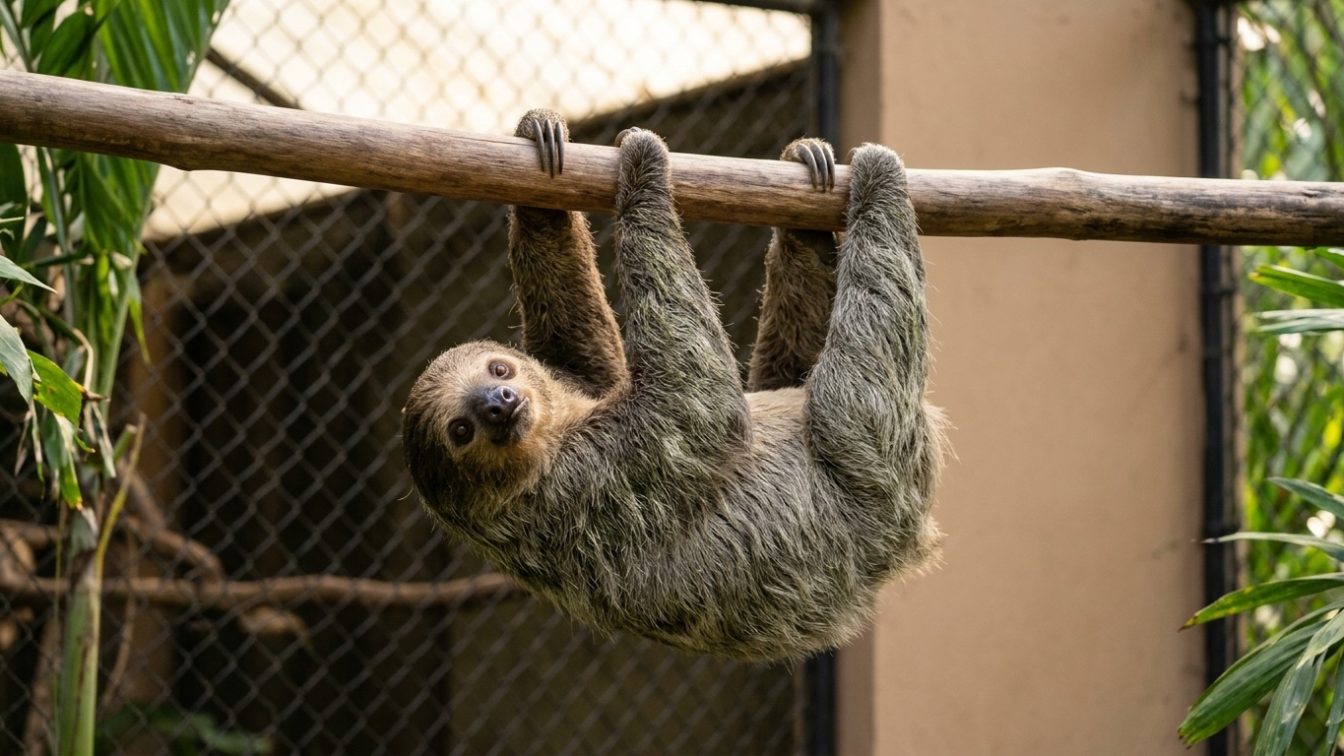
Table of contents
Summary of this article
- Florida's wildlife agency received a tip about Sloth World before a single sloth arrived, on December 9, 2024, but an inspector did not visit for eight months, by which point at least 31 sloths had died, according to WUSF reporting on records obtained by Inside Climate News.
- The first two shipments died entirely. All 21 sloths in the first shipment died after arriving at an unprepared, inadequately heated warehouse during a cold snap; the next 10 died as well. Sloths require warm temperatures and high humidity.
- The deaths kept mounting. At least 17 more sloths died between an August 2025 inspection and January 2026, even as the Florida Fish and Wildlife Conservation Commission (FWC) repeatedly found "no violations."
- Red flags were ignored. The USDA flagged "a lot of animal welfare concerns" in March 2026 but had no enforcement authority; the owner allegedly earned about $500,000 in advance ticket sales and reportedly suggested burning a sick pregnant sloth. The state issued him new permits while animals died.
- Action came only after publicity. After Inside Climate News published in April 2026, the business closed, 13 surviving sloths were transferred to a zoo, and FWC then opened a criminal investigation and tightened import rules.
The first warning arrived before a single sloth did.
On December 9, 2024, a member of the public called Florida’s wildlife agency after seeing ads for a new Orlando business called Sloth World. The caller said the owner was hiring staff and telling them the first shipment of sloths would arrive within days. An agency employee checked and found no active permits for the owner, the business, or the address. The tip was passed along to an investigator.
That investigator went to take a look eight months later, after at least 31 sloths had already died.
This is a story reported by WUSF on July 12, 2026, drawing on months of internal emails and records that Inside Climate News reporters Katie Surma and Kiley Price obtained through a public records request. It’s a hard story to read. But it’s an important one, because it lays bare a failure that building biology helps explain clearly: when you don’t control a hazard at its source, and when the rules meant to protect against it have no teeth, the harm doesn’t stay contained. It compounds.
The exposure pathway started with cold
In building biology, an “exposure pathway” is the route by which harm reaches the thing you’re trying to protect. For the sloths, the very first pathway was temperature.
Sloths are tropical animals. They are deeply sensitive to environmental change and require warm temperatures and high humidity to survive. That’s not a preference, it’s a biological requirement, a threshold below which their bodies begin to fail.
The Orlando facility was an empty warehouse, and it was not ready. An employee who arrived days before the animals were due found the building unprepared, lacking adequate heating during an unusually cold stretch in central Florida. According to records, it was already too late to cancel the shipment. The sloths arrived into a cold, unequipped space.
The outcome was catastrophic. All 21 sloths in that first shipment soon died. The 10 in the next shipment died too.
That is the exposure pathway in its starkest form: a tropical animal, a cold building, and no margin for error. The environment itself was lethal, and nothing stopped the animals from being placed into it.
Source control failed before the animals arrived
Here is where the building-biology lens sharpens the story. Source control means stopping a problem at its origin, before harm can occur. The single most powerful moment for source control in this entire timeline came and went before any sloth set foot in Orlando.
The agency knew. It had a tip on December 9, 2024. It confirmed there were no active permits. The building was an unprepared warehouse. Every ingredient of the disaster was visible or verifiable at that point.
An inspection then, before the shipment landed nine days later, could have caught the missing heating, the lack of permits, and the unready facility. That is precisely what source control looks like: intervene at the origin, and the downstream harm never happens.
Instead, the visit came eight months later. By then the pathway had already run its course, again and again. The failure wasn’t a single missed catch. It was the absence of the checkpoint that would have made the catch possible.
The rules had no teeth
If the first failure was timing, the second was design. Even when regulators did look, they concluded there was nothing they could do.
An inspector visited on August 7, 2025. He found only six surviving sloths that day, noted the facility had already lost two veterinarians in under a year, and heard the owner’s employee blame the December cold snap and a failed heating system. The inspection produced no enforcement action for the deaths.
The reasoning, laid out in the inspector’s own words, reveals the core problem: “Revocation of licenses usually involves a finding of some form of intentional mal-conduct or demonstration of an inability/unwillingness to comply with captive wildlife rules.” In other words, dozens of dead animals weren’t enough on their own. The bar for action was set at proving intent or willful non-compliance, a threshold the deaths, however grim, didn’t automatically clear.
That is a regulation without teeth. A rule that can watch 31 animals die and still find “no violations” isn’t controlling the hazard; it’s documenting it. The FWC would later state the business’s actions “did not meet the legal standard for animal cruelty” under Florida law and that “there was no legal basis for enforcement action or closure.” Whatever the legal accuracy of that position, the practical result was a system that saw the harm and let it continue.
The deaths kept mounting
A functioning safeguard stops harm. This one didn’t, and the numbers show it.
Within 10 days of the August 2025 inspection, at least two more sloths were dead. The business kept importing animals, and the body count climbed. Between that August inspection and the end of January 2026, at least 17 more sloths died, according to necropsy records.
Those records describe a slow, miserable decline: diarrhea, hair loss, excessive thirst, disorientation, a suspected back or neck injury, “suspected emaciation and weakness from stress of travel,” “severely sunken” eyes. Multiple animals carried viral infections. This is what an uncontrolled exposure pathway produces over time: a pattern of suffering that repeats with each shipment. Captive animals are not the only ones counted badly. Free-ranging cats eat nearly 2,100 species.
And still, in January 2026, investigators closed out a tip alleging the facility held roughly 80 sloths with animals dying during transport. “Please close this complaint out,” the inspector wrote, citing previously investigated issues. The crisis, in reality, was escalating.
The red flags that were waved away
By early 2026, the warnings were no longer coming from anonymous callers. They were coming from other agencies and from inside the operation.
In March 2026, officials with the USDA’s Animal Care contacted FWC saying they had “a lot of animal welfare concerns” and wanted to share information to support a state investigation. But the USDA said it had no authority to act, because the business wasn’t yet exhibiting animals to the public and didn’t hold a federal Animal Welfare Act license. This is a critical gap: the state deferred, in part, to a federal agency that couldn’t act, leaving no one holding the line.
The details the USDA passed along were alarming. According to the reporting, the owner had allegedly taken in roughly half a million dollars in advance ticket sales despite never officially opening. And a USDA veterinarian’s email relayed a chilling allegation: “He even suggested to Pete to burn a pregnant female that was not exhibiting health signs yet to get rid of the virus.” The vet’s blunt assessment: “Mr. Agresta obviously puts profit over the animals’ health and well-being.”
That financial detail matters. The roughly $500,000 in advance sales points to the true source of the harm, a business model that prioritized revenue over the animals’ basic survival needs. When profit is the driver and oversight is absent, the exposure pathway stays wide open.
Perhaps the most striking failure of source control: even as the deaths mounted, the state moved to issue the owner new permits. “It is my recommendation that after consulting with Inv. Rick Brown and Lt. Urban that we issue Agresta the permits,” an FWC official wrote on March 20, 2026. Another sloth died the next day.
The zoonotic disease risk you should understand
There’s a public-health thread running through this story that reaches beyond the animals. Multiple sloths carried viral infections, and a veterinarian had warned months earlier that pathologists suspected they might be dealing with a novel virus. FWC referred possible zoonotic disease deaths to the federal government.
“Zoonotic” means a disease that can jump from animals to people. The unregulated exotic wildlife trade, animals shipped long distances, held in poor conditions, stressed and sick, is exactly the kind of setting where such diseases can emerge and spread. An overwhelmed, uninspected facility full of sick imported animals isn’t only an animal-welfare failure. It’s a potential exposure pathway for disease into the human population. Source control at the facility protects people, not just sloths.
Action came only after the public found out
The turning point wasn’t a regulator. It was reporting. After Inside Climate News published its initial investigation on April 16, 2026, public outrage put pressure on state officials. The business shut down. Its 13 surviving sloths were transferred to a zoo.
Only then did the machinery move. FWC opened a criminal investigation, halted sloth imports for two months, and tightened its licensing requirements. Those are real steps, but they arrived after the deaths, after the publicity, and after the animals were gone. That sequence is the opposite of source control. It’s cleanup.
As Mary Hollingsworth, a Harvard animal-law expert and former Justice Department attorney, put it: “It appears that Florida state officials had the authority, the knowledge, and the opportunity to take action to protect the many sloths who had the misfortune of ending up at Sloth World.”
What this means for you
You can’t rewrite an agency’s enforcement rules on your own, but this story points to concrete actions.
Verify before you visit or buy. Before supporting any exotic-animal attraction, check whether it holds current, valid permits and licenses with your state wildlife agency and the USDA. A facility operating without them, as Sloth World initially was, is a red flag.
Understand that “no violations” isn’t a clean bill of health. As this case shows, a facility can pass inspection while animals die, if the rules set the bar at proving intent. Look for accreditation from independent bodies, not just the absence of citations.
Don’t reward the business model. Advance ticket sales funded this operation before it was ready. Withholding your money from unproven or unaccredited exotic-animal ventures removes the incentive at its source.
Support regulations with teeth. Push for rules that require pre-permit inspections, mandatory reporting of animal deaths, and enforcement triggers based on outcomes, not just proof of intent. Contact your state representatives; DeSantis’s office declined to say whether he’d back greater agency authority.
Take the disease risk seriously. The zoonotic threat from the unregulated wildlife trade is a human-health issue. Backing stronger import oversight protects communities, not only animals.
The saddest part of the Sloth World story is how avoidable it was. A tip arrived before the first animal. A checkpoint at that moment would have stopped everything downstream. Instead, the system waited, found “no violations” while the count climbed past 31, and acted only after a newspaper forced the issue. That’s a failure of source control from start to finish, and the animals paid for it.
Sources
- WUSF / Inside Climate News, Katie Surma and Kiley Price. Florida regulators stood by as dozens of sloths died, new records reveal (2026) (July 12, 2026):
Questions people ask
What was Sloth World?
Sloth World was a planned tourist attraction in Orlando, Florida, that imported dozens of sloths. According to WUSF reporting on records obtained by Inside Climate News, the facility was an unprepared warehouse where at least 31 sloths died before regulators intervened. The business shut down in April 2026 after the reporting was published.
When did Florida regulators first learn about it?
The Florida Fish and Wildlife Conservation Commission received a tip on December 9, 2024, before any sloth had arrived. An employee confirmed there were no active permits for the owner, business, or address. Despite this, an inspector did not visit the facility for eight months, by which point at least 31 sloths had died.
How many sloths died, and why?
All 21 sloths in the first shipment died after arriving at an inadequately heated warehouse during a cold snap; sloths require warm temperatures and high humidity. The next 10 also died, and at least 17 more died between an August 2025 inspection and January 2026. Necropsy records cited diarrhea, hair loss, emaciation, stress, and viral infections.
Why didn't the state take enforcement action?
The FWC repeatedly found "no violations," stating the business's actions "did not meet the legal standard for animal cruelty" and that there was "no legal basis for enforcement action or closure." An inspector noted that revoking a license usually requires proof of intentional misconduct, a threshold the deaths alone didn't automatically meet, illustrating a regulation without practical teeth.
What role did the USDA play?
In March 2026, the USDA flagged "a lot of animal welfare concerns" and offered to share information supporting a state investigation. However, the USDA said it had no authority to act because the business wasn't yet exhibiting animals publicly and didn't hold a federal Animal Welfare Act license, leaving a gap where neither agency intervened.
What happened after the story was published?
After Inside Climate News published its investigation on April 16, 2026, public pressure mounted. The business shut down, and its 13 surviving sloths were transferred to a zoo. The state then opened a criminal investigation, halted sloth imports for two months, and tightened its licensing requirements, all after the deaths had occurred.
How can I make sure an exotic-animal facility is legitimate?
Check whether the facility holds current, valid permits with your state wildlife agency and a USDA Animal Welfare Act license before visiting or buying tickets. Look for accreditation from independent organizations rather than relying on the absence of citations, since a facility can pass inspection while animals suffer. Avoid funding unproven ventures through advance ticket sales.
Have questions about the environment inside your home?
Air quality, mold, EMF, light and water all shape how a house feels and how the people in it feel. Whatever your concern is, the first step is finding out what is there.
Our certified team of environmental professionals and advocates can help.