


Free-ranging cats are killing species already at risk
Hundreds of the species cats have been documented eating are already listed as threatened or worse on the international Red List. The finding comes from 533 studies spanning more than a century.
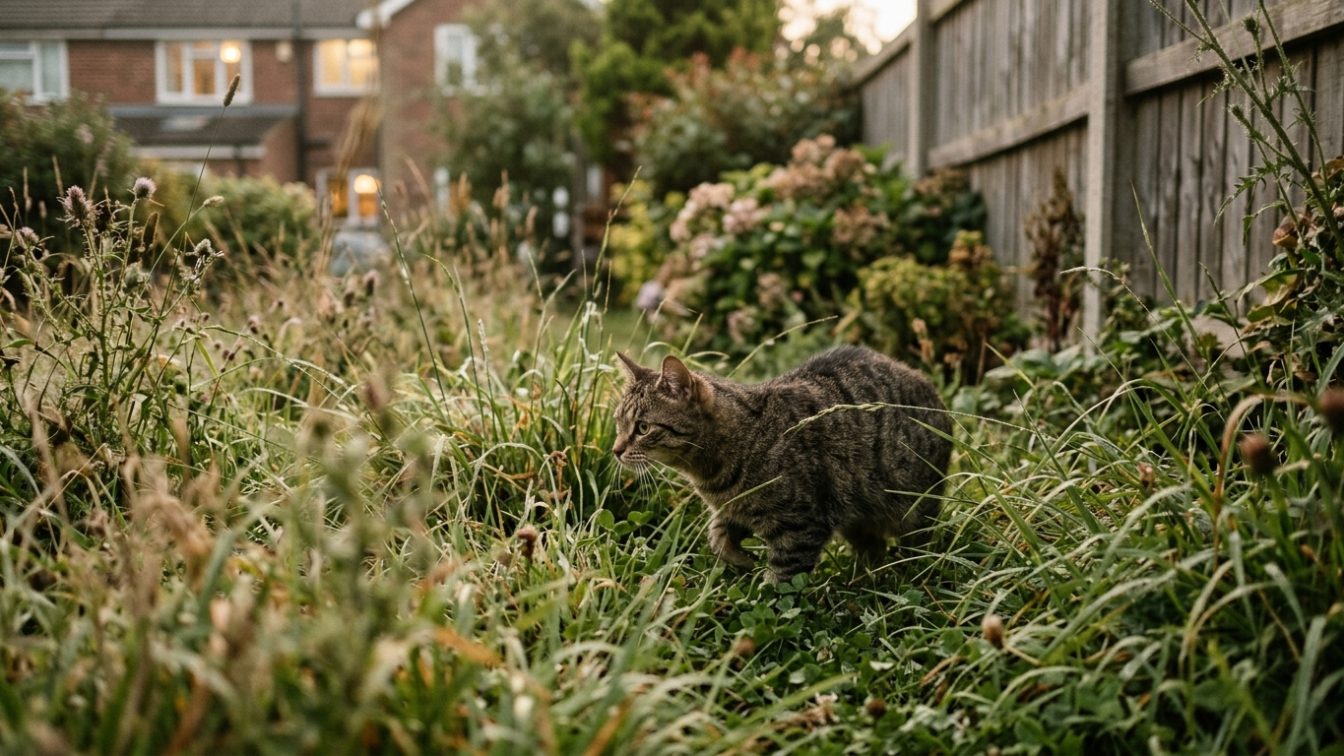
Table of contents
Summary of this article
- Free-ranging cats have been documented eating nearly 2,100 different animal species across 533 studies published over more than a century, according to biologists writing in The Conversation and their 2023 analysis.
- 347 of those species appear on the International Union for Conservation of Nature (IUCN) Red List as near threatened, vulnerable, endangered, critically endangered, or extinct.
- By share of species eaten, birds make up about 47%, reptiles 22%, mammals 20%, insects and invertebrates 5.7%, and amphibians 2.7%; at least 7% of all species eaten are insects and other invertebrates.
- Of 148 identified invertebrate species in cats' diets, two are IUCN-endangered, the Aldabran grasshopper and the Tasmanian giant freshwater crayfish, two are vulnerable (wētāpunga and the common yabby), and one is near threatened (the Canary Islands horned beetle).
- Invertebrates make up more than 70% of all terrestrial animal species and serve as pollinators and pest controllers; cats are classified as an invasive species in every ecosystem except Antarctica, which makes keeping a cat indoors a form of source control.
Free-ranging cats have been documented eating nearly 2,100 different animal species. That figure comes from biologists who reviewed 533 scientific studies published over more than a century, and it includes birds, mammals, reptiles, amphibians, and a category most people never consider: insects and other invertebrates.
The scientists, biologists studying what feral and outdoor-roaming pet cats eat, published their overall assessment in 2023 and detailed their findings in The Conversation. Of the roughly 2,100 species cats have been recorded eating, the International Union for Conservation of Nature‘s Red List classified 347 as near threatened, vulnerable, endangered, critically endangered, or extinct as of 2023. Some of those species went extinct during the decades the data covers.
The domestic cat, Felis catus, is not a native part of any wild food web. When cats live freely outdoors or are allowed to hunt beyond the home, they are an invasive species, one that now lives in every ecosystem on Earth except Antarctica. Here is what the diet data shows, why the insect finding matters for your own backyard, and what you can do about it.
What cats actually eat
The breakdown by species is more varied than the “cat catches bird” cliché suggests.
Birds account for about 47% of the species free-ranging cats eat, the largest single share. Reptiles follow at roughly 22%, and mammals at about 20%. Amphibians make up 2.7%. Insects and other invertebrates account for 5.7% of species in the main chart, and when the broader “other” invertebrate category is included, at least 7% of all species cats eat are insects and invertebrates.
That last number is the surprise. Most people picture a cat with a mouse or a sparrow. Far fewer picture a cat eating a beetle, but the data shows cats regularly consume beetles, and less frequently crustaceans, arachnids, centipedes, snails, slugs, and millipedes.
The reason is nutritional and behavioral. Cats require a large amount of protein, as much as one-third of their daily diet, and invertebrates are a ready source of it. In an urban backyard or on a remote island, a cat is unlikely to ignore available prey. Some cats hunt insects simply because chasing and catching them is entertaining, even when they do not need the calories.
The invertebrate finding, in detail
The researchers dug deeper into the invertebrate data, because invertebrates are easy to overlook and hard to study.
A little more than one-third of the studies they reviewed included invertebrates in cats’ diets, but most did not identify specific species. Part of the difficulty is physical: many invertebrates are small and soft-bodied, without the bones or distinctive features that survive in a cat’s scat or stomach contents. Even so, the team identified 148 invertebrate species that cats have eaten.
Five of those species carry a conservation status. Two are considered endangered by the IUCN: the Aldabran grasshopper (Pternoscirtus aldabrae) in the Seychelles, and the Tasmanian giant freshwater crayfish (Astacopsis gouldi), which can grow up to 13 pounds. Two are considered vulnerable: the wētāpunga (Deinacrida heteracantha), a New Zealand insect that can reach roughly the size of a mouse, and the common yabby (Cherax destructor), a freshwater crayfish native to southeastern Australia. One more, the Canary Islands horned beetle (Arhopalus pinetorum), is listed as near threatened.
The researchers were careful about what the data can and cannot prove. They found no formal research measuring how cat predation affects invertebrate populations overall, and for many species, cats are likely a smaller factor than wide-scale pesticide use. But they note it is plausible that cats contribute significantly to the deaths of rare species, or to local losses in specific places, an island, a nature preserve, or a single backyard.
Why this reaches your yard
Building biology studies how the built environment, including the yard around a home, affects health, and its first principle is source control: stop a harm where it originates rather than manage the damage after it spreads. An outdoor cat is a mobile source of predation pressure, and the pressure lands on the small animals your garden depends on.
Start with the scale of what invertebrates do. They make up more than 70% of all terrestrial animal species, and they are the pollinators, predators, and herbivores of virtually every non-marine ecosystem. In a home garden, that translates into two concrete services.
Pollination. Bees, beetles, flies, and butterflies move pollen between flowers. Without them, many fruiting and flowering plants set less fruit or none at all. A yard that loses its pollinators loses part of its harvest and its bloom.
Pest control. Predatory invertebrates, ground beetles, spiders, predatory wasps, eat the aphids, caterpillars, and grubs that damage plants. They are unpaid pest control that works continuously, and they only function when their populations are intact.
An outdoor cat sits on top of this system. It eats pollinators and pest controllers directly, and it eats the birds, reptiles, and small mammals that are themselves part of the yard’s food web. Invertebrates are already in global decline from urbanization, habitat loss, light pollution, pesticide use, and climate change. A hunting cat adds one more pressure to prey populations that are, in many places, already shrinking.
Counting what lives in a place has got easier, and a single cup of river water can now identify otters, turtles and pathogens at once. The through-line is direct. The biodiversity that makes a garden productive and self-regulating depends on small animals staying alive long enough to do their jobs. A cat allowed to roam removes some of them, and removes the labor they perform for free.
What you can do
You cannot change global pesticide use from your yard. You can control whether your own cat adds to the predation pressure on the species your garden relies on, and keep your cat safer in the process. Insects are thinning too, and North Central Florida’s monarchs have dropped 80% since 2005.
Keep your cat indoors. This is the cleanest form of source control. An indoor cat kills no wildlife and faces none of the outdoor hazards, cars, disease, predators, and poisons, that shorten an outdoor cat’s life. It is the single most effective step.
Build or buy a “catio.” An enclosed outdoor space, a screened porch, a mesh enclosure, or a purpose-built cat patio, lets a cat experience fresh air and sunlight without access to prey. It satisfies the cat’s drive to be outside while keeping the yard’s wildlife off the menu.
Cat-proof your garden fencing. Angled or roller-topped fencing keeps a cat from climbing out and keeps neighborhood cats from climbing in. This protects the invertebrates, birds, and lizards in your own yard from every roaming cat, not just your own.
Use a bell collar or a brightly colored collar cover if a cat must go out. A bell warns some prey, and high-visibility collar covers have been shown to reduce catches of birds and other animals that hunt by sight. These are partial measures, an enclosure or indoor life protects far more, but they lower the toll for a cat that already roams.
Plant a native garden. Native plants support the specific invertebrate species that evolved alongside them, giving pollinators and pest controllers the food and shelter they need to recover. A native planting rebuilds the prey base, and pairs best with keeping cats out of it entirely.
Supervise outdoor time. If your cat goes out, harness-and-leash walks or supervised sessions in a fenced yard let you interrupt hunting before it happens.
Free-ranging cats have been documented eating nearly 2,100 species, 347 of them on the IUCN Red List, and at least 7% of those species are the insects and invertebrates that keep a garden pollinated and pest-free. A house cat is a beloved pet indoors and an invasive predator outdoors. Keeping it inside, or in an enclosure of its own, protects the small, easily overlooked animals your yard runs on, and protects the cat too.
Sources
- The Conversation. Beyond birds and mice, free-ranging cats eat a surprising number of insects :
- Lepczyk et al. (2023), Nature Communications, global assessment of free-ranging cat diet (nearly 2,100 species):
- Biological Conservation (2026), invertebrates in the diet of free-ranging cats:
- IUCN Red List of Threatened Species:
- IUCN Global Invasive Species Database, Felis catus:
- Current Biology (2021), invertebrates as a share of terrestrial animal species:
- Current Biology (2023), global invertebrate decline:
- American Bird Conservancy, Cats Indoors program and keeping cats safe:
Questions people ask
How many species do free-ranging cats eat?
Biologists who reviewed 533 scientific studies published over more than a century found that free-ranging cats have been documented eating nearly 2,100 different animal species, according to their 2023 analysis reported in The Conversation. Of those, the IUCN Red List classified 347 as near threatened, vulnerable, endangered, critically endangered, or extinct as of 2023.
Do cats really eat insects?
Yes. At least 7% of the species free-ranging cats eat are insects and other invertebrates, the researchers found. Cats most commonly eat beetles, and less frequently crustaceans, arachnids, centipedes, snails, slugs, and millipedes. Cats need a large amount of protein, up to one-third of their diet, and invertebrates are a ready source, though some cats hunt insects simply for the entertainment of the chase.
Which endangered invertebrates have cats been recorded eating?
The researchers identified 148 invertebrate species in cats' diets. Two are IUCN-endangered: the Aldabran grasshopper in the Seychelles and the Tasmanian giant freshwater crayfish, which can grow up to 13 pounds. Two are vulnerable: the wētāpunga, a New Zealand insect that can reach the size of a mouse, and the common yabby, an Australian freshwater crayfish. One, the Canary Islands horned beetle, is near threatened.
How does an outdoor cat affect my garden?
Invertebrates make up more than 70% of all terrestrial animal species and serve as pollinators and pest controllers. A garden depends on them to set fruit and to keep aphids, caterpillars, and grubs in check. An outdoor cat eats pollinators, pest controllers, and the birds and lizards in the yard's food web, removing the free labor the garden runs on, and adding pressure to invertebrate populations already declining from pesticides and habitat loss.
What is the best way to protect wildlife from my cat?
Keeping your cat indoors is the most effective step, it eliminates wildlife predation and keeps the cat safer from cars, disease, and poisons. A "catio" or screened enclosure lets a cat enjoy the outdoors without access to prey. Cat-proof fencing, bell or high-visibility collars, supervised outdoor time, and a native-plant garden further reduce the toll and help prey species recover.
Have questions about the environment inside your home?
Air quality, mold, EMF, light and water all shape how a house feels and how the people in it feel. Whatever your concern is, the first step is finding out what is there.
Our certified team of environmental professionals and advocates can help.