


Federal law still skips Florida as gopher tortoises reach critical risk
Longleaf pine habitat is down to less than 3% of what it once was, and federal protection for the gopher tortoise still stops west of Florida. That leaves the state's population outside the strongest legal shield.
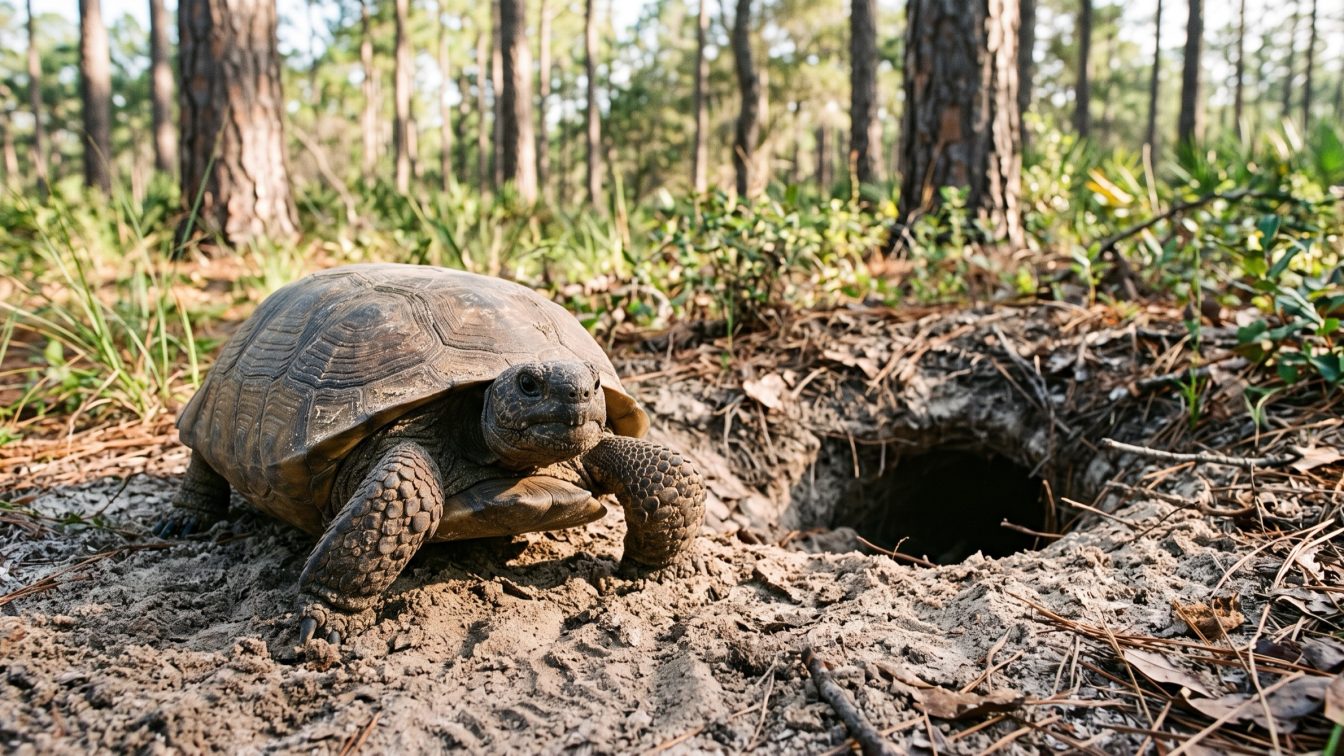
Table of contents
- What “critically endangered” actually means
- The source: less than 3% of longleaf pine remains
- Why one tortoise carries hundreds of species
- The policy pathway: rolling back protections at the worst moment
- The building-biology lens: protect the source, close the pathways
- Practical fixes for readers
- The bottom line
Summary of this article
- The International Union for Conservation of Nature (IUCN) reclassified the gopher tortoise from "vulnerable" to "critically endangered," meaning it faces an extremely high risk of extinction.
- Development has reduced the tortoise's longleaf pine habitat to less than 3% of its original expanse.
- Additional threats include invasive species, new diseases, and the fragmentation of tortoise populations into isolated pockets.
- Florida lists the gopher tortoise as "threatened." The U.S. Fish and Wildlife Service classifies it as threatened only in Louisiana, Mississippi, and western Alabama, not in Florida.
- The Trump administration removed habitat protections for endangered species at the same time the IUCN declared the tortoise's status more dire.
- Gopher tortoises are a keystone species. Their burrows shelter more than 350 other species, so their decline puts hundreds of animals at risk.
- "Habitat destruction is the number one threat to endangered [species]," said Tara Zuardo of the Center for Biological Diversity.
- The habitat-protection prohibition was upheld by the Supreme Court in a case focused on old-growth forests for spotted owls, Zuardo said.
- Practical fixes: protect and steward active burrows, support conservation easements, avoid disturbing burrow soil, and back local land-conservation efforts.
The gopher tortoise is now critically endangered. The International Union for Conservation of Nature (IUCN), a global body of conservation groups and governments, revised the animal’s status from “vulnerable” to “critically endangered,” its last category before extinction in the wild.
The reason is measurable. Development has reduced the tortoise’s longleaf pine habitat to less than 3% of its original expanse. That single number explains most of the crisis, and it points directly at the fix.
The timing sharpens the stakes. At the same moment the IUCN declared the tortoise’s outlook more dire, the Trump administration removed habitat protections for endangered species. One institution flagged the source of the problem. Another loosened the rules that guard it.
What “critically endangered” actually means
The IUCN’s categories run from “least concern” through “vulnerable,” “endangered,” and “critically endangered.” Each step signals a higher risk of extinction, and “critically endangered” is the final tier before a species disappears from the wild.
The gopher tortoise moved up two levels of concern, not one. That jump reflects a species whose losses have accelerated, not leveled off. The IUCN concluded the animal now faces an extremely high risk of extinction.
Florida’s official listing has not kept pace. The state lists the gopher tortoise as “threatened,” a lower designation than the IUCN’s global assessment. The U.S. Fish and Wildlife Service classifies the tortoise as threatened only in Louisiana, Mississippi, and western Alabama, not in Florida, where much of the population lives.
That gap matters. A species can be one step from extinction on the global scale while carrying a weaker classification in the state that holds many of its remaining burrows.
The source: less than 3% of longleaf pine remains
The gopher tortoise depends on longleaf pine habitat, the dry, sandy, open-canopy forest where it digs. That habitat is nearly gone. Development has cut it to less than 3% of its original expanse.
Think of habitat as the source. In building biology, you control a problem by controlling its source rather than chasing symptoms downstream. For the gopher tortoise, the source is the land itself. When the land vanishes, no other intervention can replace it.
Longleaf pine forest once stretched across the Southeast in a vast, open system maintained by natural fire. As roads, subdivisions, and commercial construction replaced it, the tortoise lost the ground it needs to burrow, feed, and reproduce. The 3% figure is the measurable threshold that defines how little room the species has left.
The exposure pathways compound the loss. The IUCN identified three beyond habitat destruction: invasive species, new diseases, and the fragmentation of tortoise populations.
Fragmentation is the quiet driver. As habitat breaks into disconnected patches, tortoise groups become isolated. Isolated populations lose genetic diversity, struggle to find mates, and cannot recover after a local die-off. A road through a habitat patch removes land and severs the connections a population needs to survive.
Why one tortoise carries hundreds of species
The gopher tortoise is a keystone species. Its burrows shelter more than 350 other species, from snakes and frogs to burrowing owls, gopher frogs, and countless insects. Habitat loss is not the only pressure on those tenants: free-ranging cats alone eat nearly 2,100 species.
A keystone species holds an ecosystem together the way a keystone holds an arch. Remove it, and the structure collapses. The gopher tortoise digs burrows that can reach dozens of feet long and provide refuge from heat, cold, drought, and fire for animals that cannot dig their own.
That makes the tortoise’s decline a multiplier. Losing one species does not mean losing one animal. It means removing the underground housing that more than 350 other species rely on. Protect the tortoise, and you protect the whole community that lives in and around its burrows.
The policy pathway: rolling back protections at the worst moment
Habitat destruction is the central threat, and the federal rollback strikes at the one tool built to stop it.
“Habitat destruction is the number one threat to endangered,” said Tara Zuardo of the Center for Biological Diversity. “If animals don’t have a place to live, they can’t live. Spotted owls, Atlantic salmon, Florida panthers and thousands of other species need protections for the wild places where they make their homes.”
The prohibition on habitat destruction is not a new or untested idea. Zuardo noted it was upheld by the Supreme Court in a case focused on protecting old-growth forests for spotted owls. That precedent established that harming a species’ habitat counts as harming the species itself.
The rollback reverses that logic. By narrowing what counts as harm, it opens the door for industries of all kinds to alter or destroy the places endangered species live. For a tortoise already confined to less than 3% of its original habitat, weaker land protection removes the last guardrail.
“There’s no question that destroying the places endangered species call home will harm them,” Zuardo said. “Scientists from around the world are warning we’re in an extinction crisis. Pretending this crisis doesn’t exist won’t make it go away.”
The building-biology lens: protect the source, close the pathways
The fix follows the same logic as the diagnosis. Control the source, and close the exposure pathways that feed the decline.
The source is habitat. Protecting the remaining longleaf pine, and reconnecting fragmented patches, is the single most effective action. That is a job for land managers, conservation groups, and policy, but individual choices add up, especially in a state where much of the tortoise’s range sits on or near private land.
The exposure pathways are development, invasive species, and disease. Each one has a practical counterpart:
Development fragments and removes habitat. Conservation easements, which legally protect land from future development, keep habitat intact across ownership changes.
Invasive species compete with tortoises and degrade their habitat. Removing invasive plants and never releasing exotic animals reduces that pressure.
Disease spreads more easily through stressed, crowded, and fragmented populations. Healthy, connected habitat gives populations the space to stay resilient.
Practical fixes for readers
You do not need to own a pine forest to help. Several concrete actions apply to anyone who lives near tortoise habitat.
Protect active burrows. A gopher tortoise burrow is a wide, half-moon-shaped hole with a mound of sand at the entrance. If you have one on your property, leave it undisturbed. Do not fill it, drive over it, or block the entrance. Burrows are legally protected in Florida, and a single burrow may shelter dozens of other animals.
Never disturb burrow soil or relocate a tortoise yourself. Moving a tortoise or excavating a burrow requires a permit from the Florida Fish and Wildlife Conservation Commission. Disturbing the soil around a burrow can collapse it and kill the animals sheltering inside.
Support conservation easements and land purchases. When public agencies or land trusts buy or protect longleaf pine habitat, they lock in the source the tortoise depends on. Backing local land-conservation ballot measures and land trusts directly protects habitat.
Plant and preserve native vegetation. Gopher tortoises eat low-growing native plants and grasses. Keeping native ground cover, and avoiding heavy pesticide use, supports both tortoises and the pollinators that share their habitat.
Report and advocate. If you see burrows threatened by construction, report it to the FWC. Public comment on habitat rules and support for the Endangered Species Act‘s habitat provisions carry weight, especially with the federal rollback under legal challenge.
The bottom line
The gopher tortoise moved from “vulnerable” to “critically endangered” because its habitat has been cut to less than 3% of its original size. That is the source of the crisis, and habitat is what must be protected to reverse it.
The species is not just one reptile. Its burrows shelter more than 350 other species, so its survival props up an entire underground community. The federal decision to strip habitat protections, arriving the same week the IUCN raised the alarm, removes the tool most capable of slowing the decline.
The path forward is the same one the science points to. Protect the source, close the pathways, and keep the last 3% of habitat intact. As Zuardo put it, pretending the crisis does not exist will not make it go away. Protecting the land where the tortoise lives is the only thing that can.
Sources
- WUSF / WGCU. Gopher tortoises 'critically endangered' as Trump Administration removes habitat protections for endangered species (2026) by Tom Bayles, published July 12, 2026
- International Union for Conservation of Nature (IUCN), reclassification of the gopher tortoise from "vulnerable" to "critically endangered"
- Tara Zuardo, Center for Biological Diversity (quoted in WUSF/WGCU reporting)
- Florida Fish and Wildlife Conservation Commission, gopher tortoise "threatened" listing, burrow protections, and relocation permit requirements
- U.S. Fish and Wildlife Service, gopher tortoise "threatened" classification in Louisiana, Mississippi, and western Alabama
- U.S. Supreme Court precedent upholding habitat-destruction protections in the spotted owl old-growth forest case (as cited by the Center for Biological Diversity)
Questions people ask
What does "critically endangered" mean for the gopher tortoise?
It is the IUCN's most severe category before extinction in the wild. The International Union for Conservation of Nature moved the gopher tortoise from "vulnerable" to "critically endangered," concluding it now faces an extremely high risk of extinction.
Why is the gopher tortoise declining?
The main cause is habitat loss. Development has reduced the tortoise's longleaf pine habitat to less than 3% of its original expanse. Invasive species, new diseases, and the fragmentation of populations into isolated patches add further pressure.
Is the gopher tortoise protected in Florida?
Florida lists it as "threatened," a lower designation than the IUCN's global "critically endangered" status. The U.S. Fish and Wildlife Service classifies it as threatened only in Louisiana, Mississippi, and western Alabama, not in Florida.
What did the federal government change?
The Trump administration removed habitat protections for endangered species, narrowing what counts as harm. Tara Zuardo of the Center for Biological Diversity said this reverses a precedent the Supreme Court upheld in a case protecting old-growth forests for spotted owls.
Why is the gopher tortoise called a keystone species?
Its burrows shelter more than 350 other species, including snakes, frogs, and burrowing owls. Because so many animals depend on those burrows, the tortoise's decline threatens an entire community of wildlife, not just one reptile.
What should I do if there is a burrow on my property?
Leave it undisturbed. Do not fill it, drive over it, or block the entrance. Burrows are legally protected in Florida, and moving a tortoise or excavating a burrow requires a permit from the Florida Fish and Wildlife Conservation Commission.
How do conservation easements help?
A conservation easement legally protects land from future development, keeping habitat intact even when ownership changes. Because habitat loss is the number one threat, protecting the land itself is the most effective long-term fix.
Can I move a gopher tortoise if it is in danger?
No, not without a permit. Relocating a tortoise or disturbing its burrow requires authorization from the FWC. Handling the animal or collapsing its burrow can harm both the tortoise and the other species sheltering inside.
What is the single most important number to remember?
Less than 3%. That is how much of the gopher tortoise's original longleaf pine habitat remains, and it explains why habitat protection is the deciding factor in the species' survival.
Have questions about the environment inside your home?
Air quality, mold, EMF, light and water all shape how a house feels and how the people in it feel. Whatever your concern is, the first step is finding out what is there.
Our certified team of environmental professionals and advocates can help.