


A legal label may decide whether bison can come back across the Plains
Nearly 90% of the 400,000 bison alive today are legally classified as livestock rather than wildlife. That single label shapes who manages them and where they are allowed to roam.
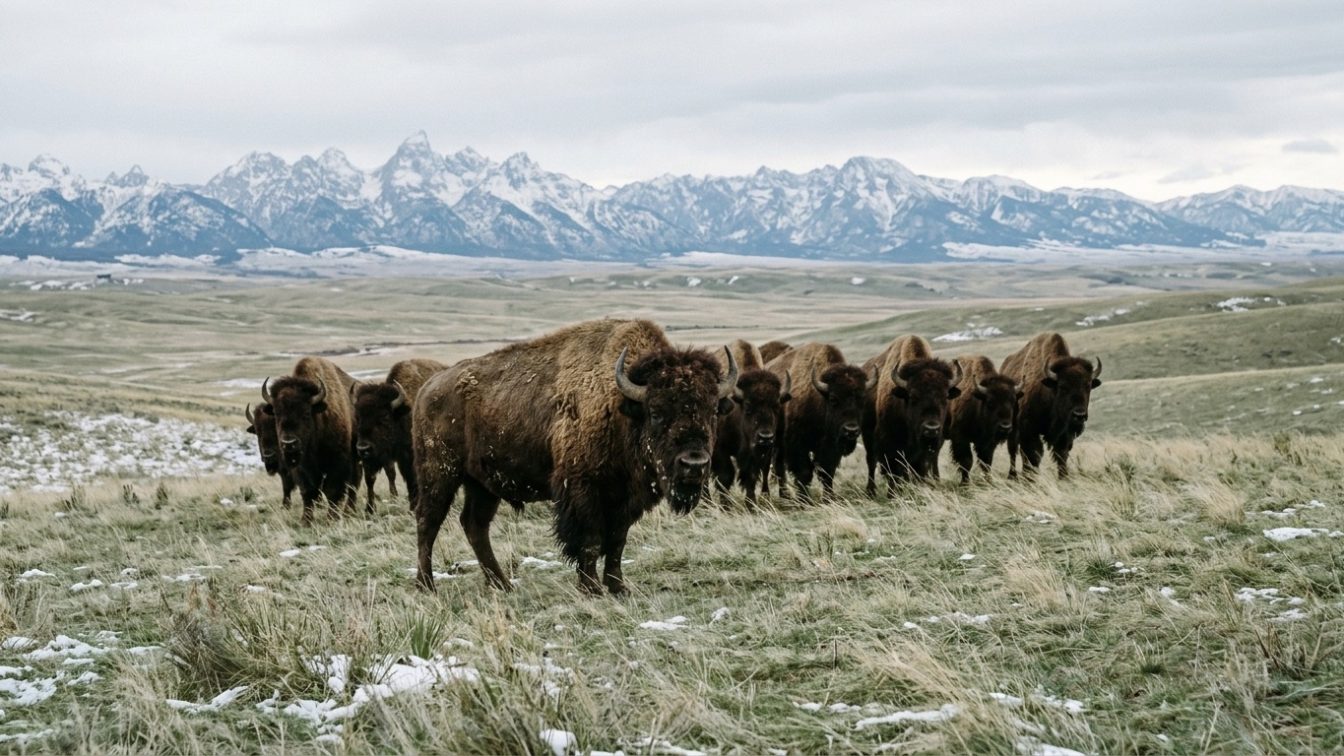
Table of contents
Summary of this article
- A single legal label, "wildlife" or "livestock", is deciding whether bison restoration can happen, according to reporting from The Conversation by political ecologists studying bison policy.
- Bison were nearly wiped out. An estimated 30 million once roamed North America; by the late 1880s, fewer than 1,000 remained after commercial hunting, disease, drought, and deliberate persecution tied to the forced assimilation of tribal nations.
- Today's classification is lopsided. About 400,000 bison exist now, but nearly 90% are legally considered livestock rather than wildlife.
- The label carries real consequences. In May 2026, the U.S. Bureau of Land Management revoked American Prairie's grazing leases for a herd of about 940 bison, ruling they were conservation animals and therefore not eligible livestock.
- Definitions are being fought over on all sides. Montana redefined "wild bison" so narrowly it effectively eliminated the category, while the Blackfeet Nation released 48 free-roaming buffalo near Chief Mountain in 2023, and more than 50 tribes filed a complaint against the BLM decision.
Picture two bison living almost identical lives on the plains of Montana, less than 50 miles apart. Both roam with the seasons. Both calve in the spring. Both stay alert for predators and forage across open grassland. To any observer, they are the same animal doing the same thing.
Yet in the eyes of the law, they are worlds apart. One is legally “wildlife.” The other is legally “livestock.” And that single distinction, not biology, not behavior, determines who manages each animal, where it can go, and whether the broader project of bringing bison back to the Great Plains can move forward at all.
That’s the heart of a policy fight now unfolding across the American West, detailed by political ecologists writing in The Conversation. For anyone who cares about wildlife, land, or how restoration actually happens, it’s a striking case study in a core building-biology idea: a definition can be a source-control lever that lets healing begin, or a barrier that blocks it before it starts.
From 30 million to fewer than 1,000
To understand why the label matters so much, you have to understand how close bison came to vanishing entirely.
Less than 200 years ago, an estimated 30 million bison roamed North America’s grasslands. They were the largest land animal on the continent and a keystone species, meaning their grazing, movement, and sheer presence shaped the entire plains ecosystem. They were also central to the ways of life of Plains Indigenous nations.
By the late 1880s, that number had collapsed to fewer than 1,000. The causes stacked together: commercial hunting, disease, drought, and deliberate persecution carried out as part of a broader effort to force tribal nations onto reservations. Killing the buffalo was, in part, a strategy to break the peoples who depended on them.
The legacies of that destruction still reverberate through Plains Indigenous communities today. But so, increasingly, does hope. Bison have recovered to about 400,000 animals across the continent. The catch is in how those animals are counted: nearly 90% of them are classified as livestock, not wildlife.
Why a definition is an exposure pathway
In building biology, an “exposure pathway” is the route by which something, a benefit or a harm, actually reaches the thing you care about. Usually that’s a physical route, like water carrying a contaminant. Here, the pathway is legal. The classification of a bison as wildlife or livestock is the route that determines whether ecological restoration reaches the land at all.
Consider what the label controls:
Who manages the animal. Wildlife falls under conservation agencies and, on federal lands, is managed as a wild population. Livestock falls under agricultural rules, private ownership, and containment requirements.
Where it can roam. A wild bison may migrate across a landscape. A livestock bison is expected to stay behind fences, contained and controlled.
What the goal is. Wildlife management aims at conservation and ecological function. Livestock management aims at production and property.
The Conversation’s authors illustrate this with the Yellowstone example. A bison inside Yellowstone National Park is wildlife, managed by the National Park Service, free to forage and migrate. When she crosses the park boundary into Montana one hard winter, she becomes a “species in need of disease management”, because Yellowstone bison can carry brucellosis, a disease that can infect cattle. Now she’s confined to a narrow tolerance zone and may be hunted. Same animal, same behavior, different legal status, entirely different fate.
That’s the pathway in action. The definition isn’t a technicality sitting on top of the biology. It is the mechanism that decides what happens on the ground.
The American Prairie decision
The stakes became concrete in May 2026, when the U.S. Bureau of Land Management revoked the grazing leases held by American Prairie, a private conservation organization working for decades to restore wild bison to the Great Plains.
The BLM’s reasoning turned entirely on classification. American Prairie’s herd of around 940 bison, the agency argued, was intended as wildlife conservation, and therefore did not qualify as “livestock production.” Federal grazing permits on public land are for livestock. If the bison weren’t livestock, they weren’t eligible. The lease was pulled.
American Prairie plans to appeal, countering that it follows all the pertinent regulations for livestock management, including containment and annual disease testing. Supporters of the revocation, meanwhile, described it as a win for rural farmers and ranchers, since it reduces competition for grazing land.
Here’s the irony that reveals how slippery the label is. American Prairie markets a vision of an “American Serengeti”, wild bison roaming free. But in practice, these animals are privately owned and managed as livestock: contained, tested, handled. Wild in rhetoric, livestock in management. The BLM used the conservation rhetoric to deny the livestock status, even as the organization insists it meets every livestock requirement.
When definitions get weaponized
The bison fight shows that if a definition controls outcomes, then whoever controls the definition controls the outcome. And people on multiple sides have figured that out.
In 2021, the Montana State Legislature redefined “wild bison” to include only animals that have never been handled and are not descended from handled animals. Because nearly every bison alive today descends from the small handful of herds that survived the near-extinction, all of which were managed at some point, this definition effectively erased the category. As a former state wildlife official put it, lawmakers “defined wild bison out of existence.” The same laws gave county commissioners the power to veto wildlife reintroductions. A legal label decides protection elsewhere too, and the gopher tortoise just moved to critically endangered.
That move was designed to stop private groups from reintroducing bison as wildlife. Yet notice the whipsaw: Montana’s rule says the bison are too tame to be wild, while the federal BLM decision says American Prairie’s bison are too wild to be productive livestock. An animal can be squeezed out from both directions at once, too wild for one label, not wild enough for the other, with restoration losing either way.
This is the opposite of source control. Instead of using a clear definition to enable ecological recovery at its root, the definitions are being manipulated to block it.
A different way of seeing
Not everyone accepts that the wildlife-versus-livestock choice is the right question in the first place.
Many Native American tribes, including the Blackfeet Nation, formally recognize bison as wildlife, but also challenge the binary itself. In Blackfoot worldviews, the buffalo, or “iinnii,” is both food and kin, a returning relative rather than a resource to be filed under one legal heading. That perspective reframes restoration not as a management category but as repair of a broken relationship.
And it produces action. In 2023, in a culmination of decades of grassroots advocacy, the Blackfeet Nation released a herd of 48 buffalo near Chief Mountain (Ninnaastako), a culturally significant site, the first bison to roam freely on Blackfoot territory in more than 150 years. It’s a real-world demonstration that restoration can happen when the people leading it aren’t trapped by the livestock-or-wildlife bind.
The ripple effects of the BLM decision reach into this work too. An organization representing more than 50 tribes has filed a complaint against the revocation, arguing it threatens not only bison restoration but the growing movement toward tribal-federal co-stewardship of shared lands.
The measurable thresholds that tell the story
The bison debate runs on numbers, and they map the whole trajectory:
30 million bison before the collapse, the baseline of a functioning plains ecosystem.
Fewer than 1,000 by the late 1880s, the near-extinction low point.
400,000 today, real recovery, but far from restoration.
Nearly 90% classified as livestock, the measure of how thoroughly the legal label shapes what these animals are allowed to be.
~940 bison in the herd whose leases were revoked, and 48 released at Chief Mountain, the concrete stakes of individual restoration efforts.
Watching these figures is how you track whether restoration is advancing or stalling. And the 90% livestock figure is the key one: it shows that recovery in raw numbers hasn’t translated into ecological restoration, because most bison remain legally penned into the “livestock” category that keeps them contained and off the wild landscape.
What this means for you
You don’t have to live near the plains to draw practical lessons from the bison fight.
Watch the definitions, not just the headlines. The real decisions often hide in how a word like “wildlife,” “harm,” or “livestock” is defined. When you follow a conservation issue, ask who controls the definition, because that’s usually who controls the outcome.
Support co-stewardship and tribal-led restoration. The Chief Mountain release shows what happens when restoration is led by those with a direct relationship to the land and the animals. Backing tribal-federal co-stewardship protects a proven pathway to recovery.
Engage in local land-use decisions. Montana’s law let county commissioners veto reintroductions. Local rules shape whether restoration can happen near you, and public input still matters at that level.
Look for the source-control question. Recovery in numbers isn’t the same as restoration on the land. Ask whether a policy actually removes the barrier to ecological function, or just manages the animals in place.
The bison came back from the edge once, saved by an unlikely coalition of ranchers, conservationists, tribes, and even business moguls. Whether they truly return to the Great Plains now depends less on biology than on a word. Get the definition right, and restoration has a path. Get it wrong, or let it be defined out of existence, and 400,000 recovered animals can still be kept from ever becoming a wild, functioning part of the landscape again.
Sources
Questions people ask
Why does it matter whether bison are classified as wildlife or livestock?
The classification determines who manages the animals, where they're allowed to roam, and what the management goal is. Wildlife is managed for conservation and can migrate; livestock is privately owned, contained behind fences, and managed for production. According to The Conversation, this single label effectively decides whether ecological restoration can happen at all.
How close did bison come to extinction?
An estimated 30 million bison once roamed North America's grasslands. By the late 1880s, fewer than 1,000 remained, after a combination of commercial hunting, disease, drought, and deliberate persecution carried out as part of efforts to force tribal nations onto reservations.
What happened with American Prairie's grazing leases?
In May 2026, the U.S. Bureau of Land Management revoked American Prairie's grazing leases for a herd of about 940 bison. The BLM argued that because the herd was intended for wildlife conservation, it didn't qualify as "livestock production" and was therefore ineligible for federal grazing permits, which are for livestock. American Prairie plans to appeal.
What did Montana do to the definition of "wild bison"?
In 2021, the Montana Legislature redefined "wild bison" to include only animals that have never been handled and aren't descended from handled animals. Because virtually all living bison descend from managed herds that survived near-extinction, this effectively eliminated the category, one former official said it "defined wild bison out of existence." The laws also let county commissioners veto wildlife reintroductions.
What did the Blackfeet Nation do at Chief Mountain?
In 2023, the Blackfeet Nation released a herd of 48 buffalo near Chief Mountain (Ninnaastako), a culturally significant site. They were the first bison to roam freely on Blackfoot territory in more than 150 years, marking a major milestone in tribal-led restoration.
How are tribes responding to the BLM decision?
An organization representing more than 50 tribes filed a complaint against the BLM's revocation of American Prairie's grazing leases, arguing that it threatens not only bison restoration but also the growing movement toward tribal-federal co-stewardship of shared lands.
Have questions about the environment inside your home?
Air quality, mold, EMF, light and water all shape how a house feels and how the people in it feel. Whatever your concern is, the first step is finding out what is there.
Our certified team of environmental professionals and advocates can help.