


Any Mold You Can See Is Already Past the First Band of Concern
No federal limit exists for mold or its spores, so no lab result can tell you a house passed. What a test can do is compare one room against outdoor air on the same day, and the cheapest instrument in this subject is your nose.
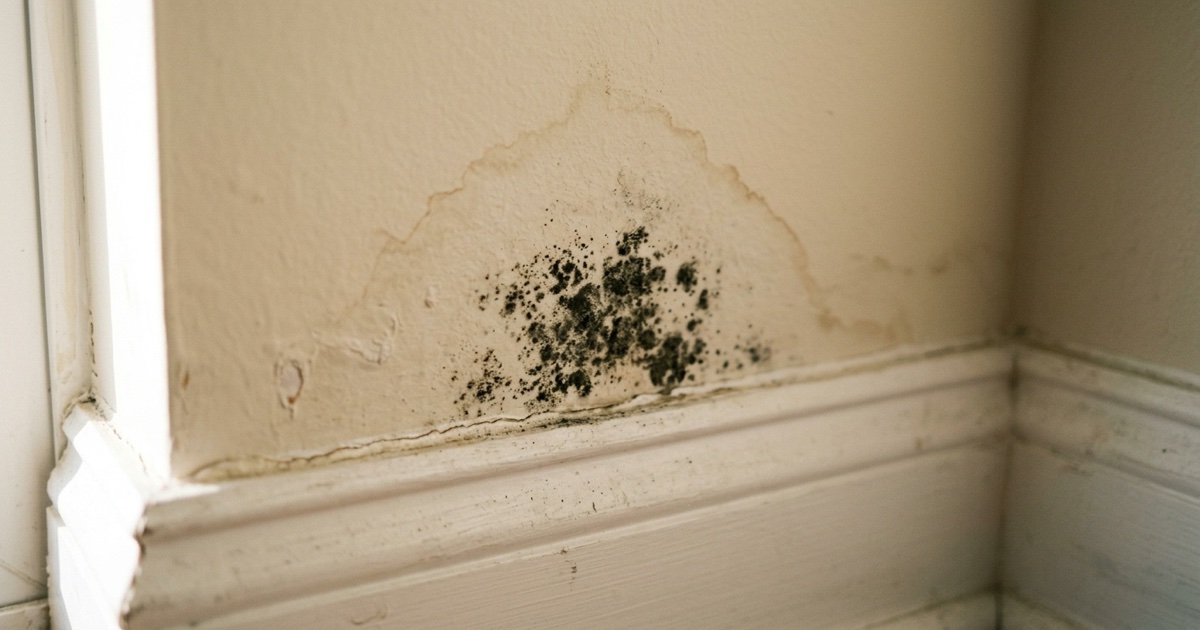
Table of contents
- Why can you smell mold before you see it?
- What happens when you leave the house for a few days?
- Is there a legal limit for mold in a house?
- What do you compare it against?
- How big does a patch have to be to matter?
- What causes mold in a house?
- What should you buy instead of a test?
- What if you rent, or the wall isn’t yours?
- What should you do about it?
Summary of this article
- EPA has set no threshold values for airborne mold or its spores, and no EPA regulations or standards exist for airborne mold contaminants. No lab result can tell you a house passed.
- EPA also writes that where visible mold growth is present, sampling is unnecessary. If you can see it, spend the money on finding the water instead.
- A test is worth something only against a comparison. Ask for an outdoor sample taken at the same house on the same day, or a reference room nobody has complained about.
- Building biology puts the no-anomaly figure for growth at zero. Any visible patch is already slight, about 3 square inches is where severe begins, and severe runs to 5.4 square feet.
- Humidity bands run in both directions: 40 to 60 percent is the clear band, and under 30 percent is as much of an anomaly as over 70.
- Water causes all of it. Material moisture, high humidity, cool surfaces and thermal bridges are the four things building biology names, and every one is water.
- A smell with nothing visible is real evidence, because growth starts where nobody can look. So is symptoms easing after several days away and returning within a day of getting home, if the pattern repeats.
- If you rent, the water is your landlord's problem and the paper trail is your job. Dated photographs, a week of humidity readings and a written notice are the lever.
Why can you smell mold before you see it?
Because what you’re smelling comes off growth that started somewhere nobody can look. Behind a surface. Inside a cavity. Under a pan.
You open a door on a room nobody uses much, and it registers before you’ve put a foot inside. Damp cardboard. An old cellar. Towels left in a gym bag over a weekend. Then you look around, and every wall in there is clean.
Nothing is wrong with your eyes. What grows needs water and dark, and both are easier to find inside a wall than on one. Under a shower pan. Behind a dishwasher that’s been weeping for a year. In a cavity below a window that only leaks when rain comes in sideways.
So a smell with nothing to see is not nothing. We’d call it the first honest piece of evidence most people get, and it arrives from the one place a visual inspection has to stop, which is the far side of a wall nobody has opened since the house went up.
Your nose got there first because it was the only part of you with access.
We find people apologize for bringing it up, as though noticing a smell were a complaint about the house.
What happens when you leave the house for a few days?
If symptoms ease after a few days away and come back within a day of getting home, your house said something out loud.
Four nights at your sister’s place, and a cough that’s been running since October goes quiet. You drive home Sunday. By Tuesday it’s back.
Or a week somewhere else, and a headache you’d stopped bothering to mention is gone by the third morning.
That pattern isn’t proof, and anybody telling you it is wants your money. Another bed, somebody else’s pets, a different pollen count, no commute, more sleep. Plenty changes when you leave a house, and we’d rather say so out loud than hand you a story about your own bedroom that nobody has tested.
What makes it worth something is repetition. Same pattern, second trip, same person, and now you have a finding. Write it down. Dates, who felt what, which rooms they sleep in, and whether it hits one person in that house or everybody in it.
No lab can produce that for you, and it costs nothing to notice.
Is there a legal limit for mold in a house?
No, and EPA says so twice. Threshold values for airborne concentrations of mold and its spores have never been set, and there are no EPA regulations or standards for airborne mold contaminants.
There’s no number. That goes down badly with somebody who already paid for a test expecting one to arrive.
Measuring spores is easy enough. A lab counts them and sends results back on letterhead. What nobody can do is check that figure against a legal threshold, because nobody with the authority to write one ever did.
Which changes what a test is for. It can confirm something grows where you suspected. It can compare one room against another. It can’t tell you a house passed, and whoever sells you a pass invented it.
Nothing here is an argument against testing. It’s an argument against paying for a verdict that doesn’t exist.
So the question worth asking is compared to what. Every useful answer in this subject starts there.
What do you compare it against?
Outdoor air, sampled at the same house on the same day.
Spores are outside right now, over every yard on earth, and their numbers shift from one week to the next. So a figure taken in your living room on a Tuesday has nothing to be measured against.
Building biology’s guidance puts it plainly. Mold indoors, on surfaces, in dust and in cavities should come in lower than outdoor air or an uncontaminated reference room, and whatever grows inside should look very similar to what’s outside.
Lower inside than out is what a healthy house looks like. Higher inside means something in there is growing. We think that gap does the work a missing standard can’t, and it costs nothing extra to ask for.
A reference room works the same way. Take a basement that worries you against a bedroom nobody has ever complained about, same house, same afternoon.
Ask any tester to sample outdoor air at the same time. Without it, whatever they hand you has nothing to sit beside.
How big does a patch have to be to matter?
Building biology puts the no-anomaly figure at zero, so any visible growth at all is already slight, and about 3 square inches is where severe begins. That’s a patch the size of four quarters pushed together.
Severe then runs all the way to 5.4 square feet, which is a square 28 inches on a side. Past that it’s extreme.
So one word covers a patch behind a toilet and most of a wall in a flooded basement, which sorts you into a box and says almost nothing about how bad your week is. Who looks and who fixes matters once it is found, and four states bar the same company from doing both.
Those bands carry no legal weight. Nobody can make you act on one, and they run tighter than any household advice you’re likely to meet.
Save your money here. EPA puts it in one line. Where visible mold growth is present, sampling is unnecessary. Nobody needs a lab to confirm what’s on a wall in front of them, and whatever that sample would have cost buys a plumber an hour to find where water gets in.
What causes mold in a house?
Water. Every time.
That same guidance names four things to keep out of a building. Moisture already sitting in materials, high humidity in air, cool surfaces, and severe thermal bridges. Read that list again. Every item on it is water.
High humidity is the obvious one.
Cool surfaces do more damage than people expect. Warm damp air touches a cold wall, gives up its water right there, and that’s why growth turns up behind a sofa pushed against an outside wall, and in one particular corner of a bathroom ceiling.
A thermal bridge is where a building does that to itself by design. A steel lintel over a window. A slab edge. A stud with no insulation behind it. Cold walks straight through and arrives at a surface you live against.
Material moisture is water already in the fabric. A leak, a flood, or lumber that went up wet and never dried out.
Which is why wiping it off buys you a few months and no more. Mold is the symptom and water is the problem, every time.
What should you buy instead of a test?
A hygrometer, for about the price of a takeaway.
Put one in whichever room worries you and leave it a week. You’re watching two things. How high it climbs, and how long it stays up there.
| Humidity in a room | Too dry | Too damp |
|---|---|---|
| no anomaly | 40 to 60 percent | 40 to 60 percent |
| slight | 30 to 40 | 60 to 70 |
| severe | 20 to 30 | 70 to 80 |
| extreme | under 20 | above 80 |
Those bands run both ways, and almost every article on this subject prints only the damp half. A heated house in a Minnesota January, or any room in Phoenix or Denver, drops under 30 percent regularly, and building biology calls that severe too. Cracked lips and a nosebleed in February are that band, not a coincidence.
A bathroom spikes during a shower and that’s fine. Whether it drops back within an hour is the part that matters, because a bathroom sitting at 70 percent all day is growing something whether or not you can see it.
Winter is when we’d watch hardest. A sealed-up house traps everything that cooking, showering and breathing put into it, and that’s the season cold walls do their work.
What if you rent, or the wall isn’t yours?
Then the water is your landlord’s problem and the paper trail is your job. More renters live with mold than owners do, and almost every piece of mold advice online is written for somebody who can open a wall.
Where the growth is, decides who owns it. A leaking supply line inside a party wall, a roof, a failed window seal, a bathroom fan ducted into an attic. All building. Condensation on a single-glazed window in a bedroom you keep shut, that one gets argued about, and that argument is why your hygrometer log matters.
So build the file before you build the case. Photograph the patch with something for scale beside it, a credit card works. Date every photo. Keep the humidity readings for a full week, in that room, unmoved. Write down when the smell is worst and what the weather did.
Then put it in writing rather than a phone call. Most states carry an implied warranty of habitability, and what turns that from a phrase into a repair is a dated written notice with evidence attached and a copy you kept.
In a rental, evidence is the whole lever. A landlord who ignores a text message answers a letter with photographs and a week of readings on it.
What should you do about it?
Four things, in this order.
Follow water first. A gutter dumping against a wall. A shower pan that leaks only when somebody’s standing in it. A bathroom fan blowing into an attic. Ground moisture under a floor. Until that stops, everything else is a repaint.
Buy a cheap meter and learn what your rooms do across a full week, because a room you’ve slept in for years can still surprise you.
If you test at all, insist on an outdoor sample taken the same day, and treat anybody who won’t as somebody selling you a figure rather than an answer.
Keep the person who tests separate from the crew who cleans. A person telling you how bad it is shouldn’t be the person billing you to fix it, and you can insist on that anywhere, in writing, before anybody starts. EPA’s own line is that sampling should be conducted by professionals with specific experience in designing protocols, sampling and interpreting results. Carrying a bucket is not that job.
Notice that none of those four is a test. The two best pieces of evidence in this whole subject arrive free, and both of them are already yours: what your nose picks up walking into a room, and how you feel on the fourth morning away from home.
Sources
- US EPA. Mold Testing or Sampling (2026)
- Baubiologie Maes / IBN. Building Biology Evaluation Guidelines for Sleeping Areas, standard points C1 and 6 (2024)
Questions people ask
Is there a legal limit for mold in a house?
No. EPA states that threshold limit values for airborne concentrations of mold or mold spores have not been set, and that there are no EPA regulations or standards for airborne mold contaminants. Nothing sampled in your house can be checked against a federal number, because none exists.
Should I pay for a mold test?
Not if you can already see it. EPA writes that in most cases, where visible mold growth is present, sampling is unnecessary. A test is worth paying for when you suspect growth you cannot see, and only when it comes with something to compare against.
What should a mold test be compared against?
Outdoor air sampled at the same house on the same day, or a reference room in the same house that nobody has complained about. Building biology's guidance is that indoor mold counts should come in lower than outdoor air, and the species indoors should look very similar to those outside.
How big does a patch of mold have to be to matter?
Smaller than most people guess. Building biology puts no anomaly at zero, so any visible growth is already slight. About 3 square inches is where severe begins, and severe runs all the way to 5.4 square feet before it becomes extreme.
What humidity level prevents mold?
Between 40 and 60 percent, and the bands run both ways. 60 to 70 is slight and 70 to 80 severe on the damp side, while 30 to 40 is slight and 20 to 30 severe on the dry side. A heated house in winter often sits in the dry bands.
Why can I smell mold but not see it?
Because growth needs water and dark, and both are easier to find inside a wall than on one. Under a shower pan, behind a weeping dishwasher, in a cavity below a window that leaks only in sideways rain. A smell with nothing visible is the first honest evidence most people get.
What can I do about mold if I rent?
Build the evidence, then put it in writing. Photograph the patch with something for scale, date every photo, log humidity in that room for a full week, and send a written notice rather than a text. Most states carry an implied warranty of habitability, and dated evidence is what turns that phrase into a repair.


Have questions about the environment inside your home?
Air quality, mold, EMF, light and water all shape how a house feels and how the people in it feel. Whatever your concern is, the first step is finding out what is there.
Our certified team of environmental professionals and advocates can help.