


Most underwater EMF studies found harm to fish and marine life
A 2026 review of subsea power-cable research found repeated effects on aquatic animals across the published literature. The affected species sit in the food chain people depend on.
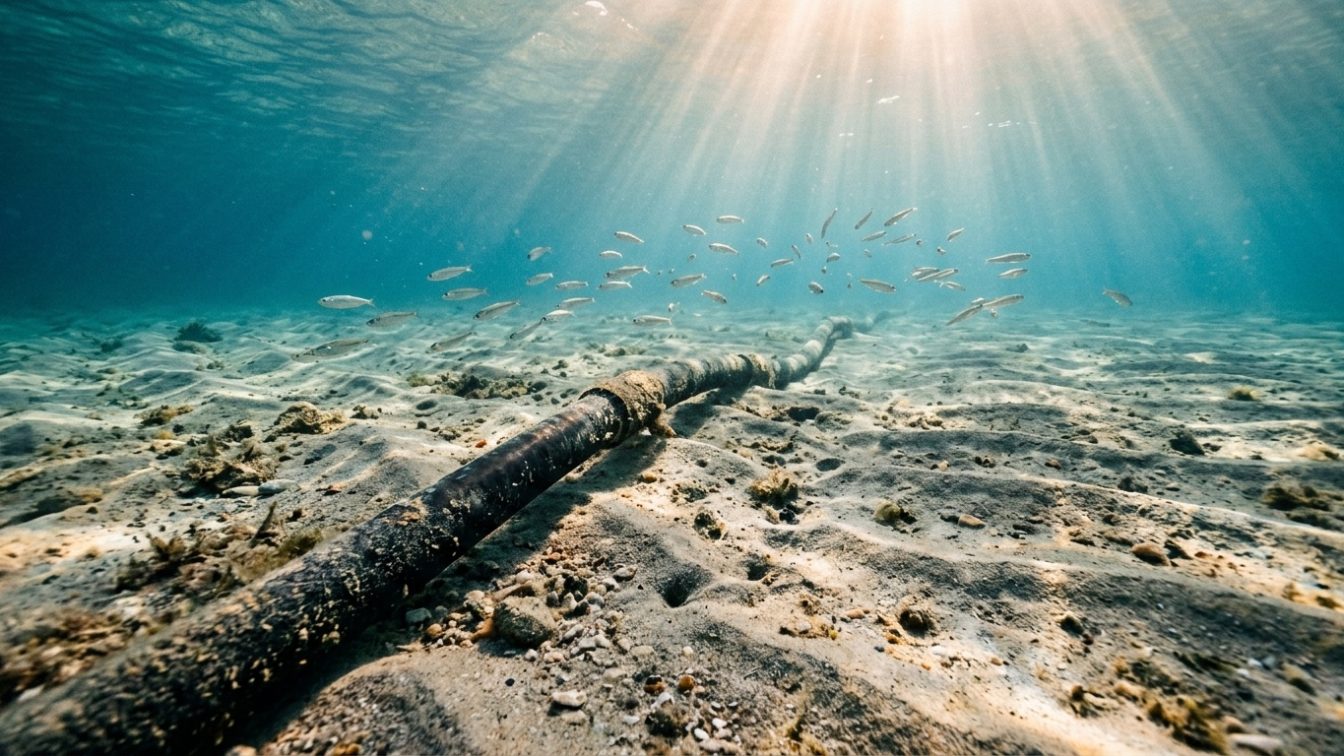
Table of contents
Summary of this article
- A 2026 scientific review covered by Environmental Health News (6 Mar 2026) found that 66% of the studies it examined reported significant impacts on aquatic life from underwater electromagnetic field (EMF) exposure. Two-thirds of the evidence pointed the same direction.
- The review documented three specific effects: altered immune responses, disrupted metabolic regulation, and impaired cardiovascular development in aquatic animals.
- Water changes how EMF behaves, and many aquatic animals sense fields directly. Sharks, rays, salmon, eels, and crustaceans use natural electric and magnetic cues to navigate, find prey, and migrate, which makes them uniquely exposed to man-made fields.
- The exposure pathways are expanding. Submarine power and data cables, offshore wind farm infrastructure, and dock and marina wiring all emit EMF into the water column, and the offshore energy buildout is adding more.
- This is a human food-chain issue, not only a wildlife issue. The affected species sit at the base of fisheries, so effects on their immune health, metabolism, and reproduction ripple upward to the people who eat them.
- EMF is measurable. Radiofrequency exposure is read in microwatts per square meter (µW/m²) and magnetic fields in milligauss (mG), letting you assess and control the water features you own, ponds, aquariums, and dock wiring, against building-biology thresholds.
A 2026 scientific review found that 66% of studies report underwater EMF harms aquatic life. The affected animals sit at the base of the human food chain.
Two-thirds of the studies in a 2026 scientific review reported significant impacts on aquatic life from underwater electromagnetic fields. That is the central finding of the review, covered by Environmental Health News on 6 March 2026, under the headline “Scientific review finds underwater EMF exposure can affect aquatic life.”
The number is 66%. In a review that pooled the available research, roughly two out of every three studies found significant effects. The three most documented were altered immune responses, disrupted metabolic regulation, and impaired cardiovascular development.
The review does not prove that underwater cables are collapsing fisheries. What it establishes is a consistent signal across most of the evidence, and it lands on species that feed the human food chain. This is where the story stops being about fish and starts being about the plate.
Why water changes everything
EMF does not behave the same underwater as it does in air. That difference is the foundation of the concern.
Water conducts electricity. Seawater conducts it especially well. When an electric current runs through a cable on the seabed, it generates both an electric field and a magnetic field, and water carries those fields through the surrounding environment in ways that air does not. The animals living in that water are immersed in the field, not passing through it.
More important, many aquatic animals sense electric and magnetic fields directly. This is not a subtle sensitivity. It is a primary sense.
Sharks and rays detect the faint electric fields of prey using specialized organs, hunting by electricity in dark or murky water.
Salmon and sea turtles use the Earth’s magnetic field to navigate across thousands of miles of open ocean back to the exact place they were born.
Eels and lobsters rely on magnetic and electric cues to orient and migrate.
For these species, a man-made field is not background noise. It is interference with a sense they use to find food, avoid danger, and complete migrations they cannot survive without. That is why aquatic animals are exposed in a way land animals often are not, the field intrudes directly on how they perceive the world.
What the review actually found
The 66% figure describes agreement across studies. The three named effects describe what that agreement was about.
- Altered immune responses
- The immune system is how an animal fights infection and disease. The review found EMF exposure associated with changes in immune function, meaning affected animals may be less able to resist illness. A weaker immune system in a fish population is a population more vulnerable to disease outbreaks.
- Disrupted metabolic regulation
- Metabolism is how a body converts food into energy and manages that energy. When it is disrupted, an animal may burn energy inefficiently, grow poorly, or struggle to fuel the demands of migration and reproduction. Metabolic disruption at the base of a food chain means smaller, weaker animals moving less energy upward.
- Impaired cardiovascular development
- This is the heart and circulatory system, and the word “development” matters. The effect appears during the formation of these systems, in embryos and young animals. A heart that does not develop properly is a defect carried for life, and it strikes at the most vulnerable stage of the life cycle.
Three effects. Two-thirds of the studies. The pattern is consistent enough that the review treats it as a documented concern rather than an isolated result.
Where the exposure comes from
The sources are largely invisible from the surface, and they are multiplying. The offshore energy buildout is putting more cable and more infrastructure into the water every year.
- Submarine power cables
- High-voltage cables carry electricity between landmasses, to islands, and from offshore installations back to shore. Every one of them generates a magnetic field along its length on the seabed, directly in the habitat of bottom-dwelling species like lobsters, crabs, and flatfish.
- Offshore wind farm infrastructure
- Offshore wind is expanding rapidly, and each turbine connects to a web of inter-array and export cables carrying power through the water column. The result is a growing grid of EMF sources across large stretches of coastal seabed.
- Submarine data cables
- The fiber-optic cables carrying internet traffic across oceans include powered components that add to the underwater field environment.
- Dock and marina wiring
- Closer to home, the electrical systems powering docks, marinas, boat lifts, and shore power add EMF to shallow, biologically rich coastal water, the nursery zones where many young fish develop.
- Home pond and aquarium equipment
- In a backyard pond or a home aquarium, pumps, heaters, filters, UV sterilizers, and lighting all run on electricity and generate magnetic fields in and around the water. This is the exposure pathway you directly own and control.
The pattern runs from ocean scale to backyard scale. The mechanism is the same at every level: electric current in water produces fields that immersed animals cannot avoid.
Why this reaches the human plate
This is the human-health lens, and it does not require the EMF to touch a person directly. It works through the food chain.
The affected species, fish, crustaceans, and the smaller animals they feed on, form the base of fisheries that feed billions of people. Aquatic ecosystems are stacked. Small organisms feed larger ones, which feed larger ones still, up to the seafood on a dinner table. Damage at the base moves upward through every level above it.
Trace the consequences. Altered immune responses mean populations more prone to disease, which means smaller and less stable fisheries. Disrupted metabolism means animals that grow poorly and move less energy up the chain. Impaired cardiovascular development in young animals means fewer of them survive to adulthood, which thins the population that fisheries depend on.
A fishery is a food supply. When the review documents effects on the immune health, metabolism, and heart development of the animals at its base, it is documenting pressure on the seafood people eat. The exposure is underwater, but the consequence follows the food chain to the surface.
This is the point building biology has made about homes for decades, applied to an ecosystem: an exposure does not stay at its source. In a house, a field from bad wiring reaches the bed. In the ocean, a field from a seabed cable reaches the fishery, and the fishery reaches the plate.
The practical fixes: control what you own
You cannot reroute a submarine cable. But the building-biology approach starts with the exposure you control, and in water that means the features on your own property.
1. Wire pond and aquarium equipment cleanly. Pumps, heaters, filters, and UV sterilizers are the EMF sources in a home water feature. Keep power cords and transformers away from the water body and away from where you sit or spend time beside it. Bundle cords neatly rather than coiling them, since coiled wire concentrates the magnetic field.
2. Choose low-EMF and distance-friendly equipment. Position pumps and heaters at the far side of a pond rather than beside a seating area or a dock where people gather. Distance is decisive, magnetic fields fall off sharply within a short range of the source, so a few feet of separation meaningfully lowers exposure to both the animals and the people nearby.
3. Measure your water features. You do not have to guess. Magnetic fields are measured in milligauss (mG) with a gauss meter, and radiofrequency exposure in microwatts per square meter (µW/m²) with an RF meter. Measure at the pump, along the cords, and at the edge of the pond or tank. The readings show you exactly where the field concentrates and where distance will do the most good.
4. Ask about cable routing near the water. If you moor a boat, build near a marina, or own waterfront property, ask what electrical infrastructure and cabling run through the adjacent water. You cannot move it, but knowing where it sits lets you make informed choices about where you site a dock, a swim area, or a pond.
5. Support the wider case for source control. Ocean-scale EMF is a regulatory question, addressed in the companion piece on wildlife regulation. As a consumer, reducing the EMF you generate at home and asking informed questions near the water is the concrete action available while policy catches up to the evidence. No U.S. rule covers wildlife exposure at all, which is its own story.
What “measurable” looks like
The strength of the building-biology approach is that it deals in numbers, not impressions. Two units do the work.
Milligauss (mG) measures magnetic fields, the field type that dominates around pumps, motors, transformers, and power cables, including the ones underwater. A gauss meter reads it directly.
Microwatts per square meter (µW/m²) measures radiofrequency exposure, the field type from wireless devices, relevant to any smart or connected water equipment.
The building-biology community’s SBM-2015 guidelines set thresholds for both, built on the principle that lower is better. For a home water feature, the workflow is the same one used indoors: measure at the source, increase distance or reroute the wiring, and measure again. The number drops. That drop is exposure removed from the water you own and the people beside it.
The bottom line
The 2026 scientific review covered by Environmental Health News does not prove that underwater cables are emptying the oceans. It documents that 66% of studies report significant impacts on aquatic life, altered immune responses, disrupted metabolism, and impaired cardiovascular development, in species that sit at the base of the human food chain.
The offshore energy buildout is adding EMF sources to the water faster than regulation is accounting for them. You cannot reroute a submarine cable, but you can control the pond pump, measure the field around your aquarium in milligauss, and ask what runs through the water before you build beside it. When the exposure travels up the food chain to the plate, treating it as a source-control problem, starting with the water you own, is the reasonable default.
Sources
- Environmental Health News (Environmental Health Sciences Staff). "Scientific review finds underwater EMF exposure can affect aquatic life." 6 March 2026.
- Baubiologie Maes / Institut für Baubiologie + Nachhaltigkeit (IBN). "Standard of Building Biology Testing Methods (SBM-2015)", Supplement on magnetic field (milligauss) and radiofrequency (µW/m²) exposure guidelines.
Questions people ask
What did the 2026 review actually find?
The scientific review, covered by Environmental Health News (6 Mar 2026), found that 66% of the studies it examined reported significant impacts on aquatic life from underwater EMF exposure. The most documented effects were altered immune responses, disrupted metabolic regulation, and impaired cardiovascular development. It documents a consistent pattern across most of the evidence, not a single confirmed outcome.
Why does EMF affect aquatic animals more than land animals?
Water conducts electricity, especially seawater, so fields from underwater cables travel through the environment and immerse the animals living there. Many aquatic species also sense electric and magnetic fields directly, sharks and rays hunt by electric fields, and salmon and sea turtles navigate by the Earth's magnetic field, so a man-made field interferes with a primary sense they depend on to survive.
Where does underwater EMF come from?
The main sources are submarine power cables, offshore wind farm infrastructure, and submarine data cables at ocean scale, plus dock and marina wiring in coastal water. Closer to home, backyard pond and aquarium equipment, pumps, heaters, filters, and UV sterilizers, generate magnetic fields in and around the water.
How does this affect me if I don't live near the ocean?
The affected species sit at the base of fisheries that supply seafood to billions of people. Effects on their immune health, metabolism, and reproduction ripple upward through the food chain, putting pressure on the fisheries that end on the plate. It also applies directly to any pond or aquarium you own, where you generate and control the EMF yourself.
How do I measure EMF around my pond or aquarium?
Use a gauss meter to measure magnetic fields in milligauss (mG) and an RF meter to measure radiofrequency exposure in microwatts per square meter (µW/m²). Measure at the pump, along the power cords, and at the edge of the water, then increase distance or reroute the wiring and measure again to confirm the reduction against building-biology SBM-2015 thresholds.
What can I actually do about underwater EMF?
You cannot reroute a submarine cable, but you can control home water features: keep pond and aquarium power cords away from the water, position pumps at a distance from seating and docks, avoid coiling cables, and measure the field. If you own waterfront property or moor a boat, ask what electrical cabling runs through the adjacent water before siting a dock or swim area.


Have questions about the environment inside your home?
Air quality, mold, EMF, light and water all shape how a house feels and how the people in it feel. Whatever your concern is, the first step is finding out what is there.
Our certified team of environmental professionals and advocates can help.