


Wireless radiation raised activity in autism-related genes in lab models
The work was done in animal and cell models and remains contested, so it stops well short of any claim about children. What it measured was gene expression, or how active certain genes became.
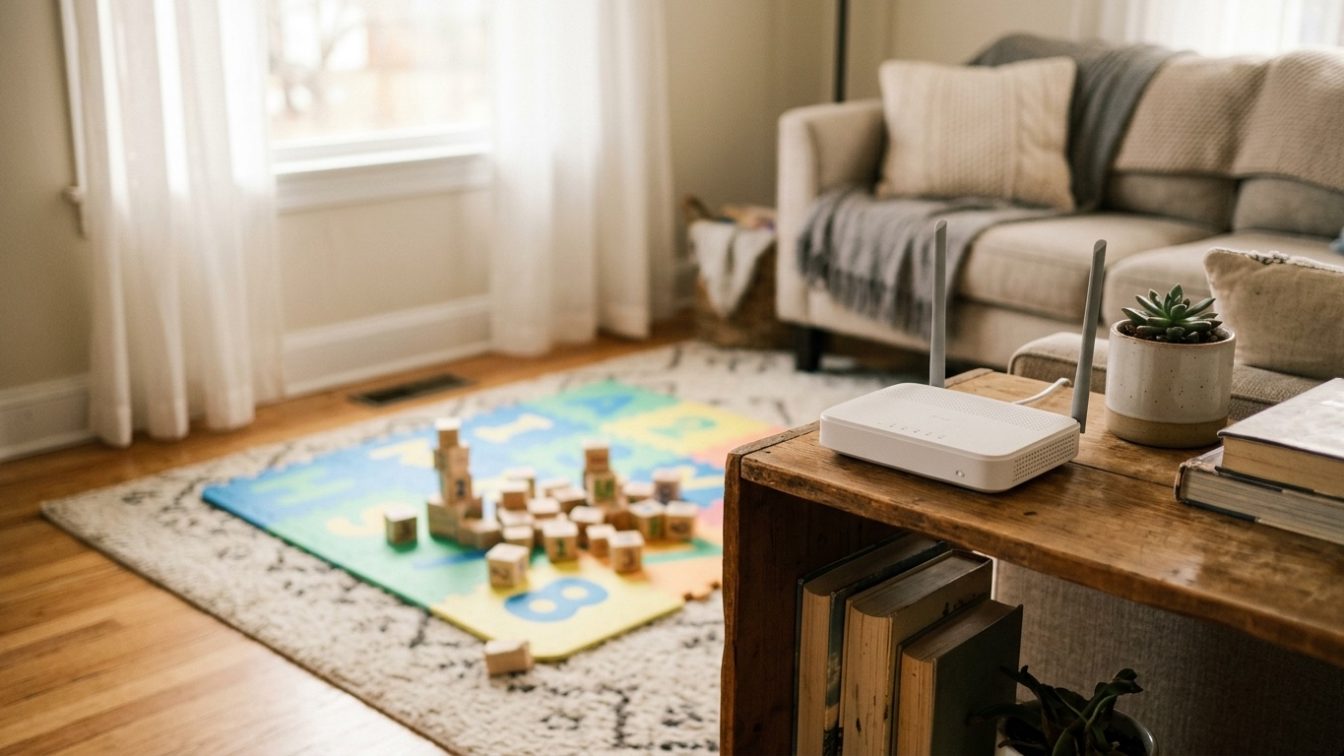
Table of contents
- What the Study Actually Found
- Why Laboratory Models Come First, and What They Cannot Tell You
- The Prenatal and Early-Childhood Window
- The Three Levers That Govern Your Exposure
- The Exposure Pathways That Matter Most
- Measurable Thresholds to Aim For
- Source Control: Lower the Dose Inside Your Own Walls
- How to Read a Contested Finding Without Overreacting
- What to Do This Week
Summary of this article
- Researchers at Yale found that wireless radiation increased the expression of autism-related genes in laboratory models, according to a study reported by Environmental Health News on December 5, 2025.
- The finding is early-stage laboratory research and remains contested. It was conducted in animal and cell models, not humans, and does not establish that wireless devices cause autism.
- The proposed mechanism involves gene expression, how active a gene becomes, rather than a change to the genetic code itself. The study reported increased activity in genes previously associated with autism.
- Exposure is governed by three levers you control: proximity, duration, and frequency. Radiofrequency power density drops with roughly the square of the distance from the source.
- Source control is cheap and measurable. Relocate the router away from sleeping and sitting areas, hardwire stationary devices, use airplane mode overnight, and keep transmitting devices off the body.
Researchers at Yale found that wireless radiation increased the expression of autism-related genes in laboratory models, according to a study reported by Environmental Health News on December 5, 2025. The finding points to a specific biological response: genes previously associated with autism became more active under wireless exposure. That is a measurable, mechanistic result, and it is worth understanding precisely.
It is also early. The study was conducted in laboratory models, animal and cell systems, not people. The connection between wireless radiation and neurodevelopment remains contested among researchers, and no regulatory agency has changed device guidance because of it. The study does not prove that wireless devices cause autism. Those caveats are not fine print. They are the accurate frame.
The building-biology approach does not require a settled verdict to be useful. It requires a source, a pathway, and a dose you can reduce. This study describes a source you control completely and a mechanism worth taking seriously without panic. That combination is enough to act sensibly.
What the Study Actually Found
The Yale research examined how wireless radiation affects gene expression in laboratory models, Environmental Health News reported. The central result was an increase in the activity of genes that prior research has linked to autism.
The distinction between gene expression and genetic change matters. Your genetic code is fixed. Gene expression is how active a given gene becomes, how much of the protein it codes for the body actually produces. An exposure that raises or lowers expression does not rewrite the gene. It changes how loudly that gene speaks.
The study reported that wireless exposure turned up the volume on genes already associated with autism in the research literature. That is a narrower and more specific claim than “wireless causes autism,” and holding the distinction clearly is what separates a proportional response from an alarmed one.
Why Laboratory Models Come First, and What They Cannot Tell You
Laboratory models are where mechanistic science begins. They are not where it ends.
Researchers use animal and cell models because they allow controlled exposure that would be impossible or unethical to run in humans. A model lets scientists isolate a single variable, a defined dose of wireless radiation, and measure a specific biological response. That control is the strength of the method.
The limitation is equally clear. A result in a laboratory model does not automatically translate to a person. Human biology is more complex, real-world exposures are lower and more variable than controlled lab doses, and many findings that appear in models never replicate in human studies. This is why the Yale result is a signal for further research, not a conclusion about human health.
The correct reading sits between two errors. Dismissing a mechanistic finding because it is early ignores useful information. Treating it as proof of human harm overstates what a lab model can establish. The measured position is to note the signal and reduce the exposure where doing so is cheap.
The Prenatal and Early-Childhood Window
The finding carries particular weight for one group: developing children, before and after birth.
Neurodevelopment is most sensitive during pregnancy and early childhood, when the brain is forming rapidly. A biological process that alters gene expression is most consequential during the windows when those genes are actively shaping development. This is a general principle of developmental biology, and it is why guidance on many environmental exposures, from lead to alcohol, focuses most sharply on pregnancy and early years.
For a household, this narrows the priority. The person most worth protecting from a plausible neurodevelopmental exposure is a pregnant parent or a young child. That focus does not require certainty about the mechanism. It follows from the simple fact that developing systems are more vulnerable to any exposure, and that the fixes cost almost nothing.
The Three Levers That Govern Your Exposure
Building biology reduces every exposure question to three variables: proximity, duration, and frequency. Wireless radiation in a home is governed by all three.
- Proximity
- Distance is the strongest lever by a wide margin. Radiofrequency power density drops with roughly the square of the distance from the source. Double your distance from a transmitter and the exposure falls to about a quarter. Move ten times farther and it falls to roughly one-hundredth. A router three feet from a bed and a router thirty feet away deliver very different doses to a sleeping person.
- Duration
- Exposure accumulates over time. Eight hours of sleep beside a transmitting router or phone is the longest continuous daily exposure most people have. A device that runs all night delivers far more total dose than the same device used briefly.
- Frequency
- A one-time exposure and a daily, years-long habit are different problems. The sources that matter most are the ones present every day in the rooms where people spend the most time, the bedroom and the main living area.
You cannot change how wireless signals propagate. You can change all three levers.
The Exposure Pathways That Matter Most
Not all sources carry equal weight. Building biology ranks them by proximity and duration, because those two factors govern dose far more than a source’s raw output.
Devices against the body. A phone in a pocket or held to the head is the closest source you own, at nearly zero distance.
The bedroom router and nightstand phone. The longest continuous daily exposure, delivered during sleep.
The home Wi-Fi router in an occupied room. A continuous transmitter in a space where people sit for hours.
The ambient outdoor field. Cell networks and neighboring signals, real, but weaker at the body than any close indoor source, because distance overwhelms raw power.
The ranking carries the lesson. A cell tower a quarter-mile away delivers less to your body than a router three feet from your pillow. Your largest controllable exposures are inside your own walls.
Measurable Thresholds to Aim For
There is no single agreed-upon safe level for chronic, low-level radiofrequency exposure, and that gap sits at the center of the contested science. Two reference points frame the discussion.
The first is the specific absorption rate, or SAR, which measures how much radiofrequency energy body tissue absorbs from a device. The U.S. Federal Communications Commission caps consumer device SAR at 1.6 watts per kilogram of tissue. Every phone sold in the United States lists its SAR value in the manual or on the manufacturer’s website. This limit governs devices and is designed to prevent tissue heating. The non-thermal, gene-expression effects the Yale study examined fall outside it.
The second is context. The World Health Organization’s International Agency for Research on Cancer classified radiofrequency electromagnetic fields as “possibly carcinogenic to humans,” Group 2B, in 2011, a category signaling limited evidence and a need for more research. It stops short of naming a confirmed hazard. The Yale finding adds to the body of research that keeps the question open.
The practical threshold is not a single number. It is a direction: measurably increase distance, measurably reduce nighttime exposure, and measurably cut the number of transmitters in sleeping areas.
Source Control: Lower the Dose Inside Your Own Walls
Building biology treats wireless radiation like any indoor exposure. You control it at the source and manage the pathways that carry it to your body. The sources closest to you deliver the most dose, and those are entirely under your control.
Move the router. Place your Wi-Fi router in a central utility area, away from bedrooms and the spots where you sit for hours. Because power drops with the square of distance, moving a router from 3 feet to 15 feet from a desk cuts exposure at the desk sharply. Never place a router in a nursery or beside a bed.
Hardwire what you can. Use ethernet cables for stationary devices, desktop computers, smart TVs, game consoles. A wired connection carries no radiofrequency signal and often runs faster. Every device you hardwire removes one transmitter from your living space.
- Use airplane mode overnight
- Switch phones and tablets to airplane mode during sleep and when connectivity is not needed. This eliminates the closest, longest exposure of the day at zero cost. Charge devices across the room, not at the bedside.
- Keep transmitting devices off the body
- Carry a phone in a bag rather than a pocket, and use speakerphone or wired earbuds instead of holding it to the head. A few inches of added distance produces a large reduction.
- Prioritize the prenatal and child spaces
- Apply these fixes first to the bedroom of a pregnant parent and to a child’s room and nursery. Power down the router overnight with a simple timer, and keep smart devices out of sleeping areas.
- Weigh shielding carefully
- Shielding paints and films can reduce incoming signal, but they must be installed and grounded correctly, and improper installation can reflect signal in unexpected ways. Measure with a radiofrequency meter before and after any shielding project. Distance and wired connections are cheaper, more reliable first-line fixes.
How to Read a Contested Finding Without Overreacting
The Yale study is one line of early laboratory evidence, and it sits within an unresolved field. Regulators have not identified a confirmed neurodevelopmental risk from consumer wireless devices at legal exposure limits. That tension is normal in emerging science, and it justifies neither dismissal nor alarm.
The building-biology response to uncertain evidence is proportional action. When a source is easy to reduce and the potential harm is serious, you reduce it, because the cost of reducing it is low even while the harm remains unproven. Moving a router and charging a phone across the room cost nothing. Waiting for definitive human data could take a decade or more.
This is the same logic building science applies to any low-cost, high-certainty fix. You seal an air leak before you have measured every draft, because sealing is cheap and the benefit is reliable. You move the transmitter out of the nursery for the same reason.
What to Do This Week
The finding reported by Environmental Health News points to a source you control completely and a life stage, early development, where any exposure deserves extra care. That combination makes wireless radiation a sensible place to apply the three levers.
Start with proximity and the sleeping spaces, where the effect is largest. Move the router out of bedrooms and away from where you sit. Switch phones to airplane mode overnight and charge them across the room. Hardwire the stationary devices you can, and give the bedroom of a pregnant parent or a young child the highest priority.
None of these steps require abandoning wireless technology. They require treating the signal as a source, the bedroom as a pathway, and daily exposure as a dose you can manage. The Yale finding may or may not hold up in human research. Your reduction plan works either way, and it costs you almost nothing to run.
Sources
- Environmental Health News. Yale Study: Wireless radiation increased the expression of autism-related genes in laboratory models
- Yale University, laboratory research on wireless radiation and gene expression
- U.S. Federal Communications Commission (FCC), specific absorption rate (SAR) limit of 1.6 watts per kilogram for consumer wireless devices
- World Health Organization / International Agency for Research on Cancer (IARC), 2011 classification of radiofrequency electromagnetic fields as Group 2B, "possibly carcinogenic to humans"
Questions people ask
What did the Yale study actually find?
Environmental Health News reported on December 5, 2025 that researchers at Yale found wireless radiation increased the expression of autism-related genes in laboratory models. That means genes previously associated with autism became more active under wireless exposure. The study measured a change in gene activity, not a change to the genetic code itself.
Does this prove that wireless devices cause autism?
No. The study was conducted in laboratory models, animal and cell systems, not humans, and the connection between wireless radiation and neurodevelopment remains contested. It is early-stage, mechanistic research that identifies a biological signal warranting further study, not a confirmed human health effect. No regulatory agency has changed device guidance based on it.
What is the difference between gene expression and genetic change?
Your genetic code is fixed. Gene expression is how active a gene becomes, how much of the protein it codes for the body produces. The Yale study reported increased expression, meaning the affected genes became more active, not that the genes themselves were altered or damaged.
Why does this finding matter most for pregnancy and young children?
Neurodevelopment is most sensitive during pregnancy and early childhood, when the brain forms rapidly. A process that alters gene expression is most consequential during the windows when those genes are actively shaping development. This is why guidance on many environmental exposures focuses most sharply on pregnancy and early years.
What is the single most effective way to reduce exposure at home?
Increase distance. Radiofrequency power density drops with roughly the square of the distance from the source, so doubling your distance cuts exposure to about a quarter. Move your Wi-Fi router out of bedrooms and away from where you sit, keep your phone off your body, and charge devices across the room rather than at the bedside.
Is the cell tower down the street a bigger concern than my home router?
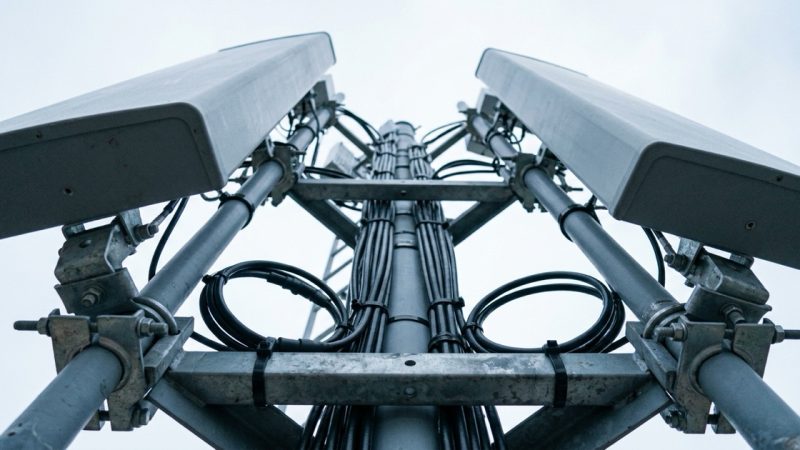
Usually not, for your personal dose. Distance overwhelms raw power. A cell tower a quarter-mile away typically delivers less radiofrequency energy to your body than a Wi-Fi router three feet from your pillow, because the router is far closer and runs continuously beside you. Your largest controllable exposures are the sources inside your home.
What limits exist, and do they cover this kind of effect?
The U.S. Federal Communications Commission caps device SAR, specific absorption rate, at 1.6 watts per kilogram of tissue. That limit is designed to prevent tissue heating, not the non-thermal, gene-expression effects the Yale study examined. The World Health Organization's IARC classified radiofrequency fields as "possibly carcinogenic to humans" (Group 2B) in 2011, signaling limited evidence and a need for more research.


Have questions about the environment inside your home?
Air quality, mold, EMF, light and water all shape how a house feels and how the people in it feel. Whatever your concern is, the first step is finding out what is there.
Our certified team of environmental professionals and advocates can help.