


Wireless radiation in New York City has exploded over the last 50 years
Cellular networks, Wi-Fi, small-cell antennas, and always-connected devices stacked exposure on top of each other for decades. No U.S. agency sets a total limit for what fills a bedroom.
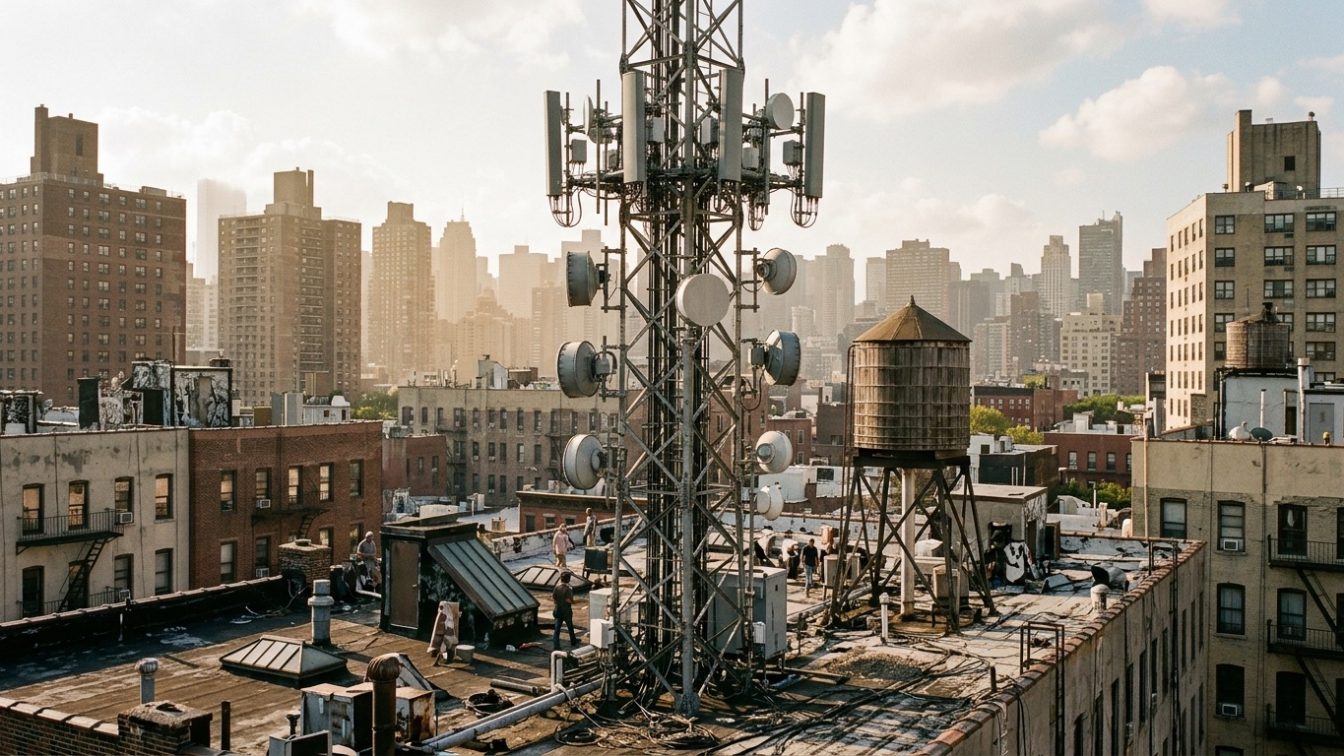
Table of contents
Summary of this article
- Ambient wireless radiation in New York City increased more than 100-fold over 50 years, according to a study reported by Environmental Health News on July 4, 2026.
- The increase came from stacked sources: cellular networks, home and public Wi-Fi, 5G small-cell antennas, and a rising number of always-connected smart devices.
- Health effects of ambient radiofrequency (RF) exposure at current urban levels remain contested. No regulatory agency has changed exposure limits based on the NYC measurements.
- Regulatory limits vary widely. The U.S. FCC caps device SAR at 1.6 W/kg, the international ICNIRP sets population whole-body limits, and the BioInitiative Report proposes far lower precautionary reference levels.
- Source control is the practical response. Distance, wired connections, airplane-mode habits, and router placement lower your personal dose regardless of the citywide trend.
Ambient wireless radiation in New York City increased more than 100-fold over the past 50 years, according to a study reported by Environmental Health News on July 4, 2026. The measurement tracks the background radiofrequency energy that now saturates the urban environment, the signal load carried in the air of a dense city, day and night, whether or not you own a single device.
The number describes an environment, not a diagnosis. A 100-fold rise in ambient exposure does not by itself establish harm, and the health effects of RF at current urban levels remain contested. No regulatory agency has revised its exposure limits based on the New York City data.
The building-biology framework does not require a settled verdict to be useful. It requires a source, a pathway, and a dose you can reduce. You cannot lower the radiofrequency load across an entire city. You can lower the load inside your own walls, where the closest and longest exposures actually occur. That distinction is where the citywide statistic becomes a personal plan.
What the Study Measured
The study documented ambient radiofrequency exposure, the background level of wireless energy present in the environment, and compared modern readings against measurements from roughly 50 years earlier, Environmental Health News reported. The finding was a rise exceeding 100-fold.
Ambient exposure is different from the exposure a single device delivers. It is the sum of every signal in the air: the cellular network, the neighbor’s Wi-Fi, the small-cell antenna on the streetlight, the transit system’s connectivity, and thousands of transmitting devices operating at once. It is the baseline you cannot switch off.
That baseline matters because it sets the floor. Even a person who uses no wireless devices at all now stands in a field more than 100 times denser than a New Yorker did in the mid-1970s. For everyone else, that ambient floor is the platform on which personal-device exposure is stacked.
Where the 100-Fold Increase Came From
The rise did not come from one technology. It came from four waves of deployment layered one on top of another, each adding transmitters to the environment without removing the ones before it.
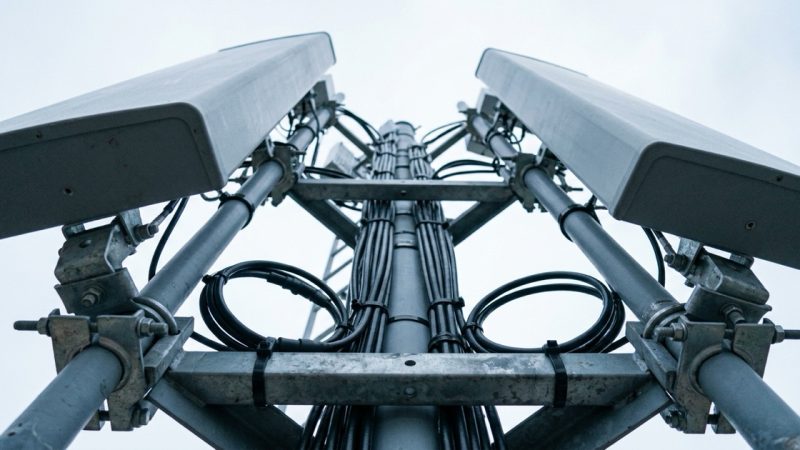
Cellular networks. The first mobile networks were sparse. Today, dense arrays of cell sites cover every block of a city to handle the traffic of millions of simultaneous connections. Each generation of network, 3G, 4G, and now 5G, added antennas rather than replacing the existing grid.
Home and public Wi-Fi. Wi-Fi did not exist as a consumer technology 50 years ago. Now nearly every apartment, office, café, and public space in New York operates at least one wireless router transmitting continuously. In a dense residential building, a single unit can detect dozens of neighboring networks.
5G small cells. 5G relies on a dense network of small-cell antennas mounted on streetlights, utility poles, and building faces to deliver high bandwidth over short distances. This architecture places transmitters far closer to street level and to home windows than traditional tall cell towers did.
Smart devices. The count of always-connected devices has climbed steeply, phones, tablets, laptops, smart speakers, thermostats, doorbells, watches, and appliances. Many transmit even when idle, checking for updates and maintaining connections around the clock. Each one is a small, persistent source.
Stacked together across five decades, these four waves produced the 100-fold ambient increase the study measured.
The Exposure Pathways That Matter Most
Radiofrequency energy reaches your body through pathways, and not all pathways carry equal weight. Building biology ranks them by proximity and duration, because those two factors govern dose more than the raw power of any single source.
The most important principle is distance. Radiofrequency power density drops with roughly the square of the distance from the source. Doubling your distance from a transmitter cuts the exposure to about a quarter. This single relationship reorders the entire threat list.
A cell tower a quarter-mile away, despite its high power, delivers less to your body than a Wi-Fi router three feet from your pillow, because distance overwhelms raw output. The pathways that matter most, in order, are the sources you hold or sit beside for hours.
Devices against the body. A phone in a pocket or held to the head is the closest RF source you own, at nearly zero distance.
The bedroom router and nightstand phone. Eight hours of sleep beside a transmitting router or phone is the longest continuous daily exposure most people have.
The home Wi-Fi router. A router in a frequently occupied room transmits into that room continuously.
The ambient urban field. The citywide load the study measured, real, unavoidable, but weaker at the body than any close personal source.
The order carries the lesson. Your largest controllable exposures are inside your home, not out on the street.
Measurable Thresholds: Three Standards That Disagree
There is no single agreed-upon safe level for RF exposure. Three reference frameworks exist, and they disagree by orders of magnitude, a gap that sits at the center of the contested science.
The FCC SAR limit. The U.S. Federal Communications Commission caps the specific absorption rate, how much RF energy body tissue absorbs from a device, at 1.6 watts per kilogram, averaged over one gram of tissue. Every phone sold in the United States lists its SAR value in the manual or on the manufacturer’s website. This limit governs devices, not ambient fields.
The ICNIRP guidelines. The International Commission on Non-Ionizing Radiation Protection sets internationally referenced limits for whole-body and ambient exposure. ICNIRP’s limits are designed to prevent established thermal effects, tissue heating, and are the basis for exposure rules in much of the world. The FCC’s ambient limits are broadly aligned with this thermal-protection approach.
The BioInitiative reference levels. The BioInitiative Report, produced by a group of independent scientists, proposes precautionary exposure levels far below the FCC and ICNIRP limits. Its authors argue that biological effects can occur below the threshold for tissue heating, and they recommend reference levels thousands of times stricter than the regulatory standards. Regulators have not adopted these levels, and the underlying claims remain disputed.
The practical takeaway is not to pick a winner. It is to recognize that where a settled scientific consensus is absent, and where reduction is cheap, lowering your dose is a reasonable hedge regardless of which framework proves correct.
The Contested Science, Read Plainly
The health significance of ambient RF at current urban levels is genuinely unresolved. That statement is not a dodge. It is the accurate position.
Established science confirms that RF at high enough intensity heats tissue, which is why the FCC and ICNIRP limits exist. What remains contested is whether the far lower, chronic, non-thermal exposures of everyday urban life produce health effects over years or decades. The World Health Organization’s International Agency for Research on Cancer classified radiofrequency electromagnetic fields as “possibly carcinogenic to humans” (Group 2B) in 2011, a category that signals limited evidence and a need for more research. It stops short of naming a confirmed hazard.
A 100-fold increase in ambient exposure over 50 years is a change large enough to justify attention. It is not, on its own, proof of harm. The correct response is neither dismissal nor alarm. It is proportional action: reduce the exposures that are easy to reduce, and let the science continue.
Source Control: Lower Your Dose Inside Your Own Walls
Building biology treats RF like any indoor exposure. You control it at the source and manage the pathways that carry it to your body. You cannot change the citywide field, but the sources closest to you, and therefore the ones delivering the most dose, are entirely under your control.
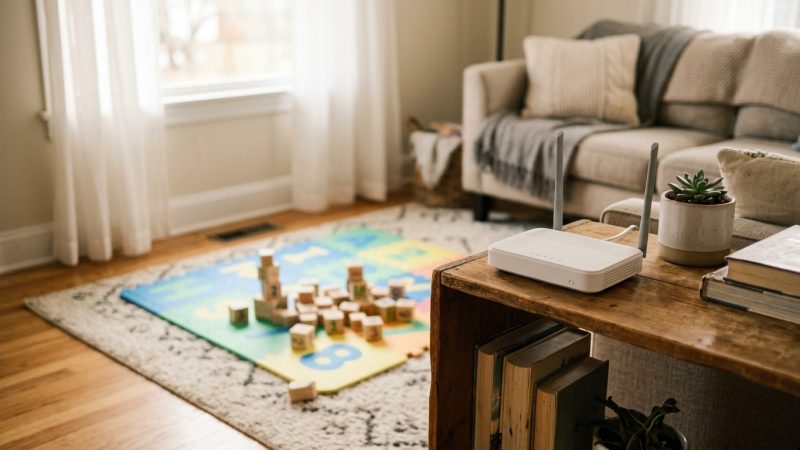
Move the router. Place your Wi-Fi router in a central utility area, away from bedrooms and the spots where you sit for hours. Because power drops with the square of distance, moving a router from 3 feet to 15 feet from your desk cuts exposure at the desk dramatically. Never sleep beside a router.
Hardwire what you can. Use ethernet cables for stationary devices, desktop computers, smart TVs, game consoles. A wired connection carries no RF and often runs faster and more reliably. Every device you hardwire is one less transmitter in your living space.
Use airplane mode as a nightly habit. Switch phones and tablets to airplane mode overnight and when you do not need connectivity. This eliminates the closest, longest exposure of the day, the transmitting phone on the nightstand, at zero cost. Charge devices across the room rather than at the bedside.
Keep transmitting devices off the body. Carry your phone in a bag rather than a pocket. Use the speakerphone or wired earbuds instead of holding the phone to your head. Distance is the strongest lever you have, and a few inches produces a large reduction.
Turn off idle transmitters. Disable Wi-Fi and Bluetooth on devices when not in use. Power down the router overnight with a simple timer. Reduce the number of always-connected smart devices in bedrooms.
Weigh shielding carefully. Shielding paints, fabrics, and window films can reduce incoming RF, but they must be installed and grounded correctly to work, and improper installation can trap or reflect signal in unexpected ways. Measure with an RF meter before and after any shielding project, and treat distance and wired connections as the first-line fixes, since they are cheaper and more reliable.
What the Citywide Number Means for One Household
The study’s 100-fold figure describes a trend no individual can reverse. New York City’s ambient RF load reflects the infrastructure of eight million people, and it will keep rising as networks densify.
That is precisely why the building-biology response focuses inward. Your total exposure is the ambient field plus the personal sources you add on top of it. The ambient portion is fixed. The personal portion, the router by your bed, the phone in your pocket, the dozen idle transmitters in your apartment, is often the larger share of your daily dose, and it is the share you can cut this week.
The measurements reported by Environmental Health News document an environment that has changed profoundly in 50 years. You cannot restore the RF landscape of 1976. You can decide how much of today’s load you carry against your own body, for how long, and how close. Move the router, hardwire the desk, sleep beside a phone in airplane mode. The citywide number sets the floor. Your habits set everything above it.
Sources
- Environmental Health News. New York City exposure to wireless radiation increased over 100-fold in 50 years
- U.S. Federal Communications Commission (FCC), specific absorption rate (SAR) limit of 1.6 watts per kilogram for consumer wireless devices
- International Commission on Non-Ionizing Radiation Protection (ICNIRP), guidelines for limiting exposure to radiofrequency electromagnetic fields
- BioInitiative Report, proposed precautionary reference levels for radiofrequency exposure
- World Health Organization / International Agency for Research on Cancer (IARC), 2011 classification of radiofrequency electromagnetic fields as Group 2B, "possibly carcinogenic to humans"
Questions people ask
How much did wireless radiation in New York City actually increase?
Ambient wireless radiation in New York City increased more than 100-fold over the past 50 years, according to a study reported by Environmental Health News on July 4, 2026. The measurement tracks background radiofrequency energy in the environment, the total signal load in the air, not the output of any single device.
What caused the 100-fold increase?
Four waves of technology stacked on top of one another: expanding cellular networks across every generation from 3G to 5G, the spread of home and public Wi-Fi, dense 5G small-cell antennas mounted at street level, and a steep rise in always-connected smart devices that transmit even when idle. Each wave added transmitters without removing the ones before it.
Does this increase mean my health is at risk?
The health effects of ambient RF at current urban levels remain contested. Established science confirms RF heats tissue at high intensity, which is why exposure limits exist, but whether chronic low-level exposure causes harm is unresolved. The World Health Organization's IARC classified radiofrequency fields as "possibly carcinogenic to humans" (Group 2B) in 2011, signaling limited evidence and a need for more research rather than a confirmed hazard.
What are the exposure limits, and why do they differ?
The U.S. FCC caps device SAR at 1.6 watts per kilogram. The international ICNIRP sets whole-body and ambient limits designed to prevent tissue heating. The BioInitiative Report proposes precautionary levels thousands of times stricter, arguing that biological effects can occur below the heating threshold. Regulators have not adopted the BioInitiative levels, and the underlying claims are disputed, the gap between the standards reflects the unsettled science.
What is the single most effective way to reduce my exposure?
Increase distance. Radiofrequency power density drops with roughly the square of the distance from the source, so doubling your distance cuts exposure to about a quarter. Move your Wi-Fi router away from where you sit and sleep, keep your phone off your body, and charge devices across the room rather than at the bedside.
Is a cell tower down the street worse than my home router?
Usually not, for your personal dose. Distance overwhelms raw power. A high-powered cell tower a quarter-mile away typically delivers less RF to your body than a Wi-Fi router three feet from your pillow, because the router is far closer and runs continuously beside you. Your largest controllable exposures are the sources inside your home, not the infrastructure on the street.
Do shielding products work?
Some can reduce incoming RF, but shielding paints, fabrics, and films must be installed and grounded correctly, and improper installation can reflect or trap signal in unexpected ways. Measure with an RF meter before and after any shielding project. Distance, wired connections, and airplane-mode habits are cheaper and more reliable, so use them first.
Have questions about the environment inside your home?
Air quality, mold, EMF, light and water all shape how a house feels and how the people in it feel. Whatever your concern is, the first step is finding out what is there.
Our certified team of environmental professionals and advocates can help.