


New chemicals reach tap water faster than treatment plants can catch up
Chemical contamination is outpacing the speed at which U.S. treatment plants can be upgraded, leaving drinking water systems years behind new threats. The backlog is measured in decades.
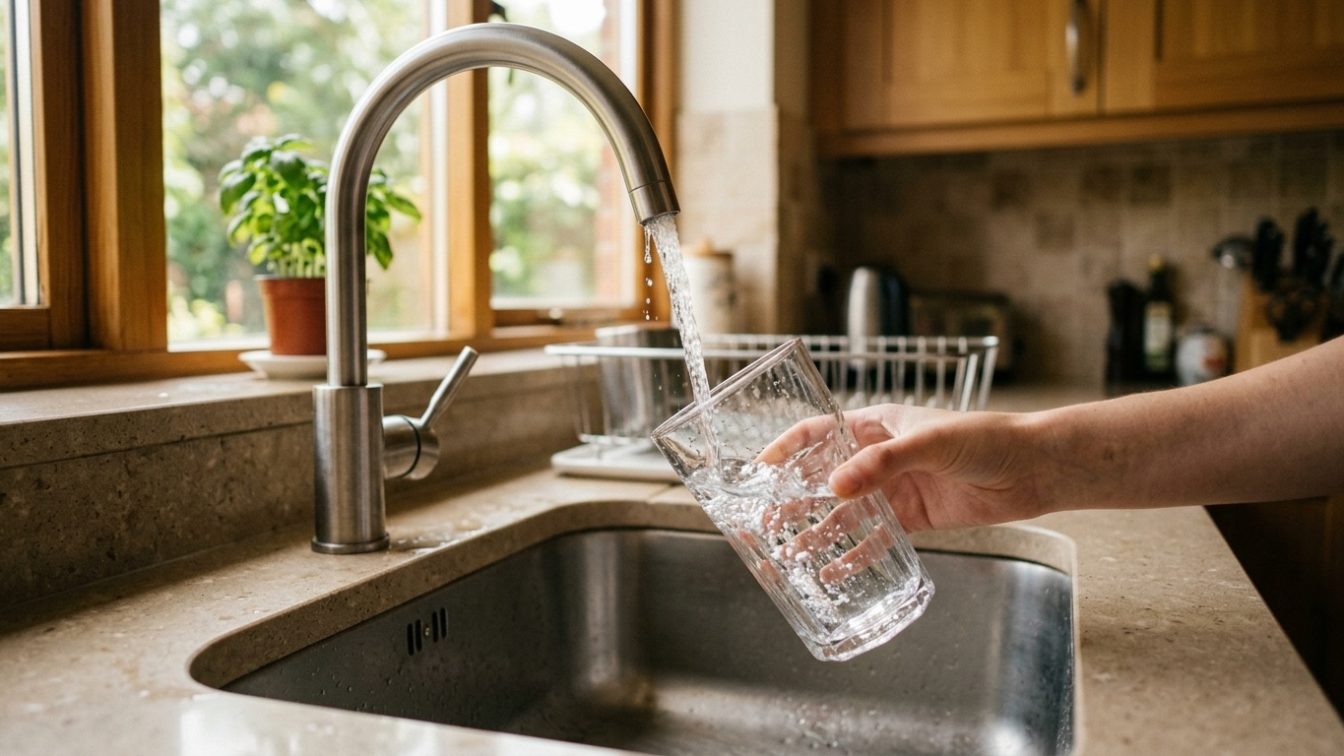
Table of contents
Summary of this article
- A study covered by Environmental Health News (EHN) on May 15, 2026, found that chemical contamination in U.S. drinking water requires "intentional and continuous reform" rather than a one-time fix.
- The word "continuous" is central: new chemicals enter commerce faster than treatment systems and regulations can adapt, so the gap between contamination and removal keeps widening.
- Emerging contaminants include pharmaceuticals, PFAS ("forever chemicals"), and plastics-related compounds that conventional treatment plants were not designed to remove.
- Most U.S. treatment plants were built to remove bacteria, sediment, and a fixed list of regulated chemicals, not the thousands of newer compounds now detected in source water.
- Many emerging contaminants are unregulated, so a utility can meet every legal standard and still deliver water containing compounds no rule yet addresses.
- Regulation is slow by design: a contaminant must be studied, assessed, and rule-making completed before a legal limit exists, a process that can take years or decades.
- Source control operates at two levels, upstream reform at the utility and policy level, and a point-of-use filter certified to remove specific contaminants at the household level.
- Households can read their Consumer Confidence Report, test a private well, and install a filter certified to NSF/ANSI 53 (carbon) or NSF/ANSI 58 (reverse osmosis).
Chemical contamination in U.S. drinking water requires “intentional and continuous reform,” a study covered by Environmental Health News (EHN) on May 15, 2026, concluded. The phrase is deliberate. It signals that the problem is not a single spill or a fixed list of pollutants, but a moving target that outpaces the systems built to control it.
The key word is continuous. New chemicals reach the market faster than treatment plants can adapt to them and faster than regulators can set limits. The result is a widening gap between what enters a water supply and what a utility can remove from it.
For any household drinking tap water, that gap is the risk. It means a utility can follow every rule, pass every test, and still deliver water carrying compounds no rule yet covers. Understanding why the gap exists is the first step to closing it at your own faucet.
What “Emerging Contaminants” Actually Means
The study addresses a category regulators call emerging contaminants. The name is plain once translated: these are chemicals showing up in water that are either newly detected, newly understood as harmful, or not yet regulated.
Three groups dominate the list:
Pharmaceuticals. Medications pass through the human body incompletely, enter sewage, and survive conventional wastewater treatment to reach rivers and groundwater. Traces of drugs, from painkillers to hormones, are detectable in many water supplies.
PFAS. Per- and polyfluoroalkyl substances, the “forever chemicals” used in nonstick coatings, firefighting foam, and stain-resistant products, resist breakdown and accumulate in water.
Plastics-related compounds. Chemicals used to make and soften plastics, along with microplastic particles themselves, leach into water from manufacturing, packaging, and waste.
What unites these groups is not their chemistry but their status. They are in the water, and the infrastructure meant to clean the water was not designed with them in mind.
Why Treatment Systems Lag Behind
Most U.S. treatment plants were built for an earlier problem. Their core job is to remove bacteria, viruses, sediment, and a defined list of regulated chemicals, the contaminants that caused the waterborne disease and pollution crises of the 20th century.
That design works for what it targets. Chlorination kills pathogens. Filtration removes particles. These processes have saved millions of lives and remain essential.
The design does not work for what it was never built to catch. Pharmaceuticals, PFAS, and plastics-related compounds are dissolved molecules, often present at parts-per-trillion levels, that pass straight through conventional filtration and disinfection. Removing them requires advanced treatment, activated carbon, reverse osmosis, or specialized processes, that many plants do not have and cannot afford to add quickly.
Here is the plain-English version. A plant built to strain gravel out of water cannot strain out a molecule dissolved in it. Upgrading to catch the dissolved molecule costs money, takes years, and must be repeated each time a new compound appears. That is the lag the study describes.
Why Regulation Cannot Keep Pace
The second half of the gap is regulatory. A chemical does not get a legal limit the moment it appears in water. It gets one only after a long process.
The sequence runs in order: a contaminant must be detected, then studied for health effects, then assessed for how widely it occurs, and only then can rule-making produce an enforceable limit. Each step takes time, and the full path from detection to legal standard can take years or decades.
Meanwhile, chemicals enter commerce constantly. The U.S. market contains tens of thousands of chemicals in active use, and new ones are introduced every year. Regulation, moving one contaminant at a time through a multi-year process, cannot match that pace.
The practical consequence lands on the household. Many emerging contaminants are unregulated, which means a utility has no legal obligation to remove them and no requirement to report them. A water supply can be fully compliant, meeting every enforceable standard, while still carrying compounds that simply have no standard yet. Compliance measures adherence to existing rules, not the safety of every chemical present.
What “Intentional and Continuous Reform” Means for You
The study’s phrase is a diagnosis of the whole system, and it translates directly to household action.
“Intentional” means the response cannot be accidental or reactive. Waiting for each new chemical to trigger a crisis before addressing it guarantees exposure in the interim. Reform has to be planned and forward-looking, at the utility, at the regulator, and at the tap.
“Continuous” means there is no finish line. Because new chemicals keep arriving, protection is not a one-time purchase or a single regulation. It is an ongoing practice. A household that filters its water once and forgets it, or reads its water report once a decade, is not keeping pace with a moving problem.
For the reader, this reframes the tap from a settled utility into an active pathway that needs periodic attention. The same logic that applies to the water system applies at home: identify what is present, install a barrier, and maintain it over time.
The Fix Is Source Control at Two Levels
In building biology, the most reliable fix is source control, intercepting a contaminant at its origin or before it reaches the body, rather than managing harm after exposure. With emerging contaminants, source control operates at two levels.
Upstream, at the system level. This is the reform the study calls for: better monitoring, faster regulation, and advanced treatment at utilities. It is the most complete solution because it protects everyone on the supply, but it is slow and largely outside a household’s direct control.
At the point of use, in your home. A filter placed between the tap and the glass intercepts contaminants the utility does not remove and rules do not yet require. It does not fix the system, but it removes the exposure that matters for your family, and it works now, on a timescale a regulation cannot match.
The two levels are complementary, not competing. Supporting upstream reform protects the community; a point-of-use filter protects the household while that reform catches up.
Practical Steps You Can Take
You cannot rebuild a treatment plant or write a regulation from your kitchen. You can find out what is in your water and put a certified, maintained barrier between it and your family.
- Read your Consumer Confidence Report every year
- Every community water system must publish this annual report listing detected, regulated contaminants. Reading it once is not enough, the “continuous” principle applies. Check it yearly, and note that it covers regulated compounds only, not every emerging chemical present.
- Test a private well
- Private wells fall outside federal drinking-water rules, so no one tests them for you. If you draw from a well, especially near industry, farmland, a landfill, or a wastewater discharge, have a certified lab run a broad panel that includes PFAS. It is the only way to know your baseline.
- Match the filter to the contaminant
- For dissolved chemicals such as PFAS, pharmaceuticals, and many plastics-related compounds, choose a filter certified to NSF/ANSI 53 (activated carbon) or NSF/ANSI 58 (reverse osmosis). Reverse osmosis is the most thorough for the widest range of dissolved contaminants.
- Verify the certification lists what you need
- A filter that reduces one contaminant may not touch another. Confirm the NSF certification specifically names the compounds you are targeting, rather than assuming a general-purpose filter covers emerging chemicals.
- Prioritize the tap used for drinking and cooking
- Focus filtration on the kitchen faucet used for drinking water, cooking, and infant formula. That is where ingestion happens and where a filter delivers the most protection per dollar.
- Maintain the filter on schedule
- A spent cartridge or membrane stops removing contaminants and can release accumulated ones back into the water. Replace on the manufacturer’s timeline. Maintenance is the household version of “continuous” reform.
- Do not rely on boiling
- Boiling kills bacteria but does not remove dissolved chemicals like PFAS or pharmaceuticals. Because water evaporates and the chemicals do not, boiling can slightly concentrate them. Filtration, not heat, is the tool for chemical contaminants.
- Reduce what you send downstream
- Never flush unused medications; use a pharmacy take-back program. What enters the sewer becomes an emerging contaminant in someone’s source water, including possibly your own.
Why This Matters Now
The study’s finding is structural, not incidental. Chemical contamination in U.S. drinking water requires “intentional and continuous reform” precisely because the problem never stops evolving. New chemicals keep entering the market, conventional treatment keeps missing them, and regulation keeps arriving years behind.
The gap is the danger. A utility can meet every legal standard while the water still carries pharmaceuticals, PFAS, and plastics-related compounds that no rule yet governs. Compliance is a measure of rules followed, not of every chemical removed.
For the household at the end of the pipe, the response mirrors the study’s own logic. Protection has to be intentional, chosen and set up, not assumed, and continuous, maintained and revisited as the problem shifts. Read the report each year, test the well, install a filter certified for the contaminants you actually face, and keep it maintained. The system will reform slowly. The barrier at your own tap you can put in place today.
Sources
- Environmental Health News (EHN). Study: Chemical contamination in U.S. drinking water requires 'intentional and continuous reform' (2026) (May 15, 2026):
- U.S. Environmental Protection Agency (EPA), Contaminant Candidate List (CCL) and Regulatory Determination:
- U.S. Environmental Protection Agency (EPA), PFAS National Primary Drinking Water Regulation:
- U.S. Environmental Protection Agency (EPA), Consumer Confidence Reports:
- U.S. Geological Survey (USGS), Contaminants of Emerging Concern in the Environment
- NSF International, Drinking Water Treatment Units certification:
Questions people ask
What did the study find?
A study covered by Environmental Health News on May 15, 2026, found that chemical contamination in U.S. drinking water requires "intentional and continuous reform." It concluded that the problem is ongoing rather than fixed, because new chemicals keep entering water faster than treatment systems and regulations can adapt.
What are emerging contaminants?
Emerging contaminants are chemicals showing up in water that are newly detected, newly understood as harmful, or not yet regulated. The main groups are pharmaceuticals, PFAS ("forever chemicals"), and plastics-related compounds. What they share is that conventional treatment was not designed to remove them.
Why can't treatment plants remove these chemicals?
Most U.S. plants were built to remove bacteria, viruses, sediment, and a fixed list of regulated chemicals. Emerging contaminants are dissolved molecules, often at parts-per-trillion levels, that pass through conventional filtration and disinfection. Removing them requires advanced treatment like activated carbon or reverse osmosis, which many plants do not have.
Why does regulation lag behind?
A chemical gets a legal limit only after it is detected, studied for health effects, assessed for how widely it occurs, and put through rule-making, a process that can take years or decades. New chemicals enter the market far faster than that, so regulation cannot keep pace, and many contaminants remain unregulated.
If my water is "compliant," is it safe?
Compliant means the water meets existing enforceable standards. Because many emerging contaminants are unregulated, a utility can meet every legal standard and still deliver water carrying compounds that have no standard yet. Compliance measures adherence to current rules, not the safety of every chemical present.
What does "intentional and continuous reform" mean for me?
"Intentional" means protection must be planned rather than reactive. "Continuous" means it has no finish line, because new chemicals keep arriving. For a household, that means treating your tap as an active pathway that needs regular attention, reading your water report yearly, filtering, and maintaining the filter over time.
How do I remove emerging contaminants at home?
Use a filter certified to NSF/ANSI 53 (activated carbon) or NSF/ANSI 58 (reverse osmosis), and confirm the certification names the specific compounds you are targeting. Reverse osmosis is the most thorough for dissolved chemicals. Maintain the filter on schedule, and prioritize the tap used for drinking and cooking. Boiling does not remove these chemicals.
What can I do to keep contaminants out of the water supply?
Never flush unused medications, use a pharmacy take-back program, because what enters the sewer becomes an emerging contaminant in source water. Supporting upstream reform, such as monitoring and advanced treatment at utilities, protects the whole community alongside your household filter.

Have questions about the environment inside your home?
Air quality, mold, EMF, light and water all shape how a house feels and how the people in it feel. Whatever your concern is, the first step is finding out what is there.
Our certified team of environmental professionals and advocates can help.