


9 Out of 10 Homes Pass a Water System Test. Yours Could Be the One That Fails
A utility passes its lead test when 9 sampled homes in 10 come in under the line. Home number 10 keeps pouring exactly what it was pouring, and lead gets in from a pipe under your yard rather than at a treatment plant.
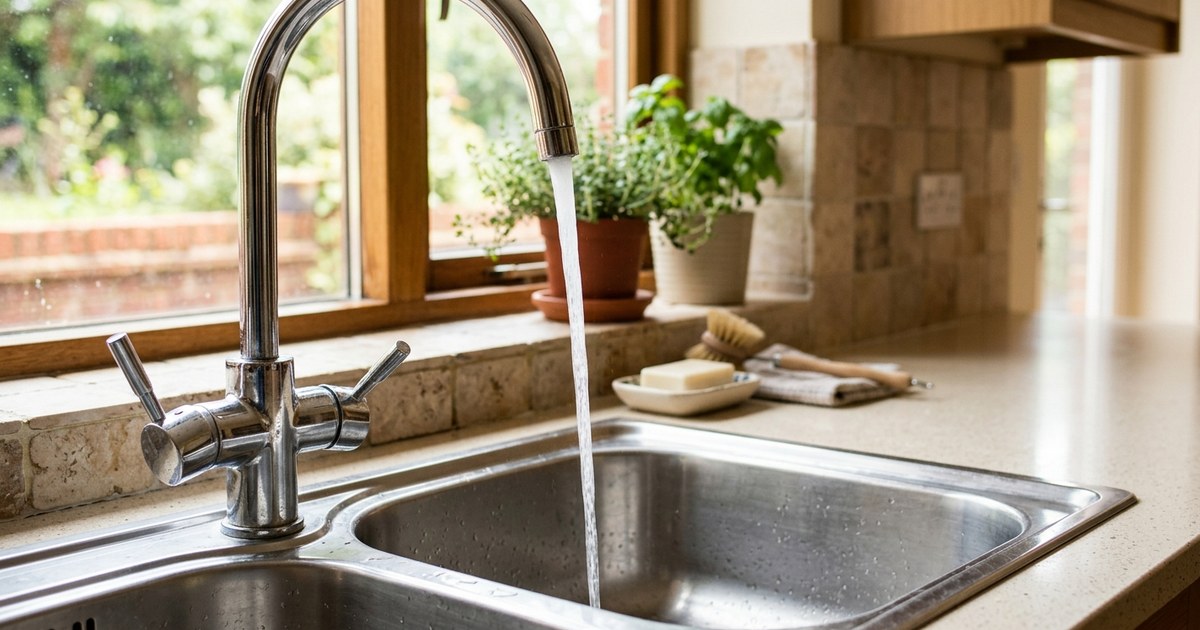
Table of contents
- Why does a passing lead test say so little about your kitchen?
- Where does lead get into your water?
- What changes on November 1, 2027?
- Does anybody have to tell you?
- Is 10 parts per billion a safe amount of lead?
- How do you find out what is in your own tap?
- What if you rent, or the pipe isn’t yours?
- What can you do this week?
Summary of this article
- The current EPA action level for lead is 15 ppb, judged at the 90th percentile across a whole water system.
- The Lead and Copper Rule Improvements, final on October 8, 2024, cut that to 10 ppb from November 1, 2027.
- The same date brings the lead service line inventory and the replacement plan due, with replacement inside 10 years.
- EPA's maximum contaminant level goal for lead is zero. The rule states there is no safe level of lead in drinking water and that the action level is not a health-based level.
- A system passes on its 90th percentile, so your own tap can run high while your utility is in the clear. Only a test at your kitchen sink speaks for your house.
Why does a passing lead test say so little about your kitchen?
Because a water system passes on 9 homes out of 10.
Once a year a letter turns up, or a link to one, and somewhere in it a line says lead is in compliance and there is nothing for you to do. Most people read that as a sentence about their own kitchen. It never was.
The method behind it is specific. A utility samples water at a set of homes, lines those results up from lowest to highest, and looks at one value near the top of that line. If 9 out of 10 come in at or under 15 parts per billion, a whole system passes.
So 9 homes can be clean, a tenth can run high, and that letter still says compliance. Nothing changes at that tenth kitchen. It keeps pouring what it was already pouring, into the same glasses, for the same family, who have now been told their water is fine.
A pass describes a system. It was never a statement about your tap.
Widen it out and it gets thinner still, because only a small share of homes in any town gets sampled at all. Yours probably isn’t one of them. Nobody is coming to your street to find out.
Where does lead get into your water?
Somewhere between a water main and your faucet, almost every time.
Water leaves a treatment plant with no lead in it whatsoever. It picks lead up on the way to you, from a service line buried under your yard, from solder in older joints, from brass inside a valve nobody has looked at since the building went up.
That is why the answer changes from one address to the next along a single street, and sometimes tap by tap inside one kitchen. Two homes can share a main and have nothing else in common.
It also explains a pair of sentences that sound like they can’t both be true. Your utility passed. Your tap has lead in it. Nobody’s lying, because those two sentences are about different pipes.
Standing water makes it worse. Overnight, water rests against metal for hours and takes a little of it along. So a first glass in the morning is the worst one of your day, and anybody testing your water will ask what time you drew it.
What changes on November 1, 2027?
EPA cut its action level for lead from 15 parts per billion down to 10. Water systems have until November 1, 2027 to get there.
That date carries more than a figure. By then every system owes a baseline list of what its service lines are made of, plus a plan for pulling the lead ones out of the ground. One sentence on its own rule page does the rest of the work: “On October 8th, the EPA issued a final rule requiring drinking water systems across the country to identify and replace lead pipes within 10 years.”
Ten years is a long time to wait on a pipe. It’s also the first time anybody has been told to go and look.
Something got deleted too. A middle tier called a trigger level, which used to sit below the action level with lighter duties attached, is gone, and one line now carries all of that weight by itself.
One piece of this outranks everything else for anybody who lives in a building rather than regulates one. A pipe nobody ever mapped becomes an entry on a public inventory, and that is something you can ask to see.
Does anybody have to tell you?
Only when a whole system goes over, and even then you’re not who that notice is written for.
Since October 16, 2024, a water system that blows past that action level has to put out a public notice within 24 hours. Fast, and genuinely useful. It’s also aimed at a population rather than at an address.
Read it from your kitchen and a gap opens up. A notice fires when a system fails. Your own address can run high through years of passes and never generate a single letter, because sampling never reached it and nothing got breached.
People read that quiet as an all-clear. Silence means nobody found a problem in whatever they happened to look at, which is a much smaller claim, and it is the difference between a system being watched and a kitchen being watched.
One more wrinkle is worth knowing. That notice goes to customers of record, so in a rented building it reaches the owner and not always the person drinking the water.
Is 10 parts per billion a safe amount of lead?
It was never written to be one. An action level is a trigger for a utility, and it tells them when to act.
EPA’s health goal for lead is zero. Not 10, not 15, but none at all, because nobody has found an amount of lead small enough to call harmless, and a small child’s body is where that lands hardest.
So two very different questions get pointed at one figure. Does this system have to do something about lead? That is what 15, and soon 10, answers. Is this glass safe for my kid? Nothing in that rule reaches your counter.
Keep both in view, because the gap between them is where every argument about drinking water happens. A utility can be doing everything the rule asks while your tap is the one nobody sampled.
| What it is | What it answers | |
|---|---|---|
| Zero | EPA’s health goal for lead | how much is safe |
| 15 ppb | the action level until 2027 | when a system must act |
| 10 ppb | the action level from November 1, 2027 | the same question, moved |
| your tap | nothing in the rule | what your family drinks |
Zero is what a health goal asks for. Ten is where somebody has to act. Those are not the same thing.
How do you find out what is in your own tap?
Have it tested, at whichever tap you drink from.
Two samples tell two different stories, and running both is what makes either one useful. A first-draw sample, taken after water has stood in your pipes all night, shows what your own plumbing adds. A flushed sample, taken after water has run a while, shows what arrives from a main. High first draw and low flushed, and lead is coming from inside your walls, your fittings, or your service line.
Ask your utility what your service line is made of. That inventory falls due on November 1, 2027, so a question that used to get a shrug now has somebody working on it. We’d ask this year rather than wait for that one. The pipe between the main and the meter is where most of it starts, and a lead service line is a primary source of lead in a child’s blood.
The timing catches people out. Your sample belongs before any plumbing work rather than after, because cutting into a lead service line shakes material loose, and swapping half of one can push results up for weeks afterward. A result from beforehand is the only thing the later one can be compared against.
What if you rent, or the pipe isn’t yours?
Then the inventory is still yours to ask for, and the replacement is somebody else’s bill.
A service line runs from the main in the street to the meter or the wall, and in most places part of it belongs to the utility and part belongs to whoever owns the building. Neither part belongs to a tenant. That does not put you outside this rule, because the inventory every system owes by November 1, 2027 is built by address rather than by owner.
So call the utility with your address rather than your landlord’s name. They will tell you what the line is made of, or that they don’t know yet, and either answer is worth having in writing.
In an apartment building the picture changes again. One service line can feed forty units, and the lead that matters after it may be in the risers, the solder, or a brass valve on your floor. Building-wide results say nothing about your own unit, and yours is the only tap you drink from.
What a tenant can do without permission covers most of the benefit anyway. Run the tap before you fill a glass. Use cold water for drinking, cooking and formula. Fit a filter certified for lead on the tap you use, which needs no plumbing and comes with you when you move.
The pipe may not be yours. The filter and the question both are.
What can you do this week?
Small, boring things, and they do more than they sound like they should.
Use a filter certified for lead, and change its cartridge on schedule. An expired cartridge is worse than no filter at all, because it carries a confidence a fresh one earns.
Drink and cook with the cold tap, and mix baby formula with it too. Hot water pulls more lead out of old pipes and out of a tank than cold ever will.
Let a tap run a bit before you fill a glass, if it has stood all night, because a few seconds moves standing water out of your fittings and brings fresh water in from a main.
None of this is a scandal. Somebody watching thousands of water systems needs one figure for each of them, and 9 out of 10 is a defensible way to get one. It was never a promise about your house, though, and nobody sends a letter saying so. Your kitchen is where you find out.
Sources
- US EPA. Lead and Copper Rule Improvements (2024)
- US EPA. Lead and Copper Rule (2021)
- CDC. Update of the Blood Lead Reference Value (2021) MMWR 70(43)
- US EPA. Safe Drinking Water Information System via Envirofacts, contaminant code PB90 (2026)
- Institut fuer Baubiologie und Nachhaltigkeit. Building Biology Evaluation Guidelines SBM-2024 (2024)
Questions people ask
What is the EPA action level for lead in drinking water?
Currently 15 parts per billion, judged at customer taps using a 90th-percentile approach across a whole water system. The Lead and Copper Rule Improvements lower it to 10 ppb from November 1, 2027, and eliminate the trigger level.
How can my utility pass its lead test while my tap has lead?
The compliance figure is a 90th percentile across a set of sampled homes, so nine in ten can fall under the line while the system passes. Lead usually enters from the service line, from solder in older joints, or from brass fittings, all of which vary house by house.
What happens on November 1, 2027?
Three things at once. The action level drops to 10 ppb, the 24-hour public notification requirement applies at that lower figure, and water systems owe both their baseline lead service line inventory and their replacement plan to the state.
Is the lead action level a safe level?
No. EPA states in the rule itself that the lead action level is not a health-based level and that there is no safe level of lead in drinking water. Its maximum contaminant level goal for lead is zero, established in part because lead is a probable carcinogen and there is no clear threshold below which the non-carcinogenic risks disappear. The action level tells a utility when to act; it does not tell a household the water is fine.
I have a young child. What should I actually do?
Ask your pediatrician about a blood lead test, and ask before you worry about your water. A test tells you what has already reached your child, which is the thing worth knowing, and your doctor can arrange one at a regular visit. Water is one route among several, and paint and dust in an older house usually matter more. While you wait, run your cold tap a while before you draw water for drinking or for mixing formula, and never use hot tap water for either, because hot water pulls more lead out of a pipe than cold does.
How should I test my own tap water for lead?
Take a first-draw sample after water has stood in the pipes overnight, which shows what your plumbing adds, and a flushed sample after running the tap, which shows what arrives from the main. Test before any plumbing work rather than after, because disturbing a lead service line can raise readings for a period.
What can I do about lead in water if I rent?
Ask the utility directly with your own address, because the service line inventory due by November 1, 2027 is built by address rather than by owner. Then do the parts that need no permission: run the tap before filling a glass, use cold water for drinking, cooking and formula, and fit a filter certified for lead, which comes with you when you move.


Have questions about the environment inside your home?
Air quality, mold, EMF, light and water all shape how a house feels and how the people in it feel. Whatever your concern is, the first step is finding out what is there.
Our certified team of environmental professionals and advocates can help.