


One state calls a $700 radon quote normal. Another says walk away
Missouri says a $700 radon quote can be normal, while Minnesota treats a price that low as a warning sign. Federal guidance offers almost no clear help on what a fair radon price looks like.
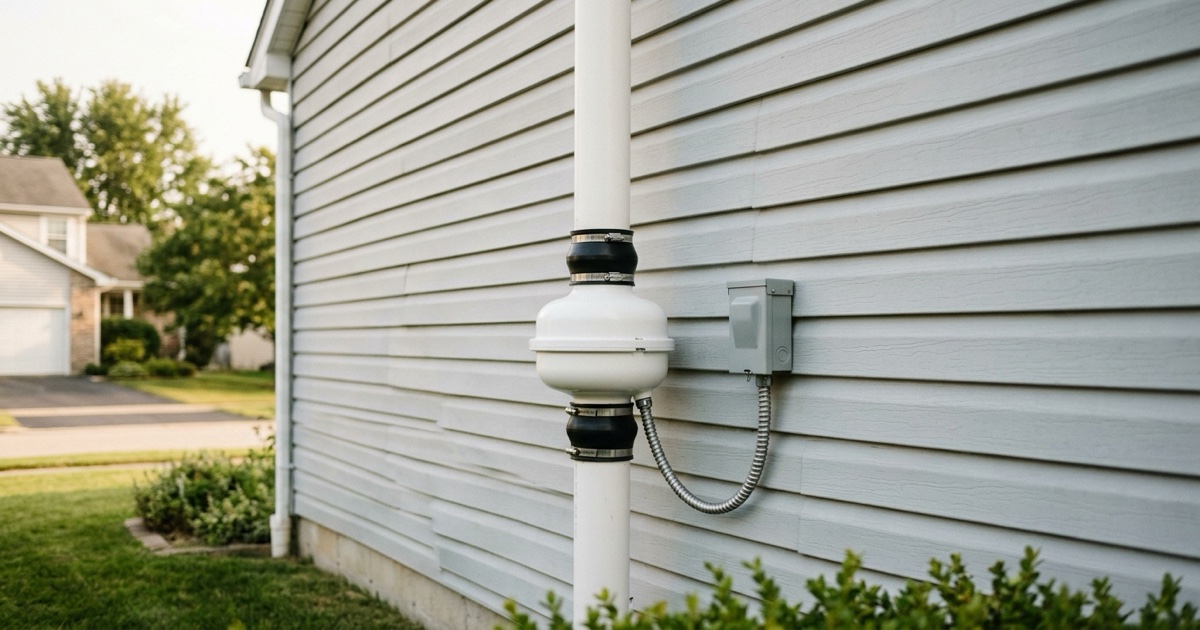
Table of contents
- Does anybody publish what radon mitigation costs?
- Why do radon quotes vary so much by state?
- What does each state page print?
- radon-system-include-and-what-does-it-cost-to-ru”>What does a radon system include, and what does it cost to run?
- Why does my foundation change the price?
- How do you compare two radon bids?
- Can somebody check a system that’s already on the wall?
- Is there help paying for it?
- What should you do with the quote you have?
Summary of this article
- EPA's Consumer's Guide to Radon Reduction, EPA 402/K-10/005, prints no price range for a mitigation system.
- The only dollar figure in that 20-page guide is $10 to $25 for a heat recovery ventilator filter.
- A Citizen's Guide to Radon and the Home Buyer's and Seller's Guide to Radon contain no price at all.
- Wisconsin's health department fact sheet P-03792, dated June 2026, gives an average of $1,000 to $2,000. Missouri's radon page gives $500 to $2,500.
- Minnesota publishes no range and warns against quotes under $1,000, which rules out the bottom third of Missouri's published range. Wisconsin does not license mitigators; Minnesota does.
- Price drivers EPA names: foundation type, how easily air moves under the slab, existing drain tile or a sump, and a crawlspace membrane.
- EPA says fans may last five years or more and that manufacturer warranties tend not to exceed five years.
- USDA's Section 504 program lends up to $40,000 and grants up to $10,000 for health and safety hazards, in rural areas only.
Does anybody publish what radon mitigation costs?
Nobody in Washington does, so state health departments fill the silence and contradict each other. Missouri puts a radon fix at $500 to $2,500. Minnesota tells residents to avoid rates under $1,000 as too good to be true. A contractor stands in your basement, writes $700 on a piece of paper, and those two states disagree about whether that is a bargain or a red flag.
So we went looking for a federal answer, and nobody in Washington publishes one.
Three consumer booklets from EPA cover radon, all of them current, and between the three of them they print a single dollar figure. It’s for a filter.
We downloaded all three and searched every page for a dollar sign. PLACEHOLDERns 20 pages on how to fix a house, and gave up a single hit. Replacement filters for a ventilator, “priced between $10 and $25.”
That is every dollar Washington prints on this subject. One filter, in a set of booklets whose whole job is telling you how to fix a house.
What all three offer instead is a referral. Cost “can vary widely,” so call your state radon office or get estimates from qualified mitigators. Every one of them ends up on that sentence at the exact moment a reader arrives at the only question they came with, and none of them will answer it.
These are live documents, too. Somebody saved that repair booklet on 18 June 2025, going by its own file properties, while the publications index still calls it a December 2016 revision. Nobody forgot about it. It was touched last summer, and it still declines to answer.
We would not call that silence lazy. A radon system gets priced one building at a time, and every variable moving that price is something a national booklet has no way to see.
Why do radon quotes vary so much by state?
Say the number on your piece of paper was $700.
Missouri treats $700 as normal. Its health department puts a radon fix at $500 to $2,500, depending on how big your house is and how it was built. Its FAQ says it a second way, as under $2,500 for a 2,000-square-foot home.
Drive north and $700 turns into a warning. Minnesota’s health department tells readers to steer clear of unlicensed installers, and of rates under $1,000. Its reasoning is blunt. Quotes that low are “too good to be true” and leave you with “sub-standard workmanship and materials.”
Same house. Same work. Two state health departments, both staffed by people who do this for a living, handing you opposite advice about the same $700, while you stand in a basement with that piece of paper.
Wisconsin falls between them and prints an average of $1,000 to $2,000 for a contractor to install a system. That fact sheet was saved on 25 June 2026, and it also tells Wisconsin residents their state doesn’t require radon contractors to be licensed or certified at all. Call at least three companies, it says.
Same house, same work, two health departments, opposite advice.
What does each state page print?
We read all five rather than trusting a summary, and the pattern is backwards from what you would expect. Minnesota licenses its mitigators and still warns you off the cheap end. Wisconsin licenses no one and prints a friendly range. New York skips a figure entirely and repeats the federal wording.
One warning about looking this up yourself. Ask a search engine and it will tell you Minnesota publishes $1,500 to $3,000. We opened the page. No range on it at all, only that warning about the cheap end. So we threw the summaries out and read every page at its own source.
| Who | What they print on price |
|---|---|
| EPA, Consumer’s Guide to Radon Reduction, EPA 402/K-10/005 | No range. $10 to $25 for a ventilator filter is the only price in 20 pages |
| EPA, A Citizen’s Guide to Radon, EPA 402/K-12/002 | No price of any kind. Cost “can vary widely” |
| EPA, Home Buyer’s and Seller’s Guide to Radon, EPA 402/K-24/001 | No price. Buyer and seller told to discuss timing and costs |
| Wisconsin health department, P-03792, June 2026 | $1,000 to $2,000 average to install a system |
| Missouri health department, radon page | $500 to $2,500 by size and construction. Under $2,500 for a 2,000-square-foot home |
| Minnesota health department | No range. Warns against quotes under $1,000 |
| New York State health department | No price. Repeats the federal wording |
| Pennsylvania environmental department | No mitigation price. $20 to $30 for a home test kit |
Read that second column downward. Federal silence, then two ranges overlapping only in their top half, then a warning ruling out the bottom of one. Nobody here is lying, and no two of them agree.
radon-system-include-and-what-does-it-cost-to-ru”>What does a radon system include, and what does it cost to run?
A pipe, a fan, a gauge and a hole in your floor.
Somebody cuts a core through your concrete slab and drops a suction pipe into rock or soil underneath. A fan on that pipe pulls soil gas out from under your floor and pushes it above your roof, leaving a slight vacuum where radon used to collect.
Rules for the finished job come from EPA, and they’re fussy. Exhaust vents above a roof surface, 10 feet or more off the ground. It has to clear windows and doors by 10 feet, unless it rises 2 feet above them. That fan can’t sit in or below a living space, so it lives in an attic, a garage, or outside on a wall. A system carries a label, plus a warning device that tells you when it quits.
None of it is exotic hardware. A core through concrete, some pipe, an electrical connection, a hole through a roof or a wall. Parts and hours. Nothing on that list would surprise a plumber, and done properly it pulls radon down by up to 99 percent.
Why does my foundation change the price?
Somebody has to find out how easily air travels under your floor before anybody can price this honestly. Their tool is a vacuum cleaner and a puff of chemical smoke.
That is a soil communication test, and it settles how many suction points the job needs. Two things decide it. How easily air moves in rock or soil under your slab, and how strong your radon source is. One pipe, or three. Nobody knows until somebody kneels down and checks, which is why a quote written without that step is a guess with a number on it.
Plumbing you already own changes that arithmetic. Perforated drain tile running around a foundation can be drawn on directly. A sump can be capped, keep carrying water away, and become where a radon pipe goes. Hollow block basement walls open a third route.
A crawlspace changes the job completely. There you’re laying high-density plastic sheet over an earth floor and drawing from beneath it, which is “the most effective way to reduce radon levels in crawlspace homes” when it is done right. That is a material cost scaled to your whole footprint, rather than one core through concrete.
No source we opened prices that gap. We are not going to guess at it.
The federal booklets will make one price comparison and no more, and it only helps you if you’re buying. Building radon resistance into a house while it is going up costs less than fixing that house afterwards, and where a builder already ran a passive system in, upgrading it to an active one means adding a fan rather than starting over. No dollars attached to either claim. Only less.
How do you compare two radon bids?
A total, taxes, permit fees, and who does the electrical work.
That same repair booklet has a contract section, and it asks for “the total cost of the job, including all taxes and permit fees,” how much of that’s a deposit, and when payment falls due in full. It wants time needed written down, a contractor committed to pulling permits and following building codes, and proof of insurance and bonding.
Minnesota turns the same ground into questions, and its list could only have been written by somebody who has seen a lot of bad proposals. Is that price firm, or are there hidden fees. Will diagnostics find the suction point and size the pipe and fan. Is electrical work needed, and is it in the proposal. Who pulls permits.
One more from Minnesota, worth more than it looks. No bids over the phone or by email. Somebody has to come and stand in your basement first.
Ask whether they guarantee a result, as well. Plenty of contractors will commit in writing to hitting an agreed radon level, and Minnesota tells you to ask for below 4.0 pCi/L. Then keep back the final payment until a test shows the number came down.
Diagnostics are their own line item, and they’re the thing most likely to appear on one bid and not the other. A free estimate doesn’t always cover that vacuum-cleaner test, and a contractor may charge for it separately. Some neighborhoods carry a source in plain sight: a radioactive waste pile is growing beside Progress Village.
Two more things worth writing on your copy. Ask whether the work will meet ASTM E2121, the industry standard for putting these systems into houses that are already standing, because that’s the exact question federal guidance tells you to put to a contractor. And where a state licenses nobody, run the name past the National Radon Proficiency Program or the National Radon Safety Board, which are the two private certifications Wisconsin sends its own residents to check.
A low bid isn’t always the cheaper outcome, either. A less expensive system can cost more to run and maintain. What goes into it decides how many years you get before somebody is back on your wall with a ladder.
Can somebody check a system that’s already on the wall?
One state does it free. Minnesota will send an inspector to look at any system installed after June 2020, and almost nobody thinks to ask for it.
Everywhere else, the check is yours to arrange, and it is worth arranging. A system on a wall proves somebody was paid. It doesn’t prove the number came down, and the only thing that proves that’s a test after the fan has been running.
So put a long-term kit back in the same spot the first one sat in, and leave it through a season. A short retest right after installation measures a house that has been open to a crew all week.
Where you rent, the same logic applies with one difference. The fan is the landlord’s asset and the test is your evidence. A result showing the system isn’t working is what gets it serviced.
A fan on the wall isn’t a result.
Not at night. Not while you’re away for two weeks. It runs continuously for as long as you own the house, and it draws power the whole time.
Nobody prices that either. We went looking for a running cost and came back with three variables. A fan system nudges your electric bill up. Most systems lose some heated or cooled air up that pipe, which pushes utility bills higher again. How much of both depends on your climate, which system you have and how your house was built. No figure anywhere. Same problem as the install.
Fans wear out. Five years or more is what the federal guide expects, and manufacturer warranties tend not to exceed five years. A replacement costs whatever labor and materials cost, it says, and it tells you to ask for estimates before work begins.
Then there is retesting, which nobody thinks about while they’re collecting quotes. Every two years, at least. A short-term kit runs about $25 at hardware stores in Wisconsin, and $20 to $30 in Pennsylvania. Missouri gives them to residents free while supplies last.
Is there help paying for it?
Some rural households qualify. USDA‘s Section 504 program lends up to $40,000, and grants up to $10,000, to take health and safety hazards out of a home somebody owns and lives in.
Read those terms before you count on them. Loans run 20 years at a fixed 1 percent. Grants go only to owners aged 62 or older, have to be repaid if a property sells inside 3 years, and stack with a loan up to $50,000. You have to own and occupy that home, be unable to get affordable credit anywhere else, and sit inside an eligible rural area.
One honest limit. That program’s page never says the word radon. It says grants remove health and safety hazards, and never writes down which ones. New York State’s health department lists it on a radon page anyway, as a funding route, which is one agency interpreting a federal program rather than the agency that runs it saying so.
Everybody outside that program is looking at local help, or at nothing.
What should you do with the quote you have?
There’s no national price for a radon fix. What exists instead is a handful of state figures arguing with each other: $1,000 to $2,000 in Wisconsin, $500 to $2,500 in Missouri, and a Minnesota warning that rules out the bottom third of Missouri’s range.
You can still make bids comparable, which means pinning five things down on every one. Foundation type. How many suction points a smoke test says you need. A sump or drain tile already there to draw on. A crawlspace floor that needs a membrane. Electrical work and permits, inside a bid or outside it.
Those five are the government’s own variables. They are why its booklets refuse to print a range, and they’re the reason two honest bids on one house can look nothing alike.
It helps to know what starts all this. A confirmed 4 pCi/L or higher is where the federal recommendation to fix kicks in, and it is a recommendation rather than a limit anybody enforces.
Nearly 1 out of every 15 homes in this country is estimated to sit above that line. Radon is the leading cause of lung cancer among people who never smoked. That is why the repair exists at all, and its price is a question three federal booklets answer by handing you back to a contractor.
We would rather give you that, and three state figures that don’t line up, than average them into a number no health department would sign.
Sources
- U.S. Environmental Protection Agency. Consumer's Guide to Radon Reduction: How to Fix Your Home (2025) EPA 402/K-10/005
- U.S. Environmental Protection Agency. A Citizen's Guide to Radon: The Guide to Protecting Yourself and Your Family from Radon (2025) EPA 402/K-12/002
- U.S. Environmental Protection Agency. Home Buyer's and Seller's Guide to Radon, March 2024 (revised) (2024) EPA 402/K-24/001
- U.S. Environmental Protection Agency. Radon-Resistant Construction Basics and Techniques (2026)
- Wisconsin Department of Health Services, Radon Program. How to Test and Mitigate for Radon (2026) P-03792 (06/2026)
- Minnesota Department of Health. Find a Radon Mitigation Professional, last updated 03/15/2023 (2023)
- New York State Department of Health. Radon Mitigation (2026)
- Pennsylvania Department of Environmental Protection, Radon Division. Radon in the Home (2026)
- Missouri Department of Health and Senior Services. Radon (2026)
- USDA Rural Development. Single Family Housing Repair Loans and Grants, Section 504 Home Repair program (2026) Housing Act of 1949 as amended, 7 CFR Part 3550
- Institute of Building Biology + Sustainability (IBN). Building Biology Evaluation Guidelines for Sleeping Areas, SBM-2024, Standard Point A6 (2024) SBM-2024
Questions people ask
How much does a radon mitigation system cost?
No federal agency publishes a figure. EPA's Consumer's Guide to Radon Reduction says most homes can be fixed for about the same cost as other common home repairs, and tells you to get an estimate from one or more qualified mitigators. Three state health departments do publish numbers and they disagree: Wisconsin gives $1,000 to $2,000 as an average, Missouri gives $500 to $2,500, and Minnesota gives no range but warns against any quote under $1,000.
Why doesn't EPA publish a price for radon mitigation?
Because the price is set by the house. A Citizen's Guide to Radon says the cost to fix can vary widely and depends on how the home was built and the extent of the problem. EPA points readers to their state radon office or to contractor estimates instead of printing a number.
What does a radon mitigation system actually consist of?
A suction pipe through the floor slab into the rock or soil below, a fan that vents above the roof, and a warning device such as a manometer. EPA calls this active subslab suction and names it the most common radon reduction method.
Does a crawlspace cost more to fix than a slab?
No source we opened prices the difference. EPA describes submembrane suction for crawlspaces, which means covering the earth floor with a high-density plastic sheet and drawing from underneath it. That is a material cost scaled to the footprint of the house rather than a single core through concrete.
What should a radon mitigation quote include?
EPA says the contract should carry the total cost of the job including all taxes and permit fees, any deposit, and when payment is due. Minnesota's health department adds whether the price is firm, whether diagnostics will be performed, whether electrical work is in the proposal, and who pulls the permits.
What does a radon system cost to run?
EPA publishes no figure. It says fan systems will slightly increase your electric bill and that most systems lose some conditioned air, with the amount depending on climate, system and construction. Fans may last five years or more, and manufacturer warranties tend not to exceed five years.
Is there financial help to pay for radon mitigation?
USDA's Section 504 Home Repair program lends up to $40,000 and grants up to $10,000 to remove health and safety hazards, for very-low-income owner-occupants in eligible rural areas. Grants go only to homeowners aged 62 or older. USDA's page does not name radon, though the New York State Department of Health lists the program on its radon mitigation page.
Have questions about the environment inside your home?
Air quality, mold, EMF, light and water all shape how a house feels and how the people in it feel. Whatever your concern is, the first step is finding out what is there.
Our certified team of environmental professionals and advocates can help.